
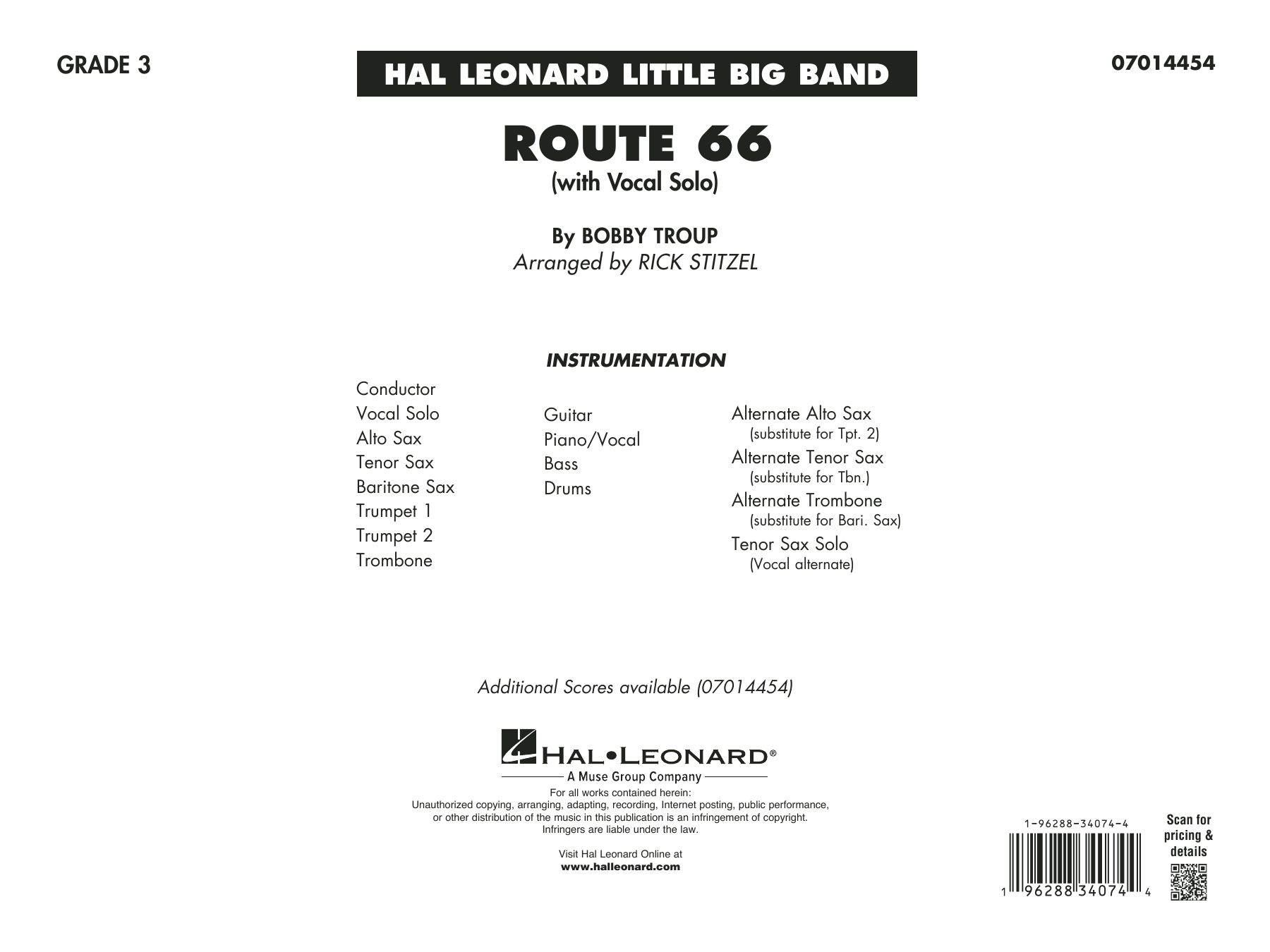

Route 66 (arr. Rick Stitzel): Jazz Ensemble Conductor Score & Parts
By Bobby Troup / As performed by Manhattan Transfer / Arranged by Rick Stitzel
Grade: 3
Item: 35-PK01720556
$50.00
Pickup currently not available
Buy Extra Parts (Digital PDF Download)
Parts Added to Cart!
Description
Give your star female vocalist the opportunity to sing this American classic made famous by the great Nat "King" Cole. Scored in Bb for jazz combo.


Route 66 (arr. Rick Stitzel): Jazz Ensemble Conductor Score & Parts isn't in MakeMusic Cloud just yet...but it could be. Let us know you'd like to see it, and you'll help shape what comes next. In the meantime, start a free trial and dive into thousands of interactive titles your students can play along with today.
Request This Title
Tell us you want it.
Start Your Free Trial
Explore everything that's ready to play right now.
Sample Audio
No sample audio found.
Sample Video
No sample videos found.
Additional Details
Publisher:
Hal Leonard
SKU:
35-PK01720556
More about this title
About the Composer: Bobby Troup
Bobby Troup composed "Route 66" in 1946, crafting one of America's most enduring popular songs from a simple idea born during a cross-country drive. His gift for memorable melody and clever, conversational lyrics made him a prolific songwriter for film, television, and the Great American Songbook, influencing generations of jazz and pop musicians.
Troup's work demonstrates how strong harmonic language and singable melodies create songs that outlast their era. Educators value his compositions because they teach students how accessibility and artistic integrity coexist in American music.
Why we love this
Rick Stitzel's arrangement gives your vocalist genuine jazz sophistication without overwhelming ensemble players at this level. The Bb voicings sit naturally in most sections, and the tune's inherent charm means students will connect immediately to the material rather than forcing their way through it.
What to expect
Nostalgic and conversational, with the easy charm of a song that's been sung a thousand times and somehow never grows tired. The Bb scoring gives the arrangement warmth and brightness, capturing the optimism and freedom of that classic American road trip narrative.
Who it's for
Ensembles with a strong female vocalist who want to add a recognized standard to their jazz repertoire without the complexity of a full big band arrangement. The Grade 3 level makes it accessible for high school jazz combos and some advanced middle school groups.
How to get the most out of it
- Build the rhythm section first. Lock the bass line and drums with the walking quarter-note pulse before layering in horns; this foundation makes everything else click into place.
- Shape the vocalist's phrasing around speech rhythms rather than strict metric placement. The lyrical storytelling of "Route 66" invites rubato and conversational timing.
- Keep ensemble comping light and conversational. Jazz ensemble players sometimes over-energize their parts; remind them they're supporting, not competing with, the voice.
- Balance the solo sections with the ensemble sections carefully. Grade 3 ensembles can rush or drag during head hits; use the recorded version as your reference for appropriate swing feel.
How to use it
Pair this with other American popular standards in a spring concert celebrating the Great American Songbook, or use it as an encore that lets audiences hear a familiar favorite through a jazz lens. It works equally well as a featured number in a larger concert or as a standalone jazz combo feature.
Skills your students will build
- Swing feel and triplet subdivision in a blues-influenced harmonic context
- Listening to and supporting a featured soloist (vocalist)
- Comping chords at appropriate dynamic and textural levels
- Reading basic jazz lead sheet notation and chord symbols
- Balancing melodic phrasing with underlying harmonic movement