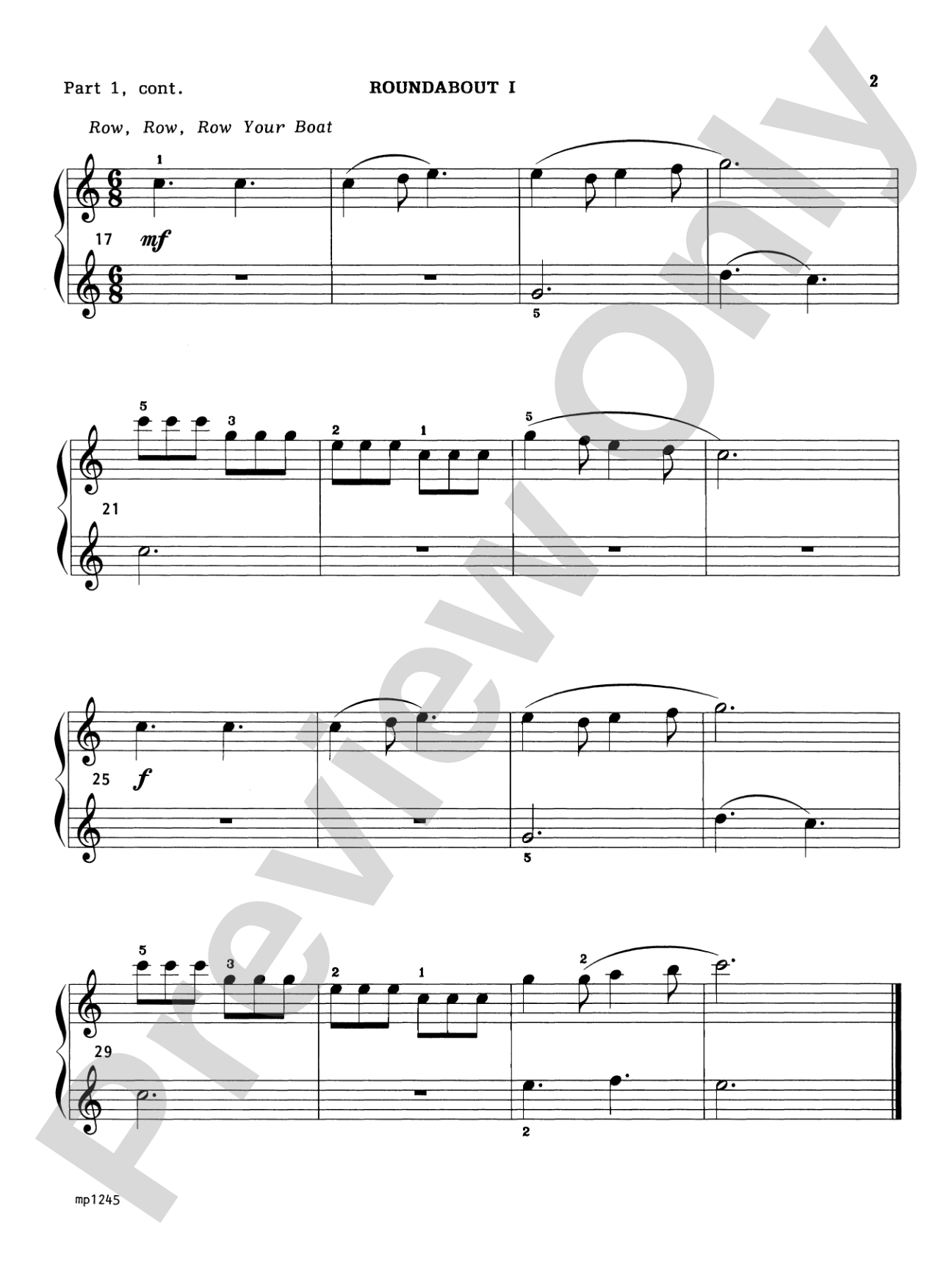
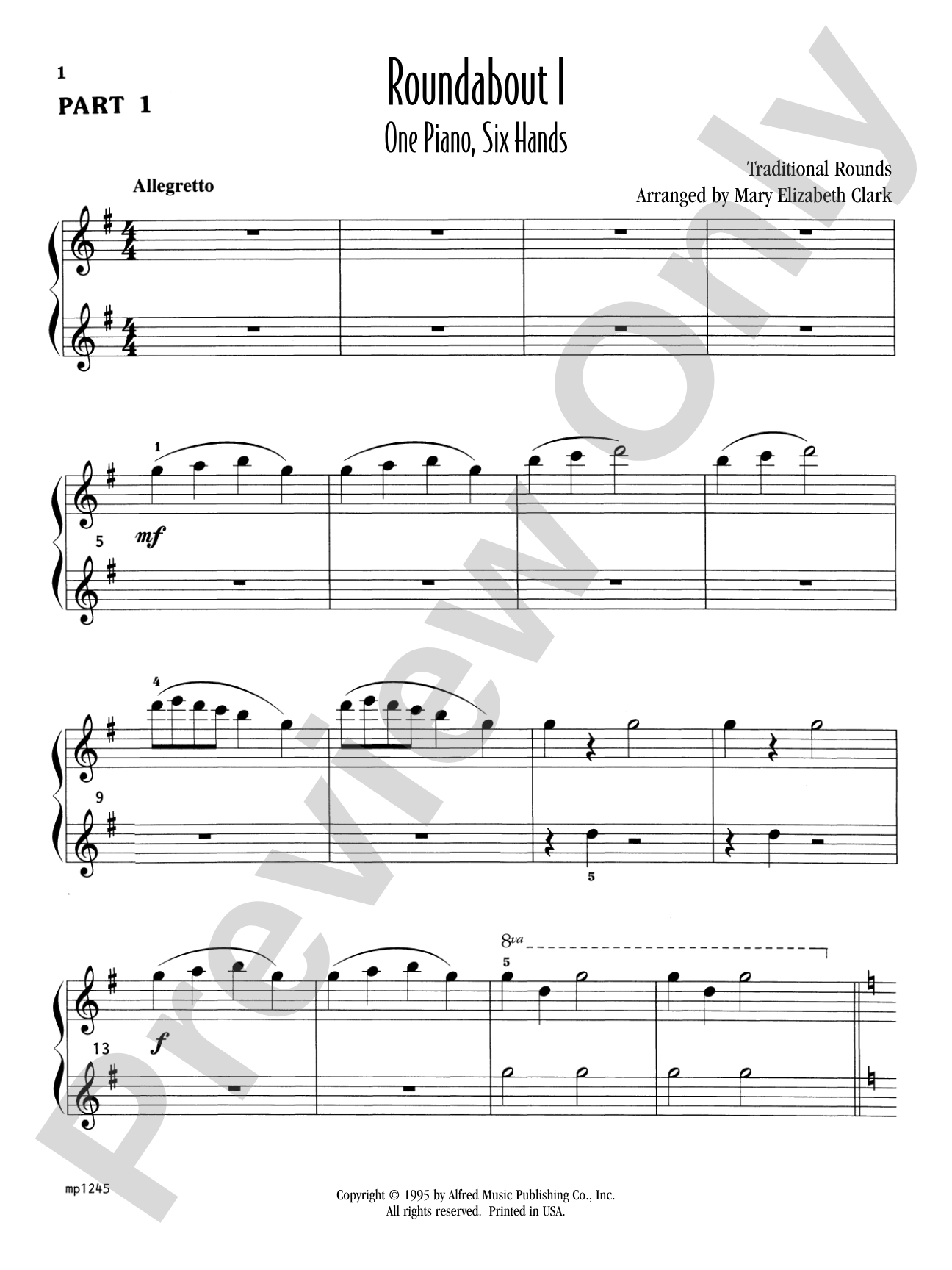
Roundabout 1 - Piano Trio (1 Piano, 6 Hands) Sheet Music Preview

Roundabout 1 - Piano Trio (1 Piano, 6 Hands): Piano

Arranged by Mary Elizabeth Clark

Level: Elementary

Item: 00-PB-0000666

Digital Download
$5.50
Description
Two traditional rounds are featured in this enjoyable late elementary piano trio, played in the keys of C Major and G Major, 4/4 time. Each performer takes a turn at the opening of the round melody and then steps back, to blend with the other voices. The edition is nicely configured with a separate sheet for each performer's part, and a master score printed on the cover. A Federation Festivals 2024-2028 selection.

Roundabout 1 - Piano Trio (1 Piano, 6 Hands): Piano isn't in MakeMusic Cloud just yet...but it could be. Let us know you'd like to see it, and you'll help shape what comes next. In the meantime, start a free trial and dive into thousands of interactive titles your students can play along with today.

Sample Audio
No sample audio found.
Sample Video
Additional Details
Publisher: Alfred Music
Page Count: 10
SKU: 00-PB-0000666

More about this title

Why we love this

Clark's arrangement respects the integrity of traditional rounds while solving a real logistics problem: how to get three pianists playing together at an elementary level without complicated hand-crossing or awkward shared-bench positioning. The separate part sheets mean each student can focus on their own line without visual clutter, and the rotating entrances keep everyone engaged and listening.

What to expect

Bright and purposeful. The traditional melodies carry a timeless quality, but the round structure keeps the texture light and playful. Each entrance feels like a discovery, building layers of familiarity rather than surprise.

Who it's for

Elementary pianists ready to experience ensemble playing without the complexity of orchestral reductions or hand-coordination issues that come with traditional four-hand arrangements. This works especially well for school piano labs or community music schools where you have multiple students at roughly the same proficiency level.

How to get the most out of it

  • Have students count off together before the first performer enters, establishing a steady pulse that carries through all three entrances.
  • Assign parts strategically: place your strongest reader on the melody line first, since that player sets the harmonic foundation for the others to follow.
  • Encourage listening during the rests. Students often rush when they stop playing; remind them to keep conducting internally so the re-entrance lands precisely.
  • Slow the tempo in early rehearsals to ensure clean part independence, then gradually accelerate as confidence builds.

How to use it

Program this as a bridge between solo repertoire and full ensemble work, or use it as a confidence-builder during a spring concert featuring multiple piano students. It also works well as a teaching tool for rhythm and listening during chamber music units in a general music class.

Skills your students will build

  • Entering on cue while maintaining independent tempo
  • Identifying and playing the primary melody against accompanying voices
  • Reading and sustaining harmonic rhythm in C Major and G Major
  • Listening and blending with ensemble partners while managing their own part

You May Also Like