
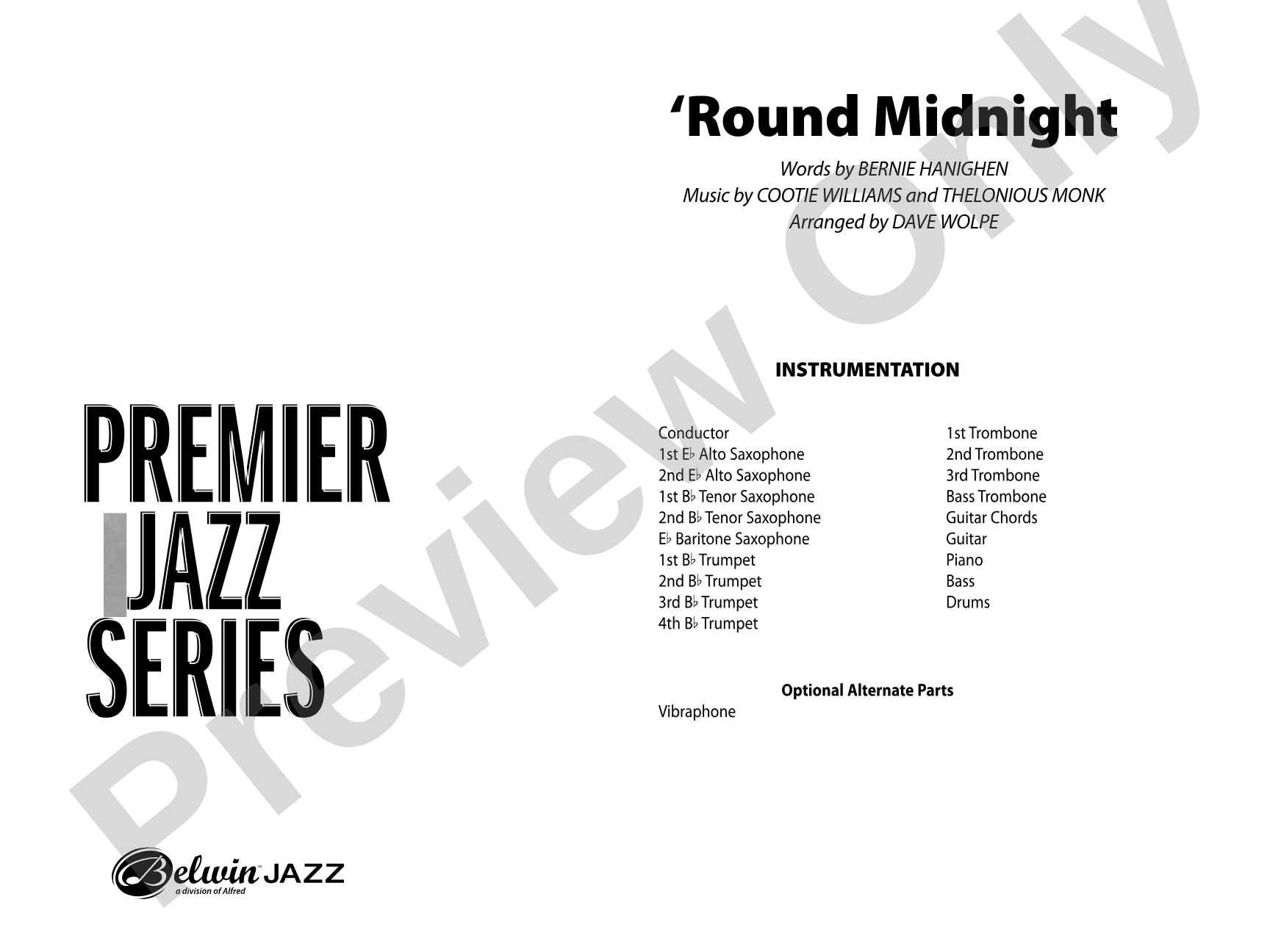
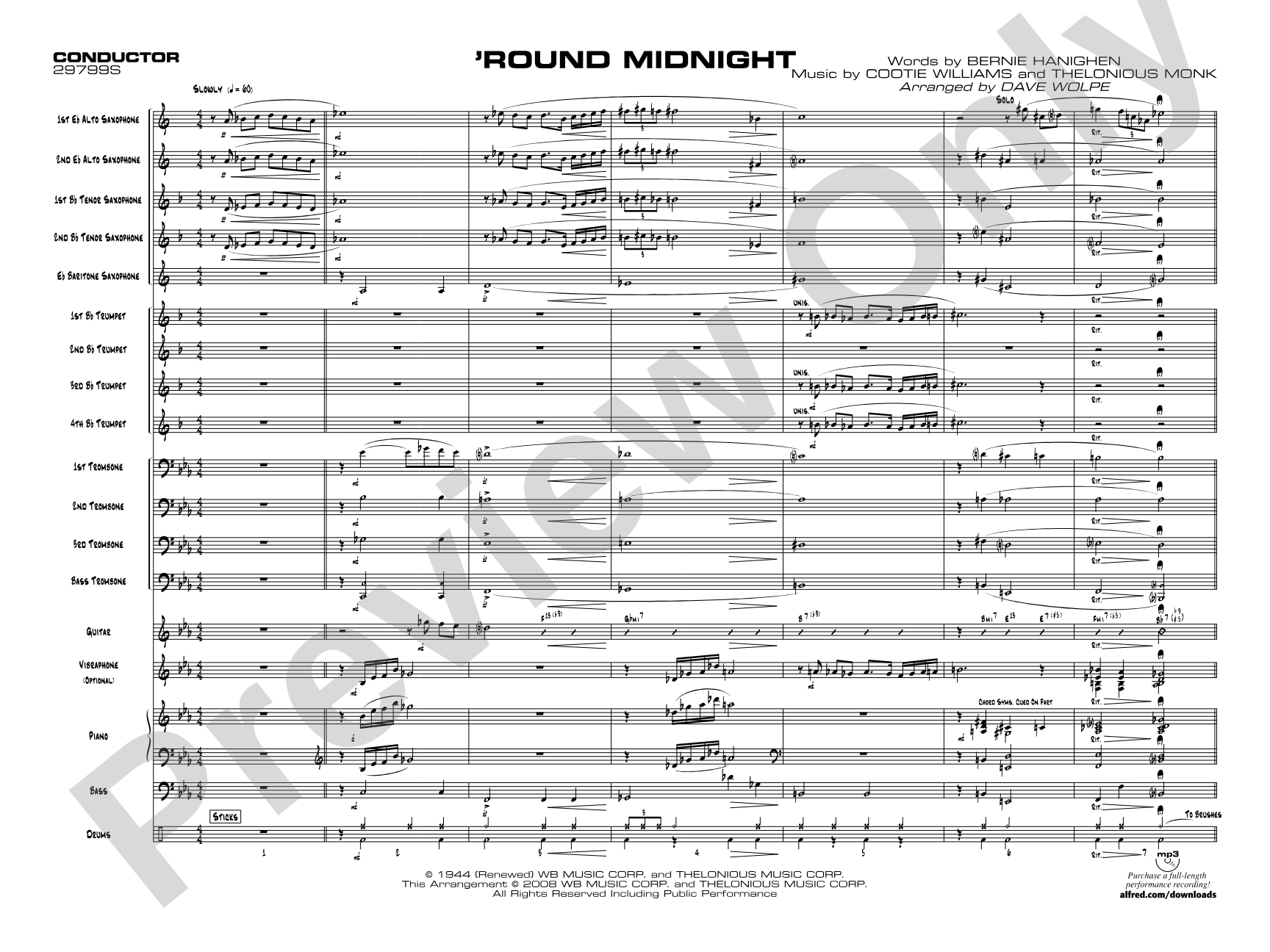
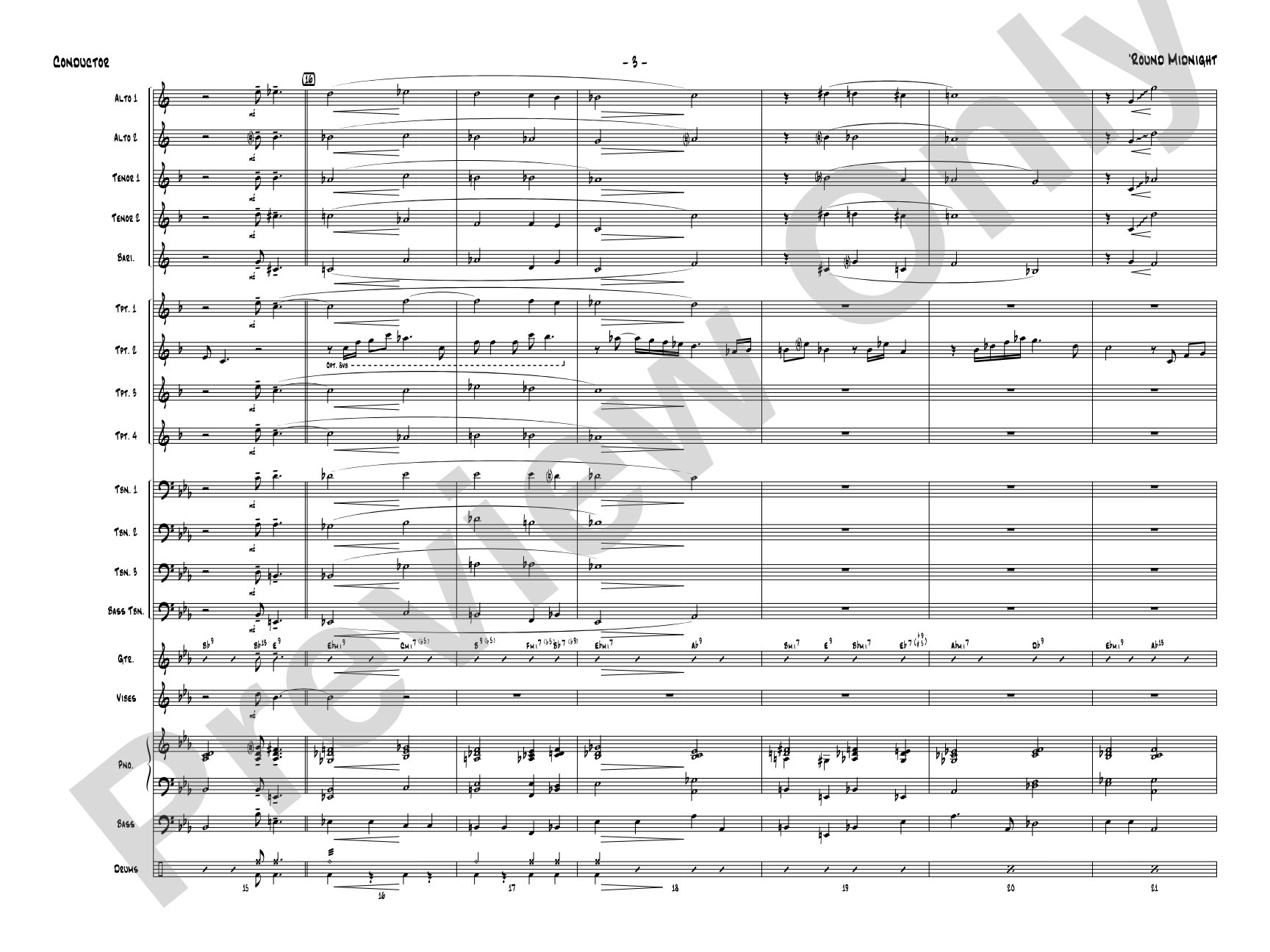
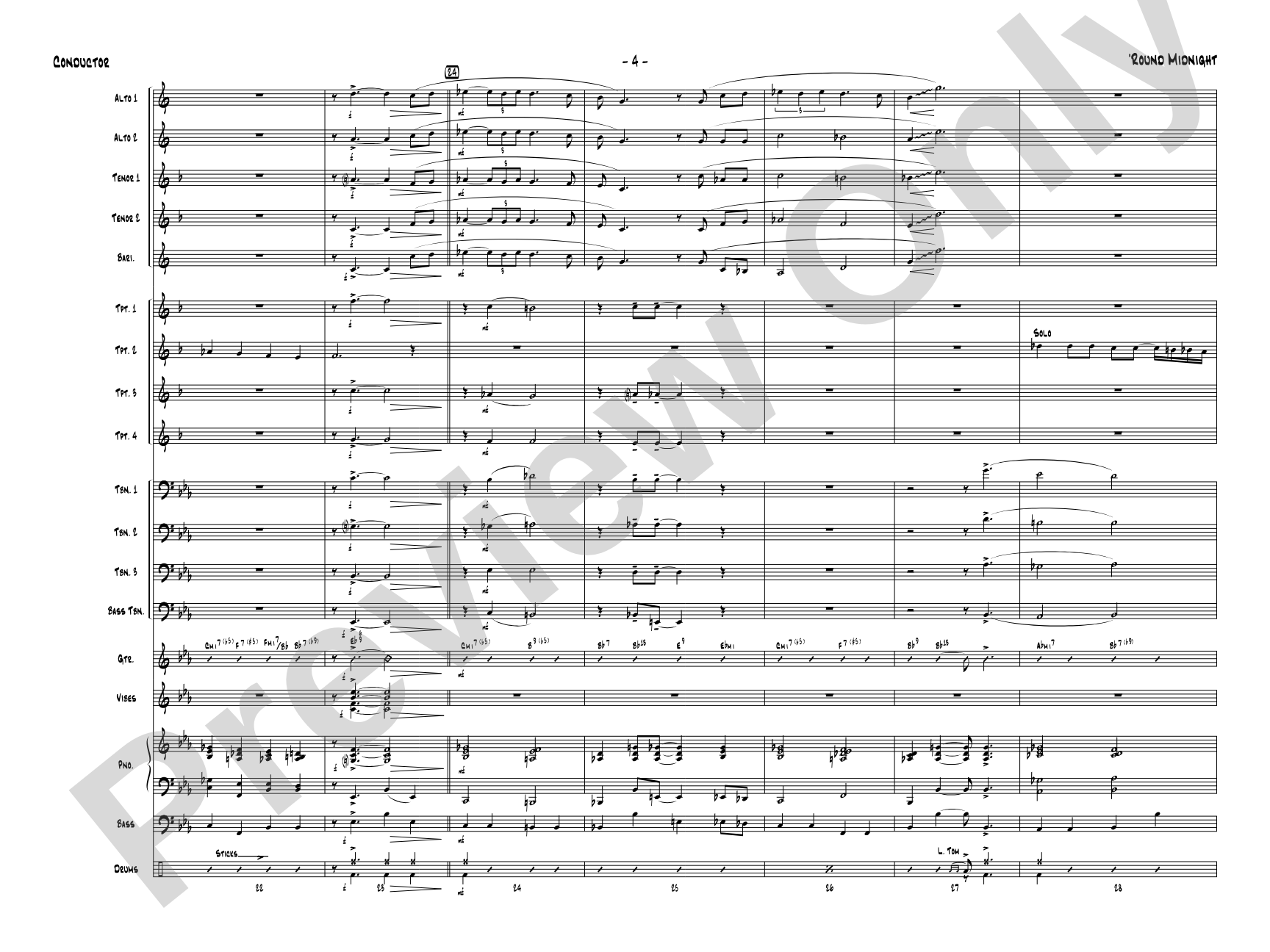
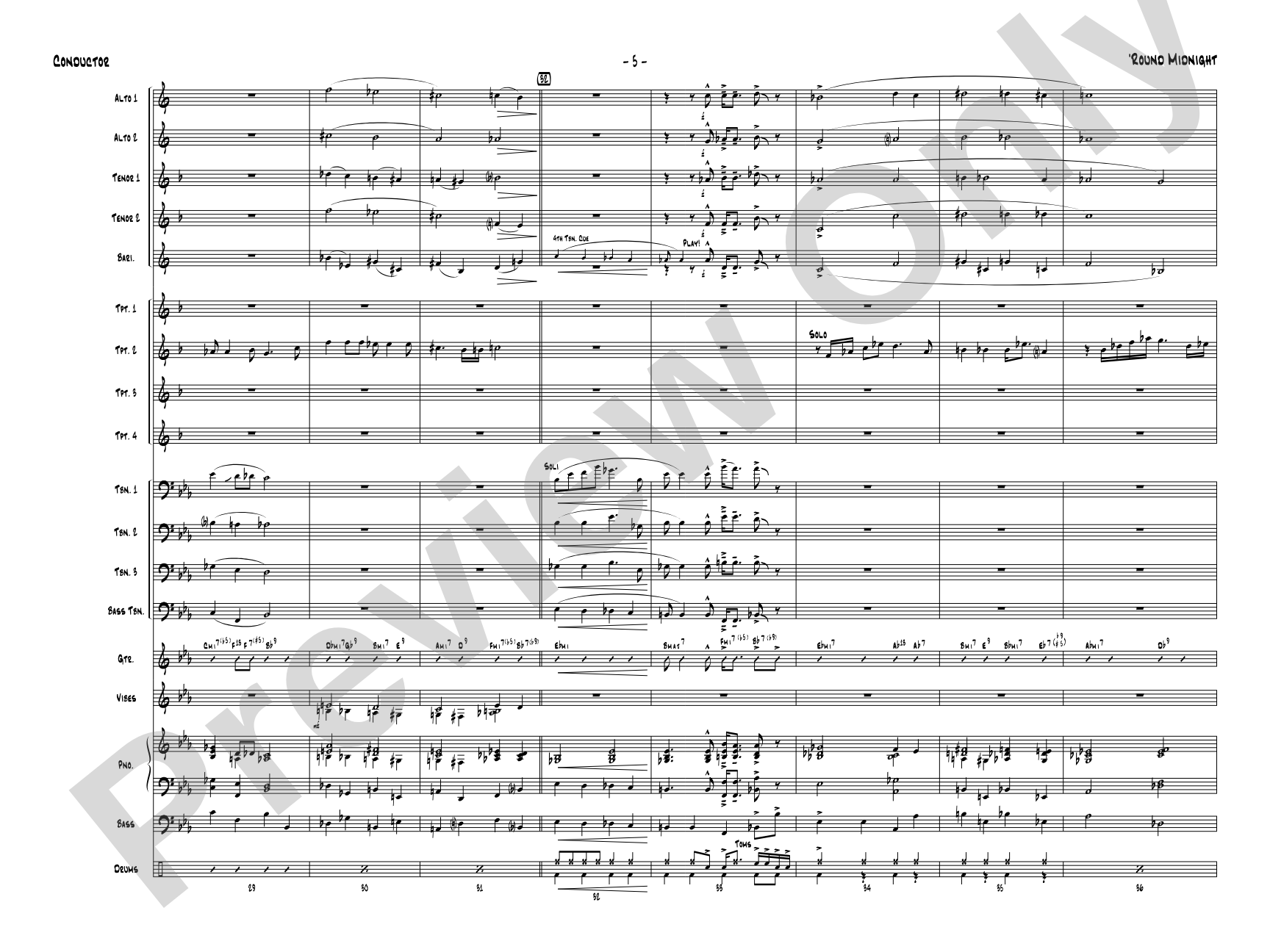
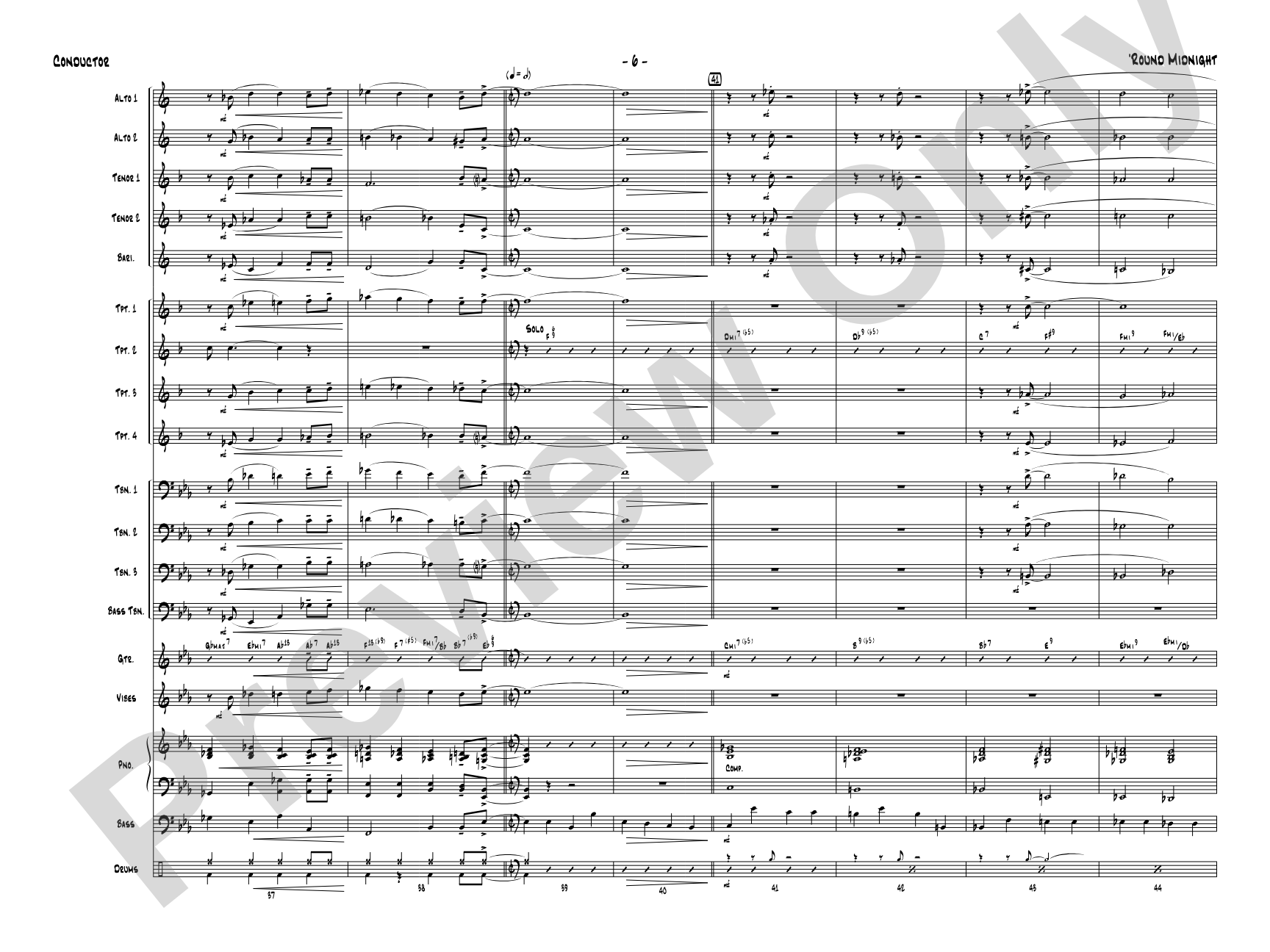
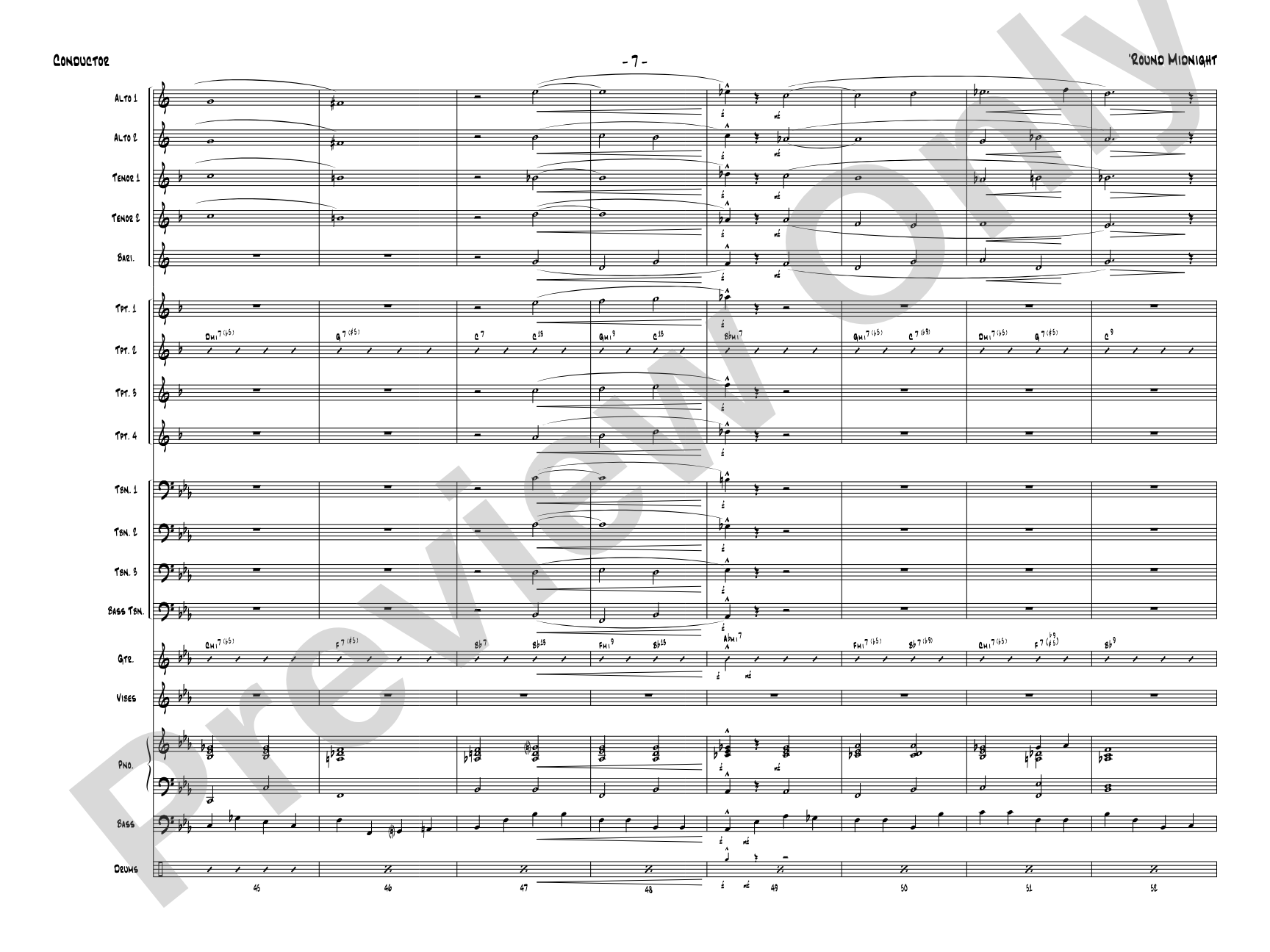
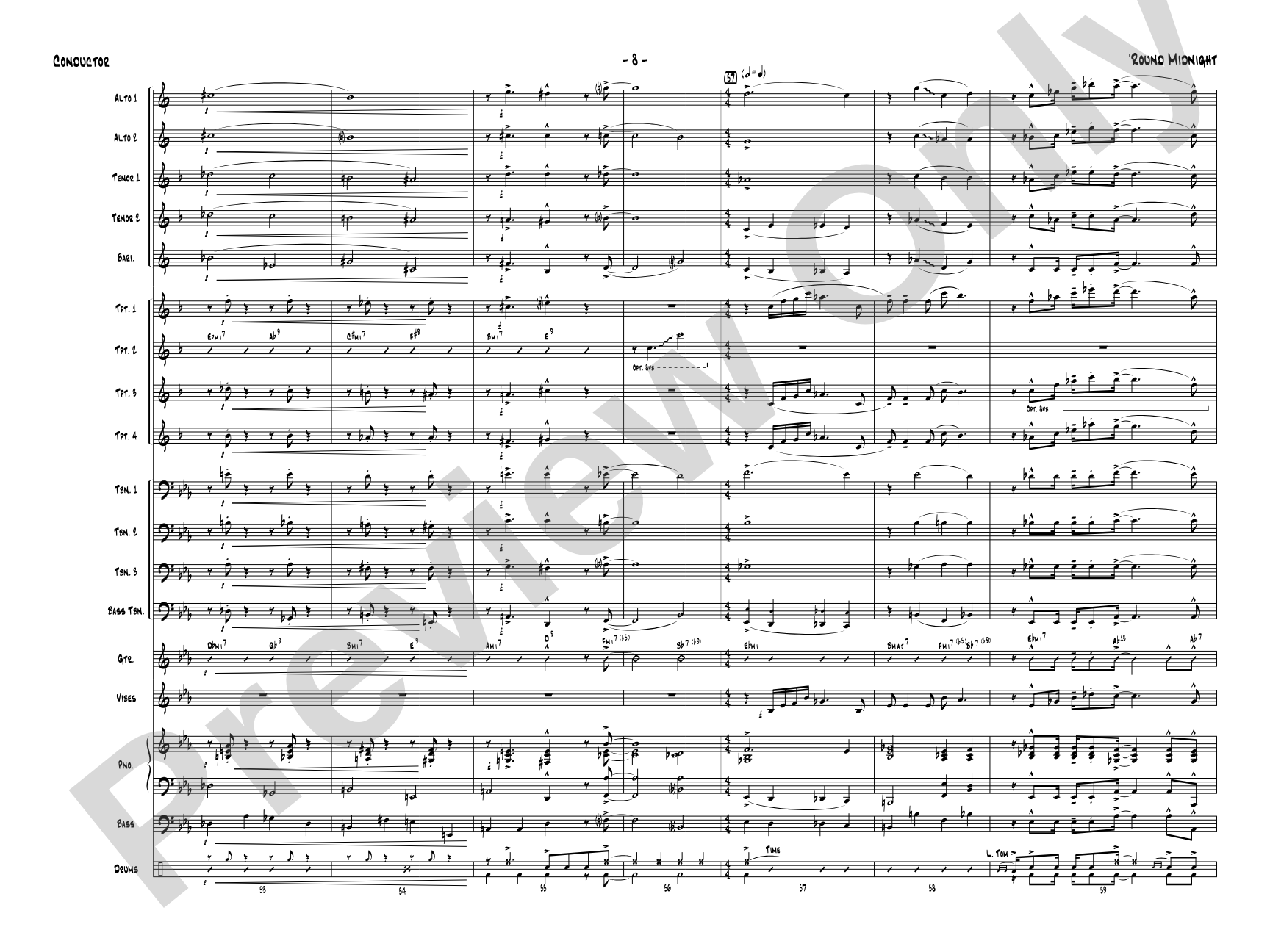
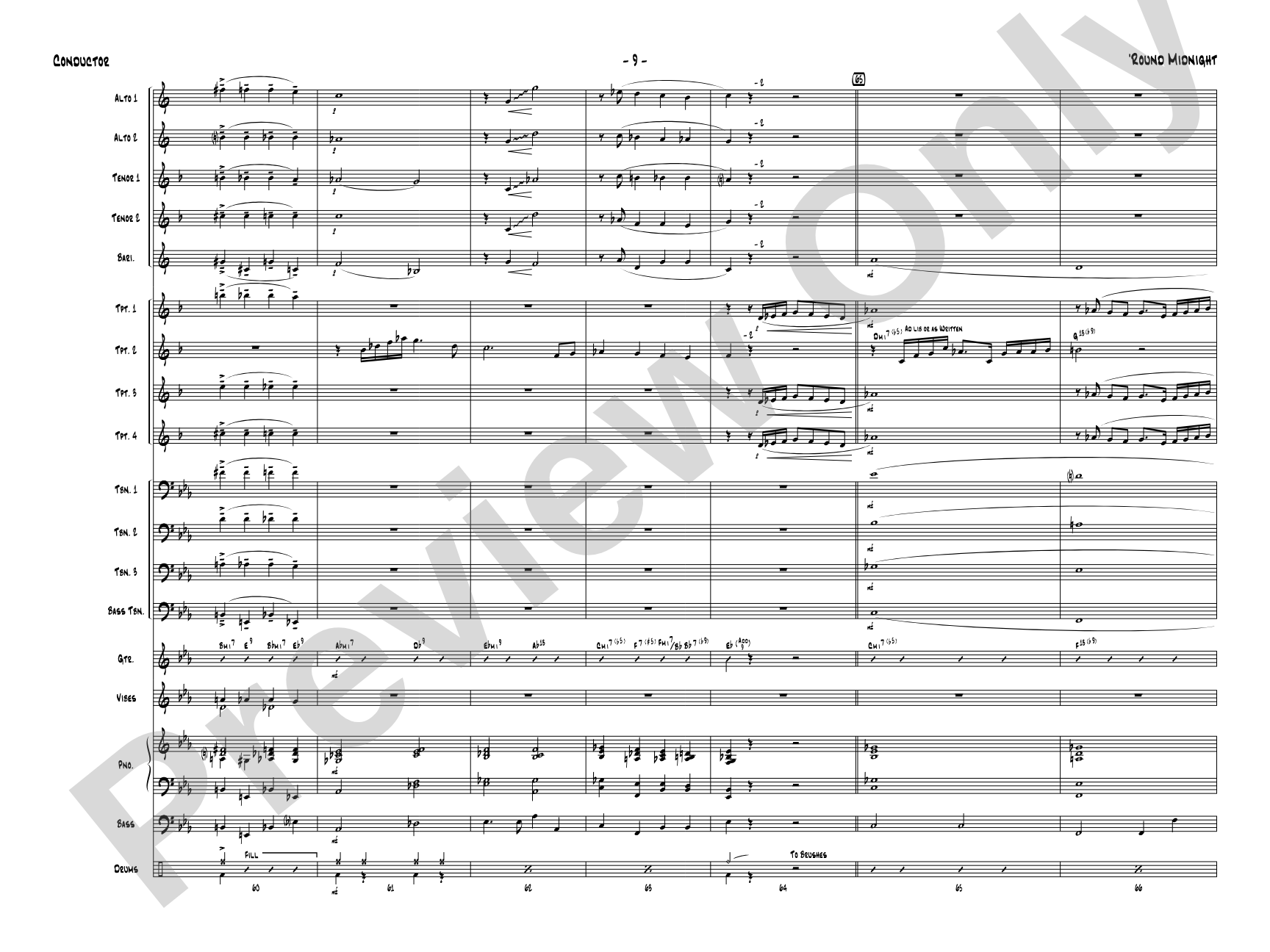
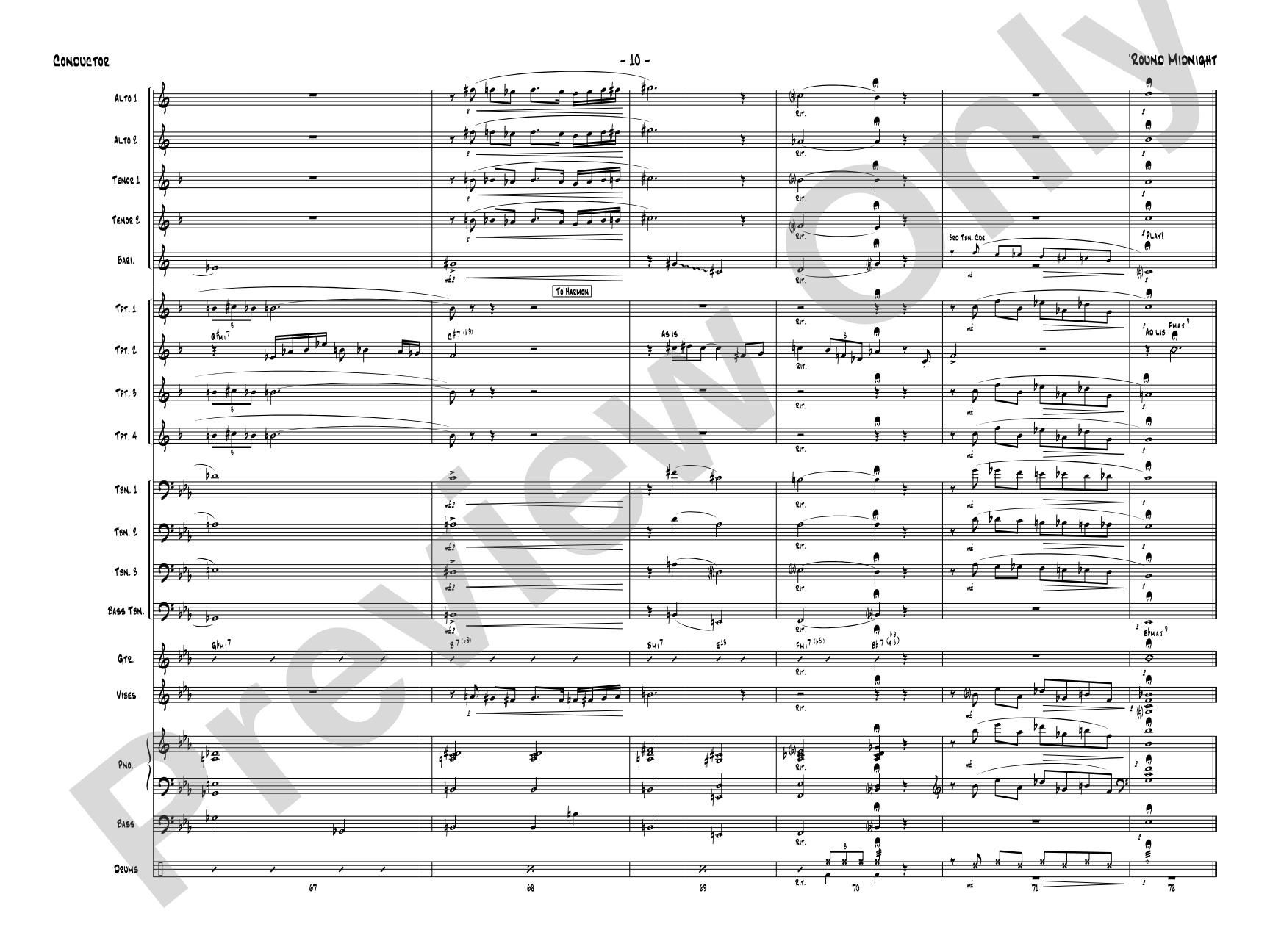

'Round Midnight: Score
Arr. Dave Wolpe
Grade: 4 (Medium Advanced / Difficult)
Item: 00-PR-0003602
$12.00
Pickup currently not available
Description
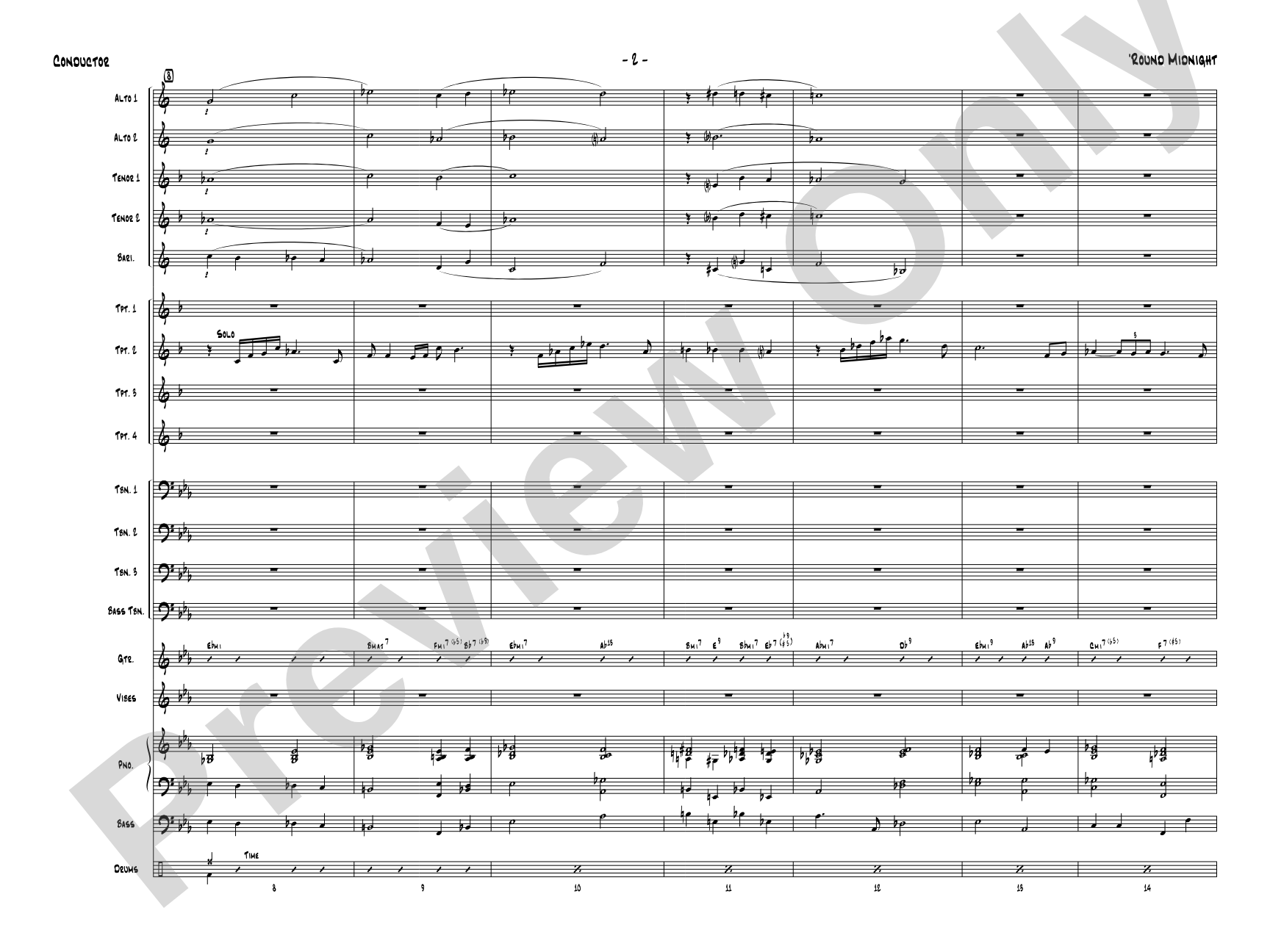
Dave Wolpe is an outstanding arranger. His chart on this jazz classic features flugelhorn set in a ballad style with a swing interlude for the solo. Quality from top to bottom---great tune, great chart. (3:57) This title is available in MakeMusic Cloud.


Don't just read it, hear it, play along with it, and watch your students grow with it. In MakeMusic Cloud, 'Round Midnight: Score comes alive with professional accompaniment, adjustable tempo, and built-in practice tools that turn solo practice into real progress.
Open in the Player
Jump straight in and assign it today.
Start Your Free Trial
Open this title and explore the full library in minutes.
Sample Audio
1
Audio File
--:--
0:00
0:00
Sample Video
No sample videos found.
Additional Details
Series:
Premier Jazz Series
Publisher:
Alfred Music
Page Count:
72
SKU:
00-PR-0003602
More about this title
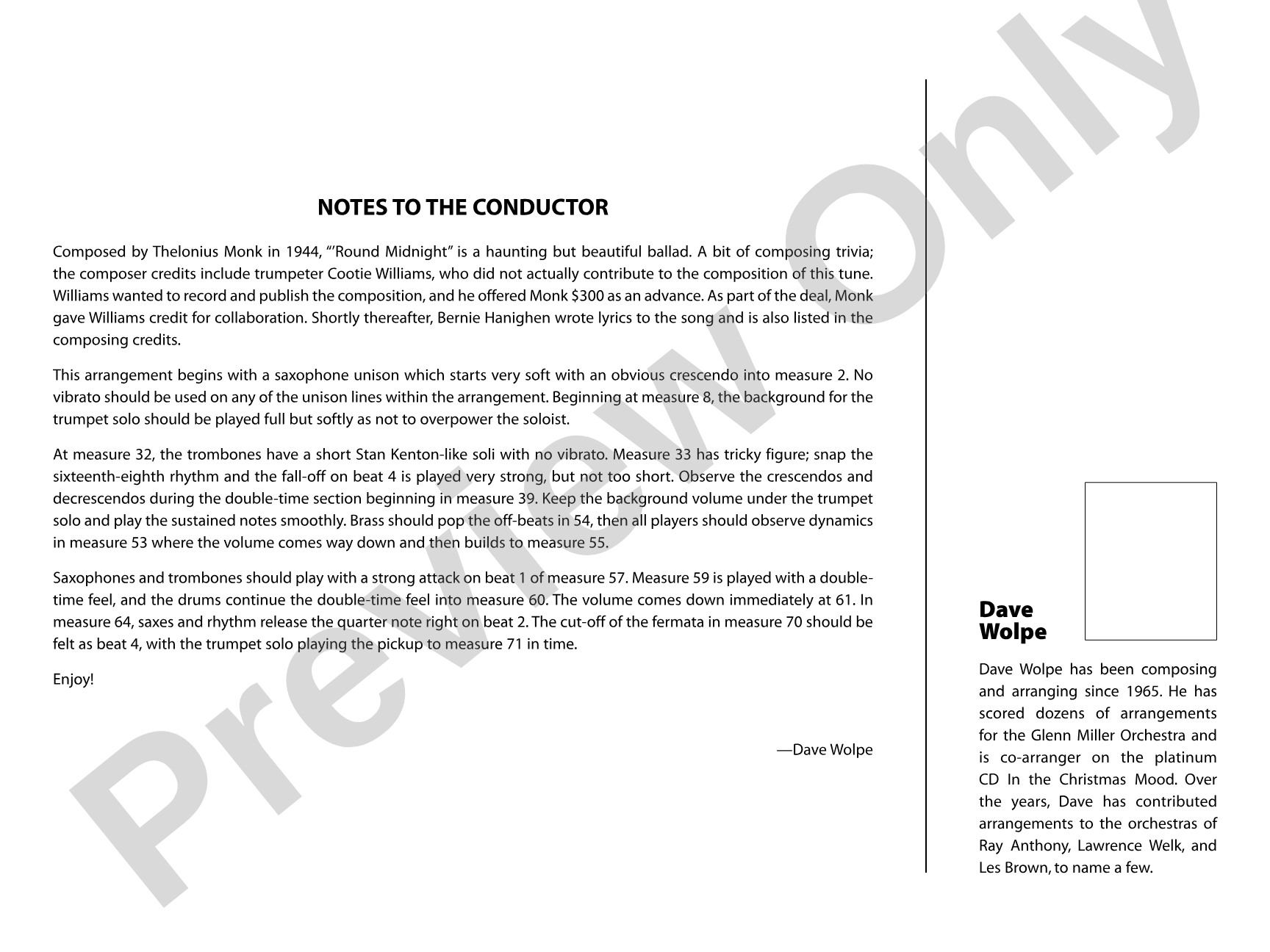
About the Arranger: Dave Wolpe
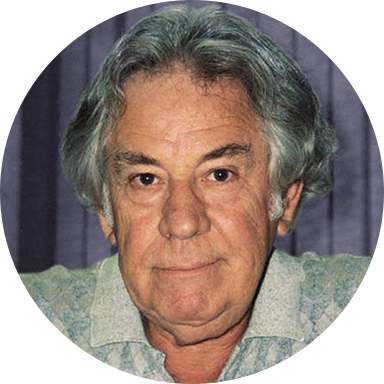
Dave Wolpe has been arranging music professionally since 1965, building a career that spans some of the most prestigious big bands in American jazz history. His work with the Glenn Miller Orchestra alone encompasses dozens of arrangements, and he served as co-arranger on the platinum-selling In the Christmas Mood. Beyond the Miller legacy, Wolpe has contributed arrangements to orchestras led by Ray Anthony, Lawrence Welk, and Les Brown, earning respect across multiple generations of jazz musicians.
Why we love this
Wolpe's chart respects the essential character of this Thelonious Monk masterpiece while giving your ensemble a fresh angle on the material. The flugelhorn feature in ballad style followed by a swinging solo section creates natural dramatic shape, and the orchestration sits comfortably for a Grade 4 group without sacrificing sophistication. You get a contest-ready arrangement with genuine musical substance.
What to expect
Monk's angular harmonic language becomes a vehicle for lyricism here. The opening moves with quiet introspection, the flugelhorn voice warm and searching, before the ensemble ignites into a swinging, driving interlude that lets your musicians play with real energy and joy.
Who it's for
Jazz ensembles at the Grade 4 level with a capable flugelhorn soloist and solid rhythm section foundation. This arrangement rewards groups that have moved beyond basic lead-sheet reading and can handle the interpretive demands of ballad playing and jazz articulation.
How to get the most out of it
- Balance the flugelhorn soloist carefully in the ballad section; this is an intimate moment, not a showcase for volume. Your rhythm section should sit back and let the solo breathe.
- Nail the transition into the swing interlude. The character shift is dramatic, and precision in the section entries will define how cleanly your group lands it.
- Work the comping section as a unit. Jazz ensemble chord hits need the same cohesion you'd demand from a horn line; every voice contributes to the harmonic shape.
- Use the recorded accompaniment if available to internalize the swing feel and tempo relationships between the ballad and swing sections before running down with the full group.
How to use it
This works beautifully as a programming contrast on a concert mixing styles and moods. Place it after an uptempo opener or use it to anchor the second half of a setlist where the audience is ready for a more sophisticated listening experience. The contest-festival designation also makes it an excellent choice for regional jazz festival programming.
Skills your students will build
- Ballad playing and space management (knowing when not to fill)
- Jazz swing articulation and feel in a tempo-change context
- Comping technique and harmonic support for soloists
- Listening and responding to solo phrasing as an ensemble
- Tonal blend in a mixed instrumentation section