
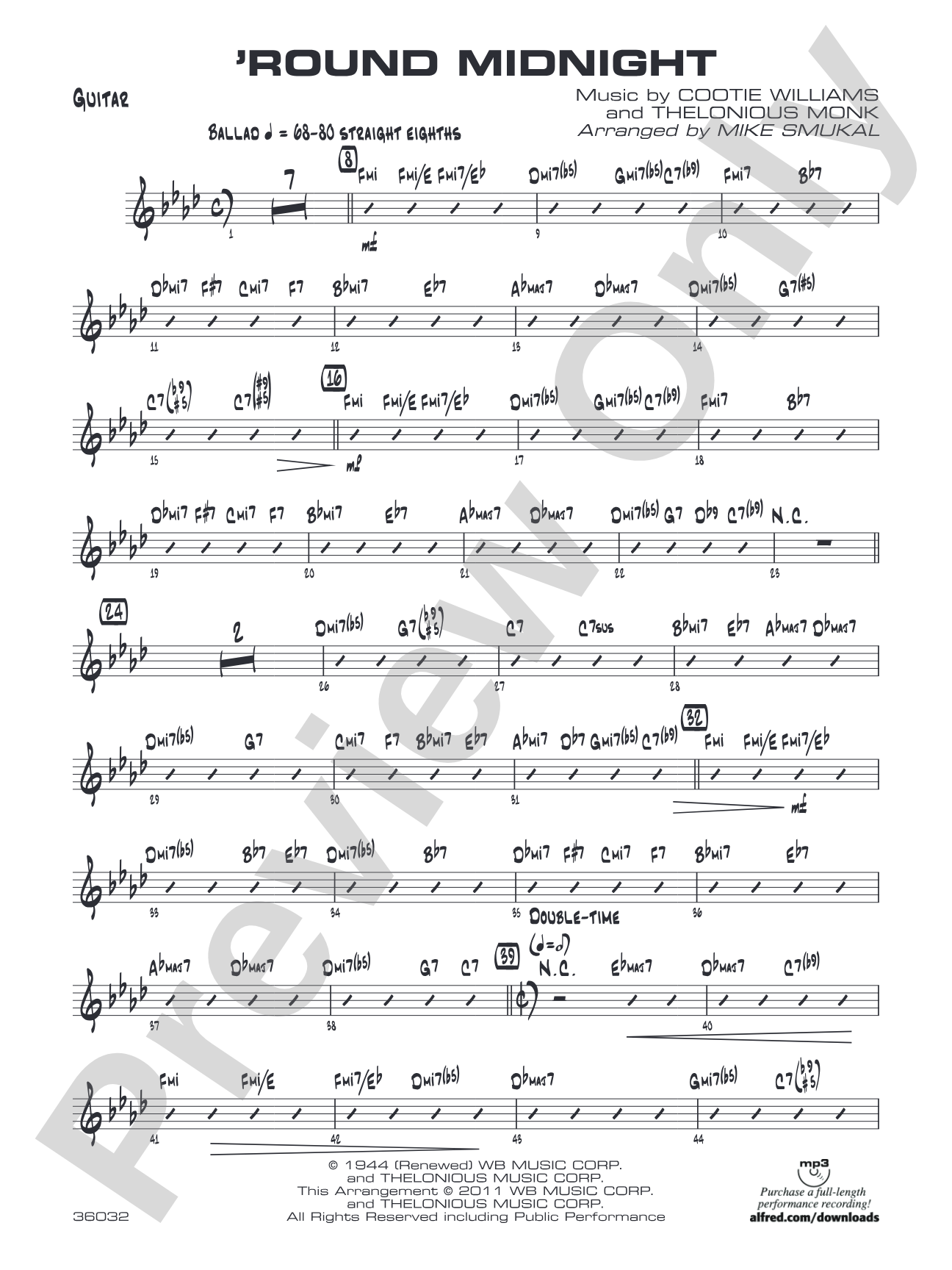

'Round Midnight: Guitar
Music by Cootie Williams and Thelonious Monk / arr. Mike Smukal
Grade: 2 (Medium Easy)
Item: 00-PC-0017520_G
$3.00
Pickup currently not available
Description
This timeless jazz tune, recorded by countless jazz artists, is now scored for the younger band. This piece includes the lush harmony you expect and then moves into a double-time section before ending at the ballad tempo. Everything is written out for the soloist and rhythm section. (3:52) This title is available in MakeMusic Cloud.
"The texture and parts are rich and thick, providing bands many chances at working on blend and balance."
-The Instrumentalist


"The texture and parts are rich and thick, providing bands many chances at working on blend and balance."
-The Instrumentalist
Don't just read it, hear it, play along with it, and watch your students grow with it. In MakeMusic Cloud, 'Round Midnight: Guitar comes alive with professional accompaniment, adjustable tempo, and built-in practice tools that turn solo practice into real progress.
Open in the Player
Jump straight in and assign it today.
Start Your Free Trial
Open this title and explore the full library in minutes.
Sample Audio
1
Audio File
--:--
0:00
0:00
Sample Video
No sample videos found.
Additional Details
Series:
Young Jazz Ensemble
Publisher:
Alfred Music
Page Count:
90
SKU:
00-PC-0017520_G
More about this title
About the Composer: Cootie Williams
Cootie Williams was a trumpeter and composer who helped define the sound of big band jazz and bebop. His work bridged the swing era and modern jazz, earning him respect as both a bandleader and sideman with Duke Ellington and other major ensembles. Williams composed music that combined technical sophistication with emotional directness, making his pieces enduringly popular across generations of jazz musicians.
Why we love this
This arrangement captures the contemplative beauty of the original while keeping the technical demands accessible for younger players. The written-out solo and rhythm section parts mean your ensemble gets the full harmonic and melodic substance of the tune without requiring improvisation skills yet. Smukal's voicings deliver the lush textures that make this composition special, and the double-time section provides a dynamic shift that keeps the performance arc engaging.
What to expect
The piece opens with the introspective, minor-key melancholy that defines the original composition, supported by rich harmony that deepens the contemplative mood. As the double-time section unfolds, the energy lifts while maintaining the tune's sophisticated feel rather than becoming bright or celebratory. The return to ballad tempo provides a graceful close, letting the melody settle into the lush chords that frame it throughout.
Who it's for
Jazz ensembles at the middle school or early high school level will find this arrangement handles the harmonic sophistication without overwhelming rhythmic complexity. Directors seeking repertoire that sounds mature and substantial while remaining within reach of developing players will appreciate how Smukal has preserved the tune's essential character. This is ideal for groups building their jazz library beyond pop-influenced charts.
How to get the most out of it
- Balance the warm, thick voicings in the ballad section by rotating which section carries the melody; this prevents any one part from dominating the dense harmonic texture.
- Approach the double-time section with restraint at first. Let the ensemble lock the rhythm with clarity before adding expression; the impact of the tempo shift lands hardest when the transition is clean.
- Shape the written solo line with rubato and phrasing that echoes how a human soloist would breathe, even though the notes are fixed. Slight hesitations and gentle pushes forward bring the melody to life.
- Use the ballad tempo sections to refine intonation in close voicings. This piece rewards careful listening to blend and balance across all parts.
How to use it
This works beautifully as the centerpiece of a jazz-focused concert, offering both a showcase of your ensemble's musicianship and a recognizable title that audiences appreciate. Consider pairing it with other Monk or Williams compositions, or weave it into a broader program that moves from standards into contemporary jazz arrangements. Its moderate length (3:52) and emotional arc make it an effective closing number or a strong transition piece that commands attention.
Skills your students will build
- Balancing dense voicings and maintaining blend in thick harmonic textures
- Sustaining phrasing and rubato in ballad-tempo melody lines
- Transitioning cleanly between tempo changes while maintaining rhythmic integrity
- Reading and executing ensemble parts that support rather than double the melody
- Interpreting jazz articulation and style in a written arrangement