'Round Midnight (arr. Mike Tomaro) Sheet Music Preview

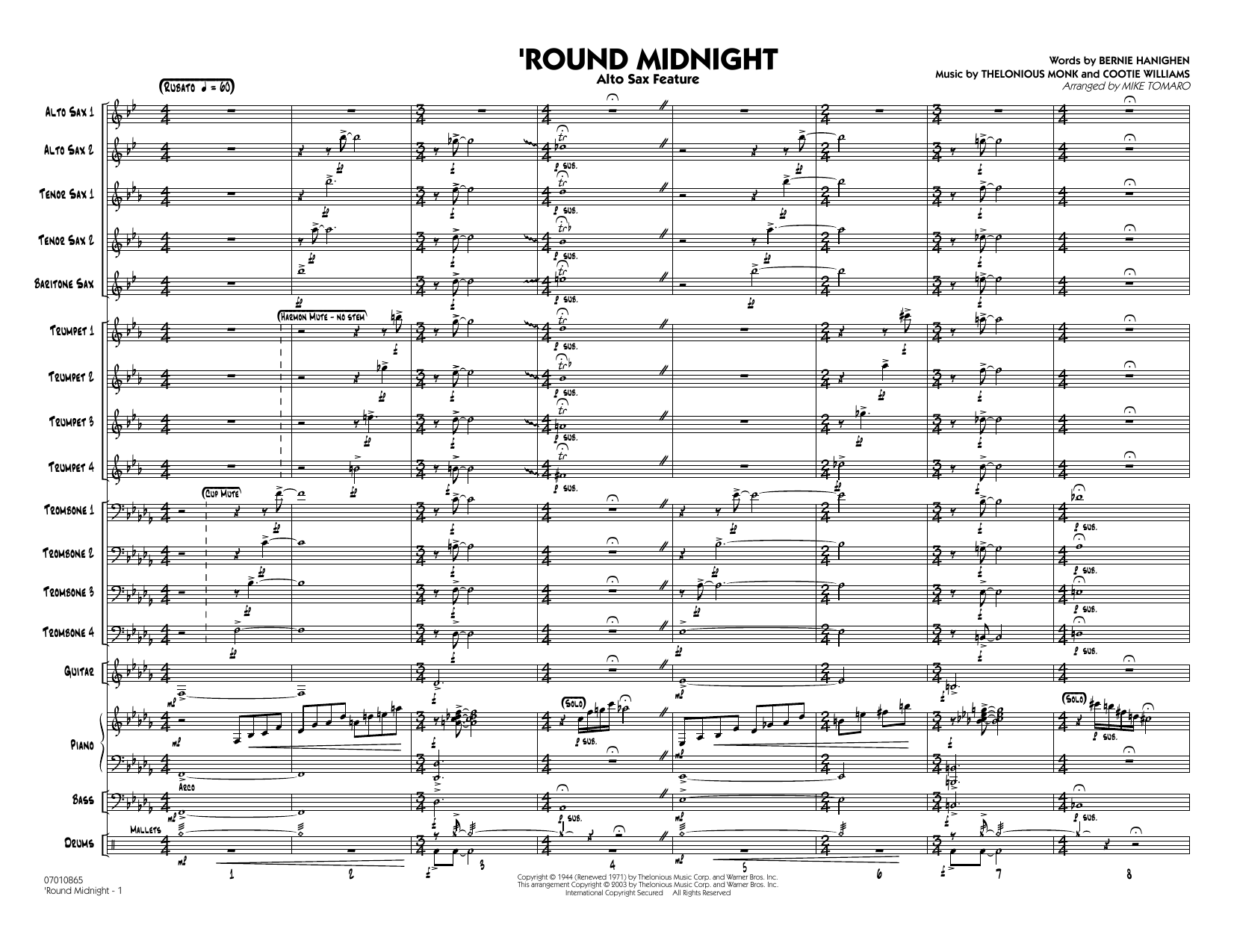
'Round Midnight (arr. Mike Tomaro): Jazz Ensemble Conductor Score & Parts

As performed by Thelonious Monk / Arranged by Mike Tomaro

Grade: 4

Item: 35-PK01214813

Digital Download
$55.00

One moment…

Description
Few jazz ballads have been performed as consistently as this Thelonious Monk gem. Mike's version is a solo vehicle for alto sax and includes a double time feel that alternates with the traditional ballad tempo. Beautiful lines and striking harmonies help create a real standout arrangement.

'Round Midnight (arr. Mike Tomaro): Jazz Ensemble Conductor Score & Parts isn't in MakeMusic Cloud just yet...but it could be. Let us know you'd like to see it, and you'll help shape what comes next. In the meantime, start a free trial and dive into thousands of interactive titles your students can play along with today.

Sample Audio
No sample audio found.
Sample Video
Additional Details
Publisher: Hal Leonard
SKU: 35-PK01214813

More about this title

About the Artist: Thelonious Monk

Thelonious Monk stands apart in jazz history as a composer and pianist who refused to follow convention. His harmonic language, built on unexpected chord substitutions and angular melodies, forced jazz musicians to rethink what was possible within the standard form. Monk's compositions have become essential touchstones in jazz education because they demand serious musicianship while remaining deeply soulful.

As a bandleader and recording artist, Monk shaped the bebop era and beyond through his uncompromising artistic vision. His tunes are taught in jazz programs worldwide not merely as repertoire, but as lessons in harmonic thinking and compositional courage.

Why we love this

Mike Tomaro's arrangement captures what makes this Monk classic endure: a haunting melody that asks something genuine from whoever plays it. The dual tempo approach between ballad and double time gives your ensemble multiple colors to explore in a single performance, transforming what could be a straightforward ballad into something with real architectural interest. Centering the alto sax keeps the spotlight intimate while the ensemble writing around it stays vibrant enough to hold an audience's attention.

What to expect

Introspective and searching, with a melody that feels both ancient and mysterious. The double time sections arrive like sudden clarity breaking through a fog, while the ballad passages return you to uncertainty and yearning. This is music that respects silence and space as much as the notes themselves.

Who it's for

Jazz ensembles at the high school and early college level with a strong alto saxophonist ready to carry a feature. Directors building programs around standard repertoire will find this arrangement offers substance without demanding virtuosity beyond Grade 4 reach. It works equally well for groups seeking meaningful solo opportunities and those wanting to deepen students' familiarity with Monk's compositional legacy.

How to get the most out of it

  • Balance the melody carefully during the ballad sections; the alto should speak clearly without overwhelming the ensemble's harmonic support beneath
  • Control the transition between ballad and double time feels so each shift lands deliberately rather than sounding like a tempo accident
  • Let the harmonies breathe. Tomaro's voicings are striking precisely because they're not predictable; resist the urge to rush through the chord changes
  • Work the rhythmic precision of the double time section separately from the ballad material so players understand where the groove sits in each context

How to use it

Feature this on a concert dedicated to jazz standards or as a bridge between straight bebop and contemporary ballad writing. The Grade 4 difficulty sits comfortably in a mixed setlist without overshadowing the ensemble's other demands, making it ideal for a mid-season concert when sight reading has sharpened but spring exhaustion hasn't set in yet.

Skills your students will build

  • Balancing solo voice with ensemble accompaniment
  • Controlling tempo transitions between related but distinct feels (ballad and double time)
  • Interpreting Monk's harmonic language and voice leading
  • Navigating syncopated rhythms within a small group context
  • Listening for and responding to harmonic color rather than just playing changes

You May Also Like