Round Midnight: Lead Sheet Digital Sheet Music

Round Midnight: Lead Sheet Digital Sheet Music

Cootie Williams, Thelonious Monk, Charlie Parker

Item: 00-PS-0008740

Digital Download
$1.99
Description

Round Midnight: Lead Sheet Digital Sheet Music isn't in MakeMusic Cloud just yet...but it could be. Let us know you'd like to see it, and you'll help shape what comes next. In the meantime, start a free trial and dive into thousands of interactive titles your students can play along with today.

Sample Audio
No sample audio found.
Sample Video
Additional Details
SKU: 00-PS-0008740

More about this title

About the Artist: Charlie Parker

Charlie Parker revolutionized jazz in the 1940s by developing bebop alongside Dizzy Gillespie and other innovators. His virtuosic alto saxophone work, harmonic sophistication, and rhythmic inventiveness set the standard for modern jazz improvisation and influenced every jazz musician who followed.

Thelonious Monk composed "Round Midnight" as one of jazz's most haunting and harmonically complex standards. Monk's distinctive compositional voice appears throughout his catalog: angular melodies, unconventional chord progressions, and a compositional approach that demands both precision and interpretive depth from performers.

Why we love this

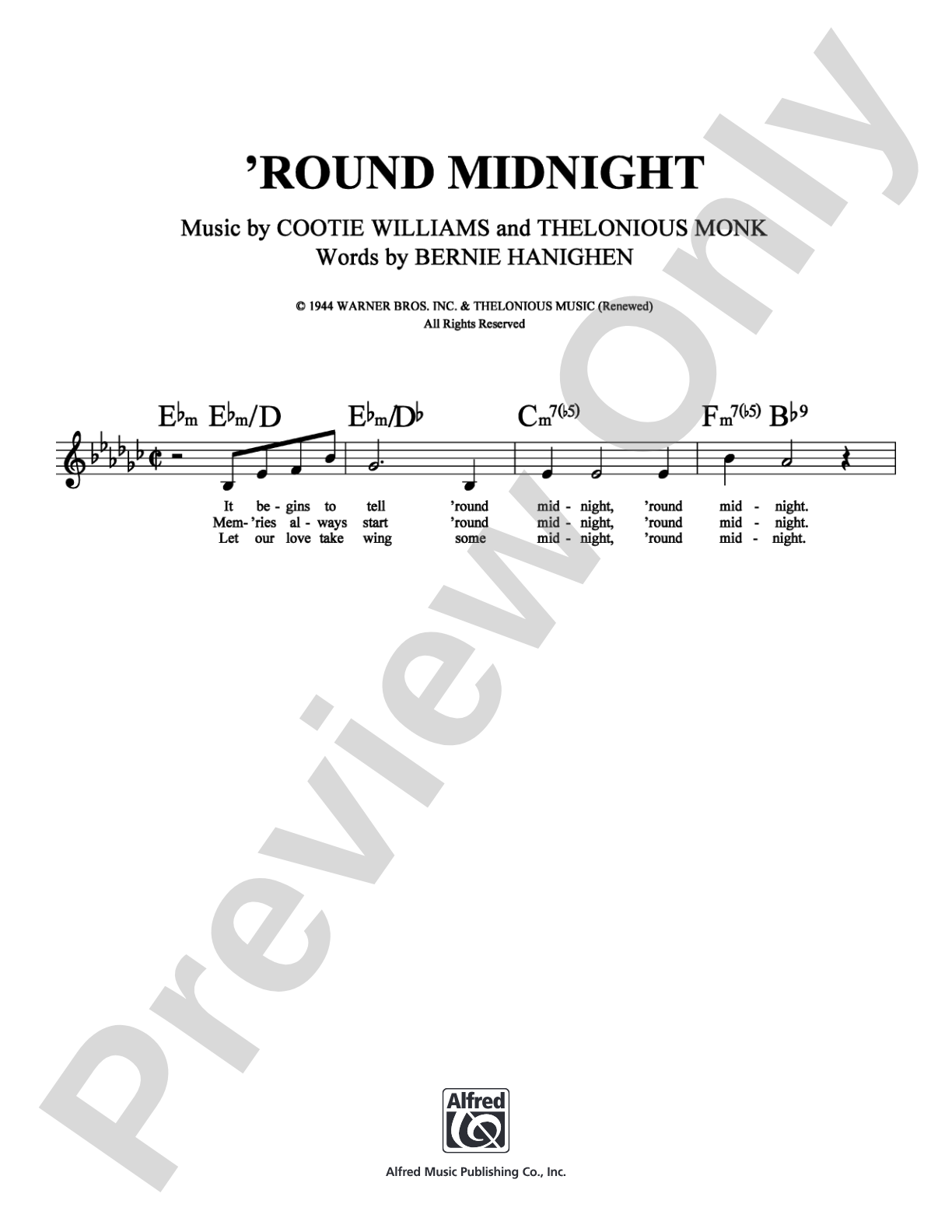
This lead sheet captures one of the jazz canon's most rewarding standards for students serious about jazz study. The composition's angular melody and chromatic harmony force players to develop stronger harmonic awareness while its lyrical quality rewards expressive phrasing and nuanced interpretation.

What to expect

The melody unfolds with a quiet melancholy, almost like a late-night conversation with an old friend. Harmonically unexpected turns keep the listener slightly off balance, creating an introspective mood that feels both intricate and deeply human.

Who it's for

Jazz students working on standards repertoire, improvisation students studying classic compositions, and jazz ensembles preparing lead sheet-based charts. This is essential material for anyone developing fluency with jazz harmony and melodic interpretation.

How to get the most out of it

  • Treat the melody line as a singing voice, not a technical display. The composition's power comes from its mournful character, so prioritize tone quality and deliberate phrasing over speed.
  • Study how the chord changes relate to the melody contour. Monk's harmonic choices often seem unconventional until you hear how they support the melodic shape.
  • Use space and silence strategically. The lead sheet format invites improvisation, but the composed melody already contains rests that matter; respect them before you fill them.
  • Listen to multiple recorded interpretations before settling on your own tempo and articulation choices. This standard has been recorded by saxophonists, trumpet players, singers, and pianists, each offering different insights into the composition's possibilities.

How to use it

Feature this as part of a jazz standards showcase or as a study piece in a small jazz combo setting. It works equally well as a recital solo with piano accompaniment or as an ensemble number where different players take the melody in sequence.

Skills your students will build

  • Reading and interpreting jazz lead sheet notation
  • Understanding chromatic and modal harmony in bebop-era standards
  • Developing expressive phrasing and tone control in a lyrical context
  • Improvising over complex chord changes while respecting the composition's harmonic intent
  • Transcribing and analyzing recorded performances to inform interpretation choices

You May Also Like