Round Midnight: Piano/Vocal/Chords Digital Sheet Music

Round Midnight: Piano/Vocal/Chords Digital Sheet Music

Cootie Williams, Thelonious Monk, Linda Ronstadt

Item: 00-PS-0005441

Digital Download
$3.99
Description

Round Midnight: Piano/Vocal/Chords Digital Sheet Music isn't in MakeMusic Cloud just yet...but it could be. Let us know you'd like to see it, and you'll help shape what comes next. In the meantime, start a free trial and dive into thousands of interactive titles your students can play along with today.

Sample Audio
No sample audio found.
Sample Video
Additional Details
SKU: 00-PS-0005441

More about this title

About the Artist: Linda Ronstadt

Linda Ronstadt stands as one of the most versatile vocalists in American music, equally at home in rock, country, standards, and operatic repertoire. Her interpretations of classic jazz standards are marked by impeccable phrasing, emotional clarity, and a willingness to inhabit a song rather than simply perform it. Thelonious Monk composed "Round Midnight" (1957), one of the most recorded jazz compositions in the American songbook, and it remains a touchstone for musicians exploring harmony, melody, and the intersection of accessibility and harmonic sophistication.

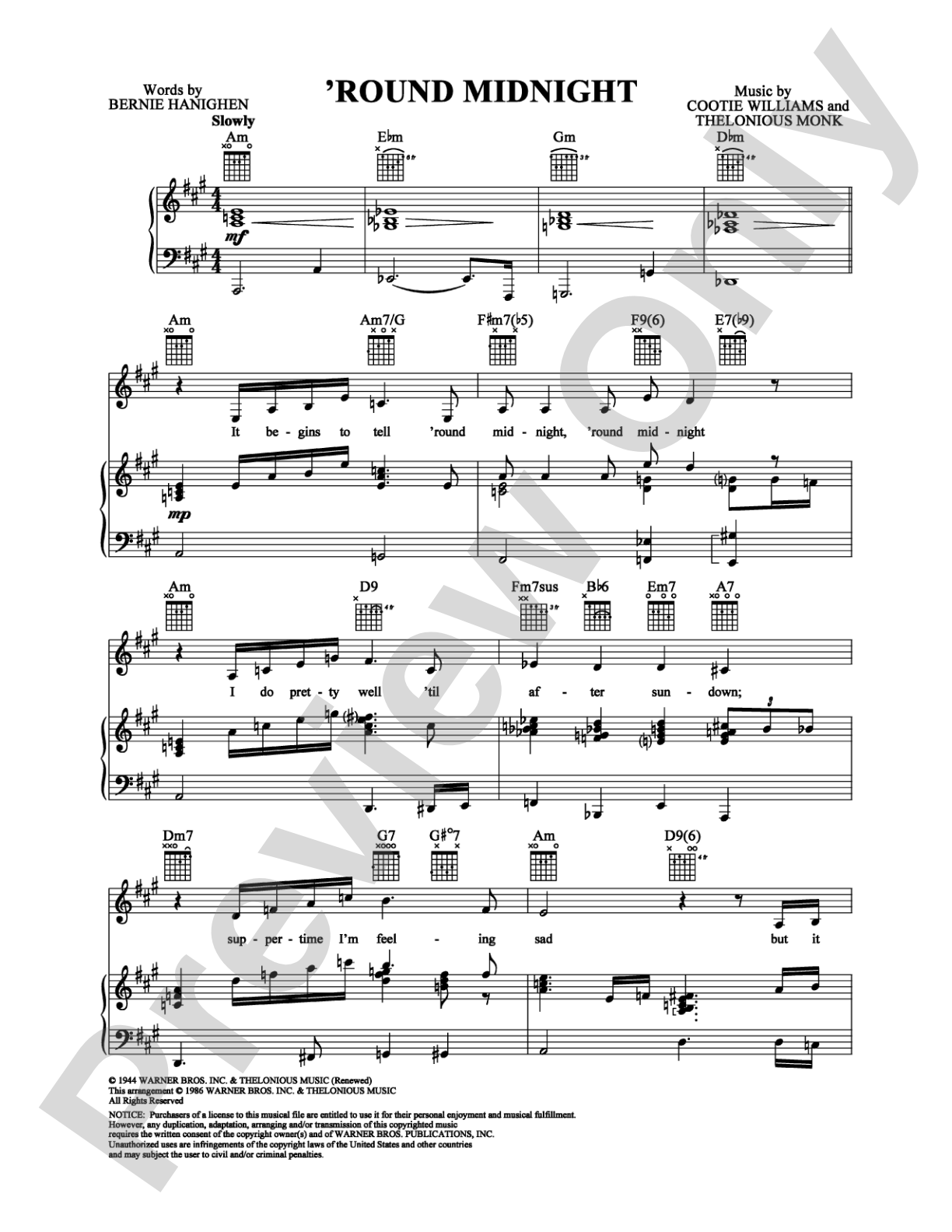
Why we love this

This arrangement pairs a timeless Monk composition with one of the most disciplined interpreters of American song. The piano/vocal/chords format gives singers and pianists room to discover their own voice within a piece that rewards both technical precision and emotional restraint. Ronstadt's version proves that standards this substantial can be performed with contemporary sensibility without sacrificing their essential character.

What to expect

"Round Midnight" carries a contemplative, almost nocturnal quality, with harmonic turns that feel both inevitable and surprising. The melody unfolds with a restrained elegance that demands the performer's full emotional presence; every phrase choice matters.

Who it's for

Vocalists comfortable with jazz standards and pianists seeking to deepen their command of post-bebop harmony will find this piece both rewarding and musically substantial. It suits singers with a lyrical approach and pianists who understand that comping behind a vocalist requires active listening, not autopilot accompaniment.

How to get the most out of it

  • Map out the harmonic rhythm before working on phrasing; Monk's changes move at different speeds than the melody, and getting comfortable with the underlying structure will liberate your interpretation.
  • Resist the urge to rush through the slower passages. The composition's power comes from space and silence as much as from the notes themselves.
  • Use the chord symbols as a springboard for reharmonization or voicing choices that reflect your own musical personality while respecting Monk's original harmonic intent.

How to use it

Program this alongside other American standards to show how jazz composition evolved beyond swing; it pairs well with Ellington or Gershwin pieces in a concert celebrating the Great American Songbook. It also works beautifully as a recital closer, where its introspective character and compact length allow for a graceful exit.

Skills your students will build

  • Reading and interpreting jazz chord symbols and implied harmonic extensions
  • Balancing melodic phrasing against underlying harmonic rhythm
  • Sustaining lyrical line through complex harmonic movement
  • Accompaniment listening and responsiveness between voice and piano
  • Improvisation and reharmonization within a structured composition

You May Also Like