
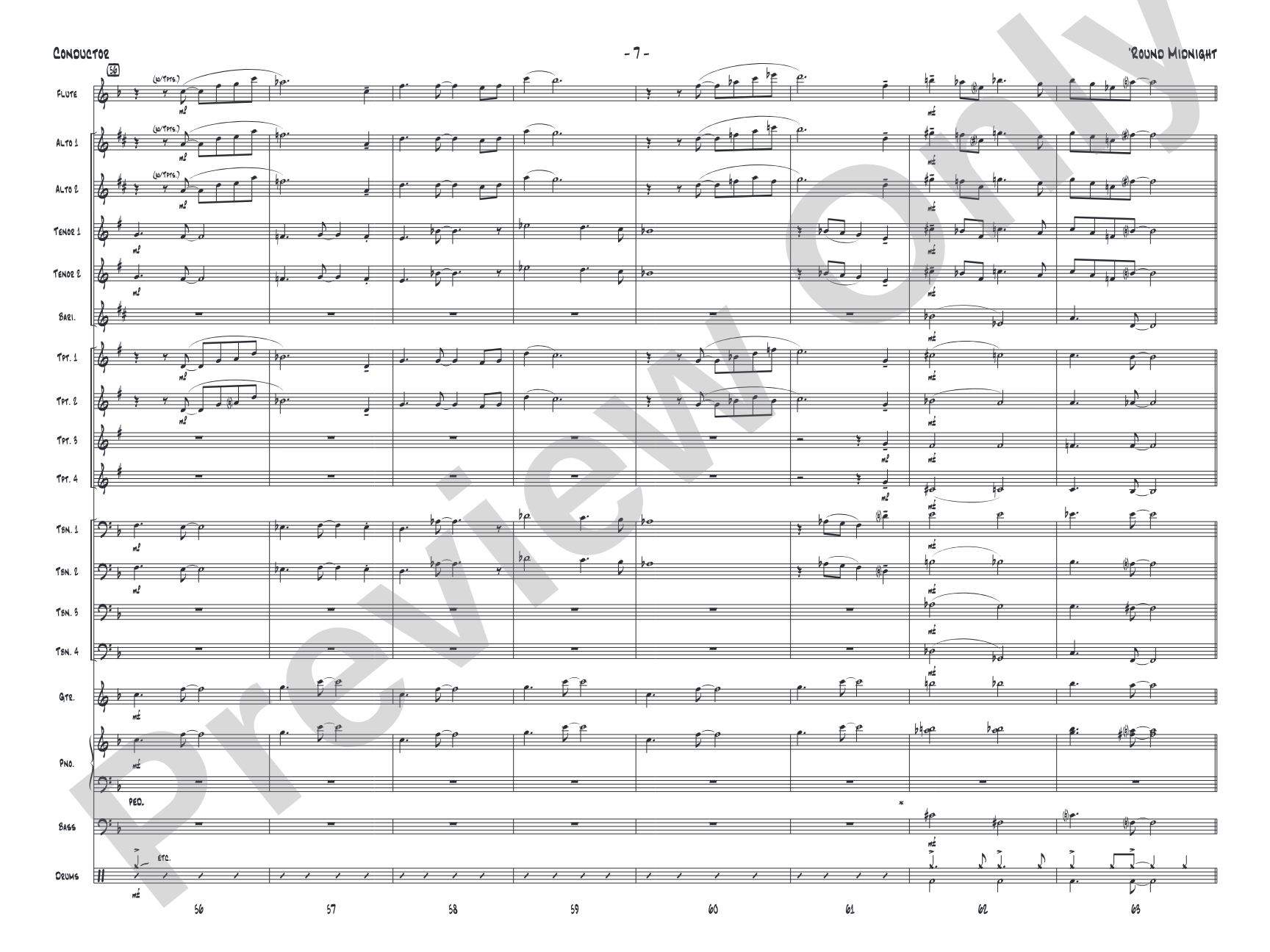
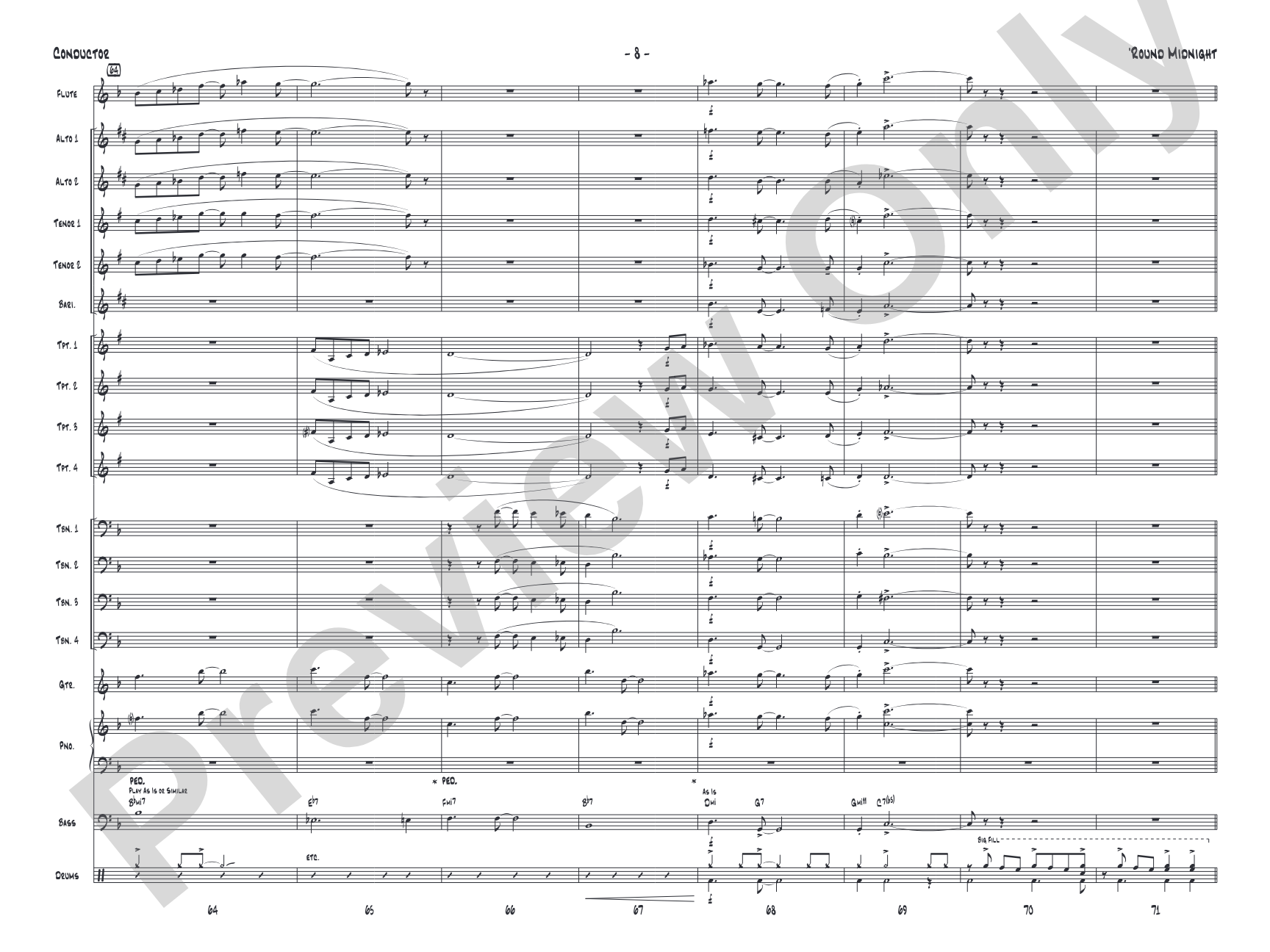
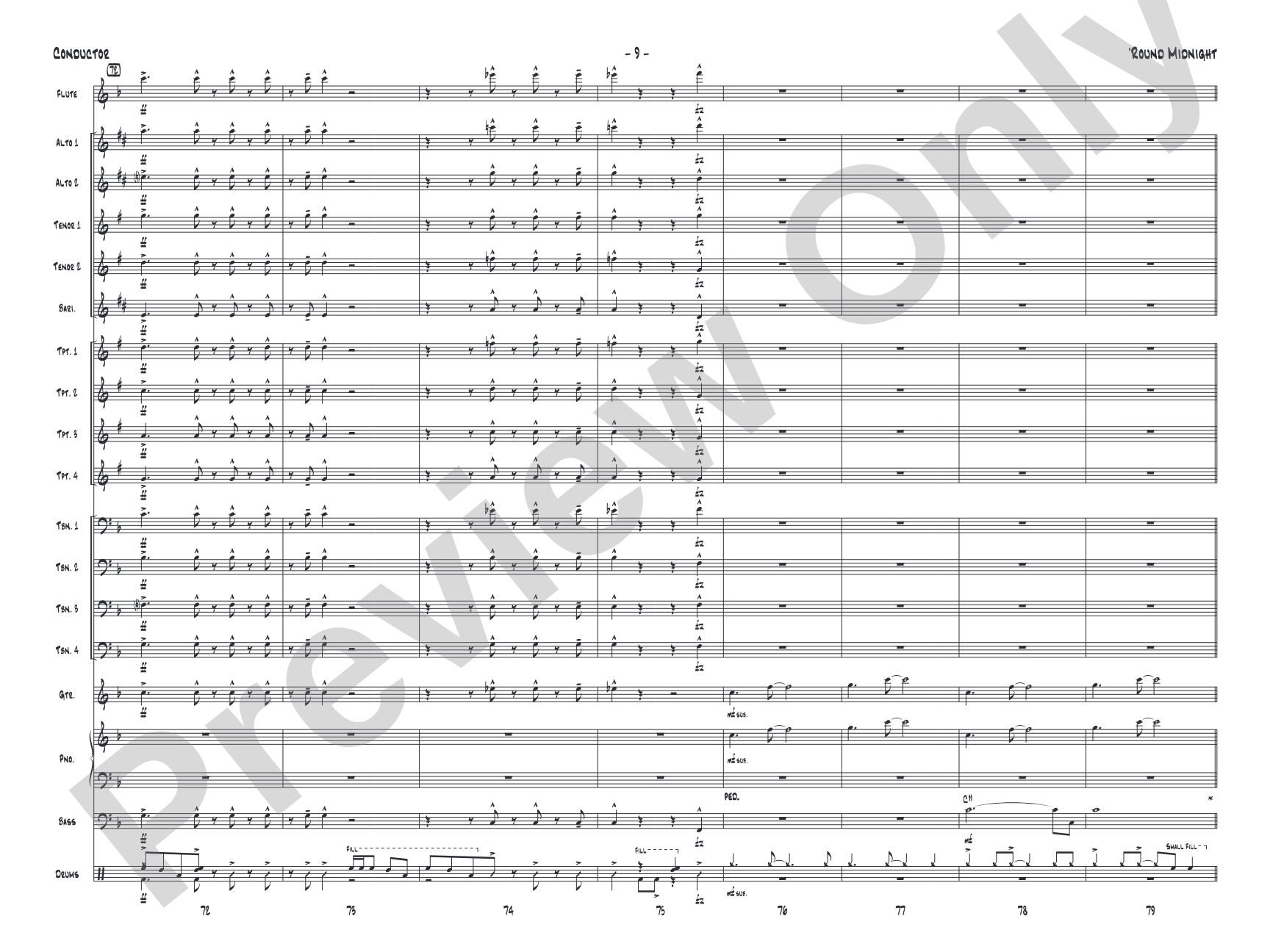
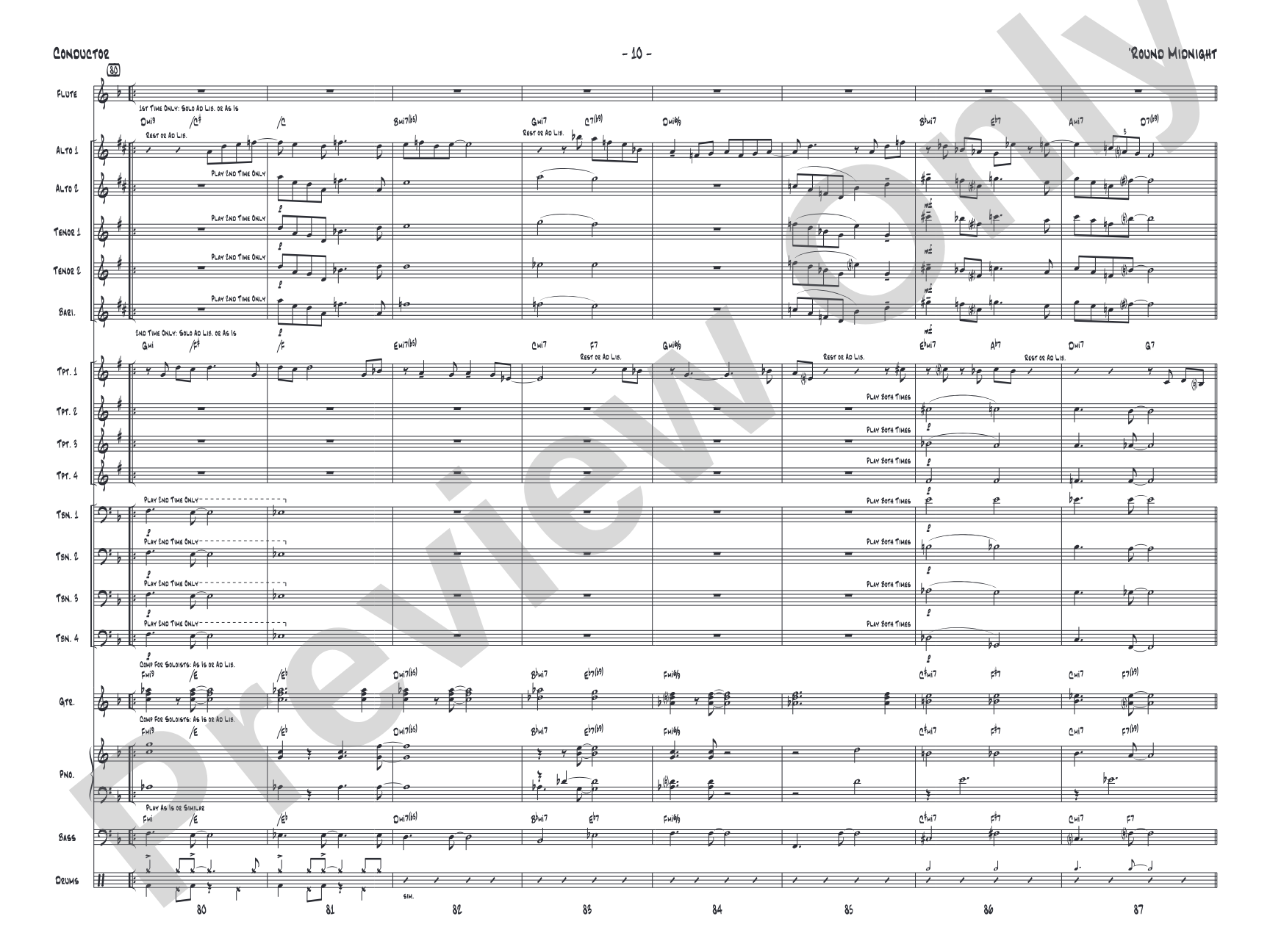
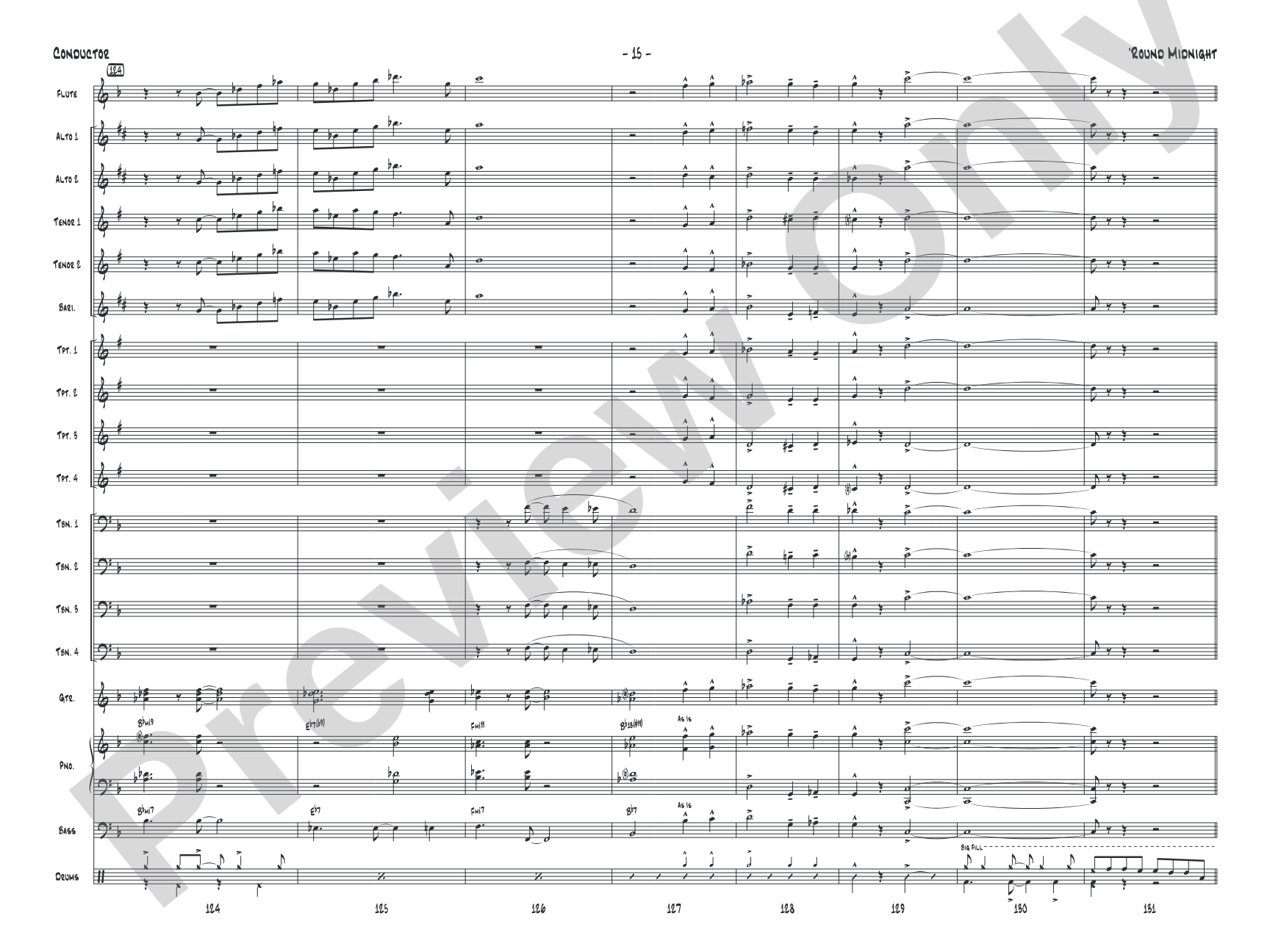
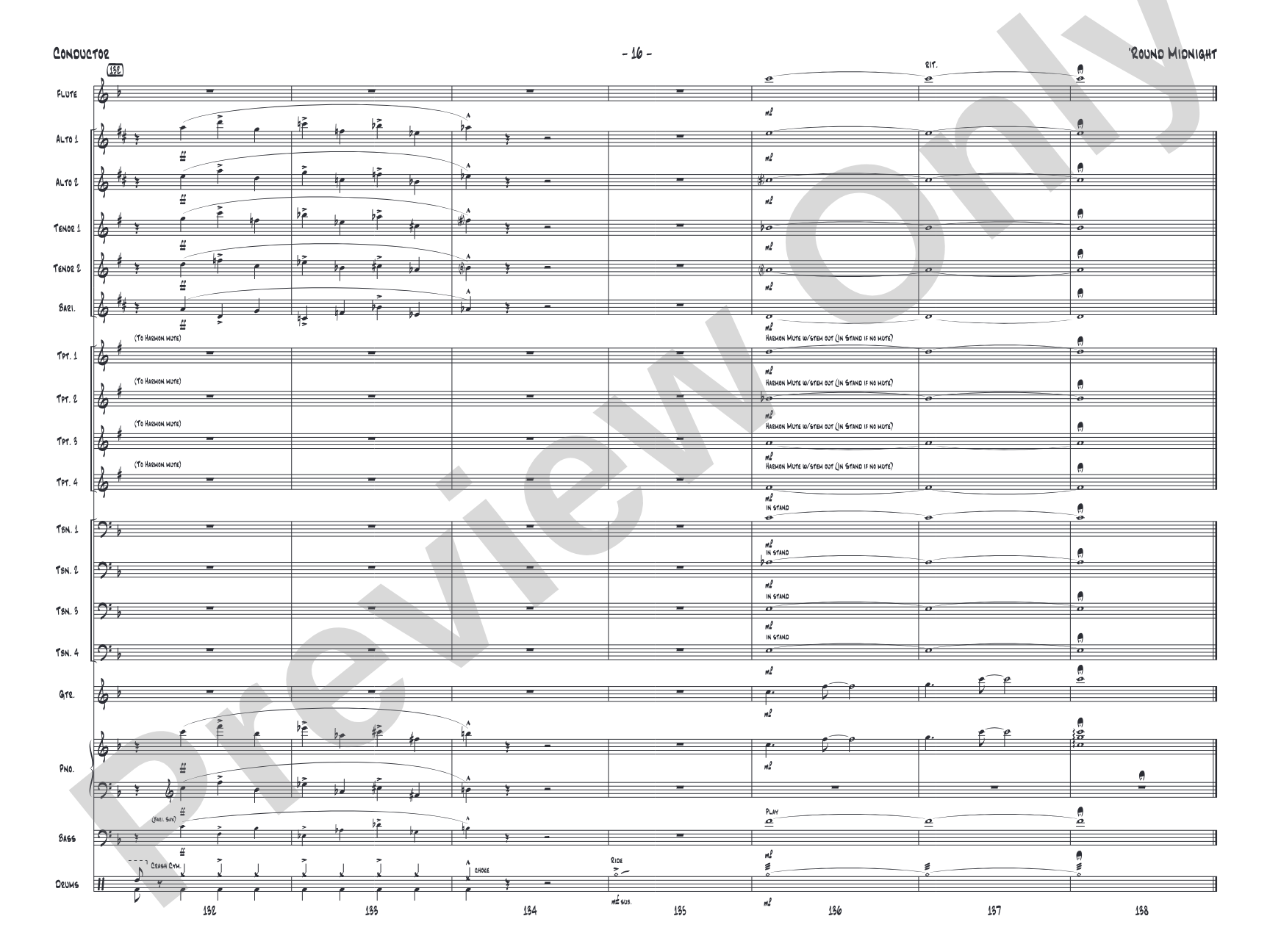

'Round Midnight: Jazz Ensemble Conductor Score & Parts
Words by Bernie Hanighen, music by Cootie Williams and Thelonious Monk / arr. Rick Hirsch
Grade: 2.5 (Medium Easy)
Item: 00-PK-0008430

$48.00
One moment…
Description
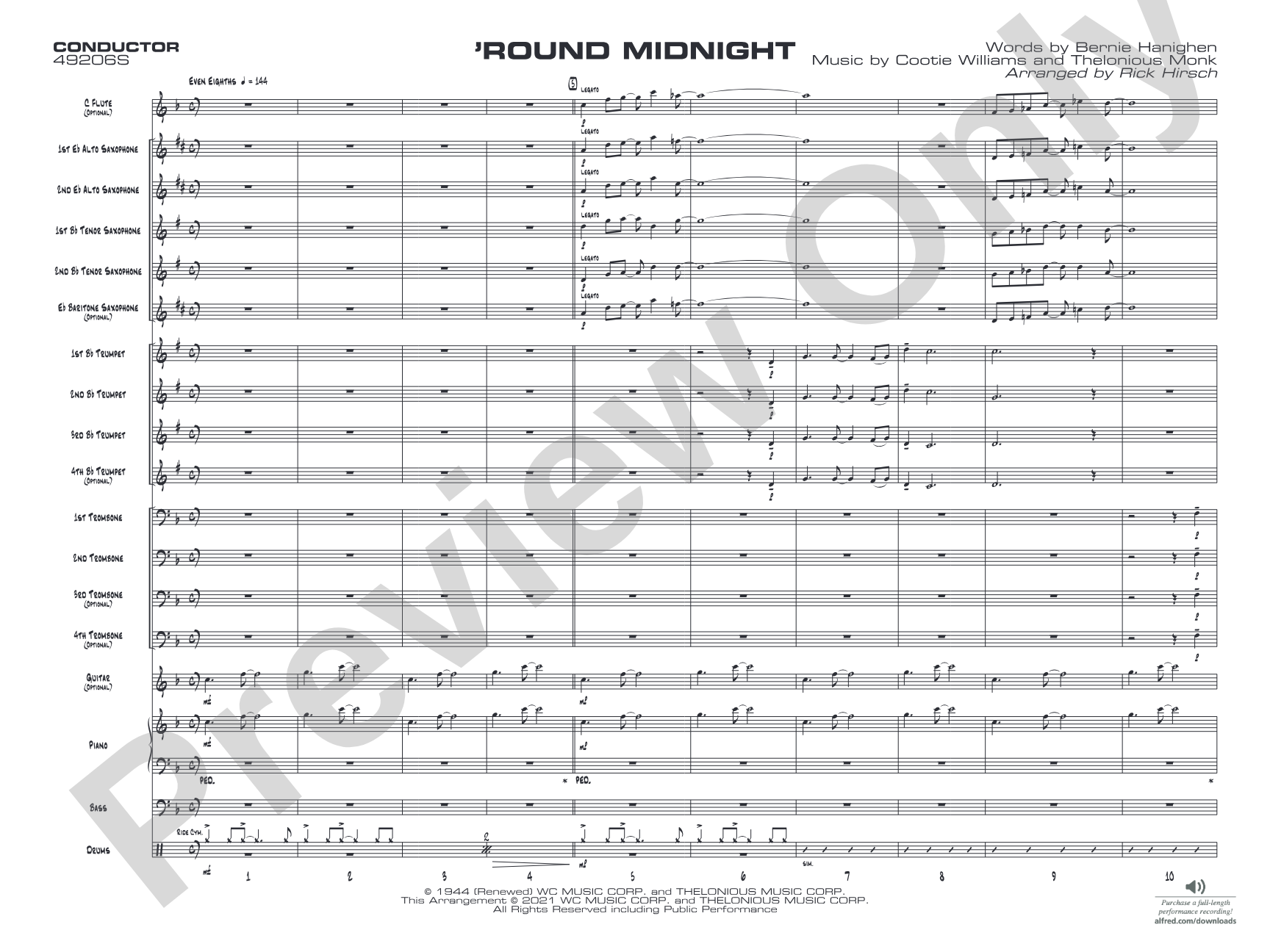
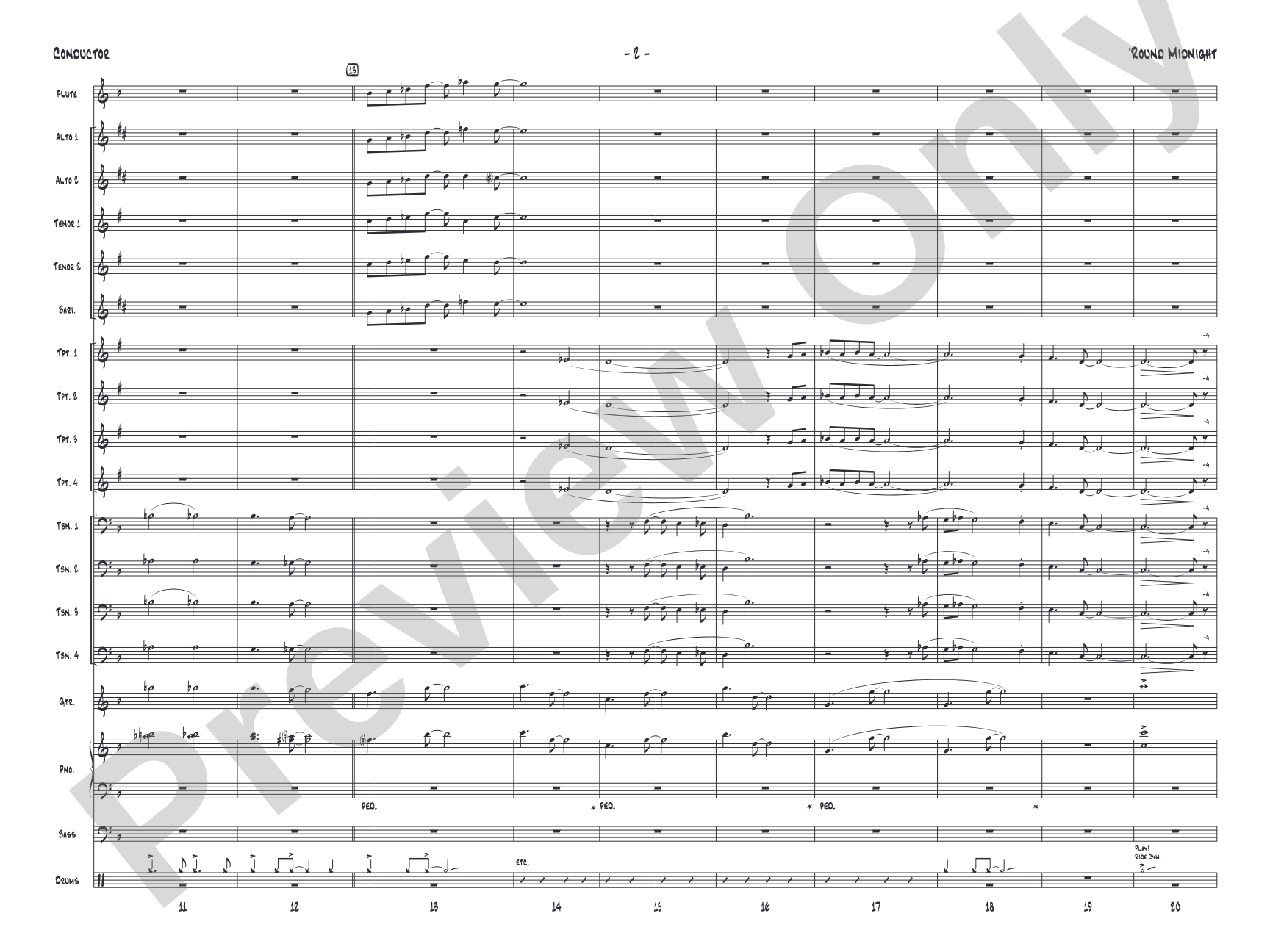
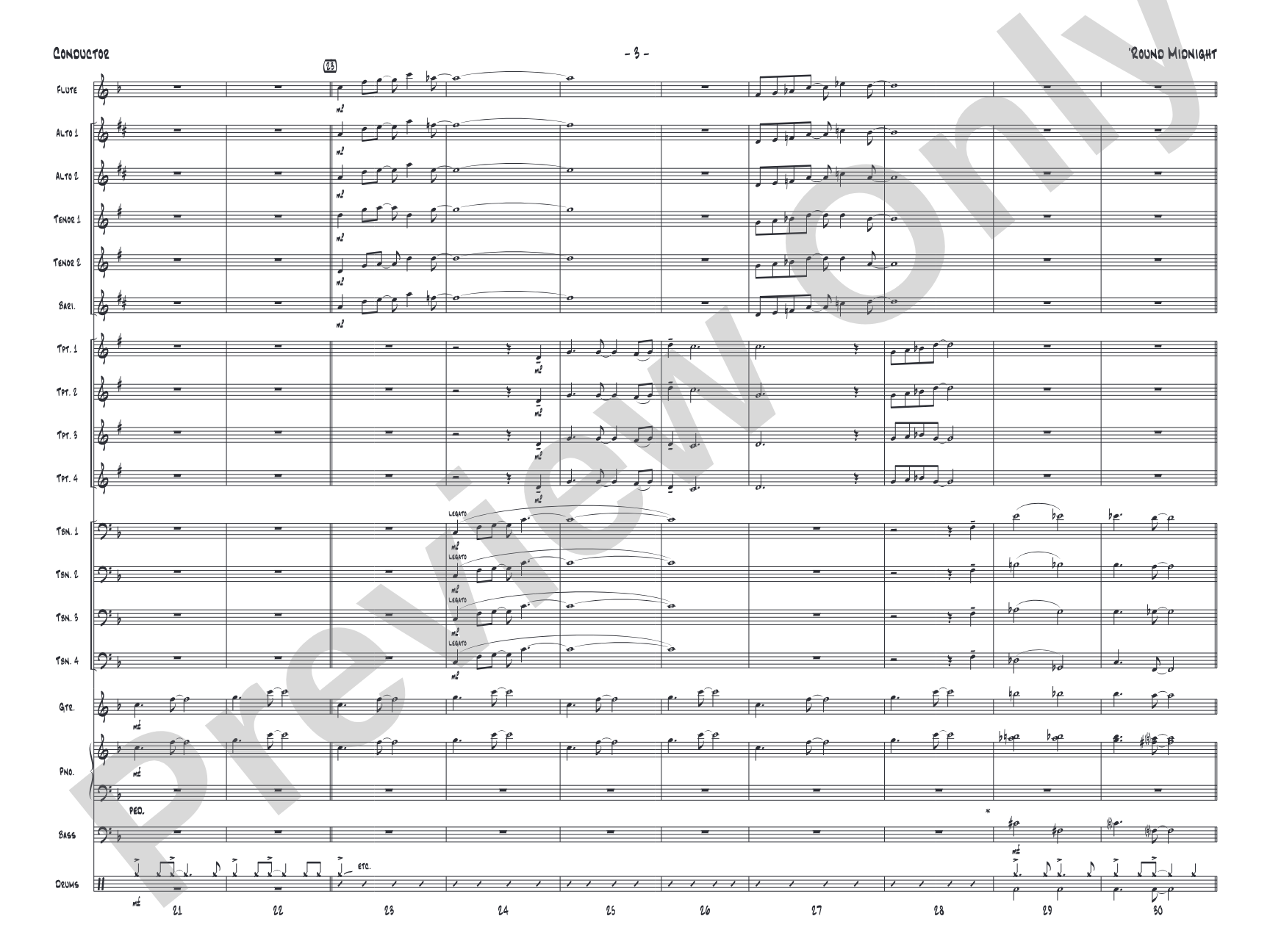
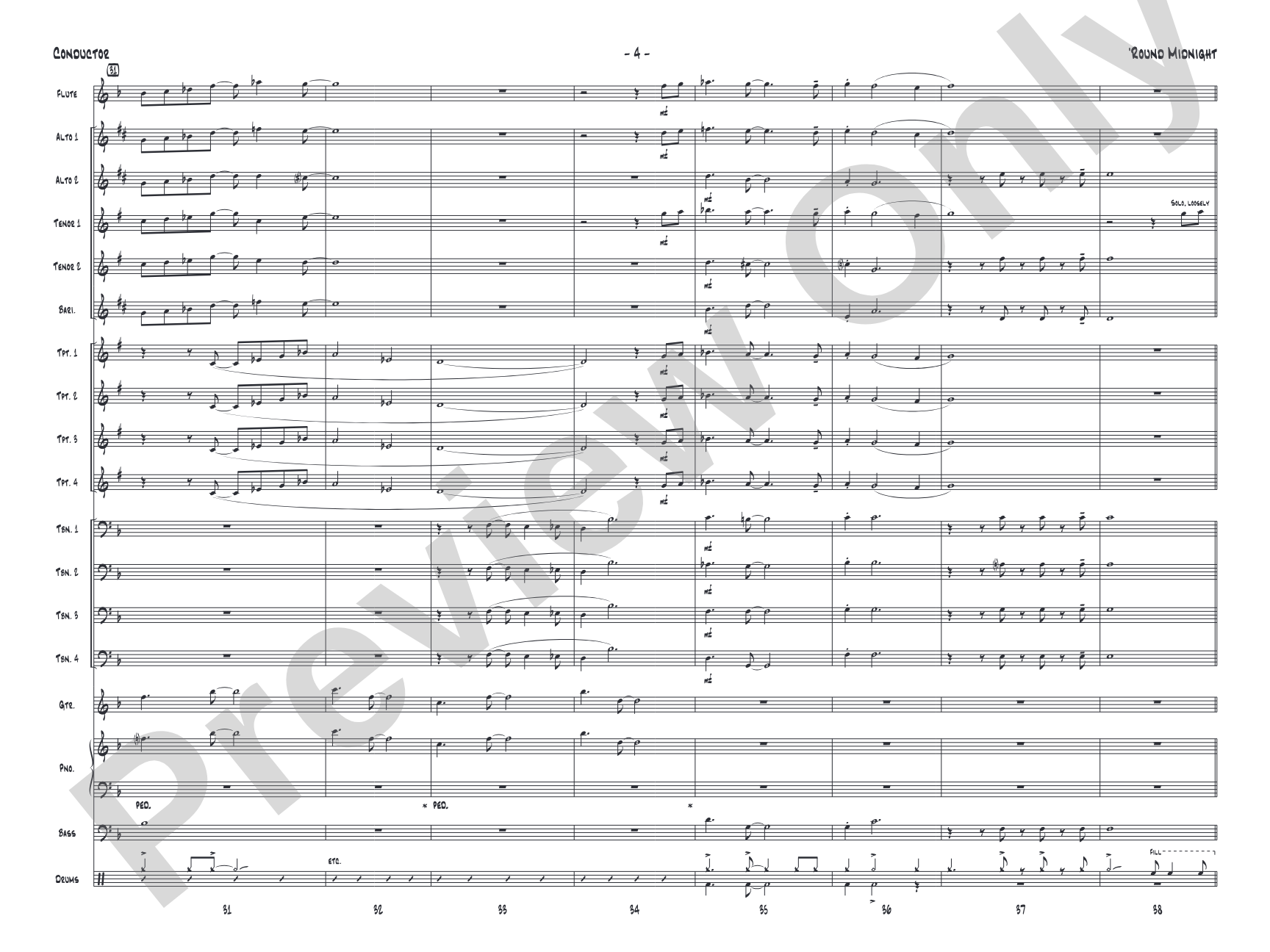
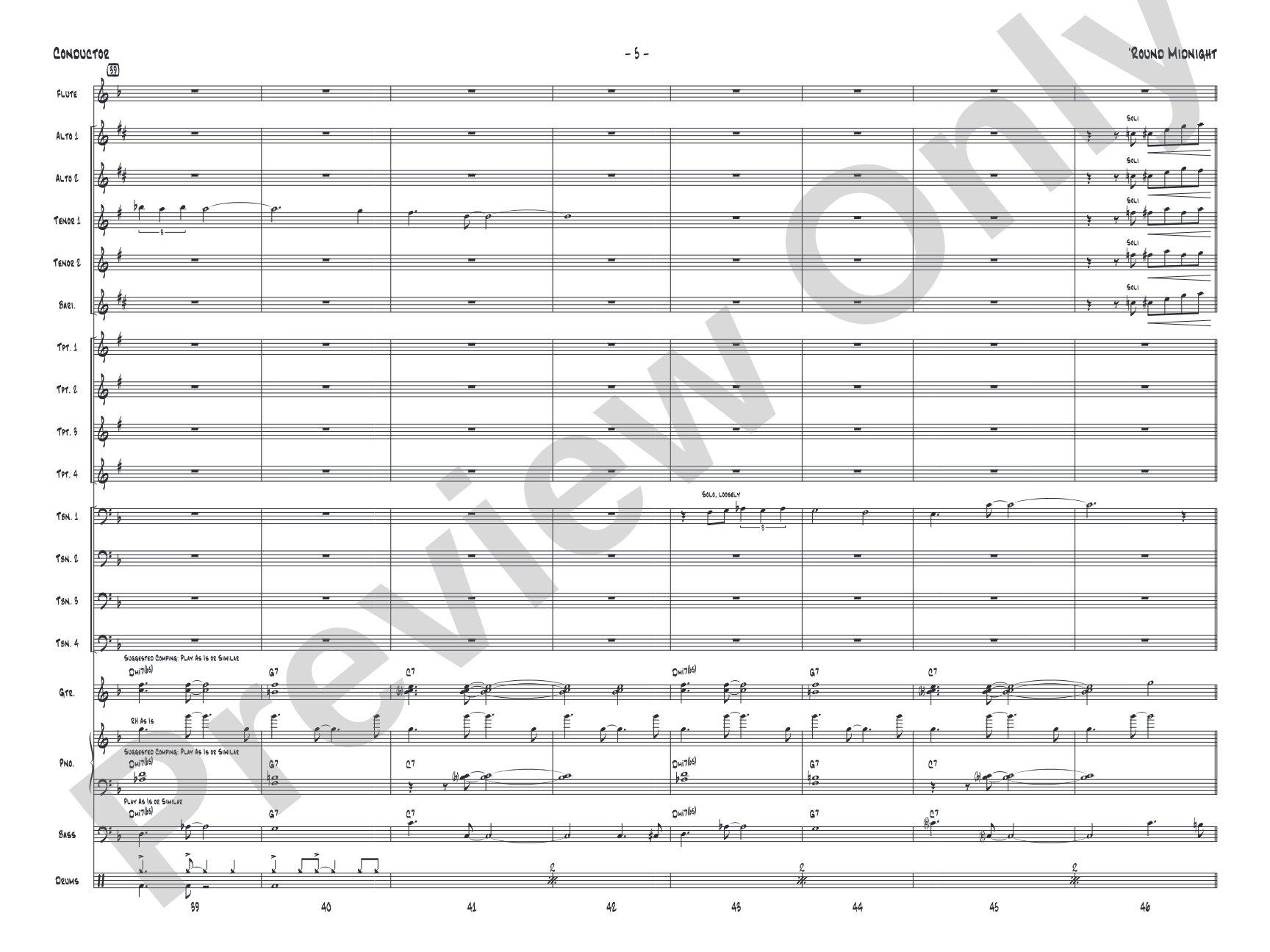
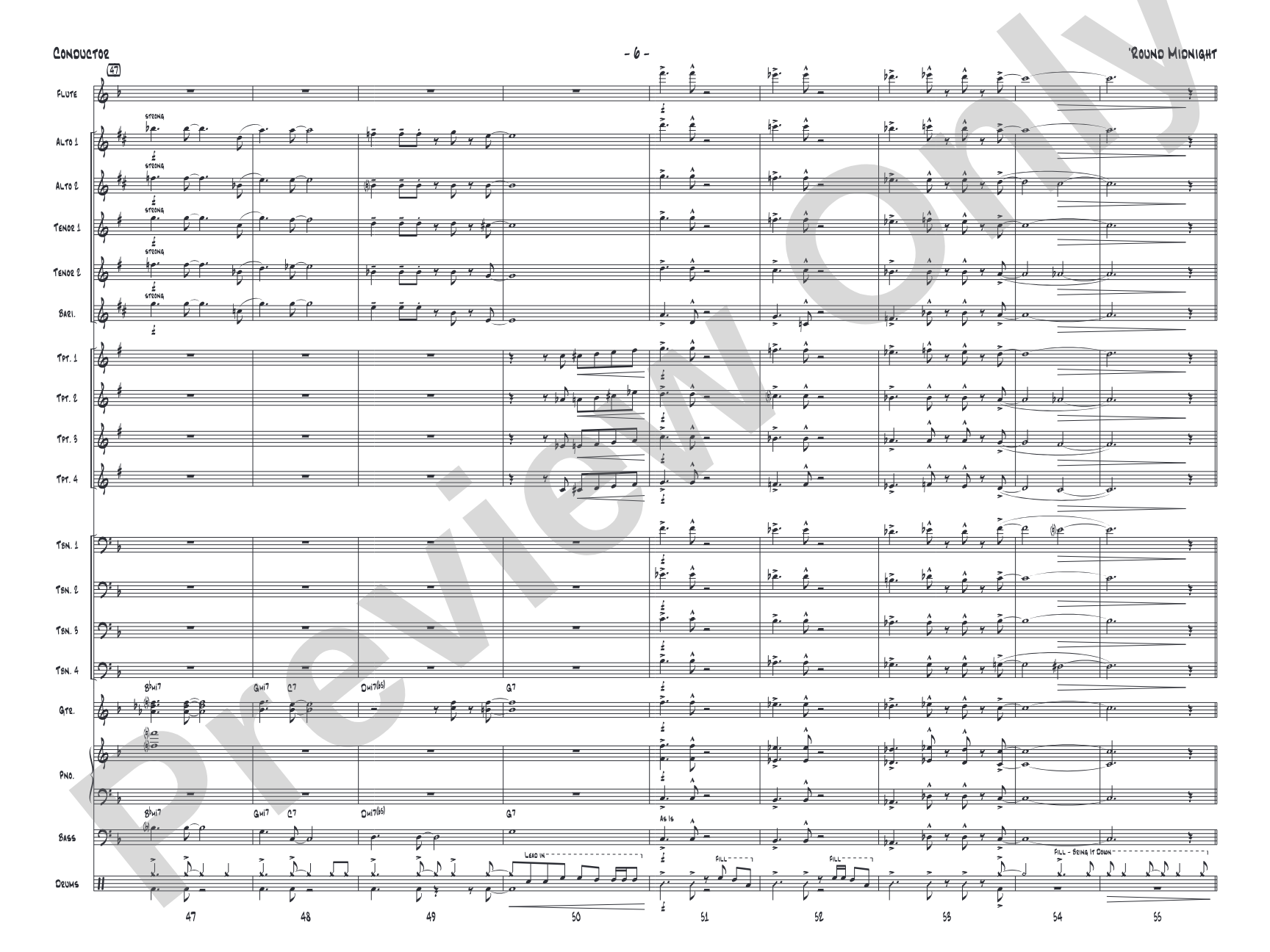
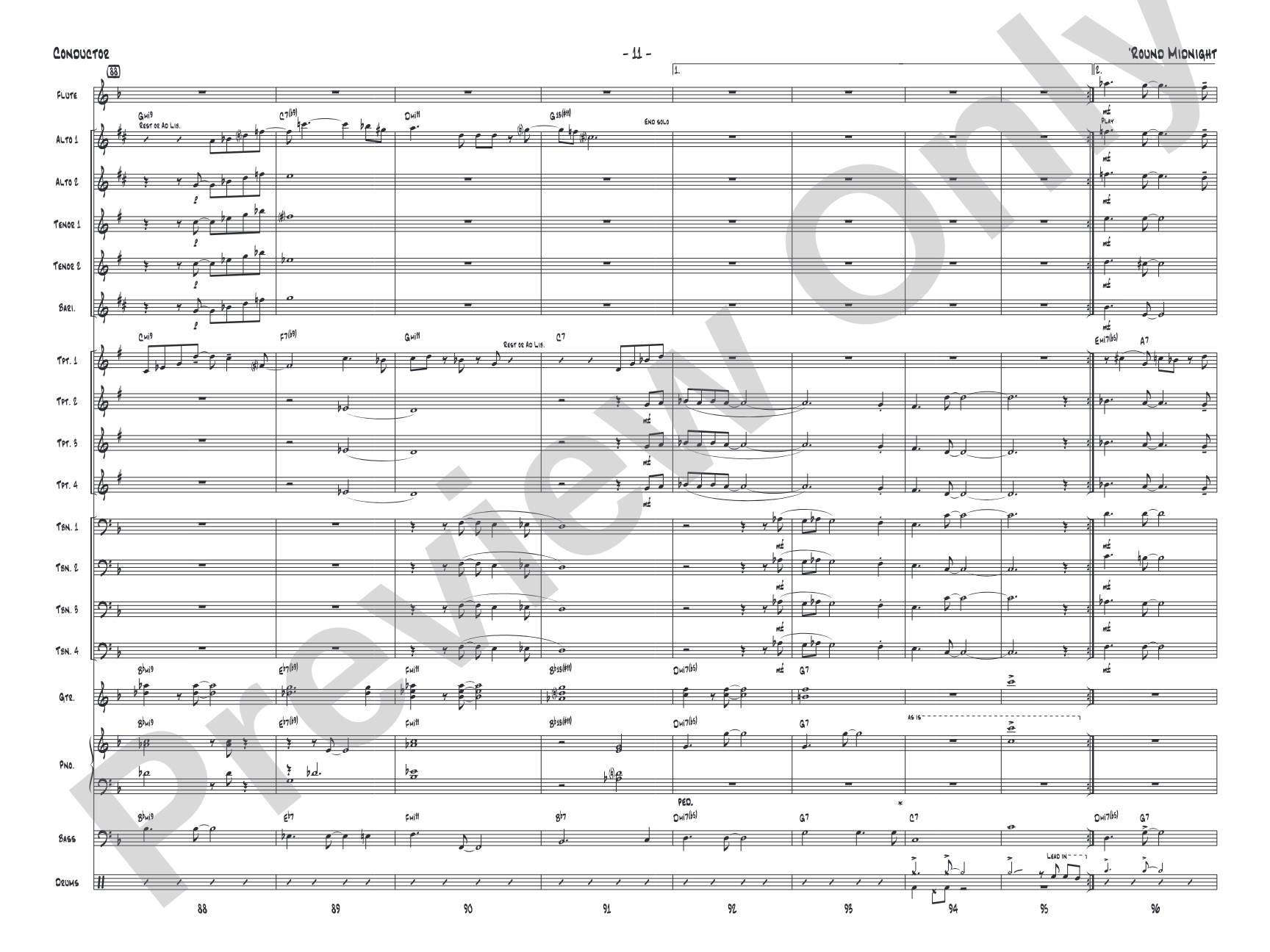
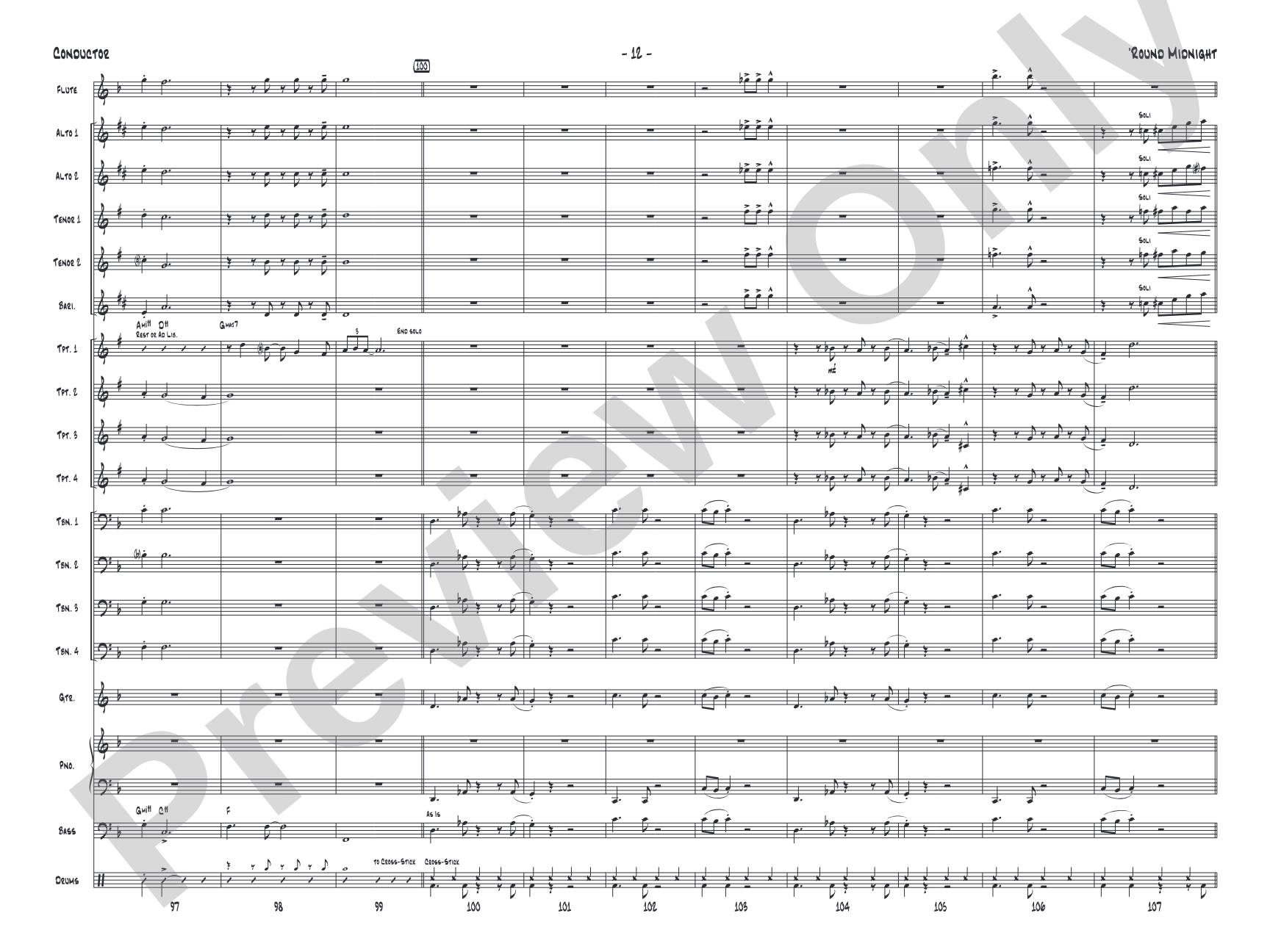
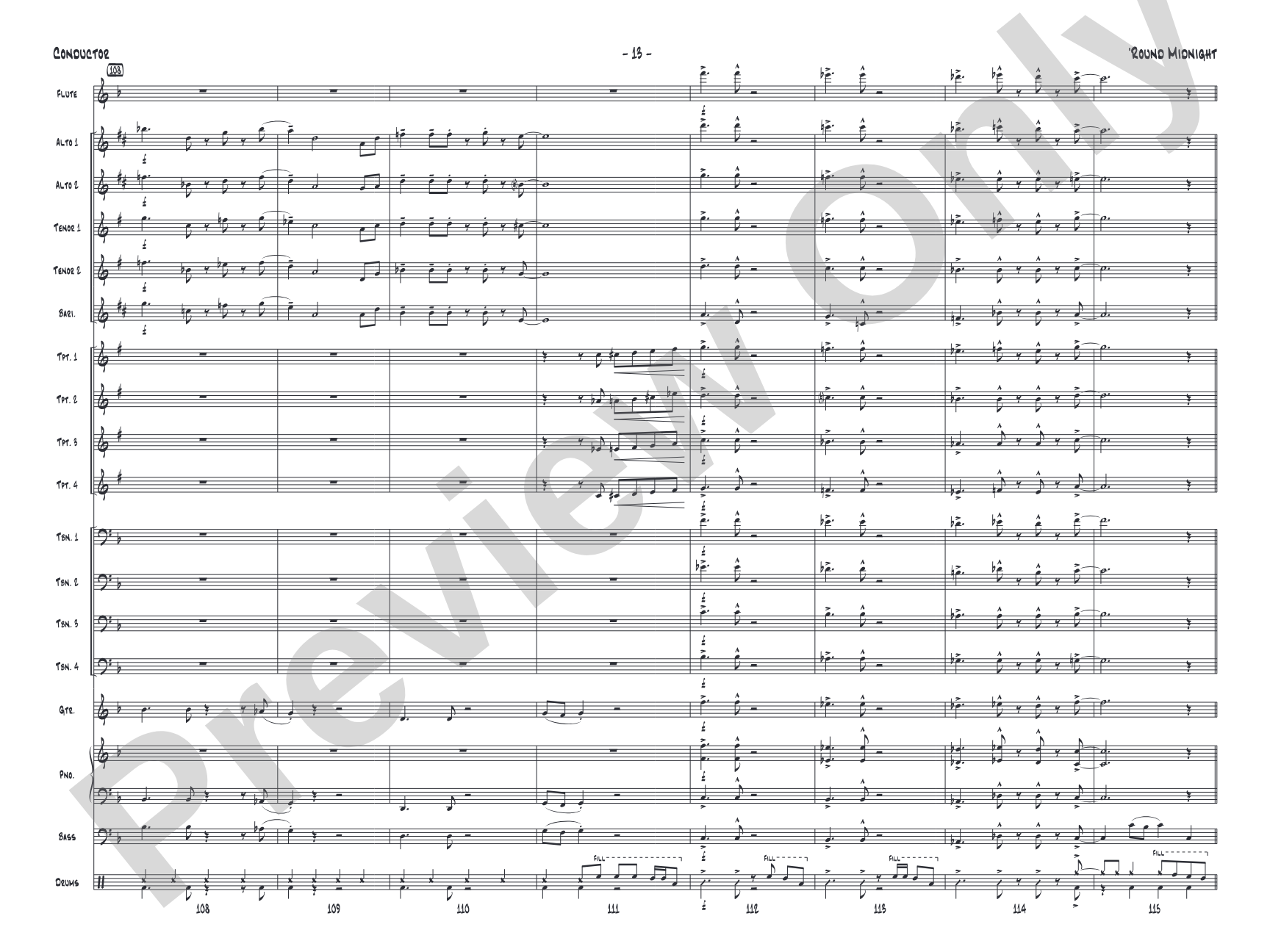
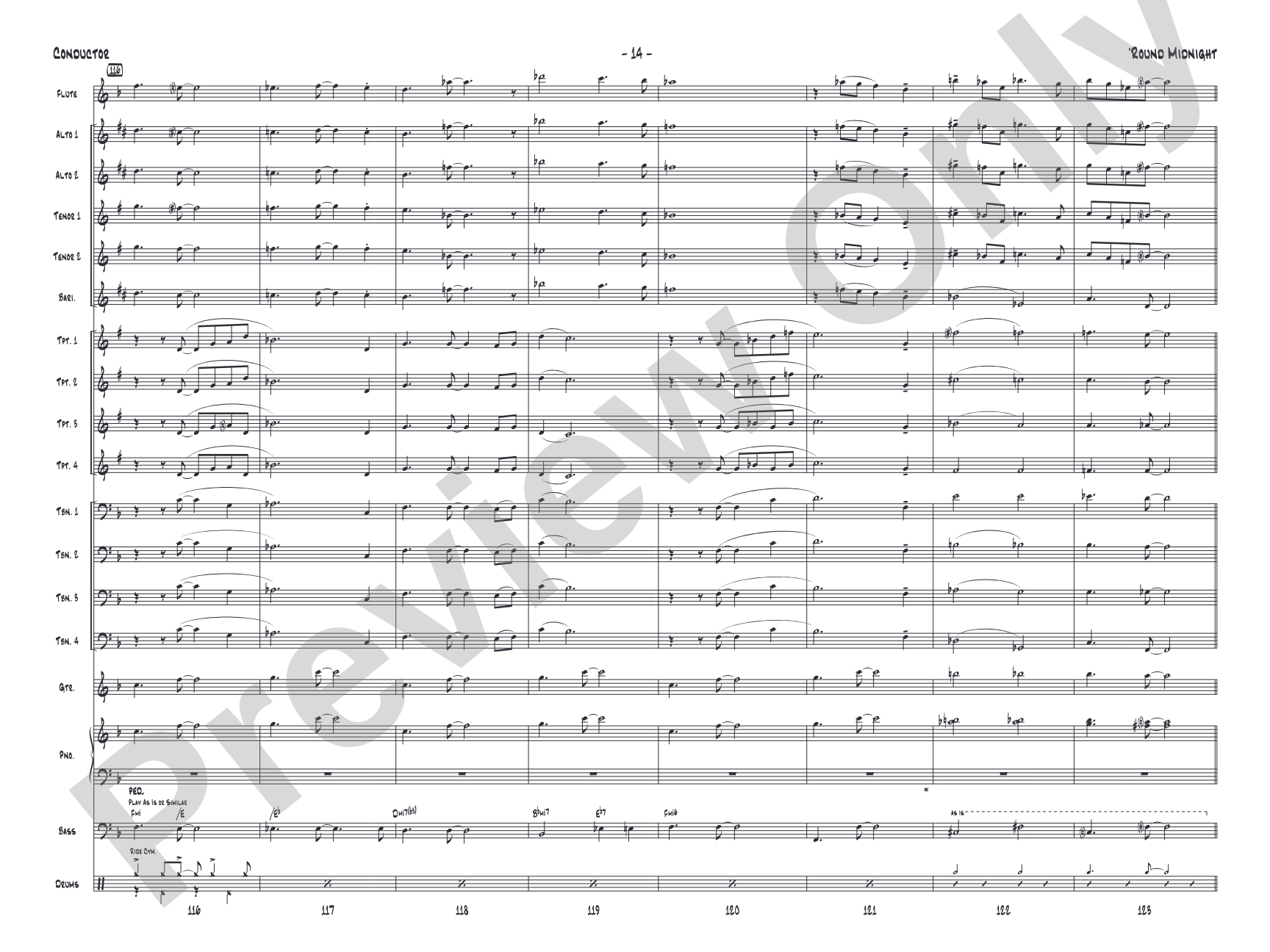
'Round Midnight arranged by Rick Hirsch is a superb chart on a wonderful jazz standard, played around 140 BPM. Typically a ballad, this treatment is a straight-eighth feel with smooth cascading lines. Written-out solos are provided for trumpet 1 and alto 1. Included are a few sax solis, beautiful harmonies, and lead trumpet range is to written G on top of the staff. Optional parts include flute, clarinet, and vibes and more. A uniquely beautiful chart! (4:25) This title is available in MakeMusic Cloud.


Don't just read it, hear it, play along with it, and watch your students grow with it. In MakeMusic Cloud, 'Round Midnight: Jazz Ensemble Conductor Score & Parts comes alive with professional accompaniment, adjustable tempo, and built-in practice tools that turn solo practice into real progress.
Open in the Player
Jump straight in and assign it today.
Start Your Free Trial
Open this title and explore the full library in minutes.
Sample Audio
1
Audio File
--:--
0:00
0:00
Sample Video
Additional Details
Series:
Young Jazz Ensemble
Publisher:
Alfred Music
Page Count:
97
SKU:
00-PK-0008430
More about this title
About the Composer: Cootie Williams
Cootie Williams was a trumpeter and composer who became a cornerstone of the Harlem jazz scene in the 1920s and 1930s. His work with Duke Ellington's orchestra and later bandleading efforts shaped his reputation as both a skilled soloist and a musician who understood how to write for ensemble texture. Williams collaborated with many of jazz's most innovative figures, and his compositions remain standards in the jazz repertoire.
Why we love this
Rick Hirsch has taken a composition that typically floats in ballad territory and given it forward momentum without losing its introspective quality. The written-out solos for trumpet 1 and alto 1 make this accessible to ensembles still developing improvisational confidence, while the straight-eighth feel and cascading lines keep the arrangement engaging for more experienced groups. It's a chart that teaches ensemble cohesion and voice leading at a medium-easy level without ever feeling like a step backward.
What to expect
The piece inhabits a contemplative space that's neither sleepy nor mournful. Straight-eighths push gently forward while smooth, interlocking lines create an almost impressionistic texture, as if the ensemble is turning the melody over in its collective hands. It's introspective and grounded, yet alive.
Who it's for
This arrangement suits jazz ensembles at the high school or early college level who want to program a recognizable standard without the rhythmic complexity of a fast-burning uptempo or the performance demands of a true ballad. Soloists need some facility but not the free-form improvisational range required by open-section charts. Directors building repertoire lists that balance accessibility with musical substance will find this especially useful.
How to get the most out of it
- Shape the cascading lines as connected phrases rather than individual notes; think of them as melodic gestures that flow across the ensemble rather than static harmonic blocks.
- Balance the lead trumpet at written G against the ensemble underneath; this range sits high enough to carry the moment, but clarity depends on the section supporting without overwhelming.
- Let the written-out solos breathe and speak as individual voices; these aren't accompanimental textures, so give them space to sing even at the moderate tempo of 140 BPM.
- Use the sax soli passages to reinforce precision in unison and harmony; even beautiful voicing falls apart if rhythmic alignment isn't locked.
How to use it
Program this early in a concert to establish elegance and ensemble control before moving into higher-energy material. It also works well as a bridge between a classical first half and full jazz repertoire, demonstrating how standards can be reframed without losing their essential character. The 4-minute-25-second duration fits comfortably into concert pacing without demanding an entire set.
Skills your students will build
- Reading and executing straight-eighth jazz feels
- Balancing written-out solo lines with ensemble accompaniment
- Voice leading across ensemble texture and harmonic density
- Interpreting cascading, interconnected melodic lines as cohesive phrases
- Managing dynamic control in a moderate-tempo medium-register chart