
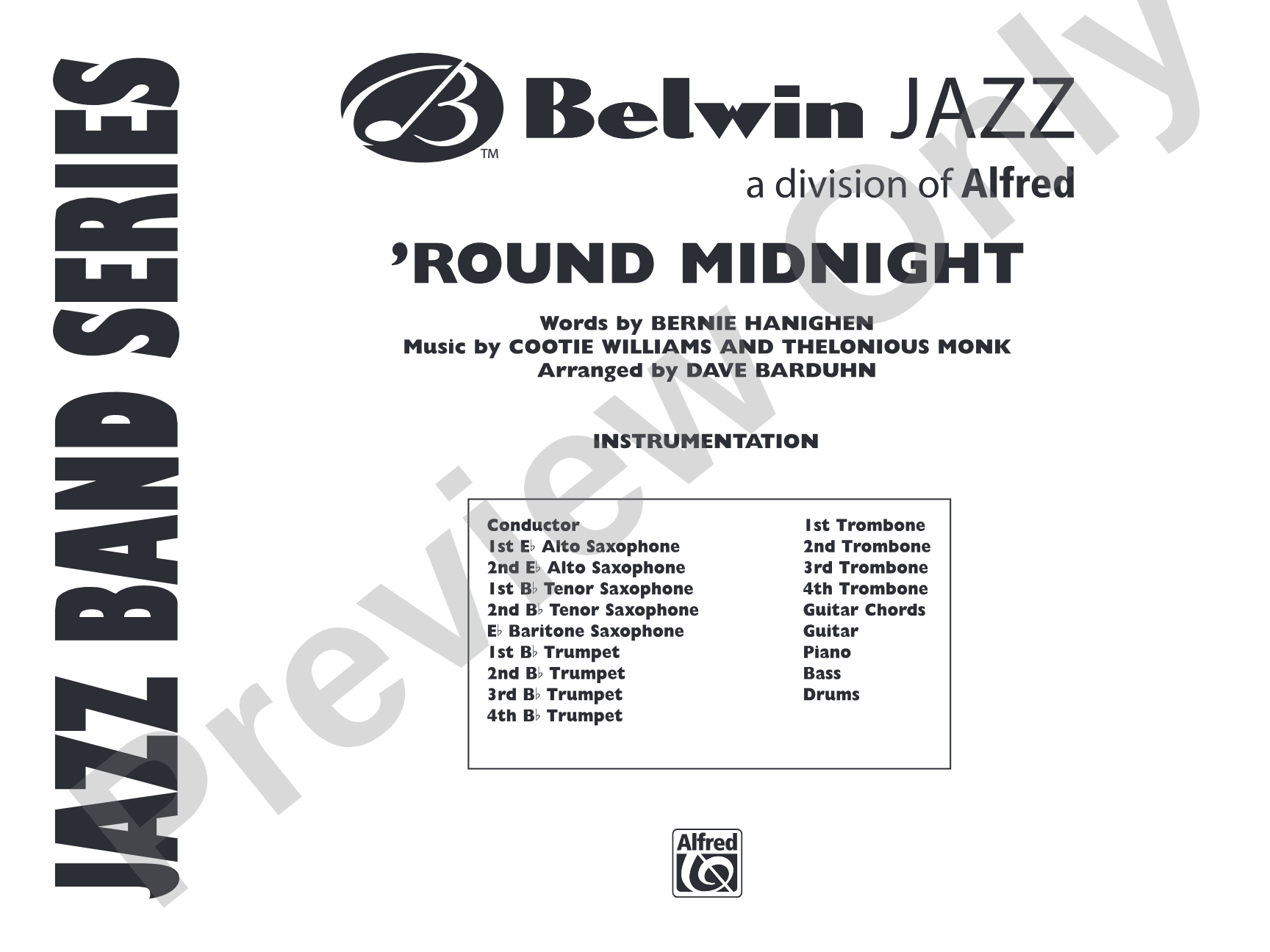
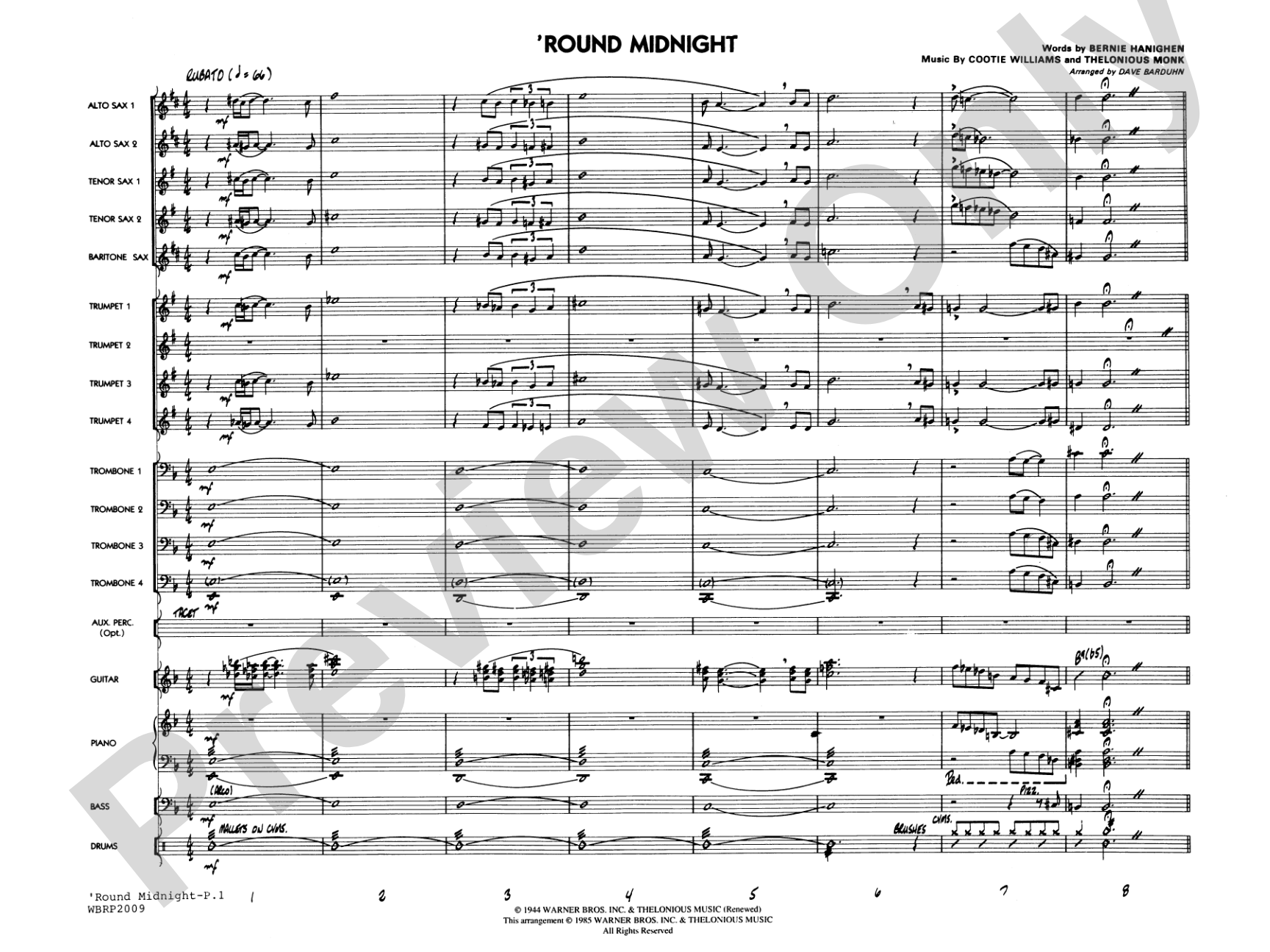
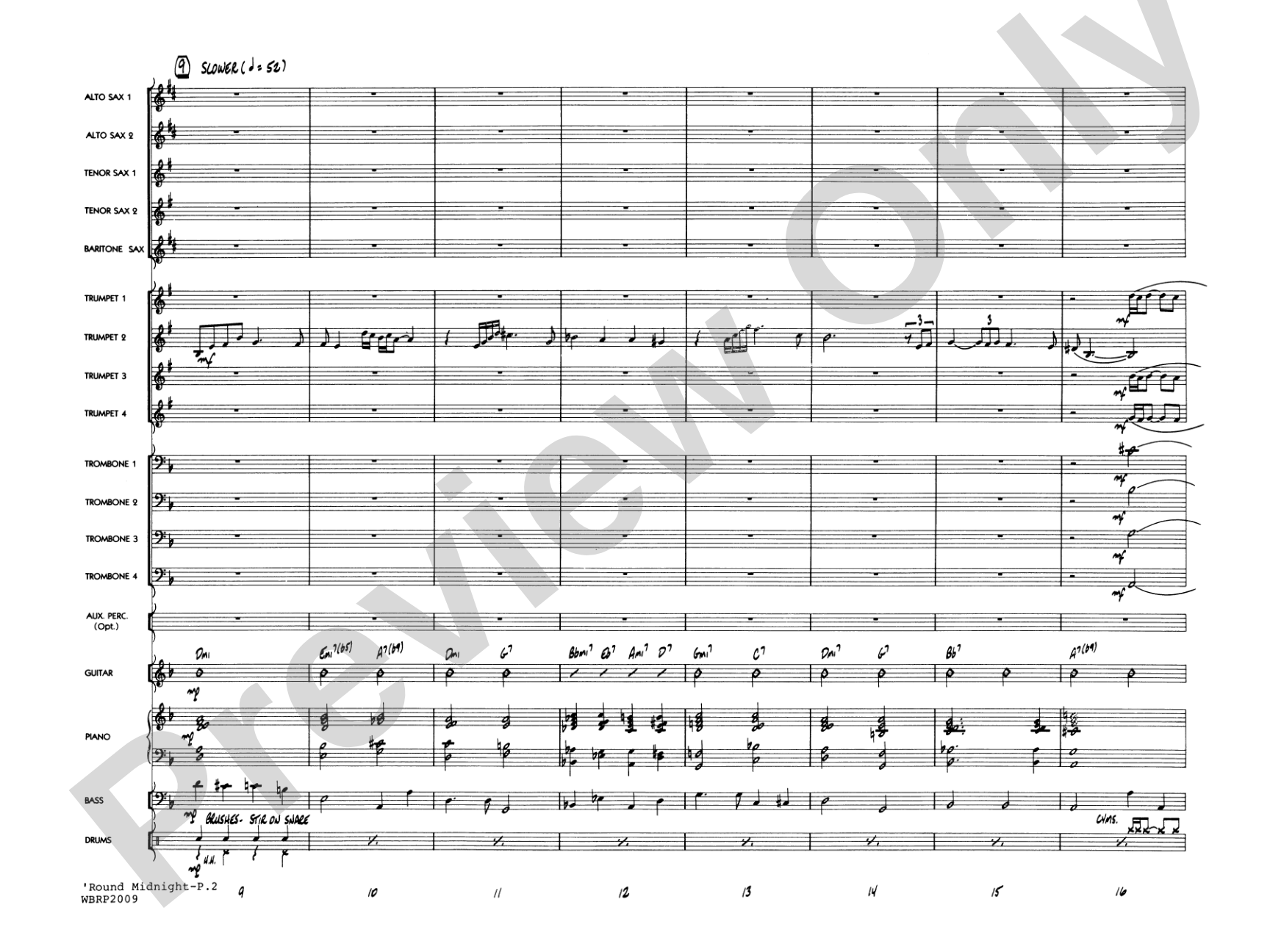
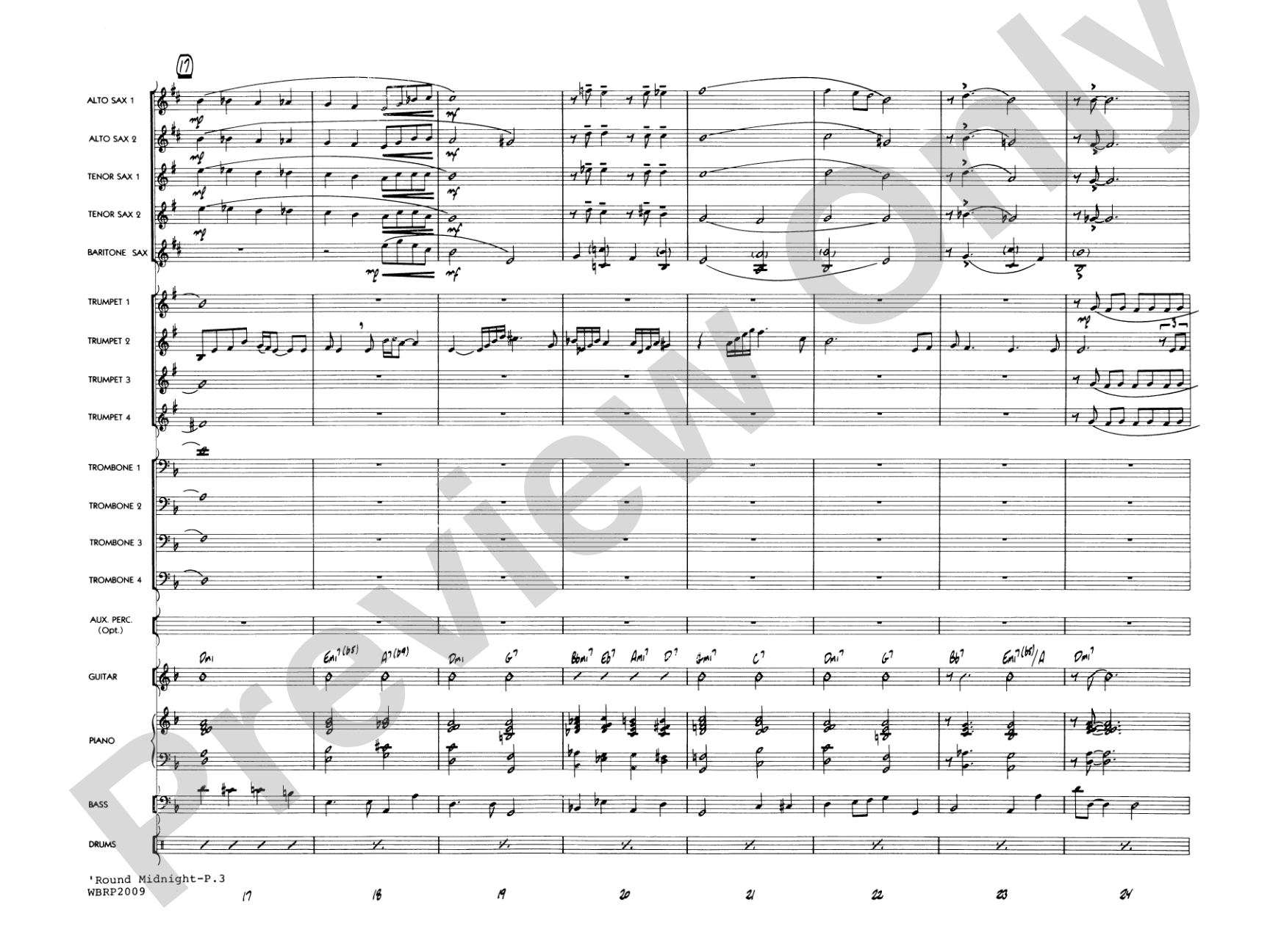
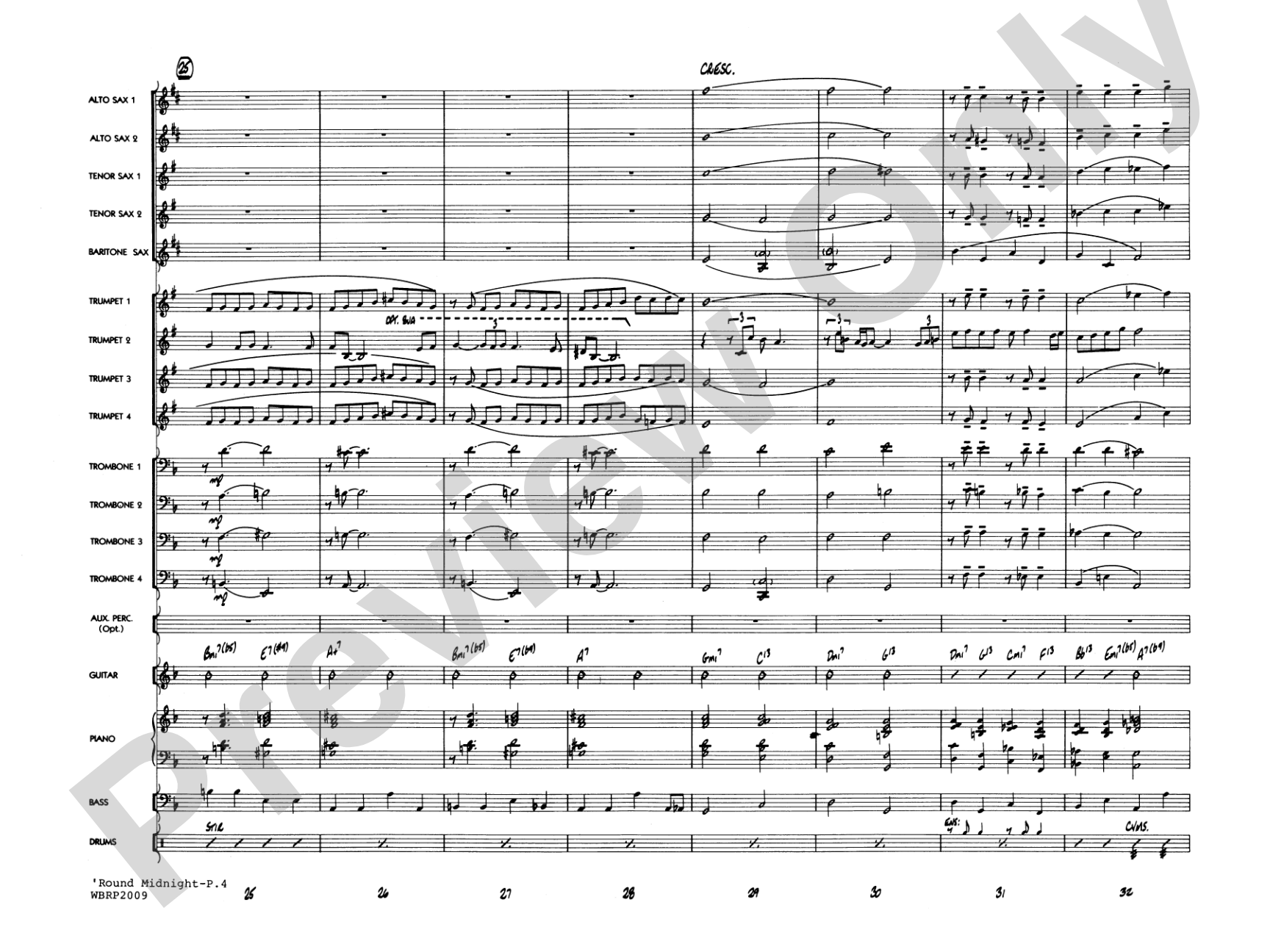
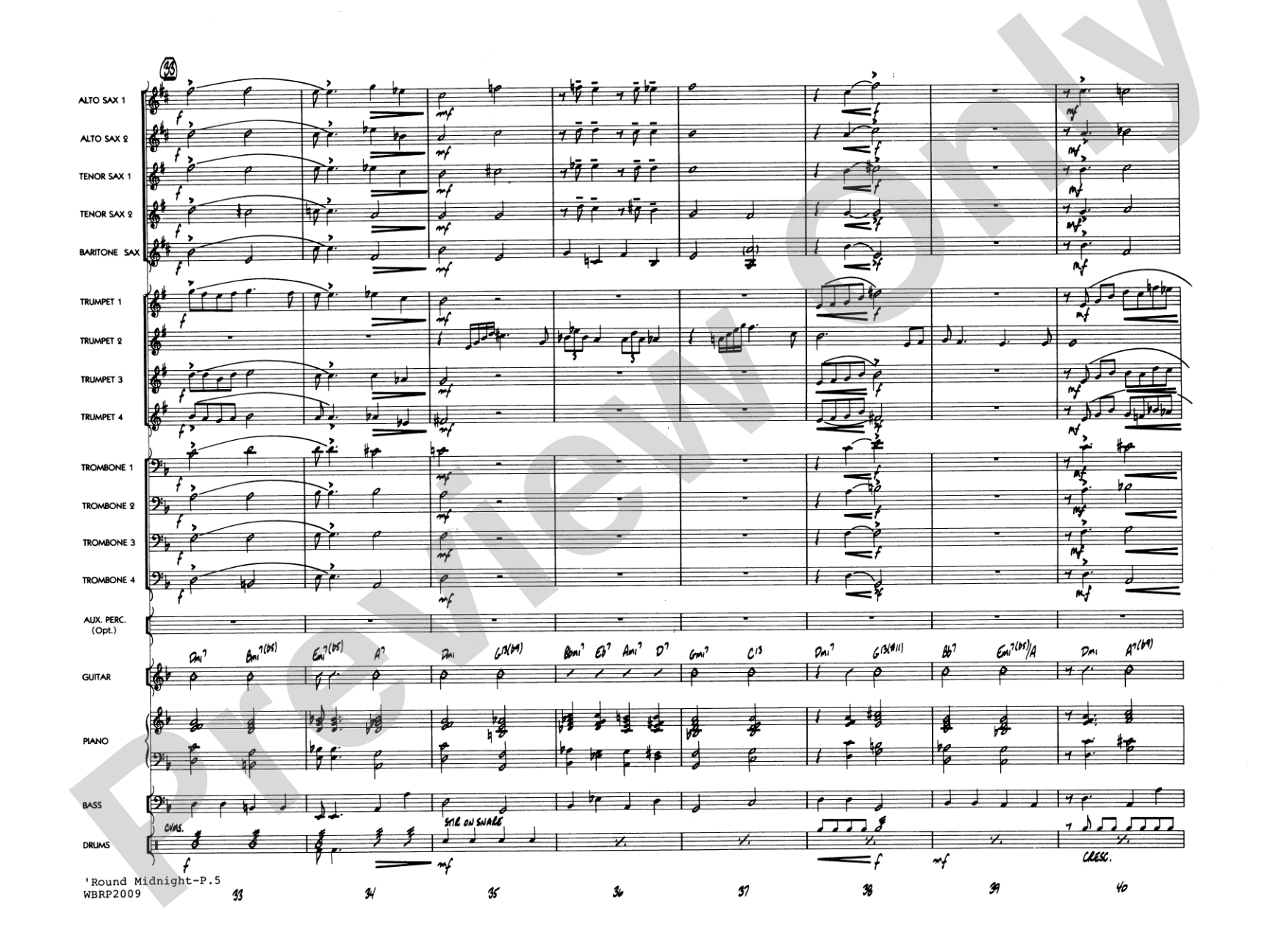
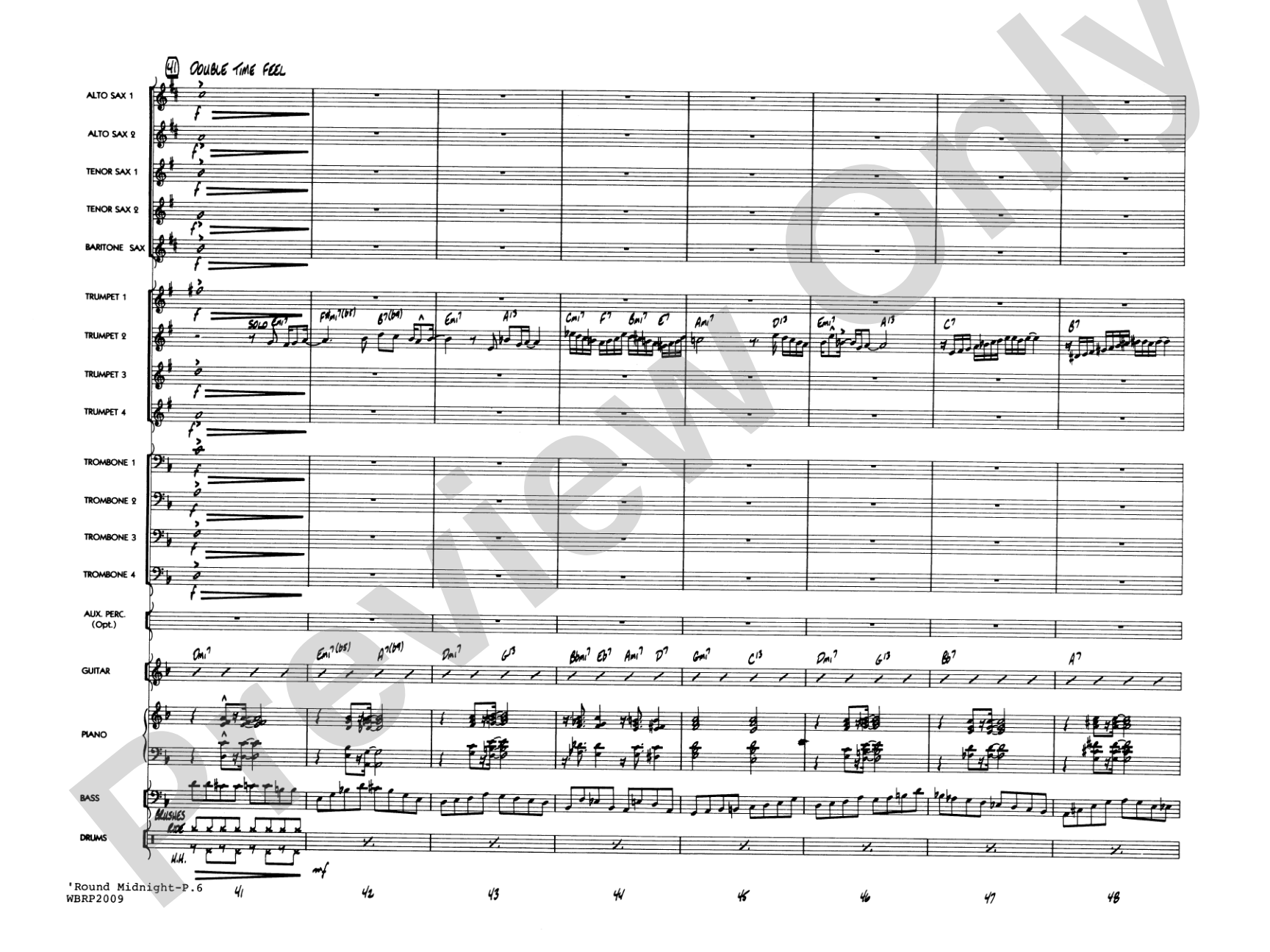
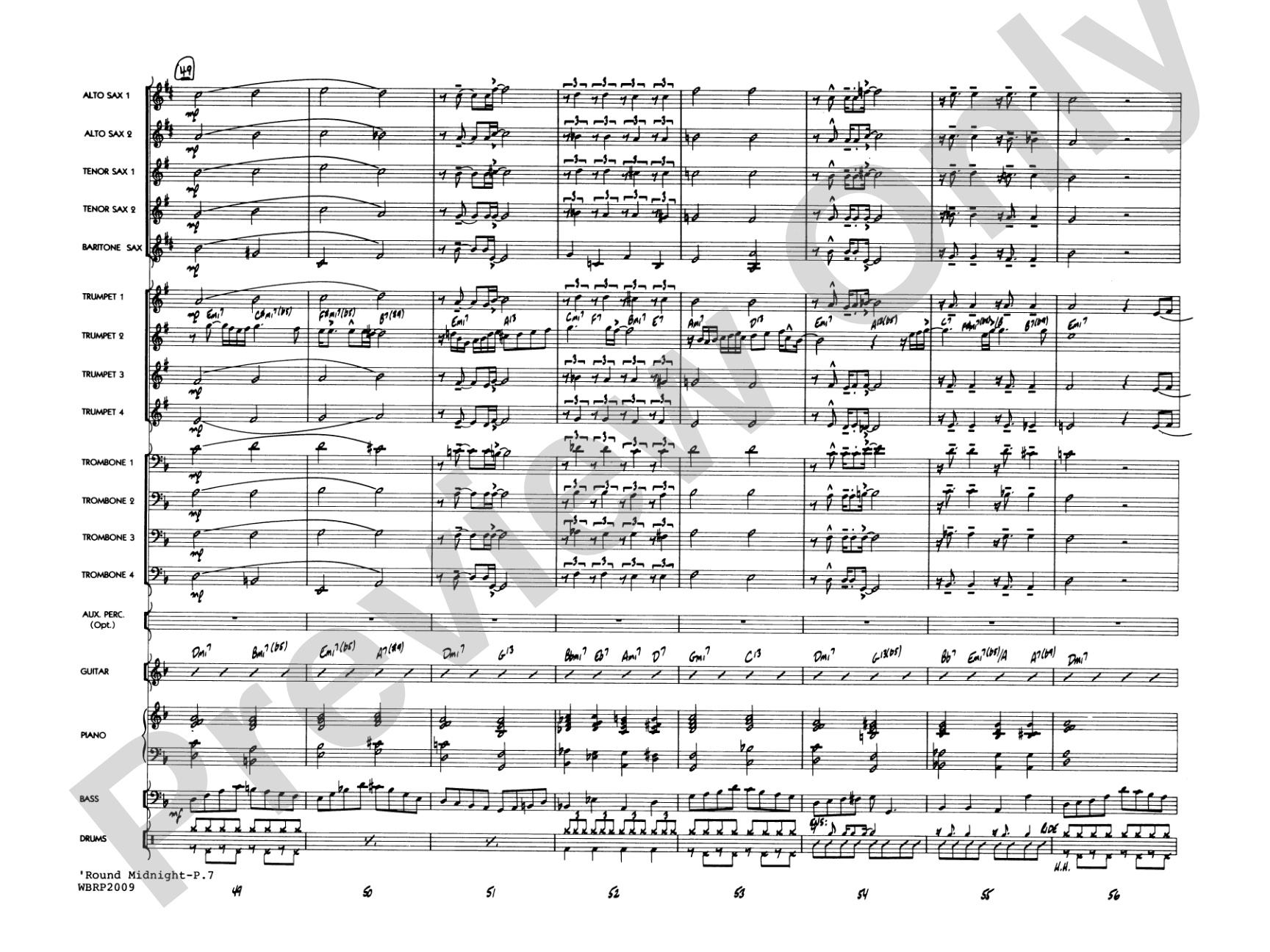
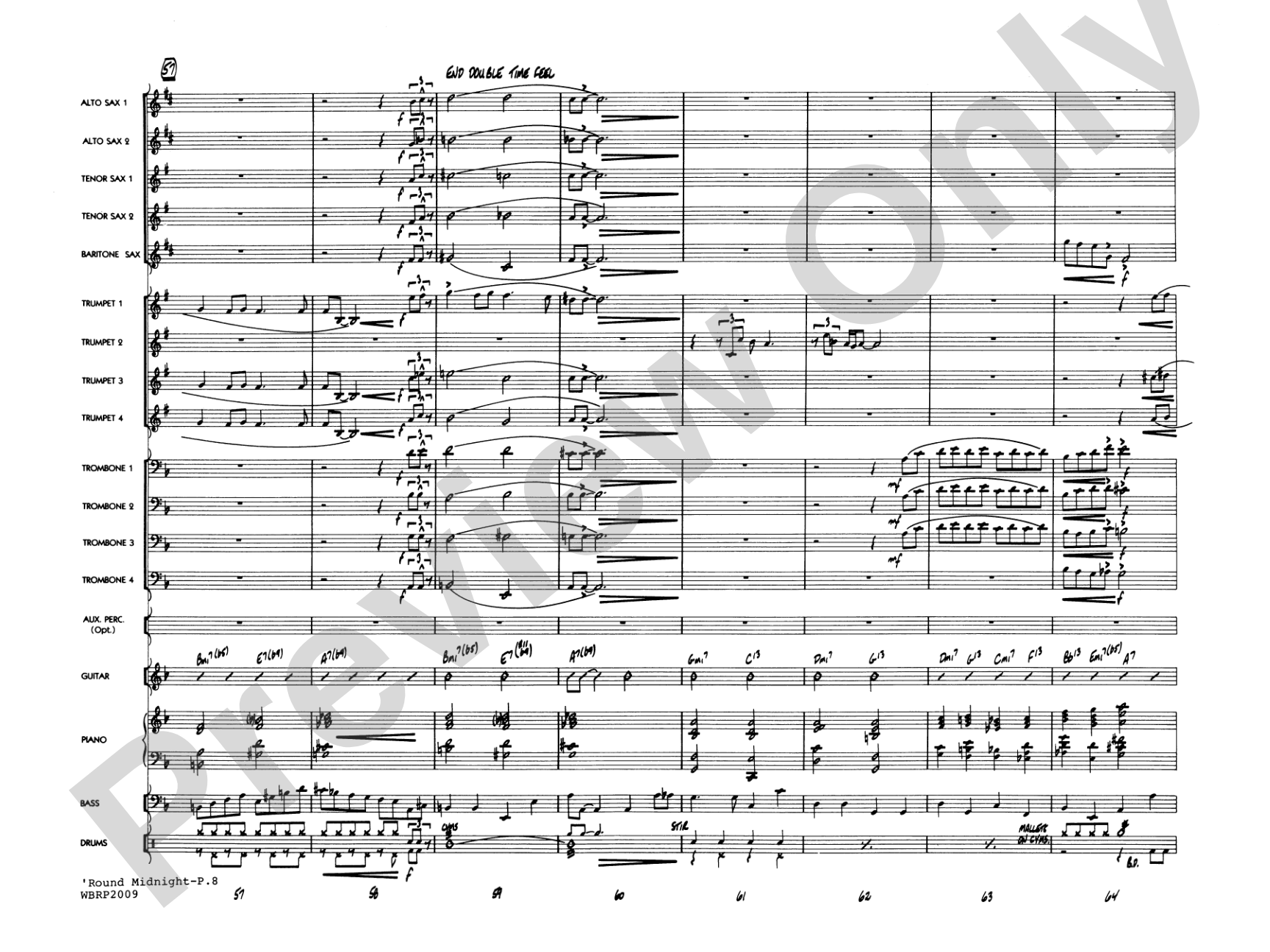
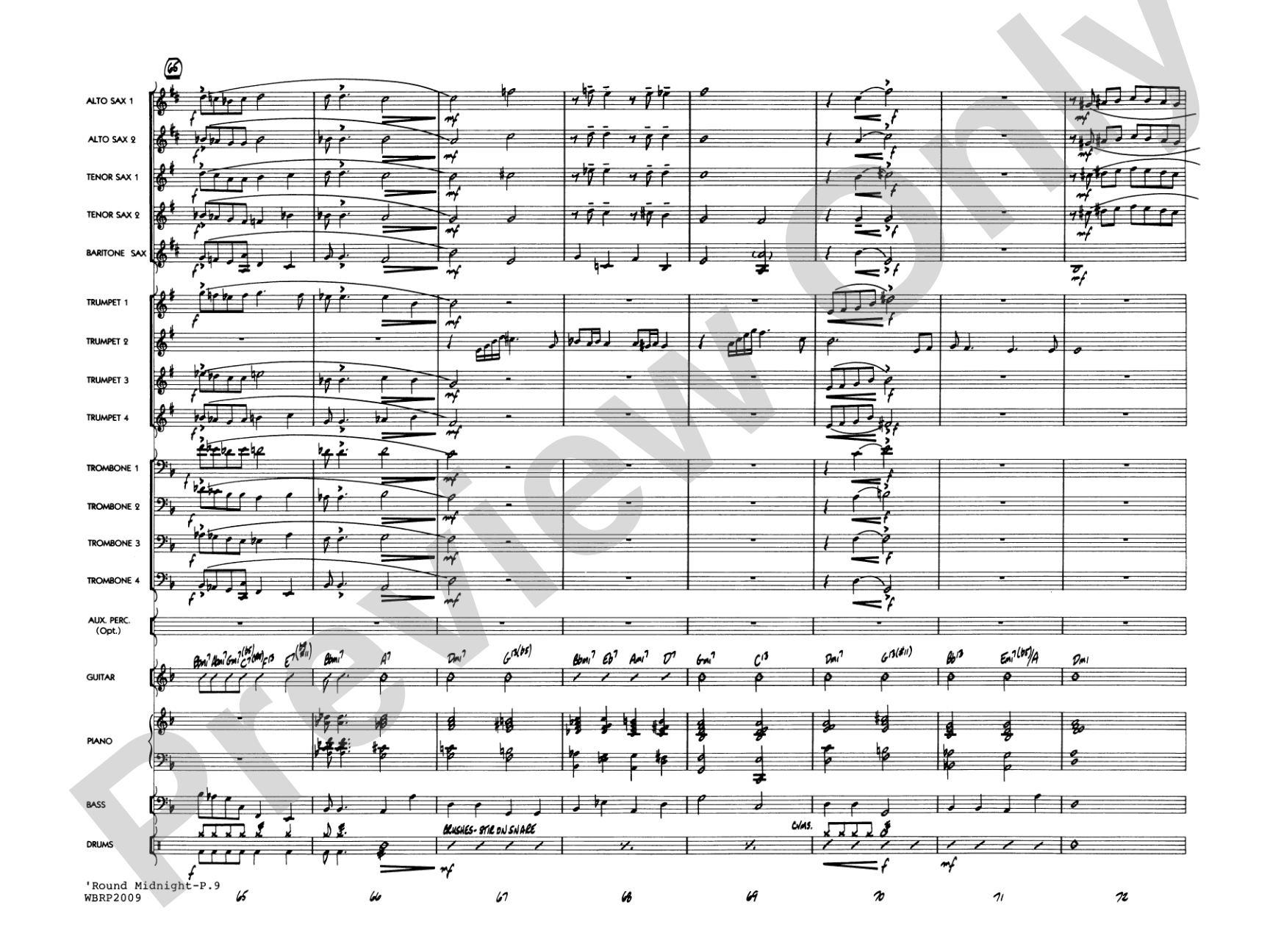
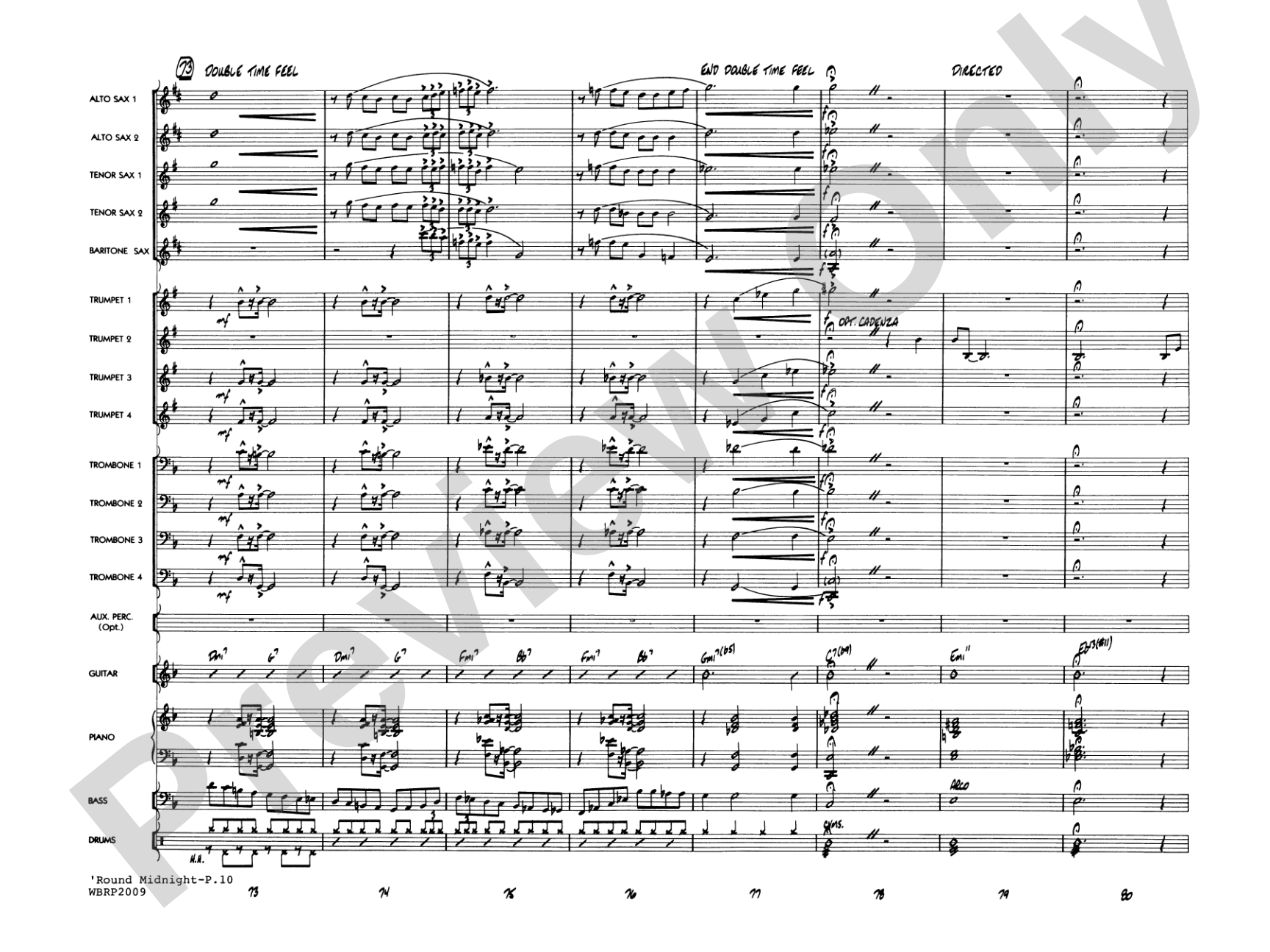
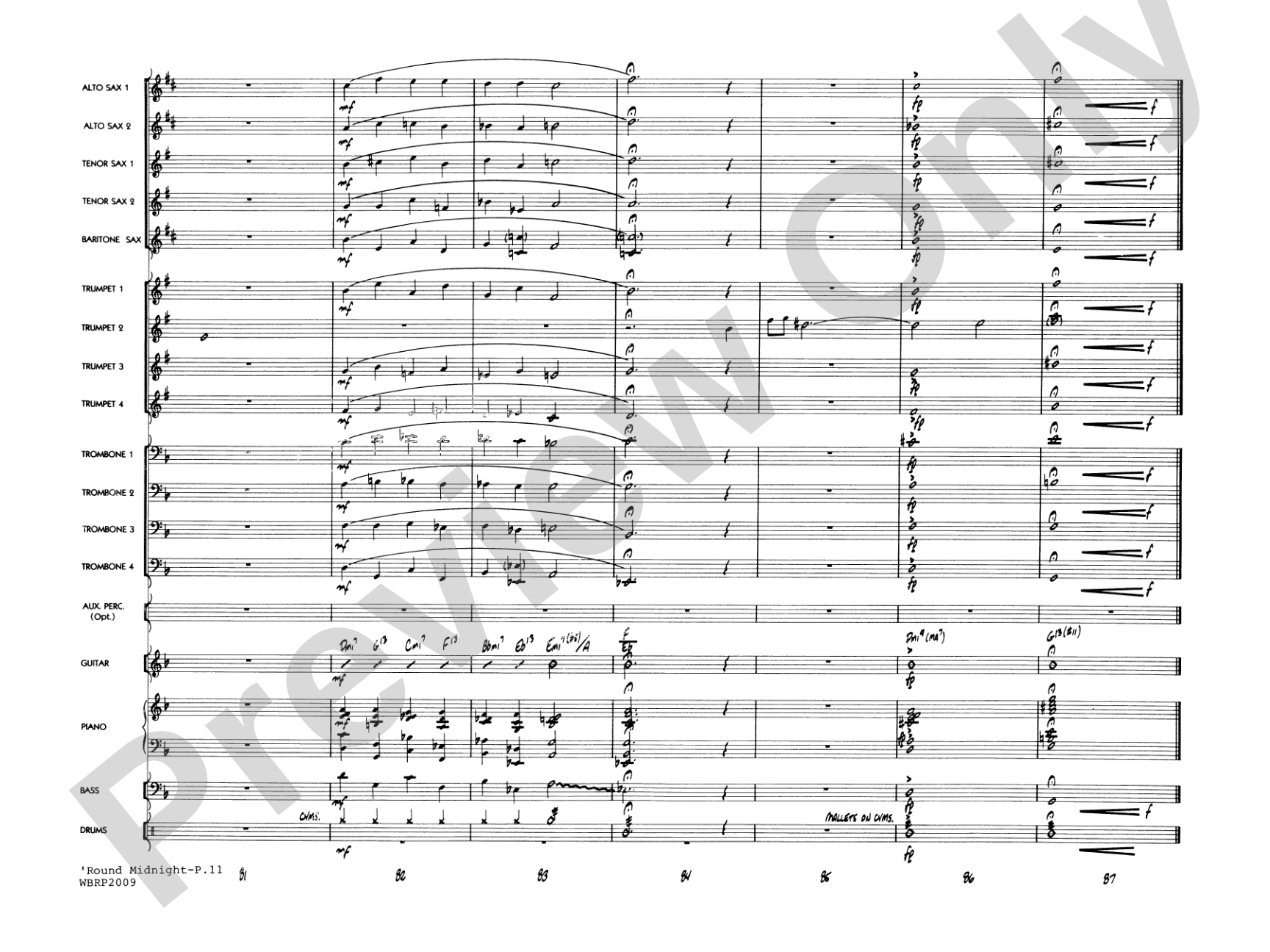

'Round Midnight: Jazz Ensemble Conductor Score & Parts
By Cootie Williams and Thelonious Monk / arr. Dave Barduhn
Grade: 3 (Medium)
Item: 00-PK-0002680

$48.00
One moment…
Description
Jeff Barduhn scores one of the most hauntingly beautiful ballads to ever come from the jazz genre. This jazz melody has long been considered a true standard. With subtle harmonic structuring, Jeff's arrangement proves a great vehicle to demonstrate the many tonal colors and timbres of your concert band.


Don't just read it, hear it, play along with it, and watch your students grow with it. In MakeMusic Cloud, 'Round Midnight: Jazz Ensemble Conductor Score & Parts comes alive with professional accompaniment, adjustable tempo, and built-in practice tools that turn solo practice into real progress.
Open in the Player
Jump straight in and assign it today.
Start Your Free Trial
Open this title and explore the full library in minutes.
Sample Audio
No sample audio found.
Sample Video
No sample videos found.
Additional Details
Series:
Jazz Band Series
Publisher:
Alfred Music
Page Count:
37
SKU:
00-PK-0002680
More about this title
About the Composer: Cootie Williams
Cootie Williams (1911-1985) was a trumpeter and bandleader whose work bridged swing and bebop, making him a crucial figure in jazz's evolution during the mid-twentieth century. His compositions and recordings with Duke Ellington's orchestra and his own ensembles helped define the sound of the 1940s and beyond, and his melodic sensibility earned him respect among both traditionalists and modernists.
Beyond his own playing, Williams' compositions have become jazz standards taught in educational settings worldwide. His melodies balance accessibility with harmonic sophistication, making them ideal vehicles for student musicians learning to navigate jazz idiom and phrasing.
Why we love this
This arrangement captures the piece's signature melancholy without requiring your ensemble to navigate excessive complexity. Barduhn's orchestration invites every section to contribute meaningful color to a ballad that rewards sensitive listening, and at Grade 3, the part-writing serves both accessibility and musicality, making it a rare ballad that works equally well for festival adjudication or concert programming.
What to expect
A late-night standard rendered in muted, introspective tones; the arrangement honors the original's haunting quality while keeping the texture lean enough for a medium-level ensemble to maintain clarity. Listeners hear sophistication and restraint rather than effort.
Who it's for
Jazz ensemble directors looking for a ballad that sits comfortably at Grade 3 while offering genuine musical substance. This works for ensembles with developing jazz vocabularies and players who are still building fluency in swing articulation, blues tonality, and ensemble blend.
How to get the most out of it
- Shape the opening melody with long-line phrasing rather than metronomic pulse; this ballad breathes, so give it room to settle into its own time.
- Balance the harmonic layers carefully during ensemble sections; the timbral subtlety Barduhn writes depends on each voice hearing the voices around them.
- Let the rhythm section anchor the groove without pushing the tempo; if the drummer rushes, the haunting quality evaporates.
- Rehearse with attention to dynamic control in the softer passages; a well-shaped pianissimo section often impresses adjudicators more than a loud one.
How to use it
Anchor a concert's second half with this ballad, especially if you're programming a mix of uptempo and lyrical jazz. Its reflective mood provides excellent contrast to swing charts and gives audiences a moment to settle into the ensemble's sound without demanding technical pyrotechnics.
Skills your students will build
- Swing articulation and phrasing appropriate to ballad tempo
- Blending muted trumpet and trombone colors in ensemble voicings
- Listening to harmonic layers and adjusting intonation in a jazz context
- Dynamic control in softer passages with extended holds
- Interpreting jazz rubato and responding to the rhythm section's feel