
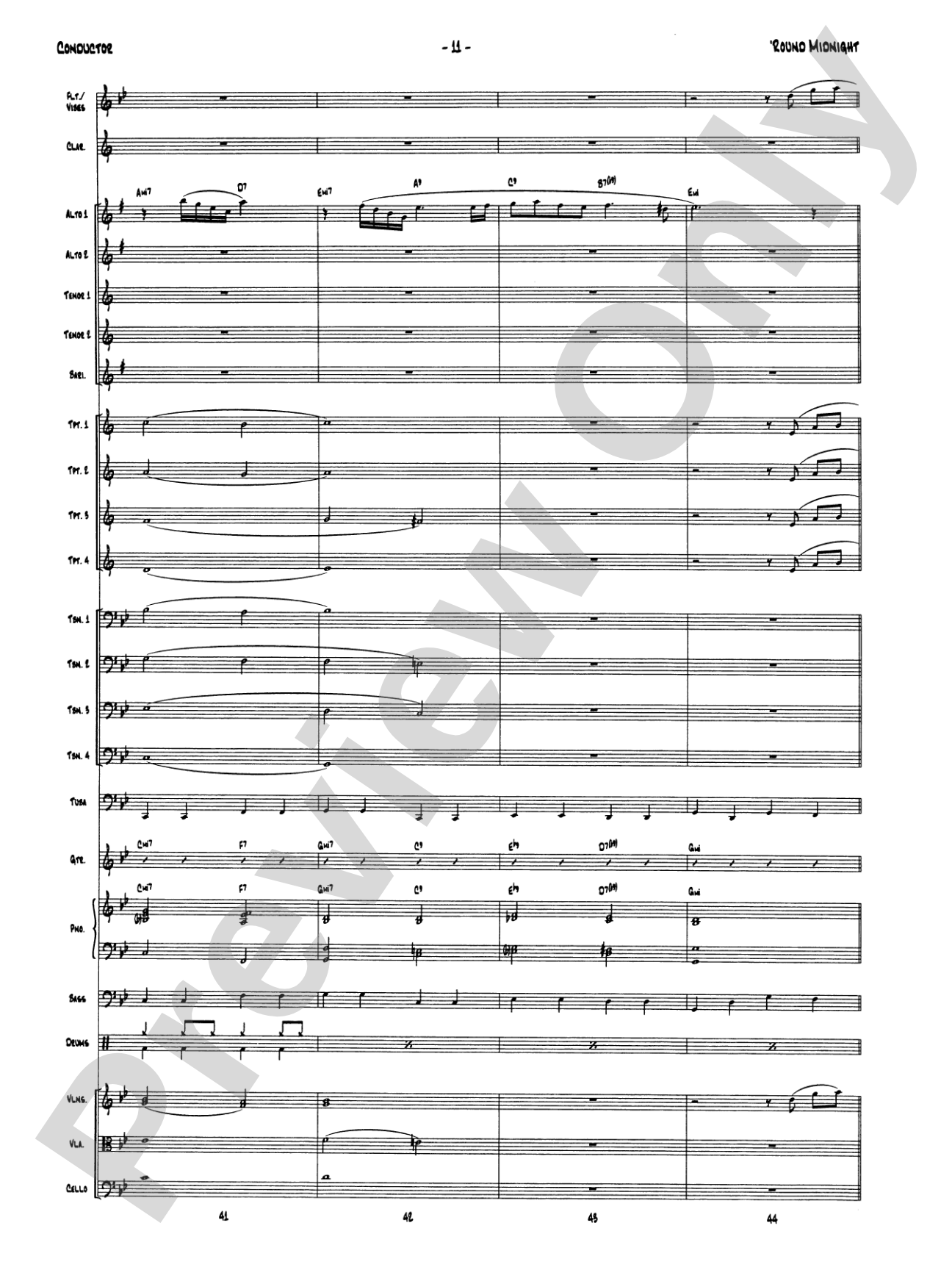
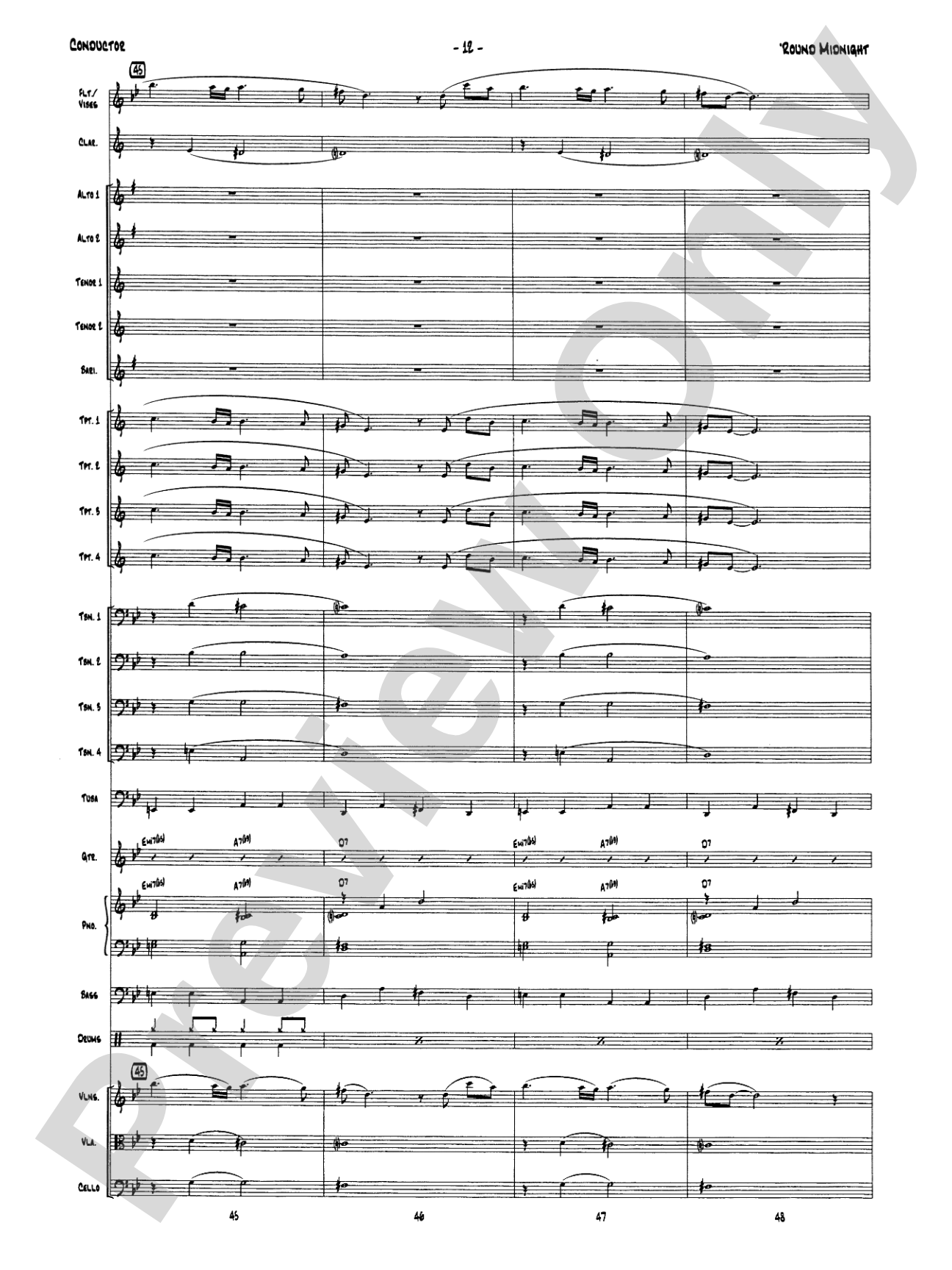
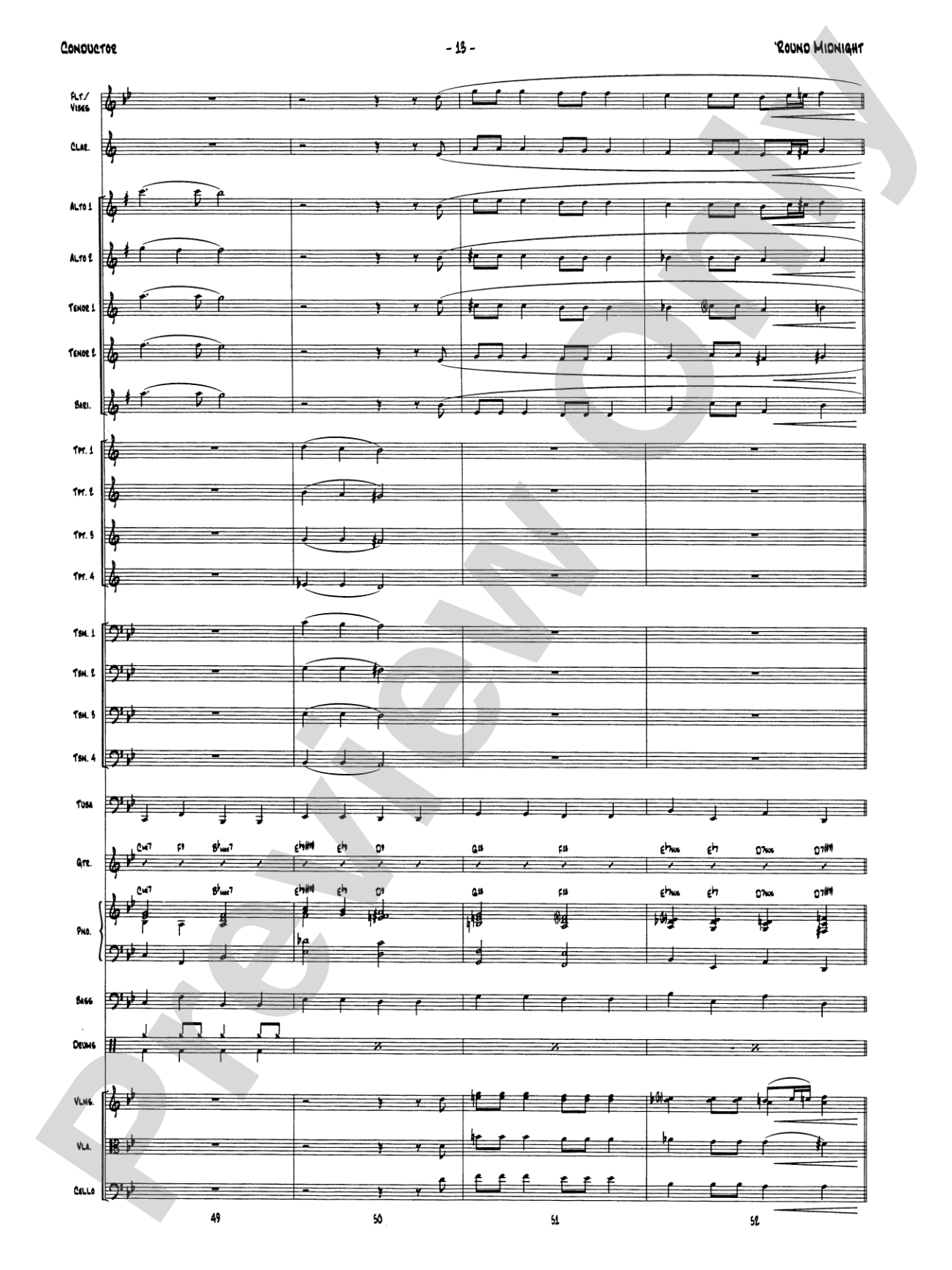
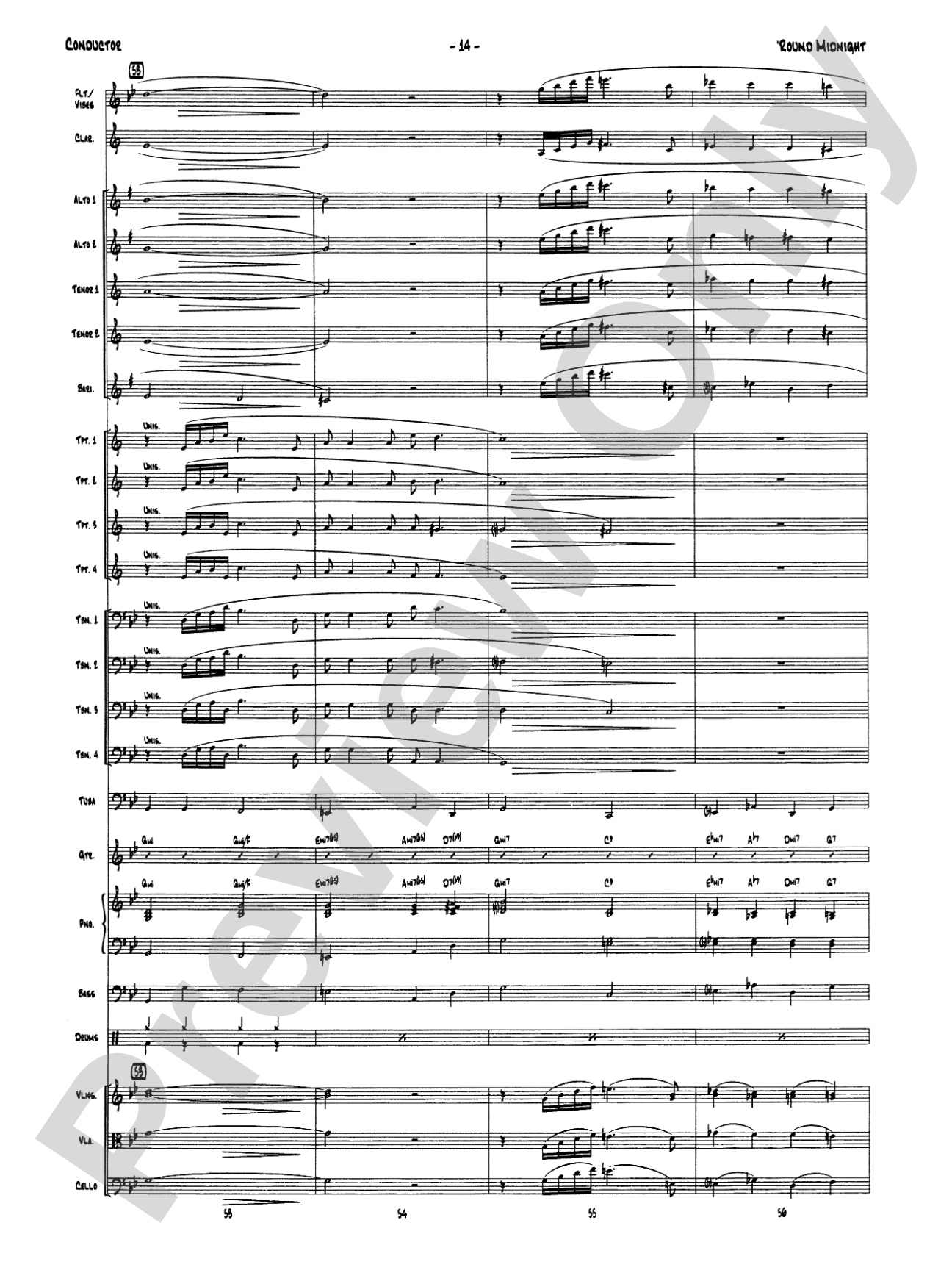
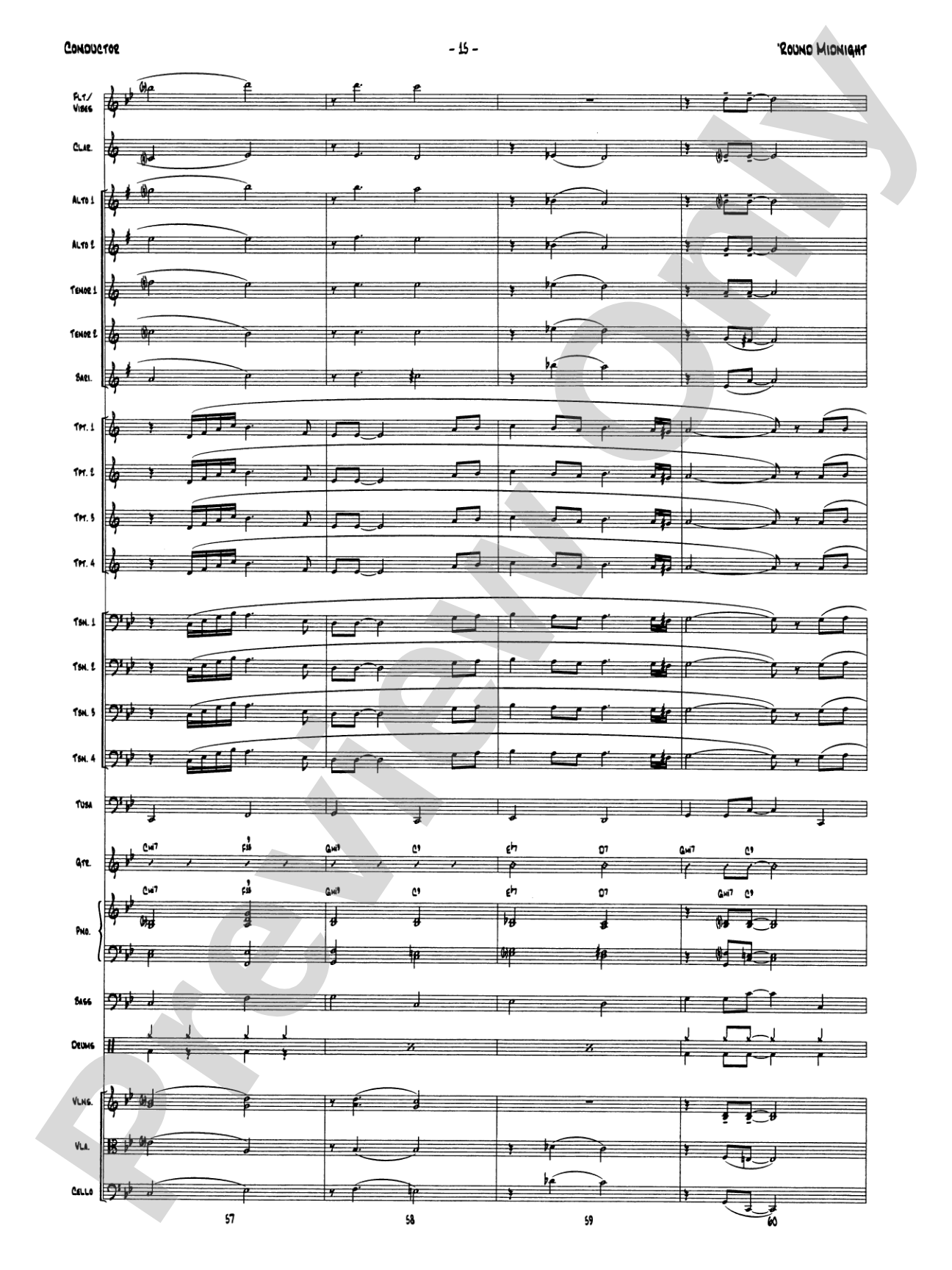
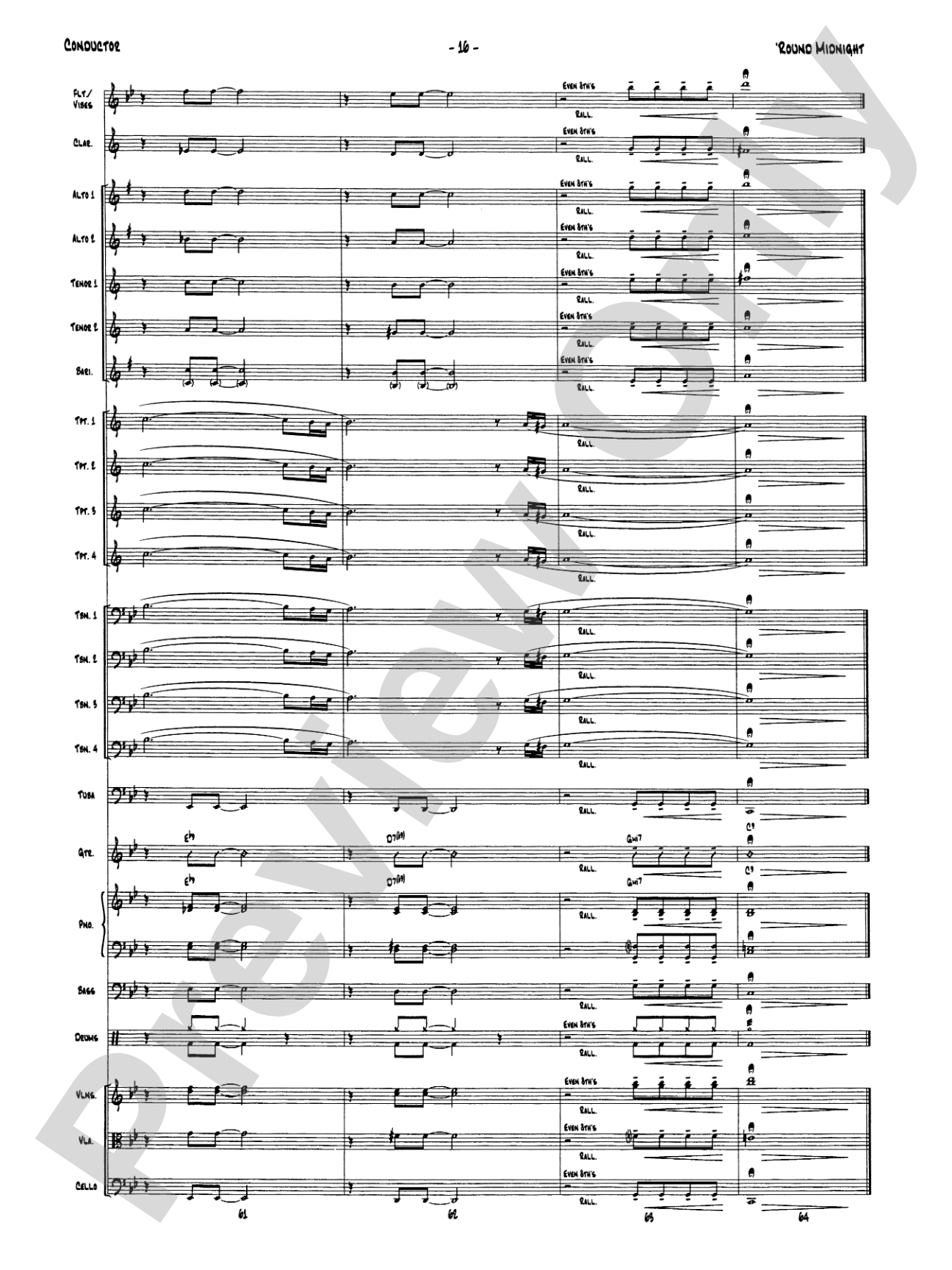



'Round Midnight: Jazz Ensemble Conductor Score & Parts
Words by Bernie Hanighen, music by Cootie Williams and Thelonious Monk / arr. Mike Lewis
Grade: 2 (Medium Easy)
Item: 00-PK-0002535

$44.00
One moment…
Description
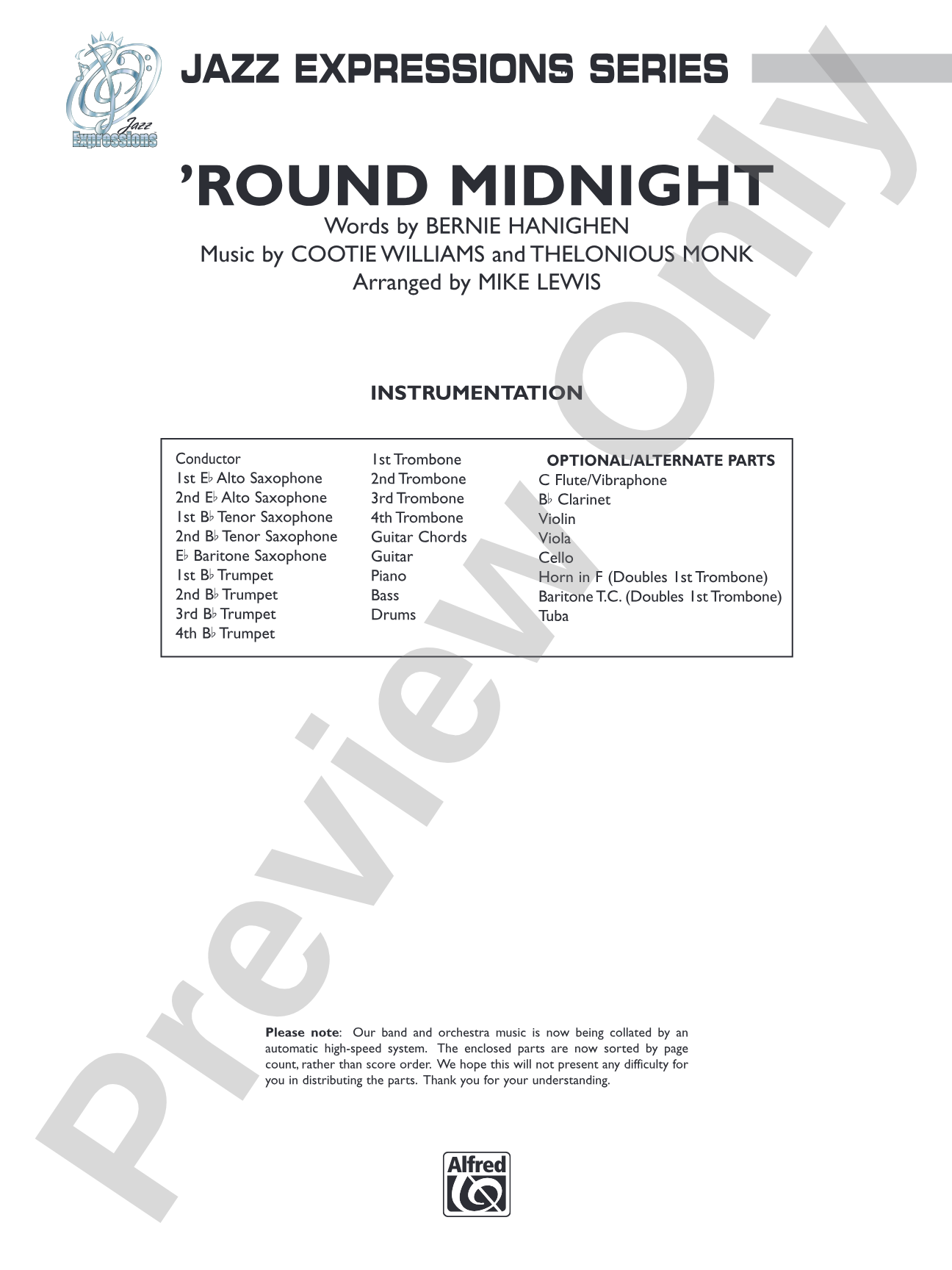
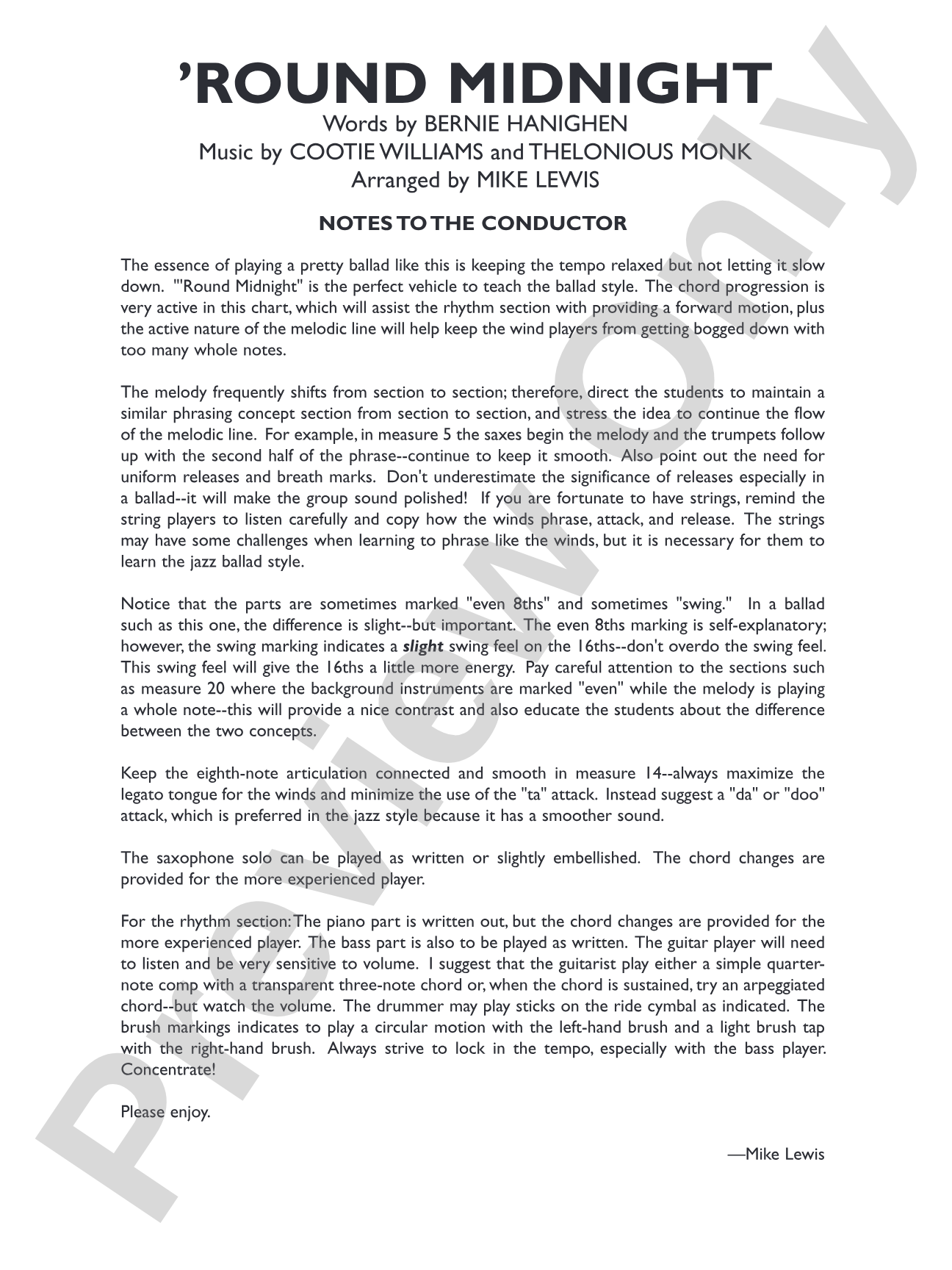
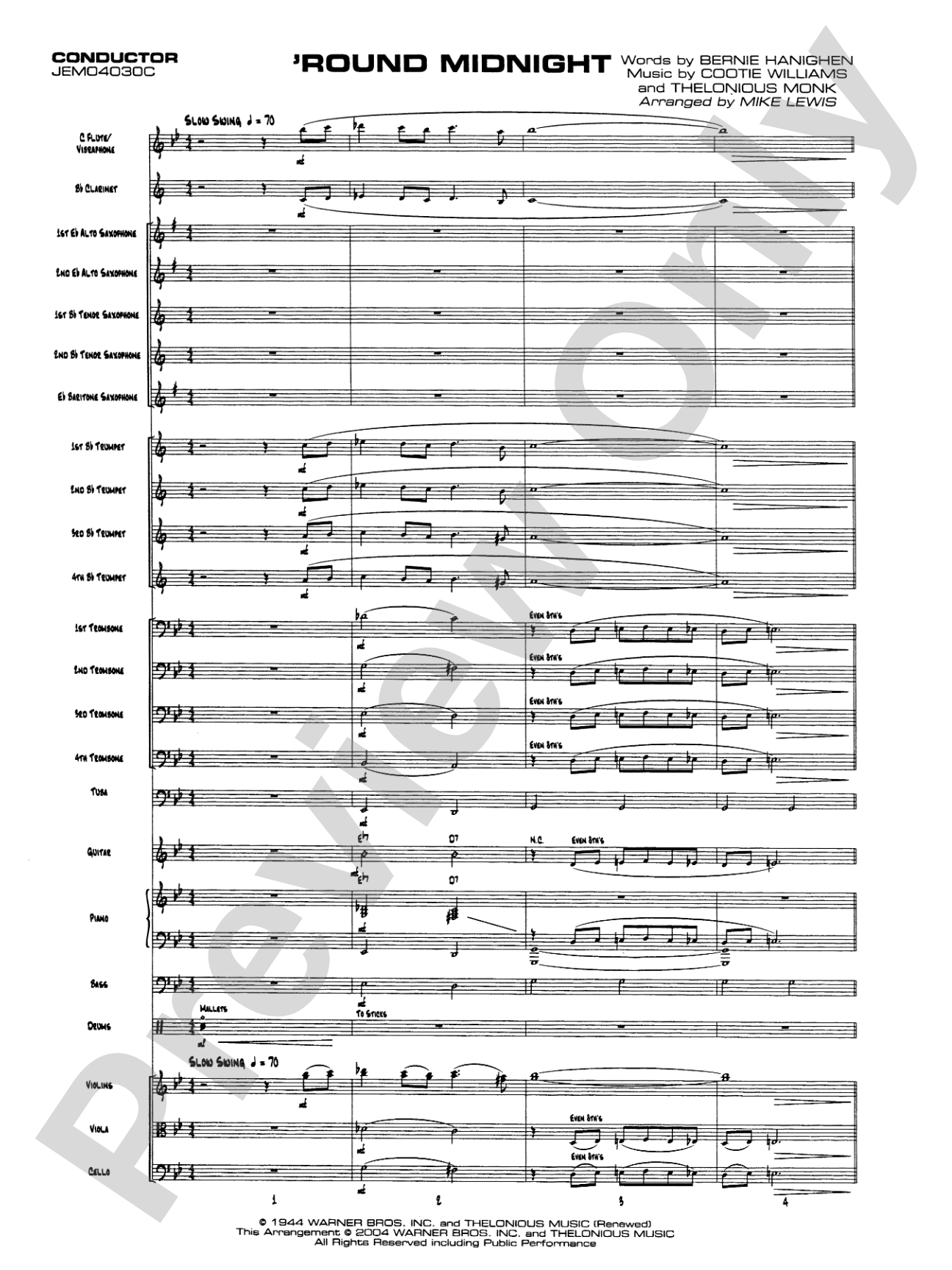
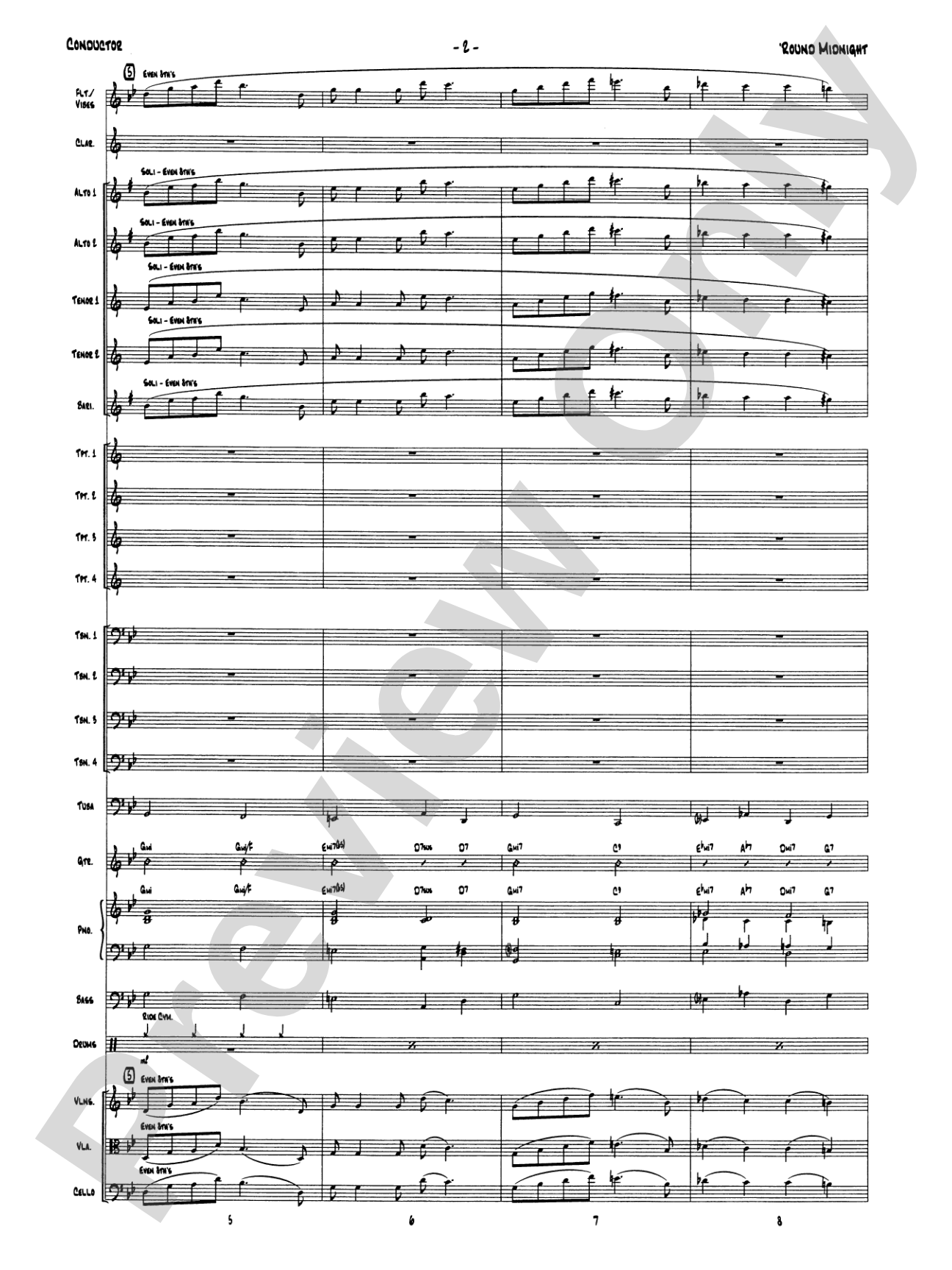
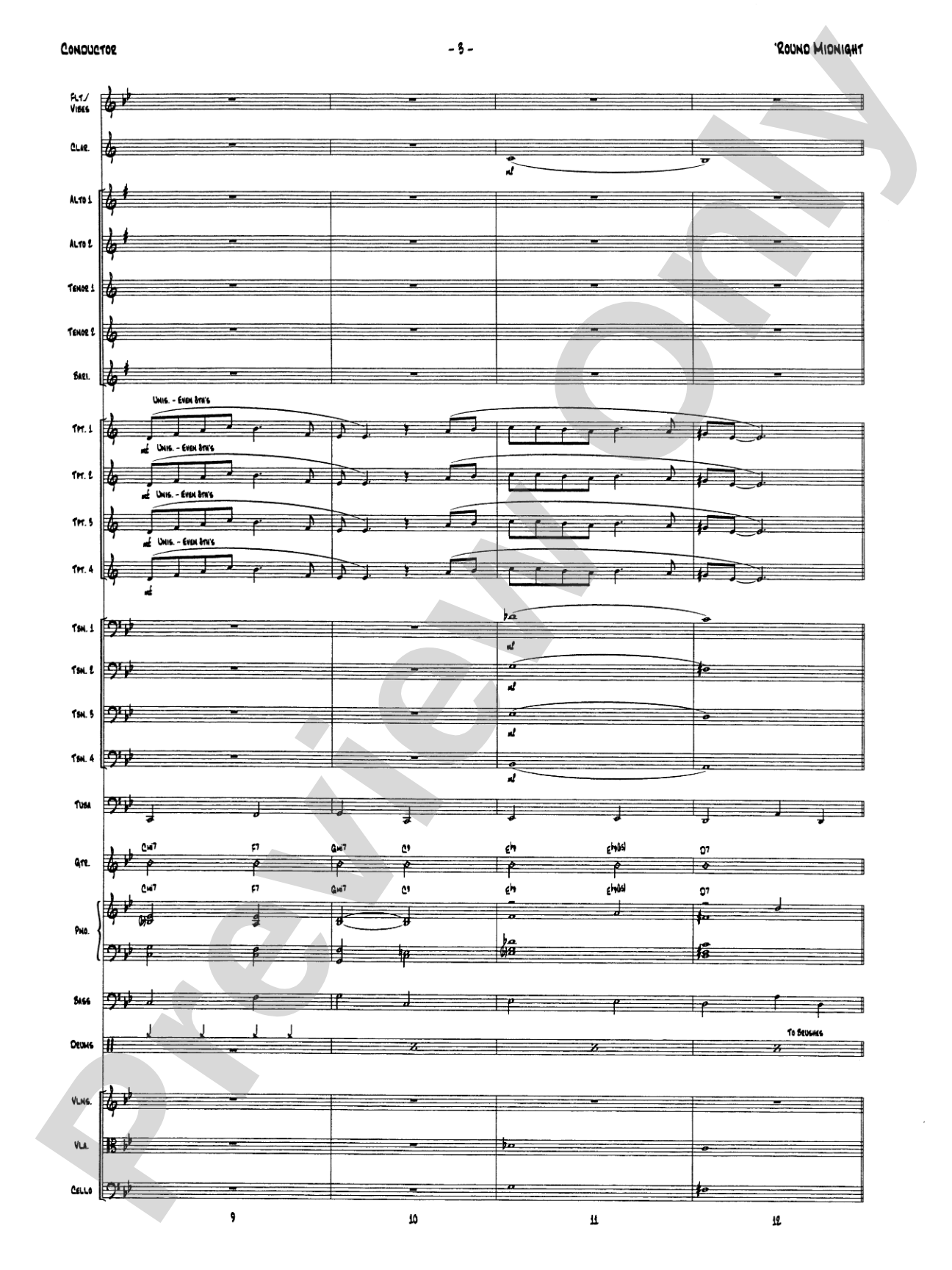
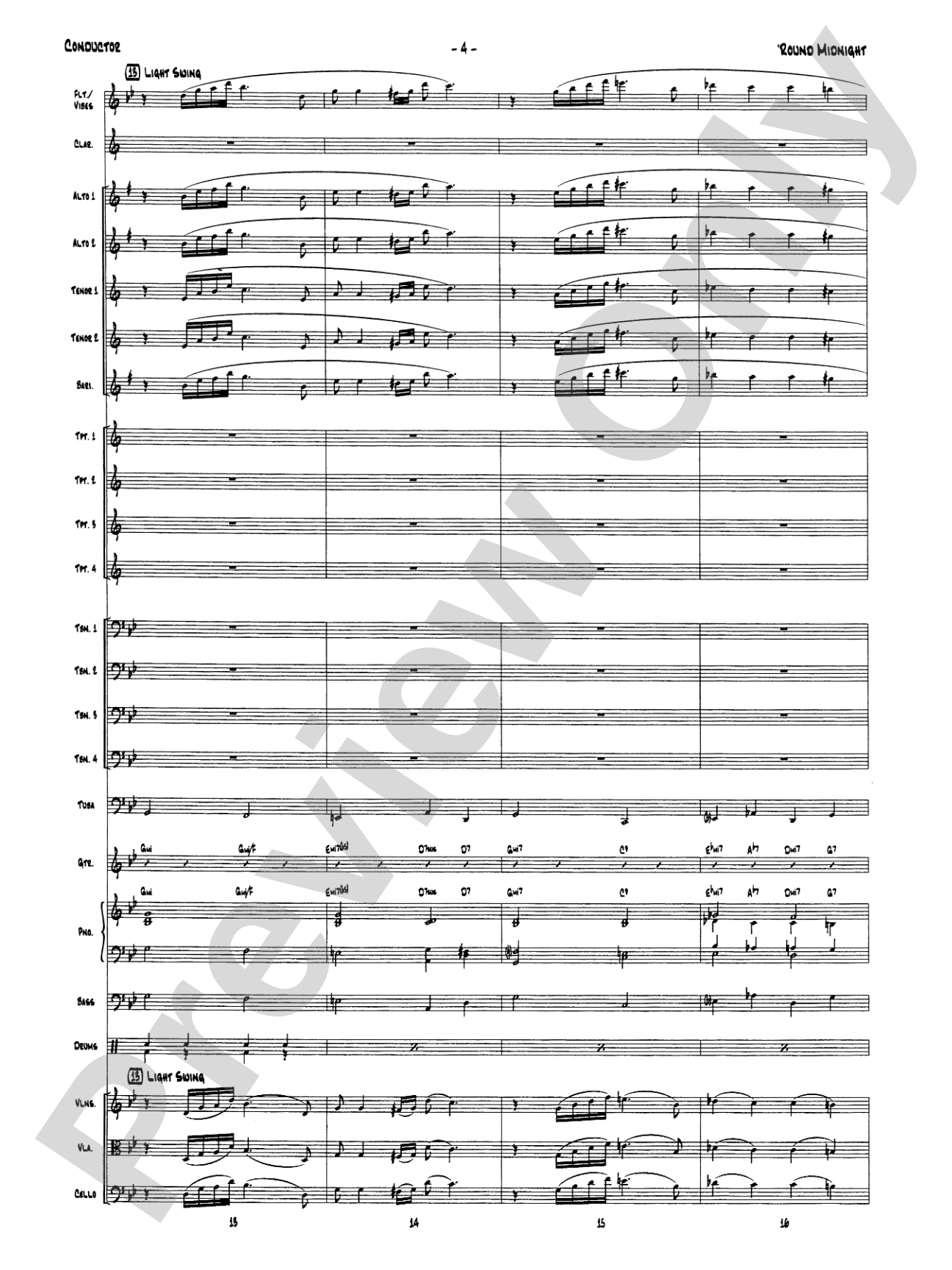
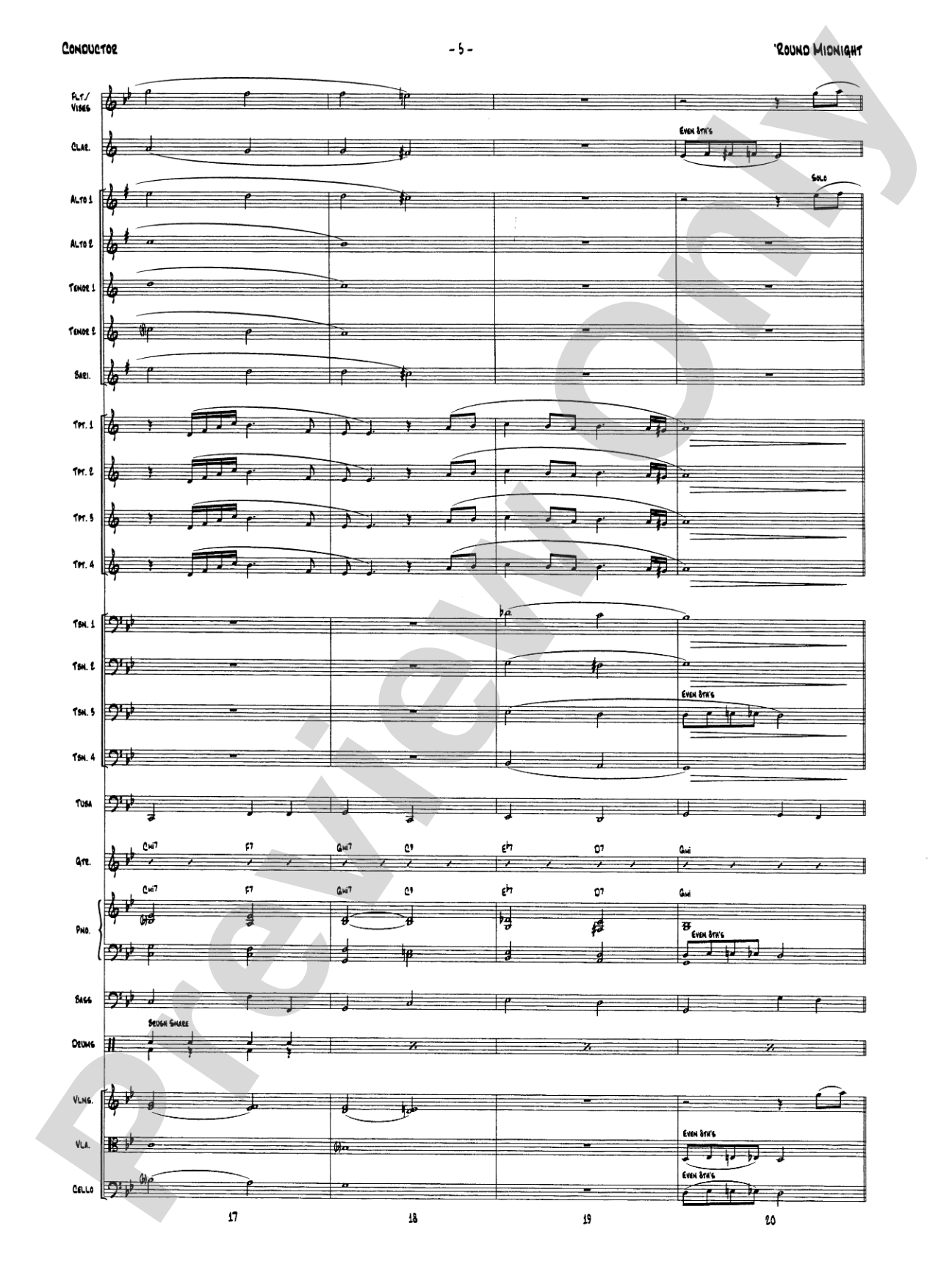
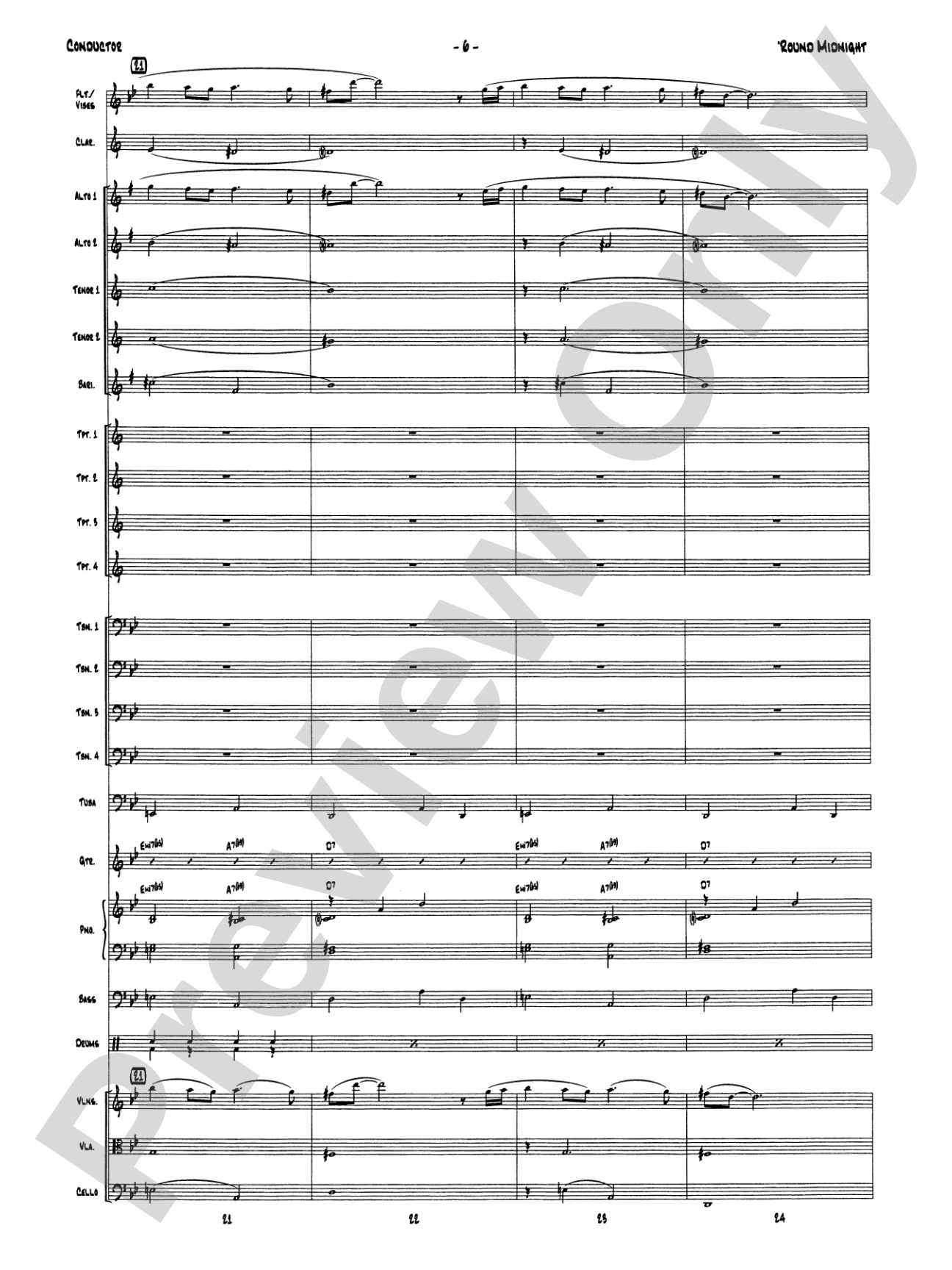
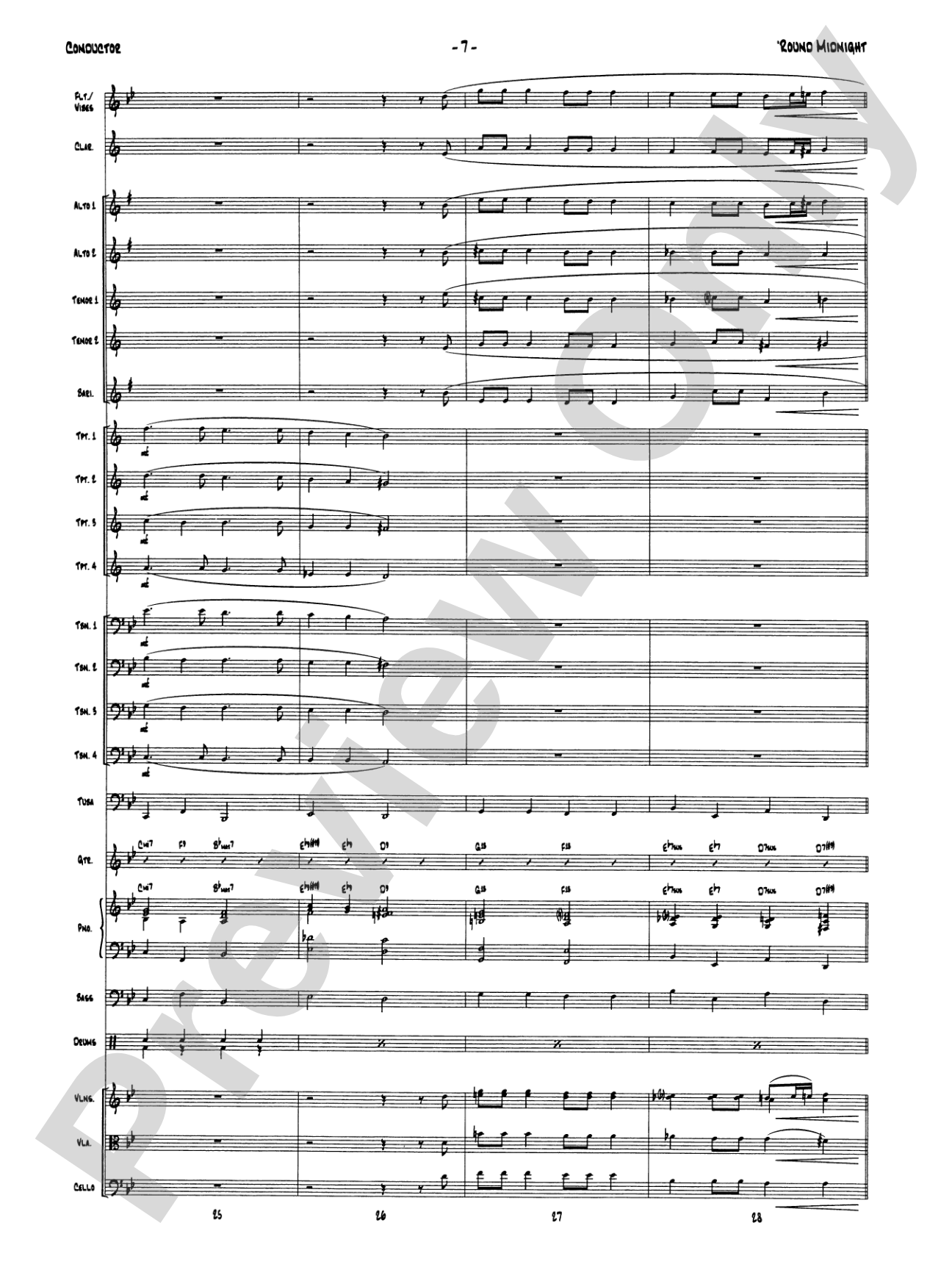
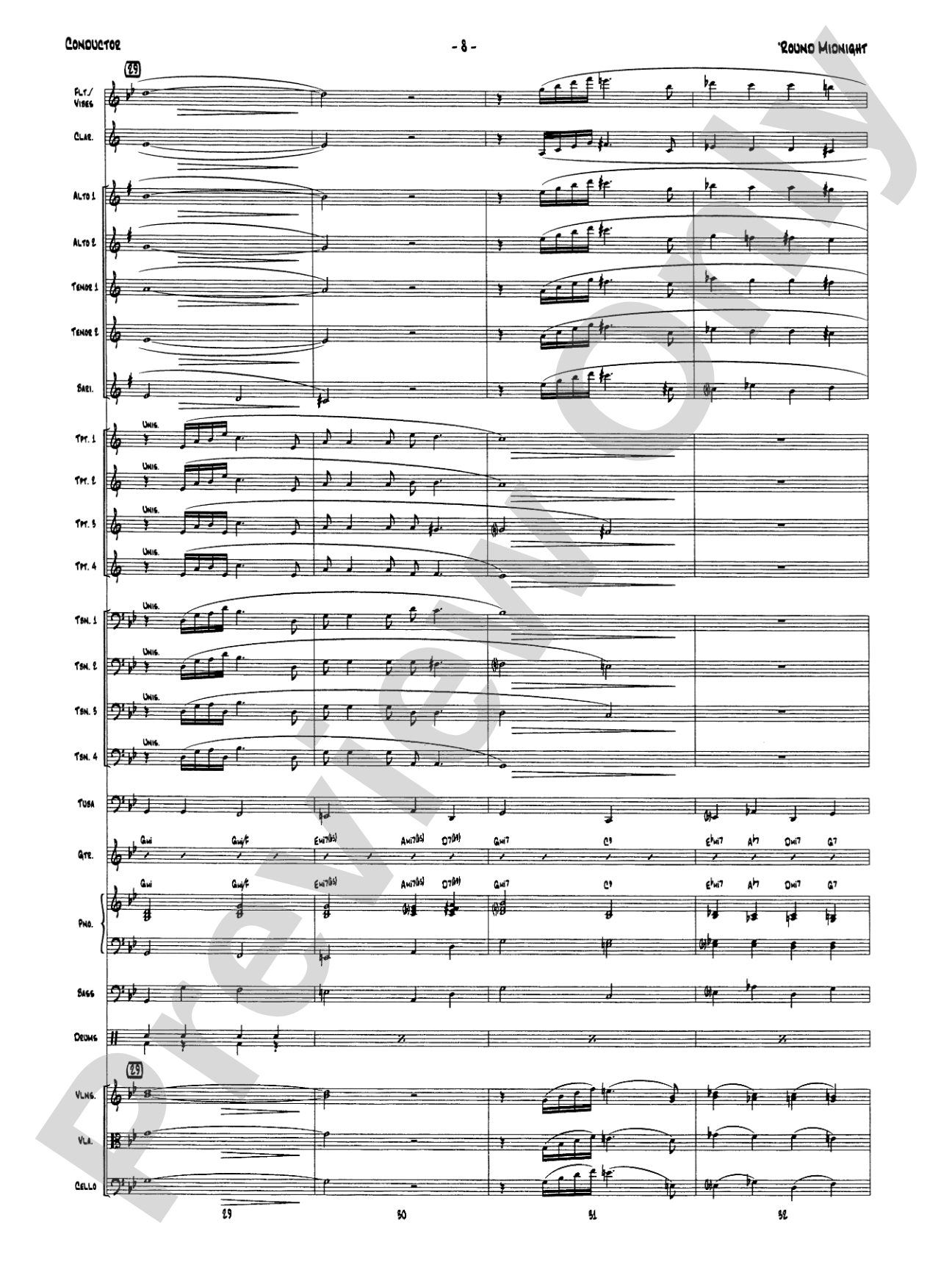
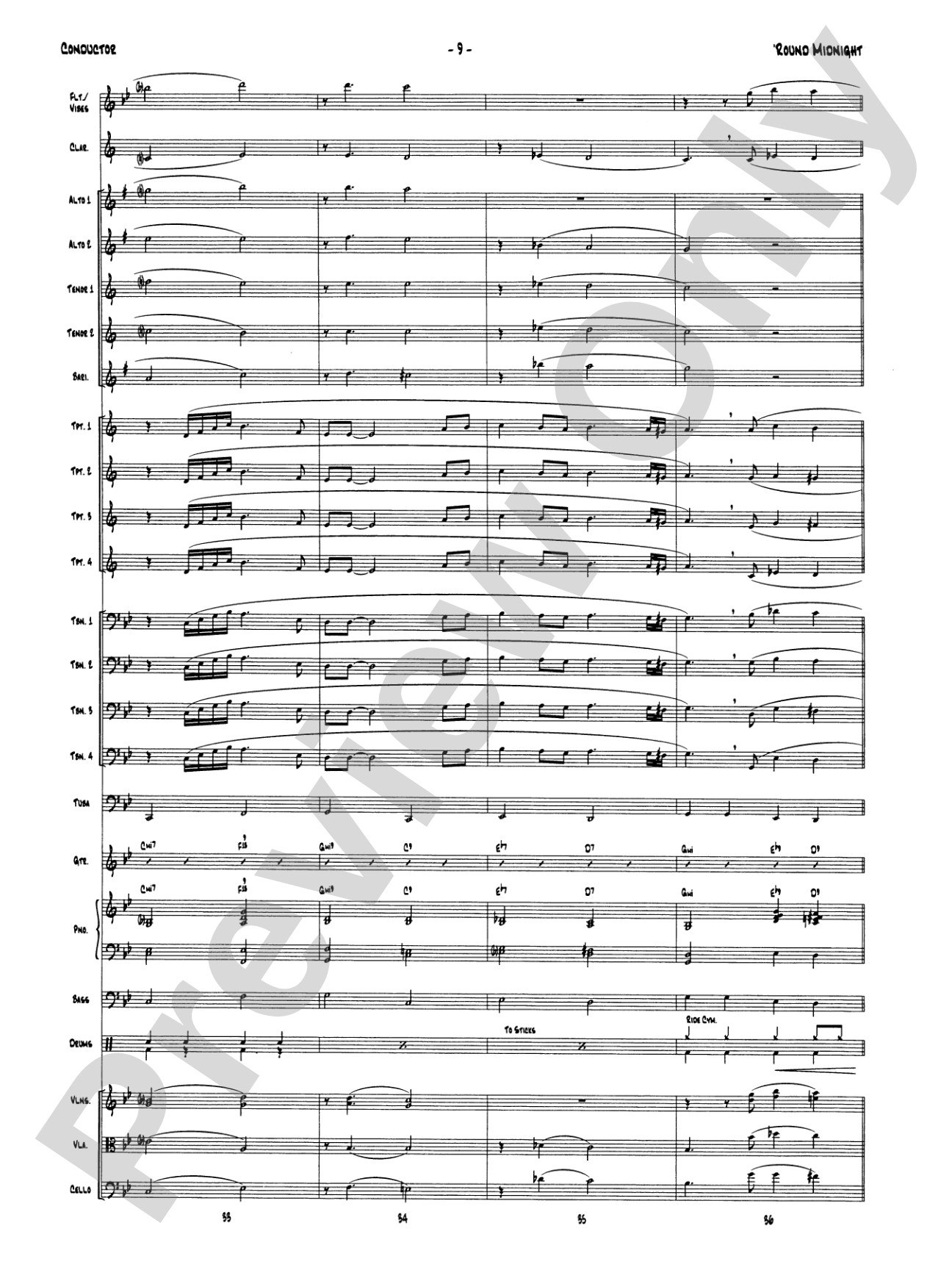
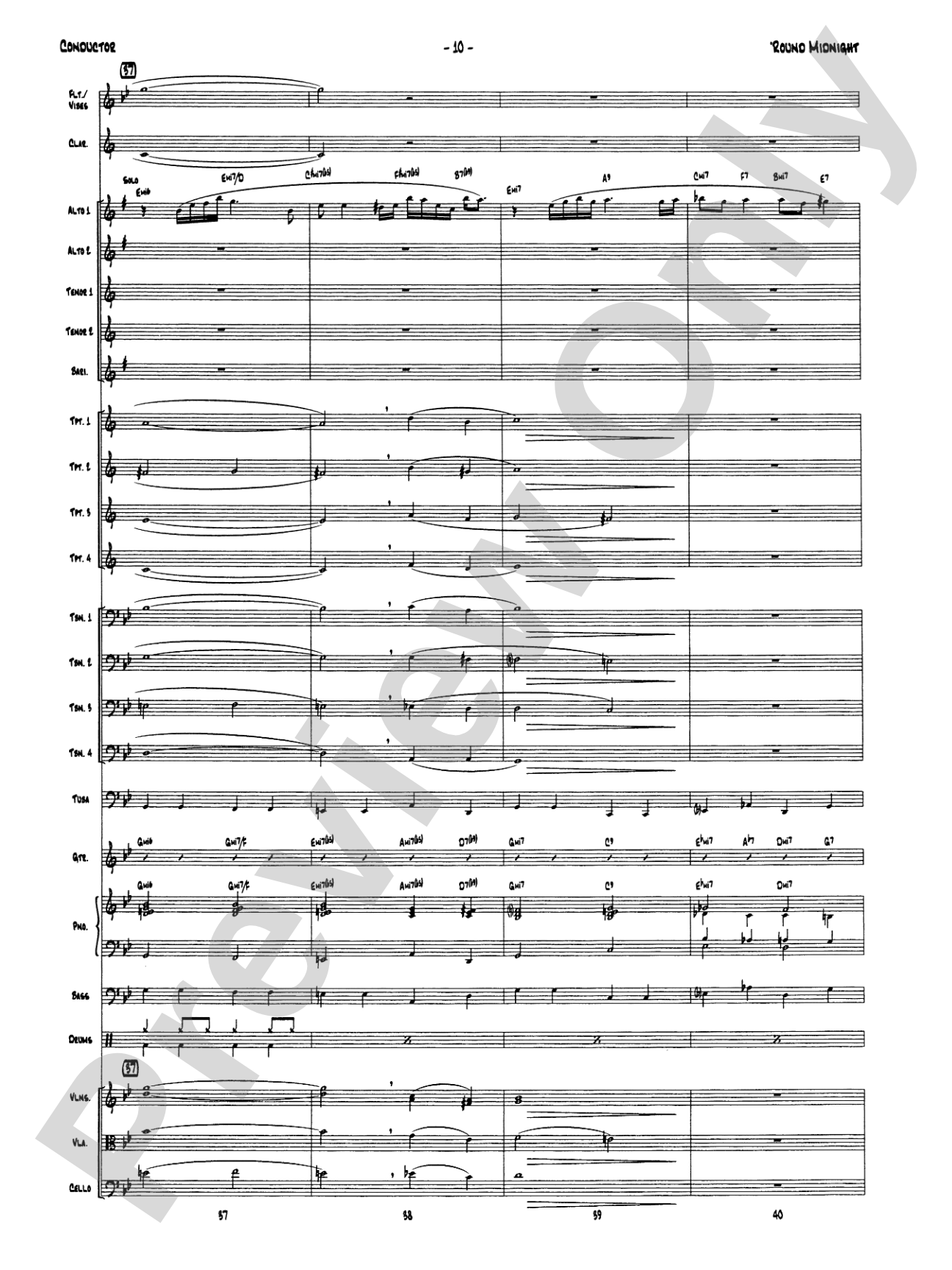
"'Round Midnight" is a jazz classic now available in an arrangement correlated to the Jazz Expressions™ curriculum. The focus of this chart is teaching the traditional ballad style to the young player with legato melodic phrases, smooth phrasing articulations, a lyrical solo for 1st alto saxophone (written or ad-lib), and accessible ranges set in a slow swing feel. Optional parts for flute, clarinet, horn, baritone horn, tuba, AND violin, viola and cello. (3:46)


Don't just read it, hear it, play along with it, and watch your students grow with it. In MakeMusic Cloud, 'Round Midnight: Jazz Ensemble Conductor Score & Parts comes alive with professional accompaniment, adjustable tempo, and built-in practice tools that turn solo practice into real progress.
Open in the Player
Jump straight in and assign it today.
Start Your Free Trial
Open this title and explore the full library in minutes.
Sample Audio
1
Audio File
--:--
0:00
0:00
Sample Video
No sample videos found.
Additional Details
Series:
Jazz Expressions
Publisher:
Alfred Music
Page Count:
56
SKU:
00-PK-0002535
More about this title
About the Composer: Bernie Hanighen
Bernie Hanighen (1912-1993) was an American songwriter and composer who helped establish jazz standards during the Great American Songbook era. He collaborated with some of jazz's most innovative figures, including Cootie Williams and Thelonious Monk, to create music that has endured across generations of jazz musicians and educators.
Why we love this
This arrangement captures what makes a true jazz ballad educational without oversimplifying the style. Mike Lewis has crafted something that teaches legato phrasing and swing feel through actual melodic content rather than patterns, and the optional instrumental parts mean you can use it whether your ensemble is brass-heavy, has strings, or somewhere in between.
What to expect
Smoky and introspective, with long melodic lines that ask players to sing through their instruments rather than articulate. The slow swing creates space for genuine musical conversation between sections, and the accessible ranges let younger players focus on tone and phrasing instead of fighting the mechanics.
Who it's for
Jazz ensemble directors working with grades 2-3 who want to introduce authentic ballad style and legato jazz phrasing to young players. This works equally well for a standard big band setup or an ensemble with optional strings, making it flexible for different program configurations.
How to get the most out of it
- Shape the opening melody with long breaths and subtle dynamic arcs; resist the urge to rush the slow swing feel, which sits on the fine line between ballad and groove.
- Feature the 1st alto saxophone solo as the emotional centerpiece of the chart. Whether the player chooses to read the written line or take an ad-lib, give them space to breathe and let the accompaniment settle underneath.
- Balance the optional strings and woodwinds carefully so they enhance the texture without burying the core harmonic movement; this is a jazz piece first, not a string arrangement.
- Keep the rhythm section relaxed and conversational, especially on the slower passages, so the entire ensemble learns to listen and respond rather than just count.
How to use it
Place this early in the jazz season when you're building foundational concepts around swing feel and ballad interpretation, or use it as a featured selection in a concert of jazz standards alongside more uptempo charts. The moderate length and attainable difficulty make it ideal for fall festivals or mid-year assessments of stylistic understanding.
Skills your students will build
- Legato phrasing and breath control in jazz context
- Slow swing feel and behind-the-beat articulation
- Listening and responding as an ensemble in ballad tempo
- Melodic independence for featured soloists
- Reading and balancing optional instrumental doublings