
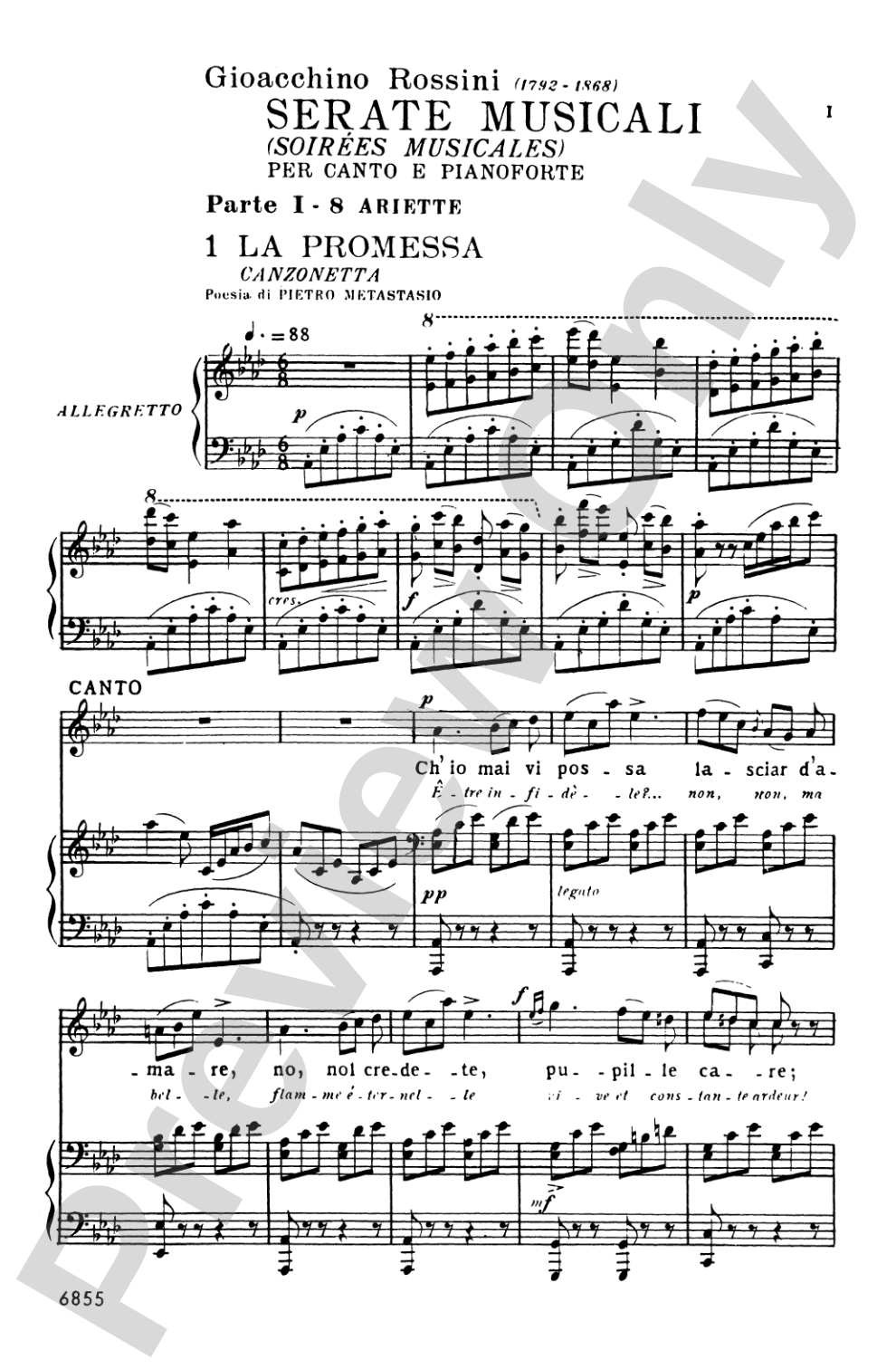
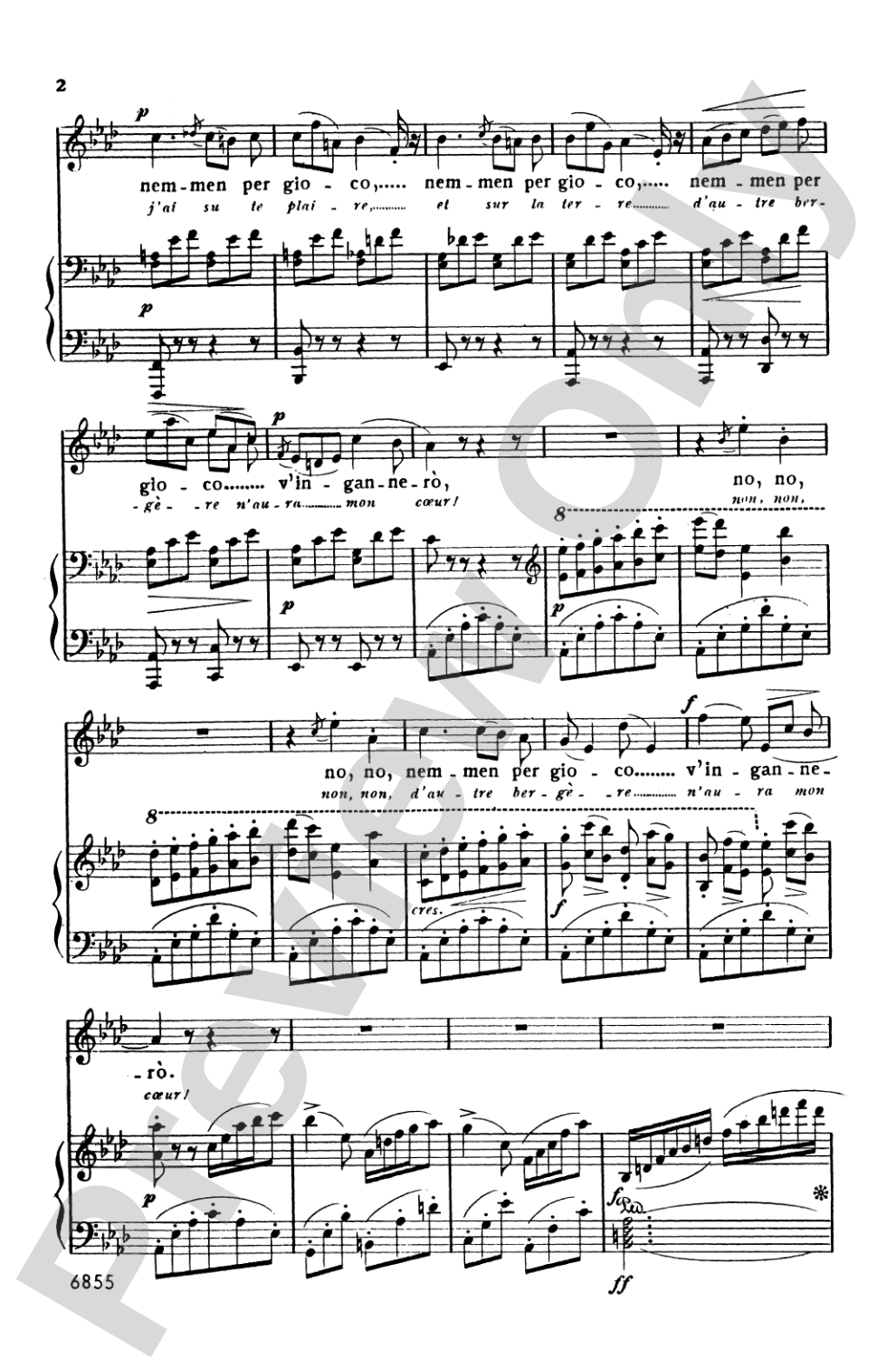
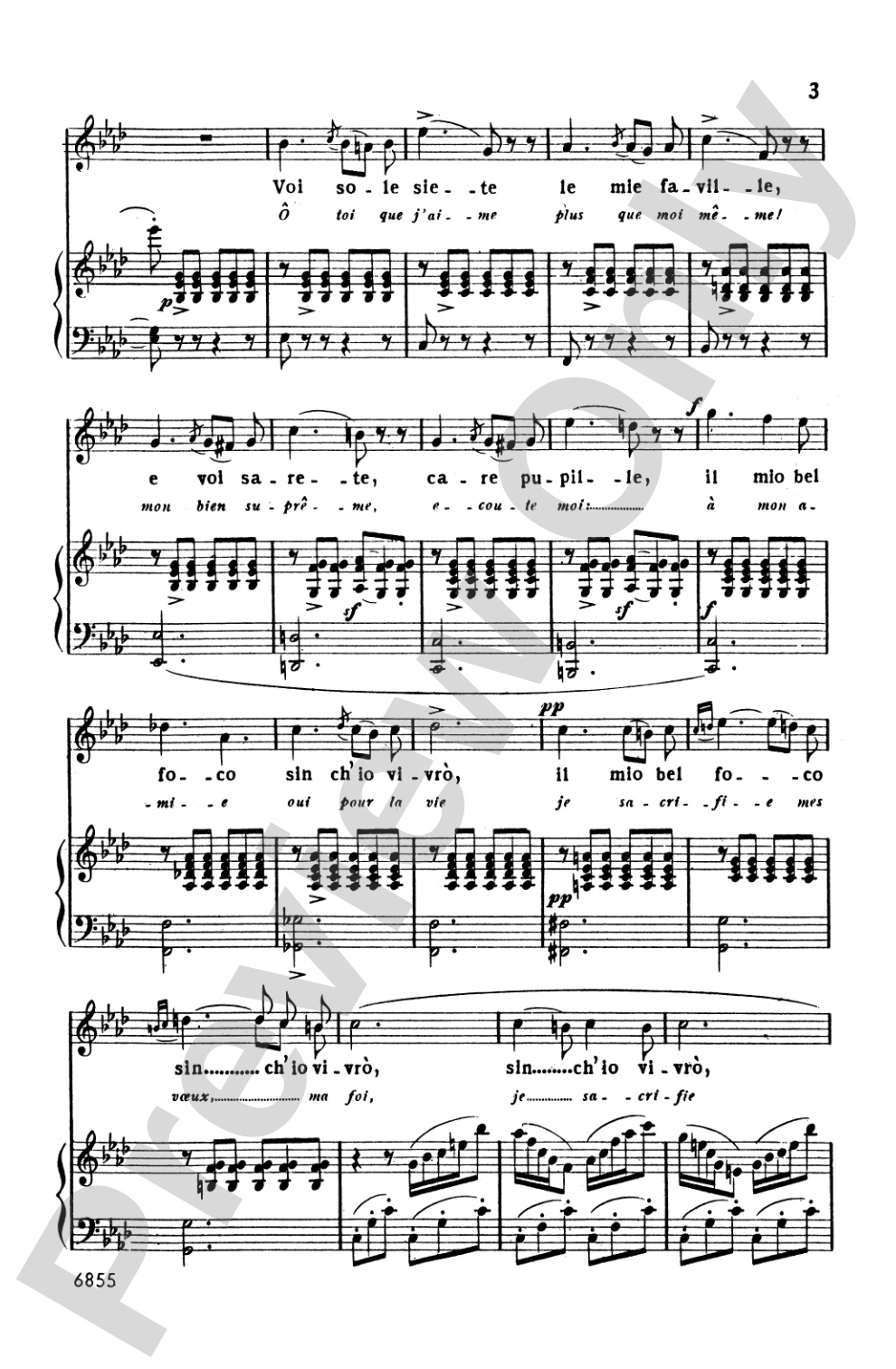
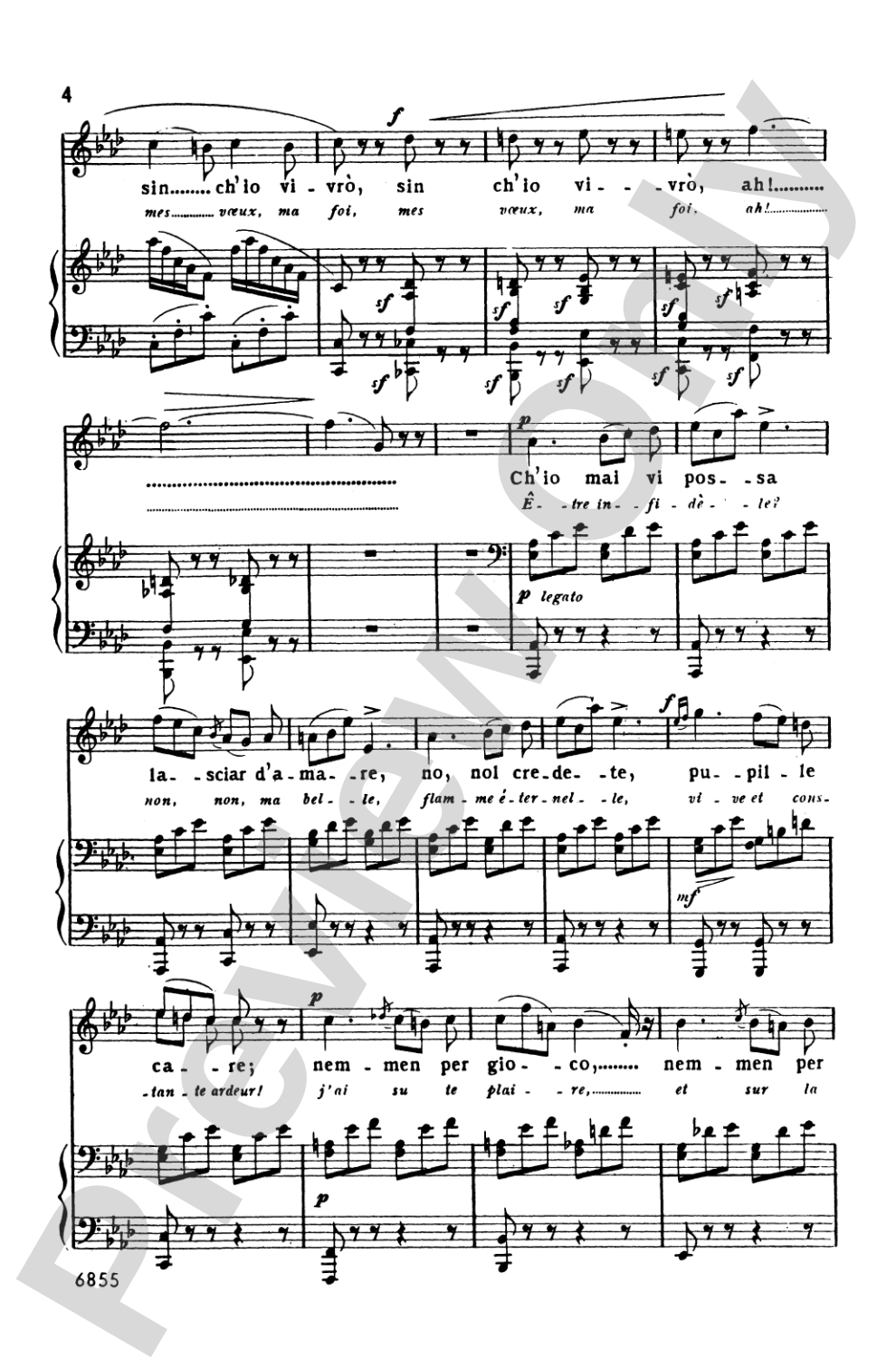
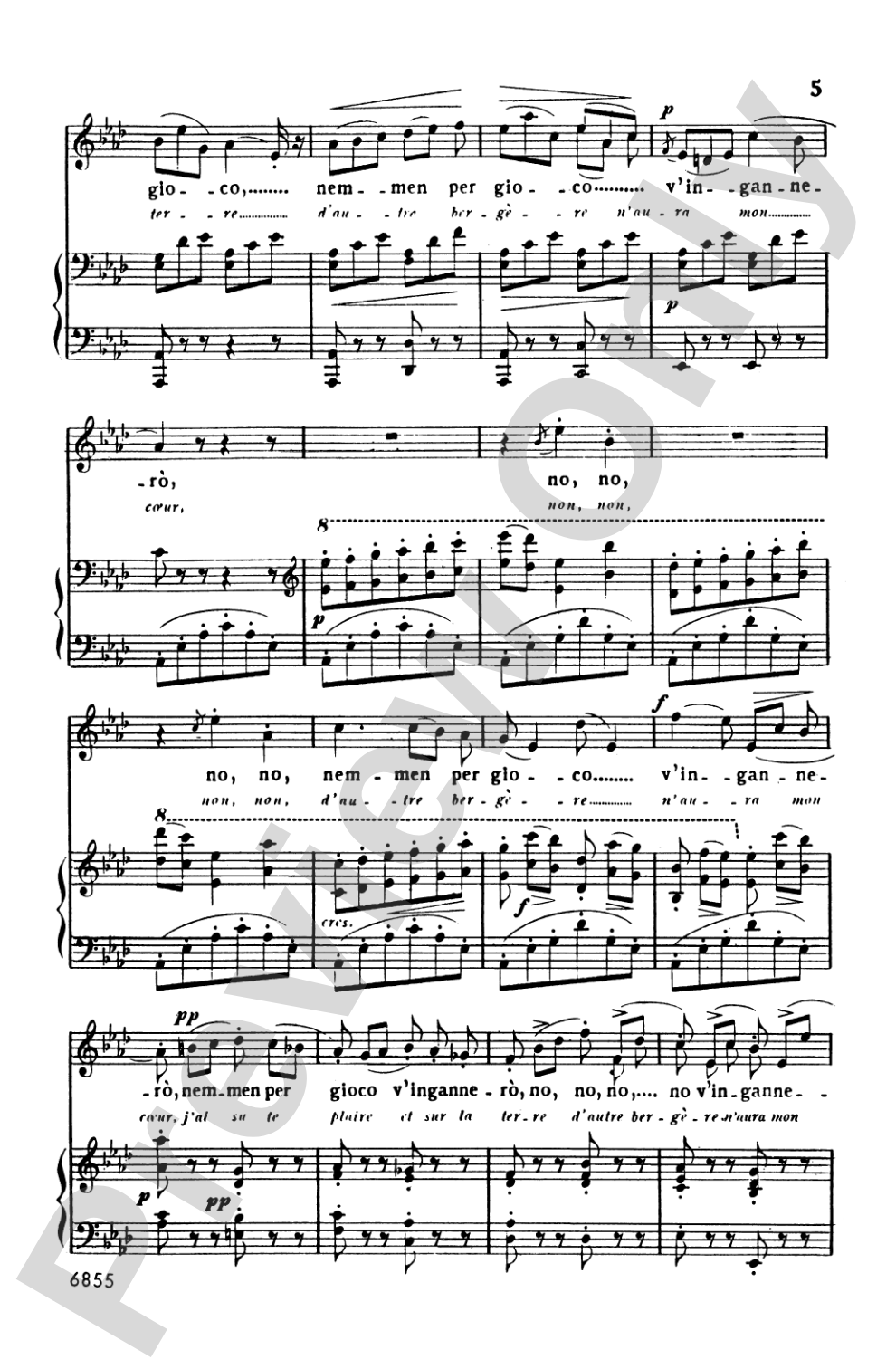
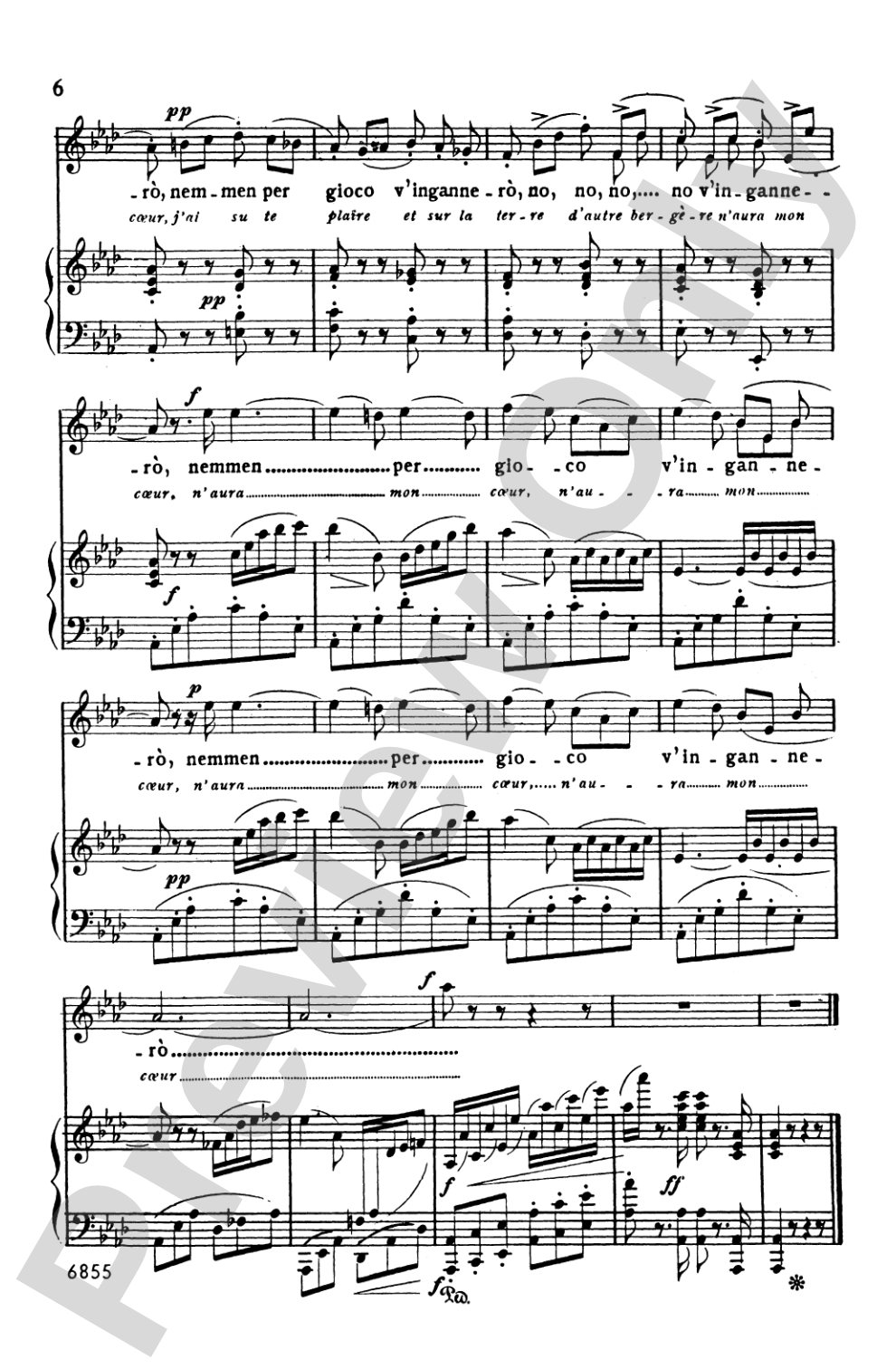

Rossini: Soirées Musicales, Volume I (Italian/French): High Voice Octavo-Size Book
For Voice and Piano with Italian and French Text
By Gioacchino Rossini
Item: 00-PK-0003658

$11.99
Pickup currently not available
Buy Extra Parts (Digital PDF Download)
Parts Added to Cart!
Description
Expertly arranged Vocal Collection for High Voice by Gioacchino Rossini from the Kalmus Edition series. This is from the Romantic era.


Don't just read it, hear it, play along with it, and watch your students grow with it. In MakeMusic Cloud, Rossini: Soirées Musicales, Volume I (Italian/French): High Voice Octavo-Size Book comes alive with professional accompaniment, adjustable tempo, and built-in practice tools that turn solo practice into real progress.
Open in the Player
Jump straight in and assign it today.
Start Your Free Trial
Open this title and explore the full library in minutes.
Sample Audio
No sample audio found.
Sample Video
No sample videos found.
Additional Details
Series:
Kalmus Edition
Publisher:
Alfred Music
Page Count:
56
SKU:
00-PK-0003658
More about this title
About the Composer: Gioacchino Rossini
Gioacchino Rossini (1792-1868) was the most celebrated opera composer of the early 19th century, known for his gift for melody and his ability to write brilliantly for the human voice. His operas, including The Barber of Seville and Cinderella, remain cornerstones of the repertoire, and his instrumental and vocal chamber works reveal the same inventiveness and charm that made him a household name across Europe.
Rossini's Soirées Musicales (Musical Evenings) represent the composer at his most intimate, crafted for the salon rather than the opera house. These songs showcase his mastery of vocal writing: graceful lines, memorable melodies, and accompaniments that are never perfunctory. They remain treasured by singers who want to explore the elegance and technical demands of the Romantic vocal tradition.
Why we love this
These pieces strike an ideal balance between accessibility and sophistication. The melodies are immediately appealing and singable, yet the harmonic language and accompaniment patterns offer genuine musical substance that keeps singers and audiences engaged. For recital and concert programming, they provide a window into early Romantic vocal style without demanding the dramatic intensity of opera.
What to expect
These songs capture the elegant social world of the salon, where singing was entertainment, art, and courtship rolled into one. You'll find moments of genuine pathos and lyrical beauty alongside passages of witty charm and technical display. The overall character is refined, intimate, and deeply melodic.
Who it's for
High voice singers preparing recital material, vocal students exploring Romantic song literature, and singers seeking stylistically grounded alternatives to the standard art song canon. This collection suits singers comfortable with Italian and French text and ready to work with the ornamentation and harmonic language of the early 19th century.
How to get the most out of it
- Pay attention to the French and Italian text equally; diction shapes phrasing, and these songs reward clear articulation in both languages.
- Resist over-legit the rapid passages. Rossini's ornaments breathe best when they stay conversational rather than becoming thick or self-conscious.
- Support the melodic line with the accompaniment rather than against it; the piano writing is sophisticated and should feel like an equal partner, not a backdrop.
- Shape phrases by the harmonic rhythm and text, not just by breath marks; many of these songs ask for longer arcs than their surface simplicity might suggest.
How to use it
Program these songs in themed recitals exploring Romantic vocal writing, or use individual pieces as lighter moments in otherwise dramatic programs. They work beautifully in vocal ensemble concerts or as part of a semester recital showcasing diverse song traditions. A single Soirée can offer a change of pace between heavier contemporary art songs or art songs in other languages.
Skills your students will build
- Stylistically informed interpretation of early Romantic vocal music
- Diction and text expression in Italian and French
- Ornamentation and embellishment in the bel canto tradition
- Collaboration with accompanists on sophisticated harmonic language
- Phrasing across longer melodic arcs despite apparent simplicity