
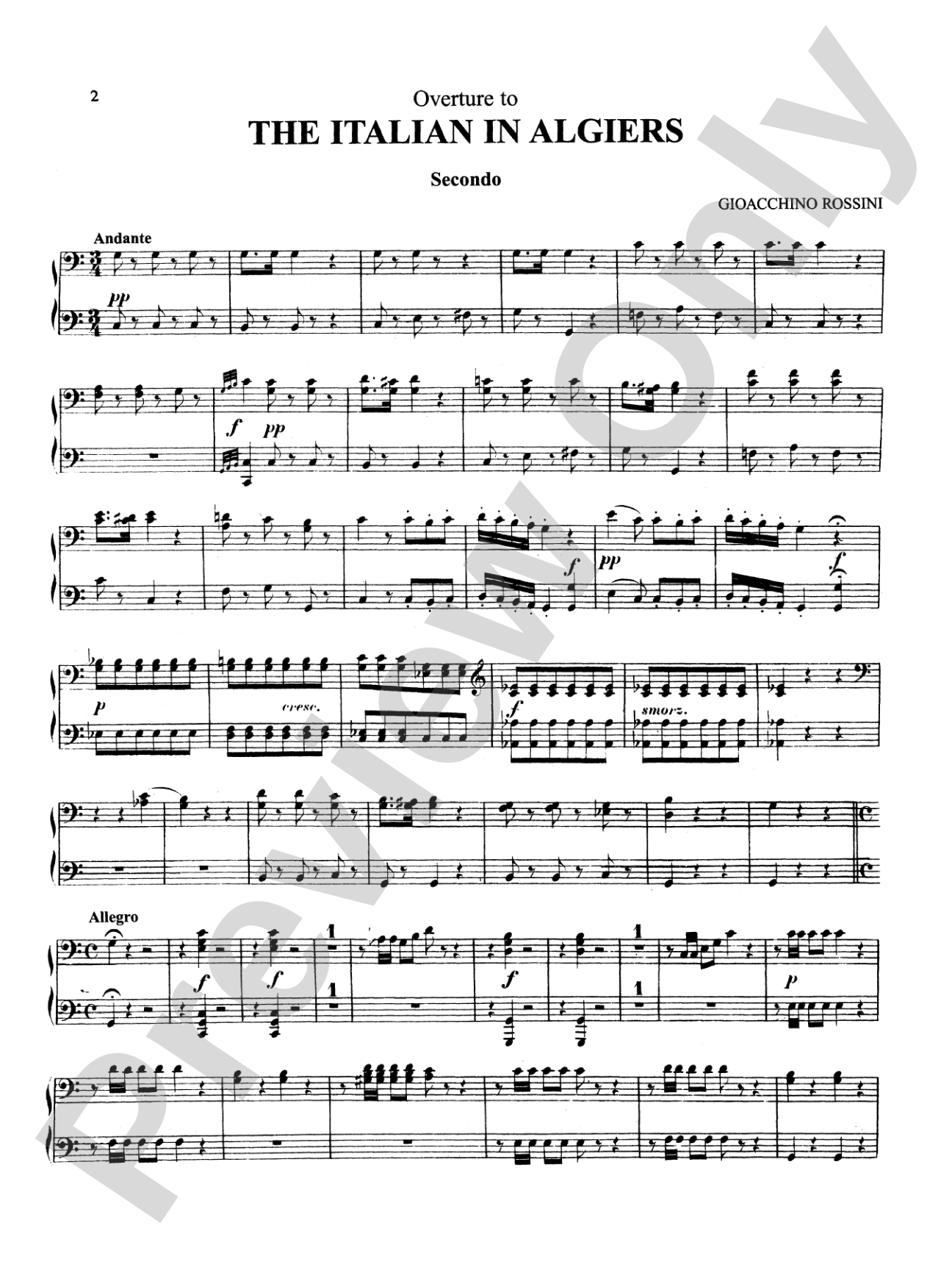
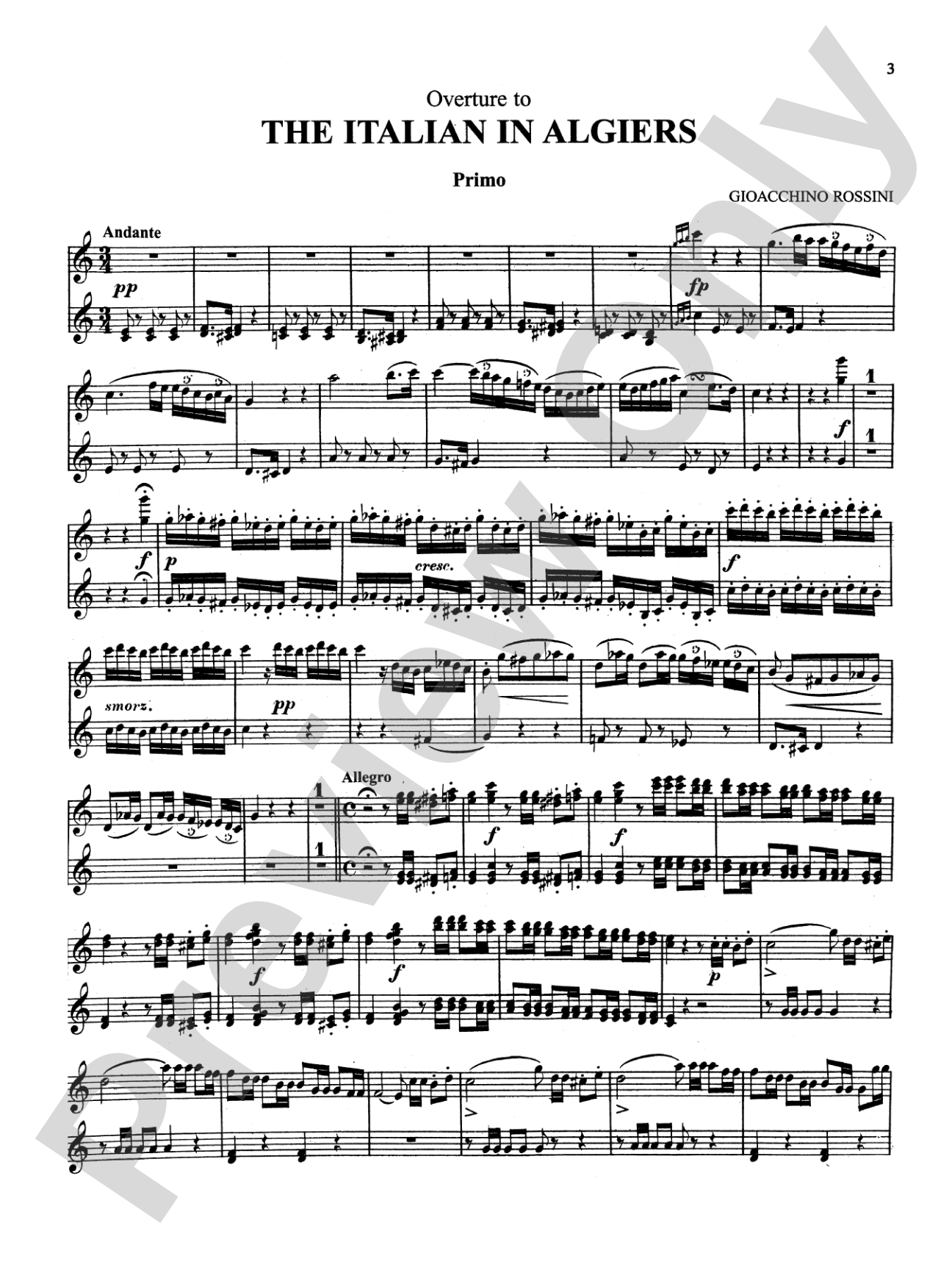
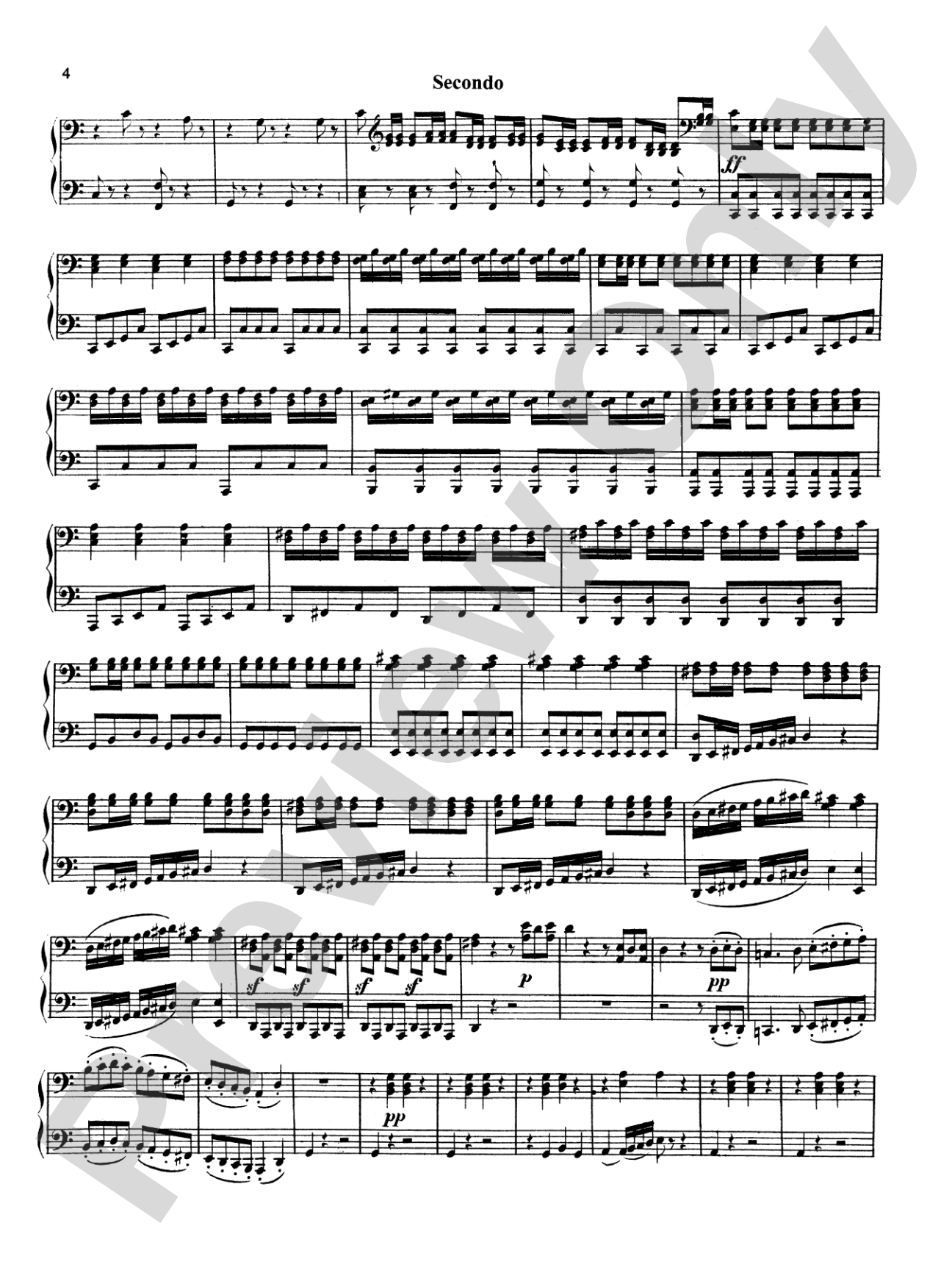
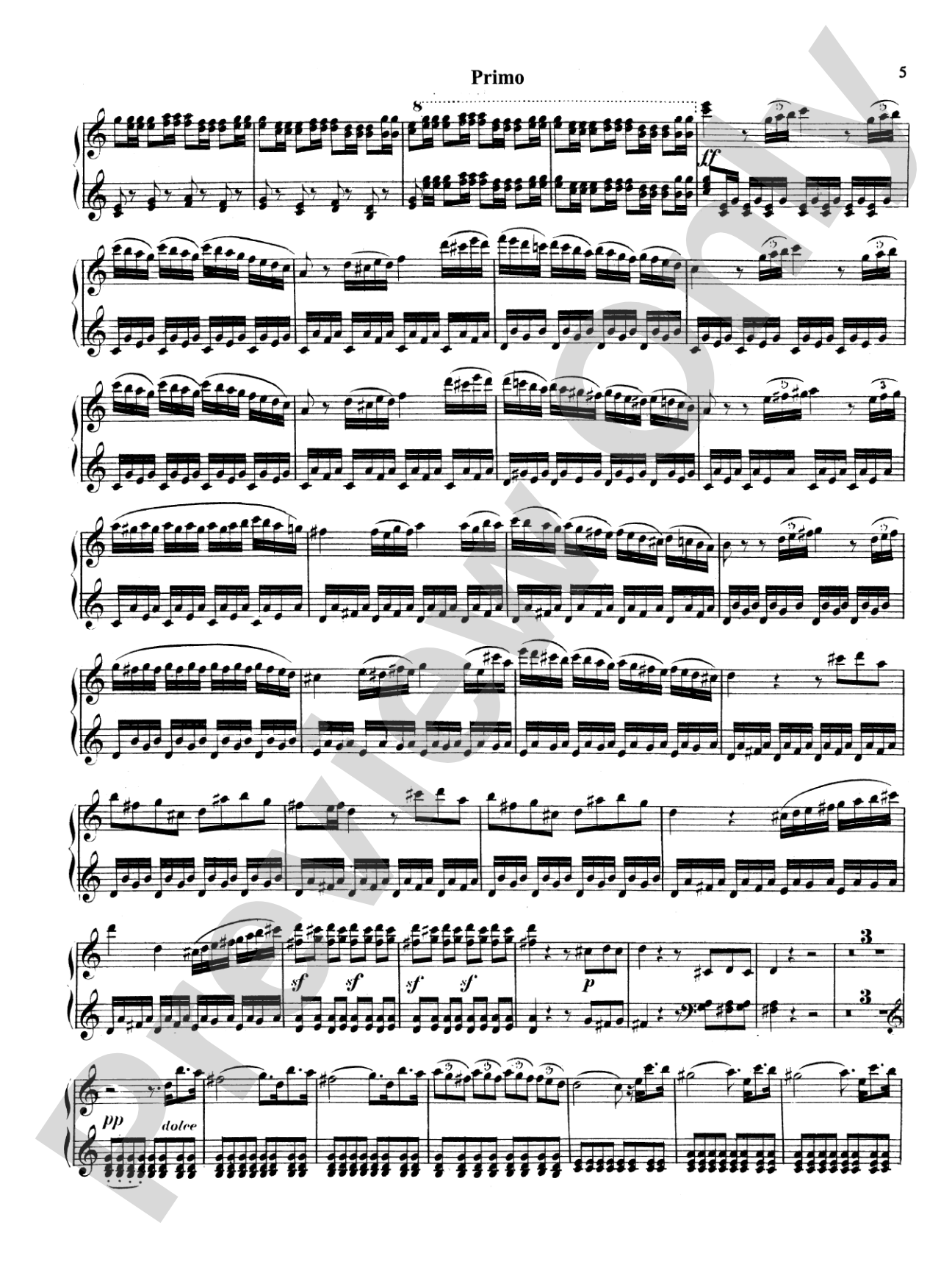
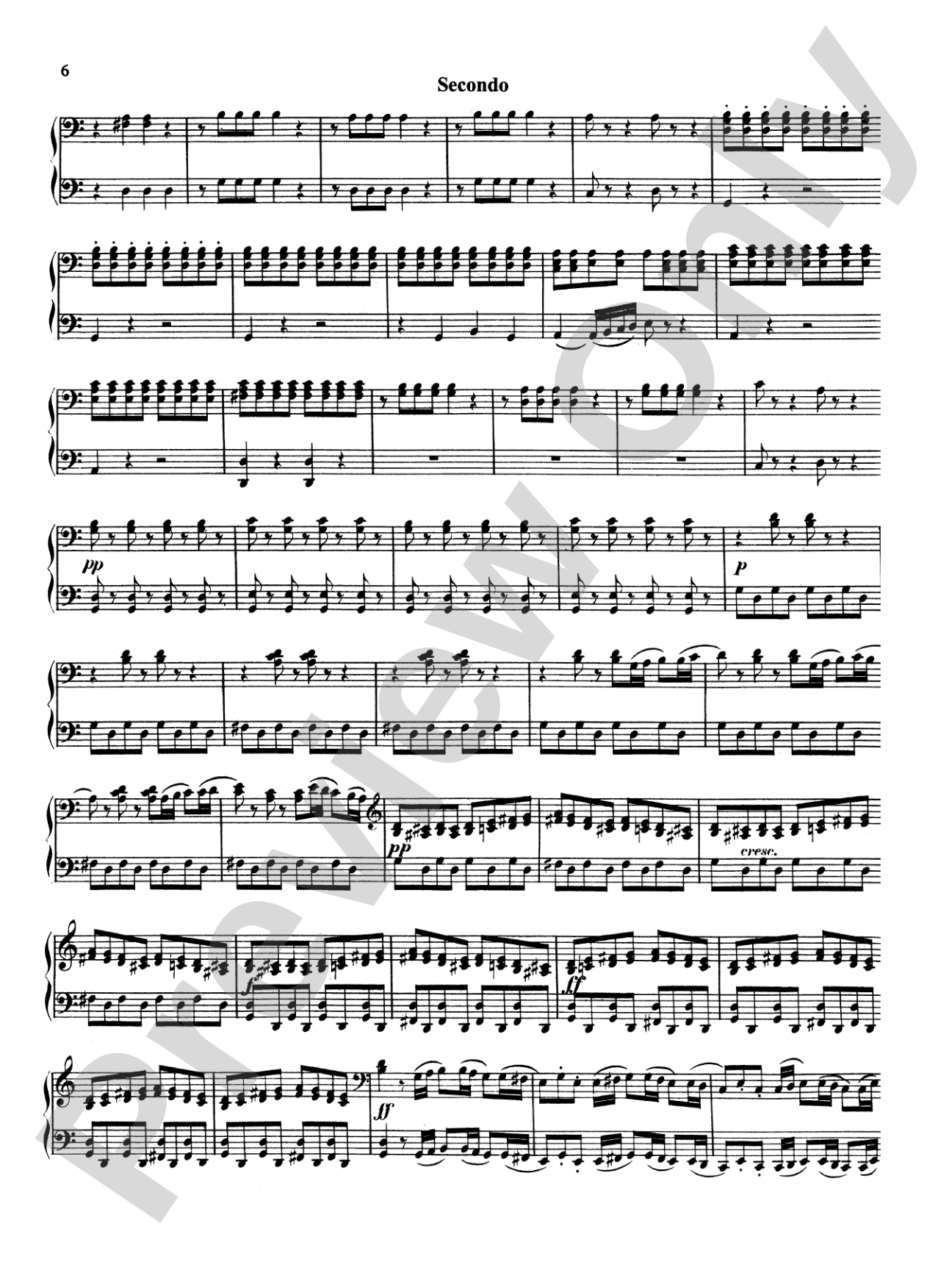
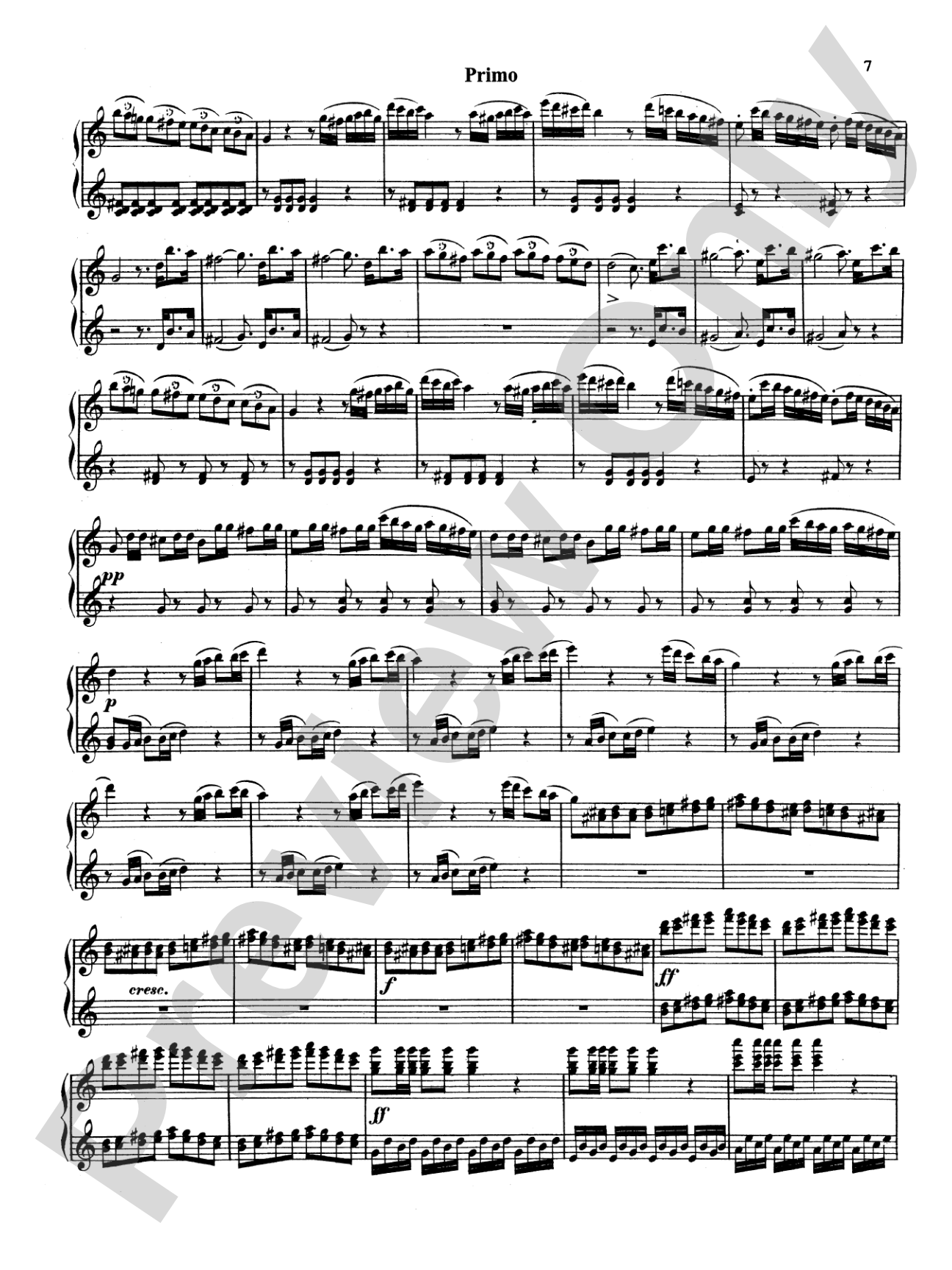
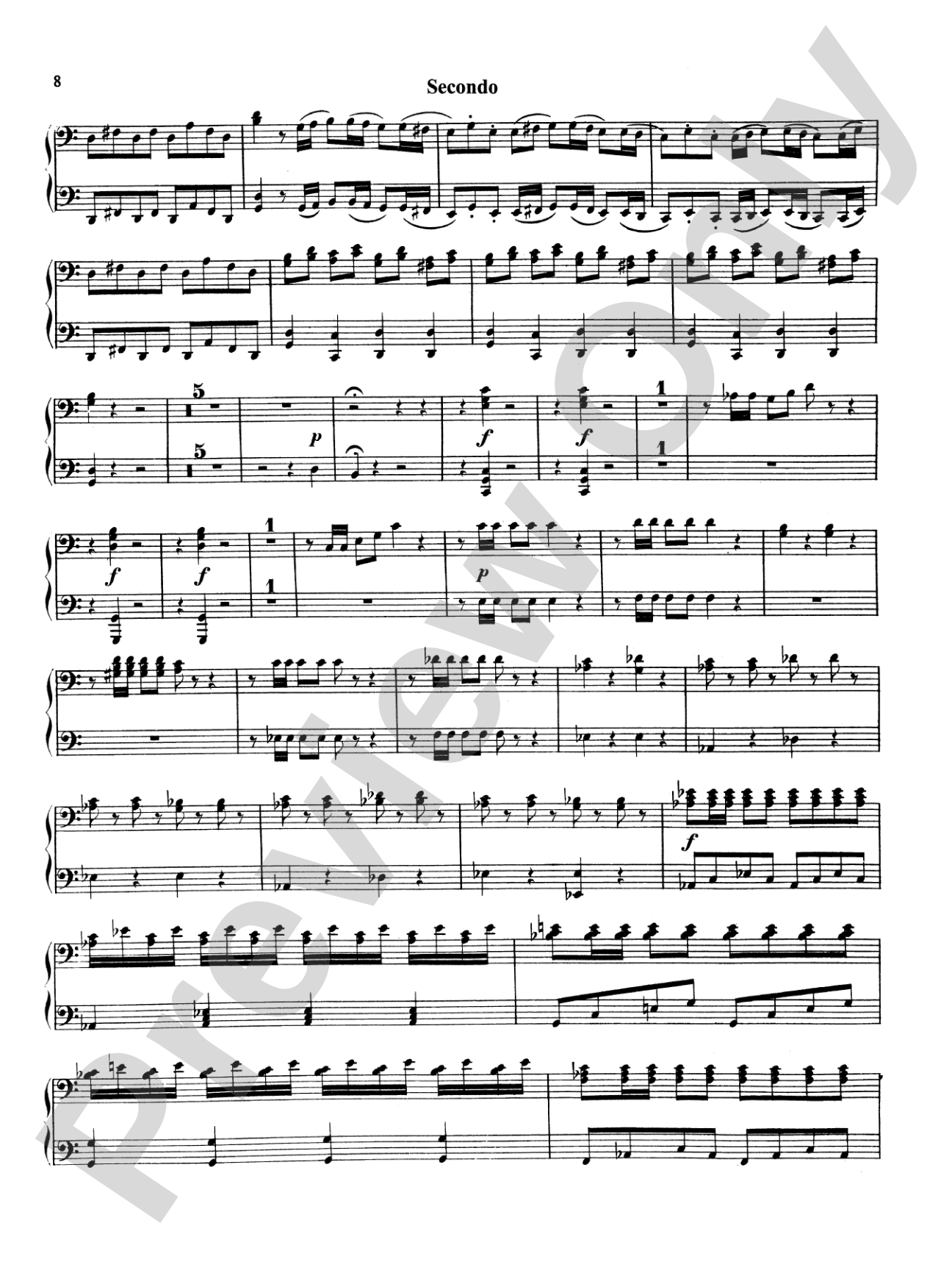
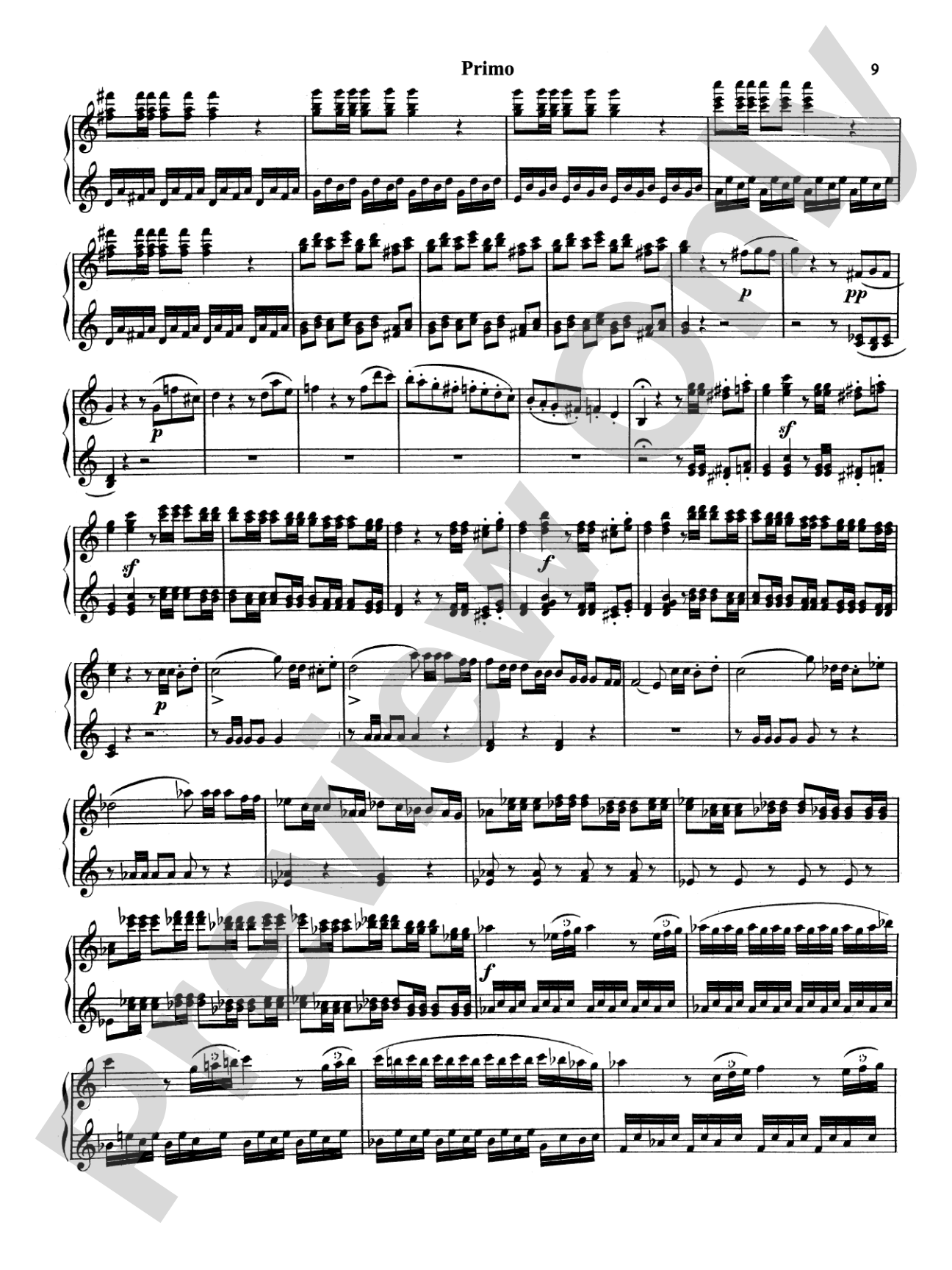
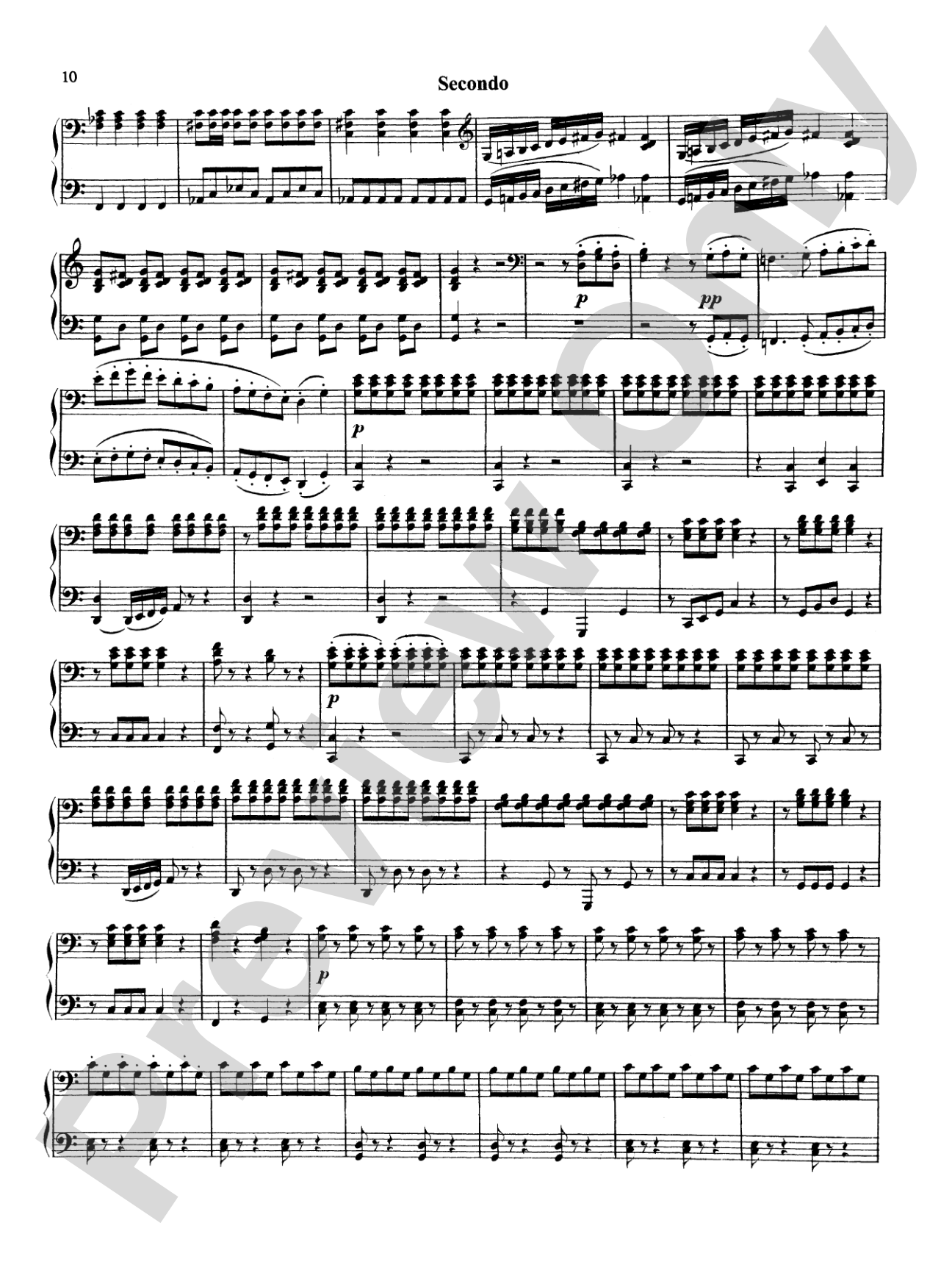
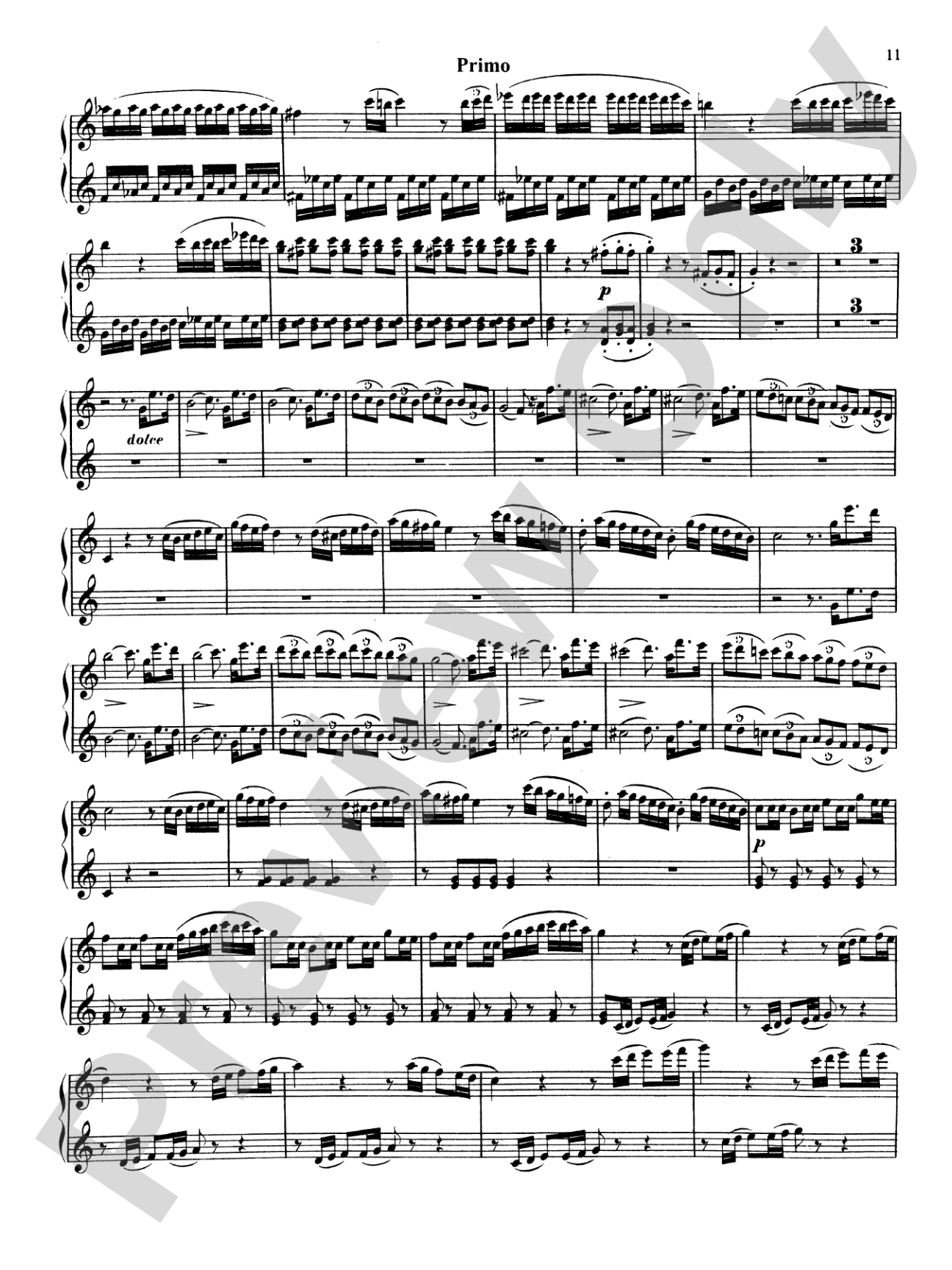
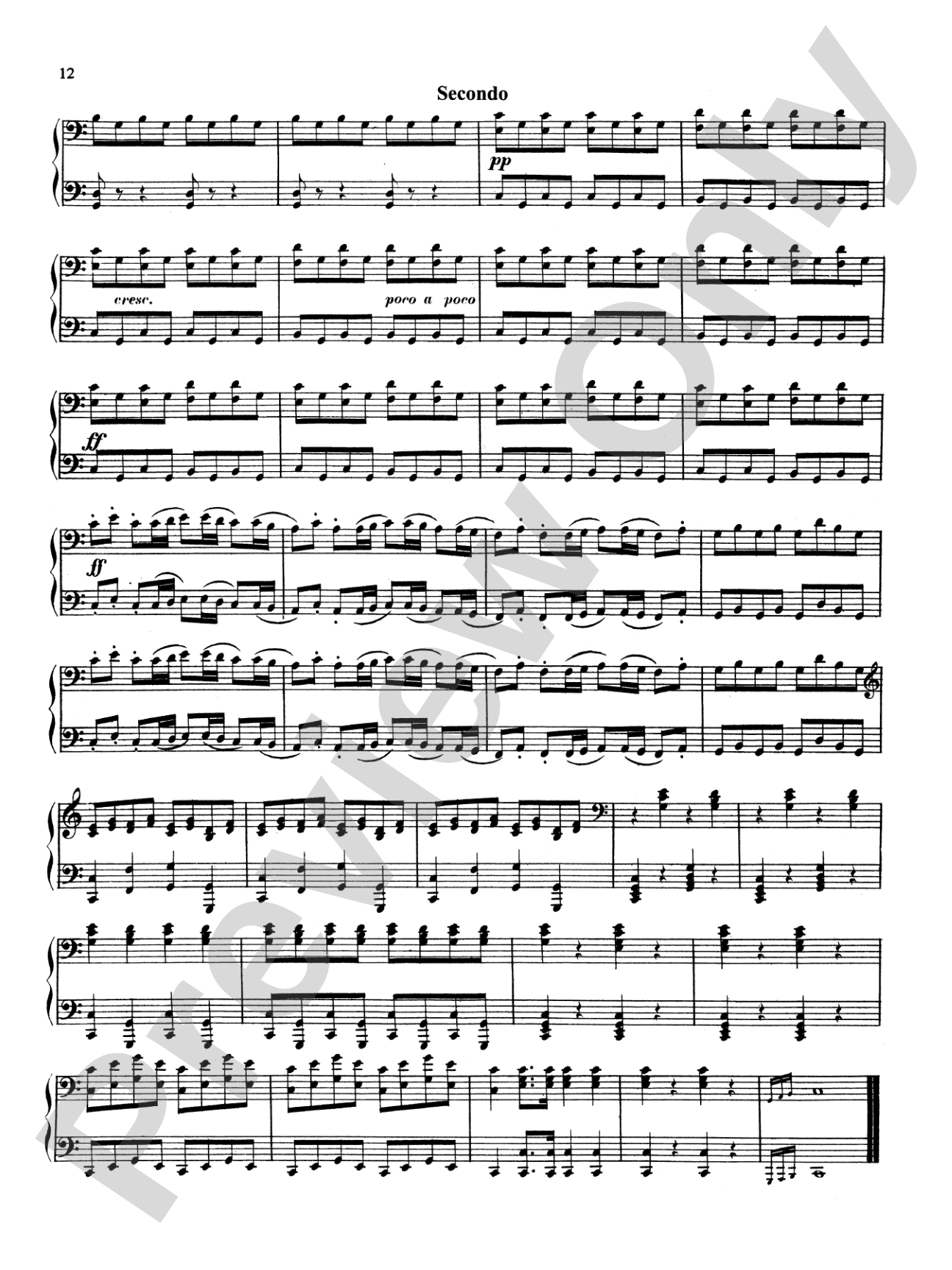
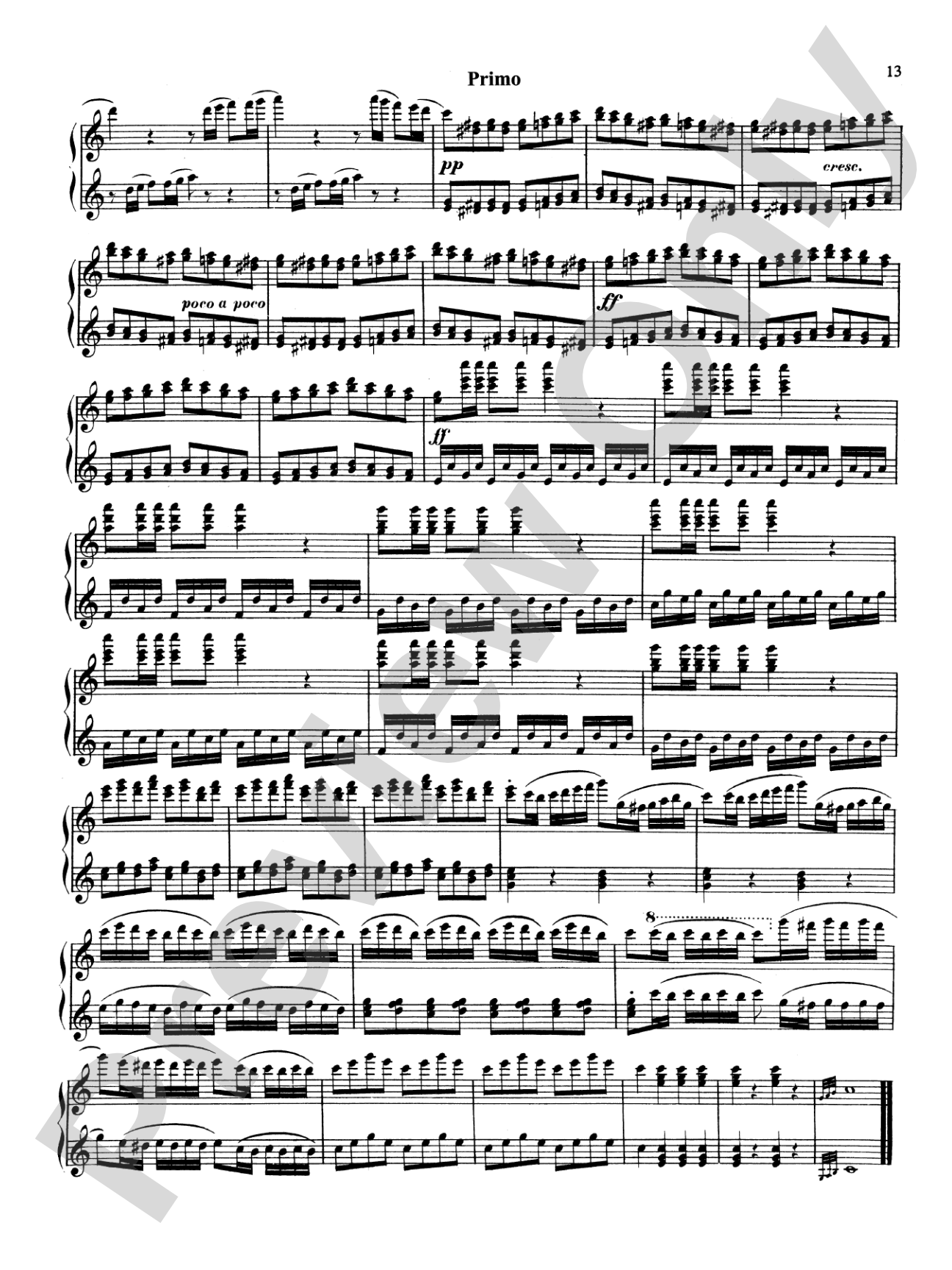

Rossini: Opera Overtures (Arranged): Piano Duet (1 Piano, 4 Hands) Book
By Gioacchino Rossini
Item: 00-PK-0002750

$14.99
Pickup currently not available
Buy Extra Parts (Digital PDF Download)
| Product | Price | Quantity |
|---|---|---|
| Rossini: Opera Overtures (Arranged) | $1.99 | |
| Rossini: Opera Overtures (Arranged) | $1.99 | |
| Rossini: Opera Overtures (Arranged) | $1.99 | |
| Rossini: Opera Overtures (Arranged) | $1.99 | |
| Rossini: Opera Overtures (Arranged) | $1.99 | |
| Rossini: Opera Overtures (Arranged) | $1.99 |
Parts Added to Cart!
Related Items
Opera Overtures: Piano Duet (1 Piano, 4 Hands) Book |
$14.95
|
View |
Description
Titles: The Italian in Algiers * Othello * The Barber of Seville * Tancrède * La Gazza Ladra * Semiramide.


Don't just read it, hear it, play along with it, and watch your students grow with it. In MakeMusic Cloud, Rossini: Opera Overtures (Arranged): Piano Duet (1 Piano, 4 Hands) Book comes alive with professional accompaniment, adjustable tempo, and built-in practice tools that turn solo practice into real progress.
Open in the Player
Jump straight in and assign it today.
Start Your Free Trial
Open this title and explore the full library in minutes.
Sample Audio
No sample audio found.
Sample Video
No sample videos found.
Additional Details
Series:
Kalmus Edition
Publisher:
Alfred Music
Page Count:
80
SKU:
00-PK-0002750
More about this title
About the Composer: Gioacchino Rossini
Gioacchino Rossini (1792, 1868) revolutionized Italian opera with his gift for melody, rhythmic vitality, and orchestral color. His overtures became concert works in their own right, standing apart from their parent operas through their structural clarity and infectious energy. Rossini's influence extended far beyond the opera house; his music shaped how composers thought about dramatic pacing, ensemble writing, and the marriage of vocal and instrumental storytelling.
Why we love this
These arrangements capture everything that makes Rossini's overtures irresistible, the cascading runs, the rhythmic drive, the sudden key shifts, and those moments where melody soars above bustling accompaniment. Four-hand writing magnifies the orchestral sweep while remaining perfectly playable for advancing duet musicians. Programming these pieces signals to your audience that they're about to hear music of genuine sophistication and theatrical flair.
What to expect
Rossini's overtures sparkle with wit and propulsion. These four-hand versions preserve that spirited momentum while adding texture and depth; playing them feels like conducting an orchestra from the keyboard. The music moves with theatrical urgency, full of surprises, sudden tempo shifts, unexpected harmonic turns, and moments where both players must lock into rhythmic unison before the music springs apart again.
Who it's for
Intermediate to advanced pianists looking to expand their duet repertoire with works that are both musically rewarding and approachable. This collection suits students preparing for recitals, ensemble-focused pianists, or teachers seeking lively material that generates genuine audience engagement.
How to get the most out of it
- Establish the tempo hierarchy early in rehearsal; Rossini's overtures rely on precise rhythmic alignment between both players, so lock the pulse before tackling articulation details.
- Bring out the primo part's melodic lines with gentle emphasis while keeping the secondo supportive and rhythmically steady, especially during faster passages where clarity matters most.
- Pay attention to Rossini's crescendo markings and sudden dynamic shifts; these theatrical gestures drive the momentum and prevent the faster sections from becoming merely technical displays.
- Coordinate hand crossings and shifts between parts smoothly; the Kalmus edition preserves Rossini's original voice leading, so practice transitions where both players navigate the keyboard together.
How to use it
Feature one overture as a high-energy opener on a recital or chamber concert to establish immediate audience interest. Alternatively, use the collection as a resource for pairing with vocal students preparing operatic repertoire, allowing them to become familiar with these musical ideas through keyboard performance.
Skills your students will build
- Maintaining steady pulse in both hands while coordinating independent rhythmic figures
- Executing rapid scalar passages and hand coordination across multiple octaves
- Balancing melody and accompaniment in the duet texture
- Interpreting theatrical dynamics and sudden character shifts within a single piece
- Reading and managing dense multi-staff keyboard notation at tempo