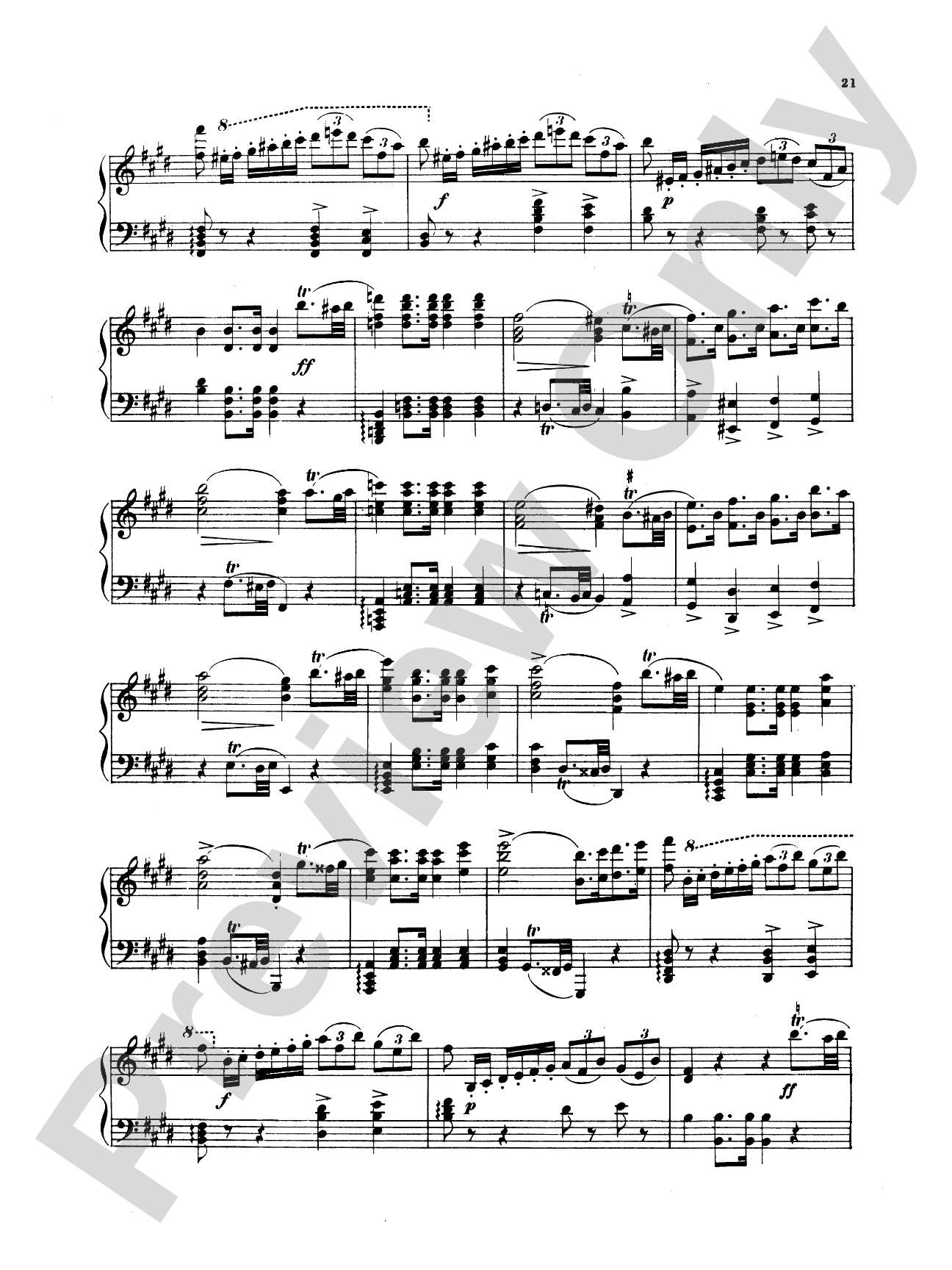
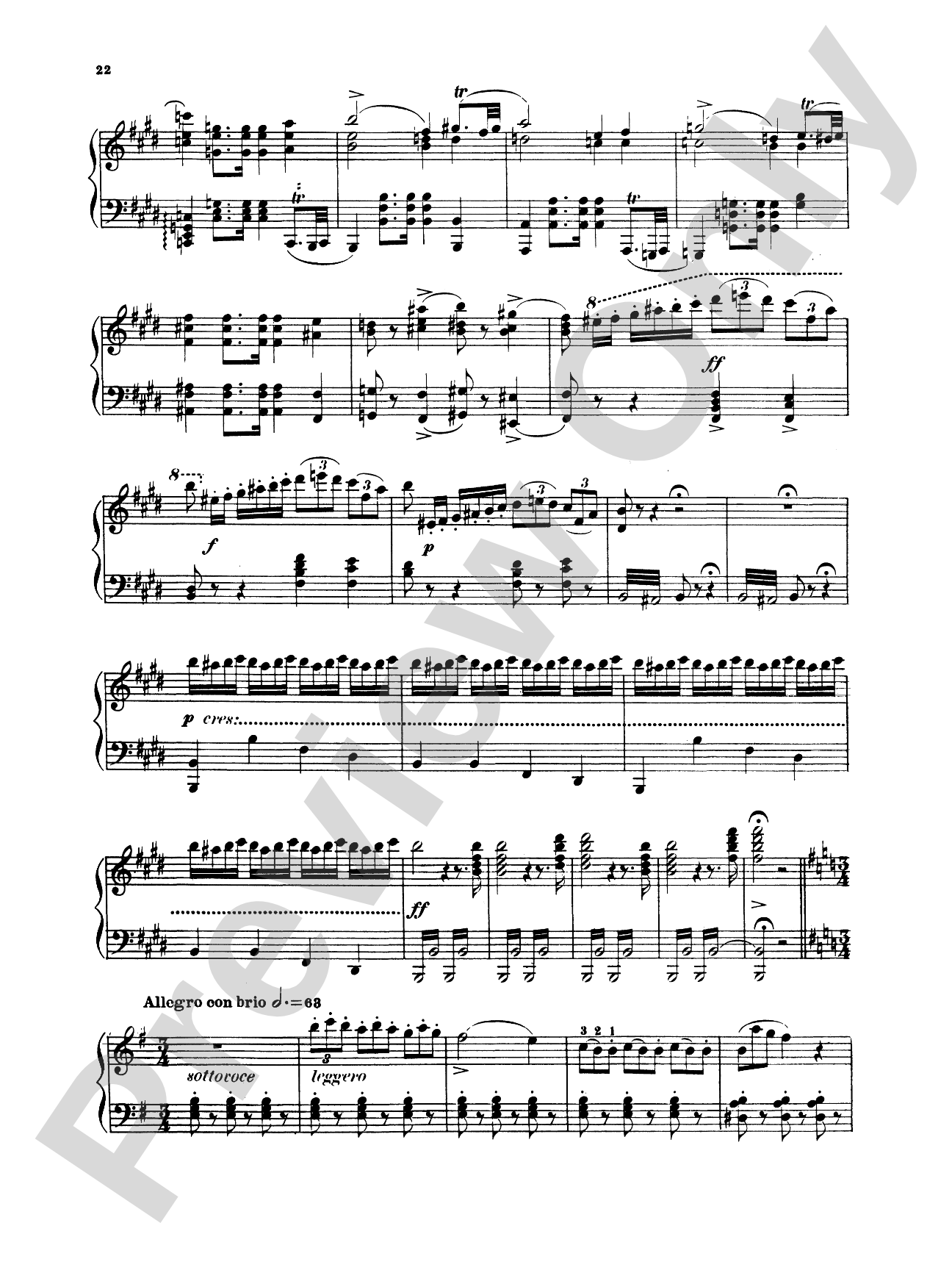
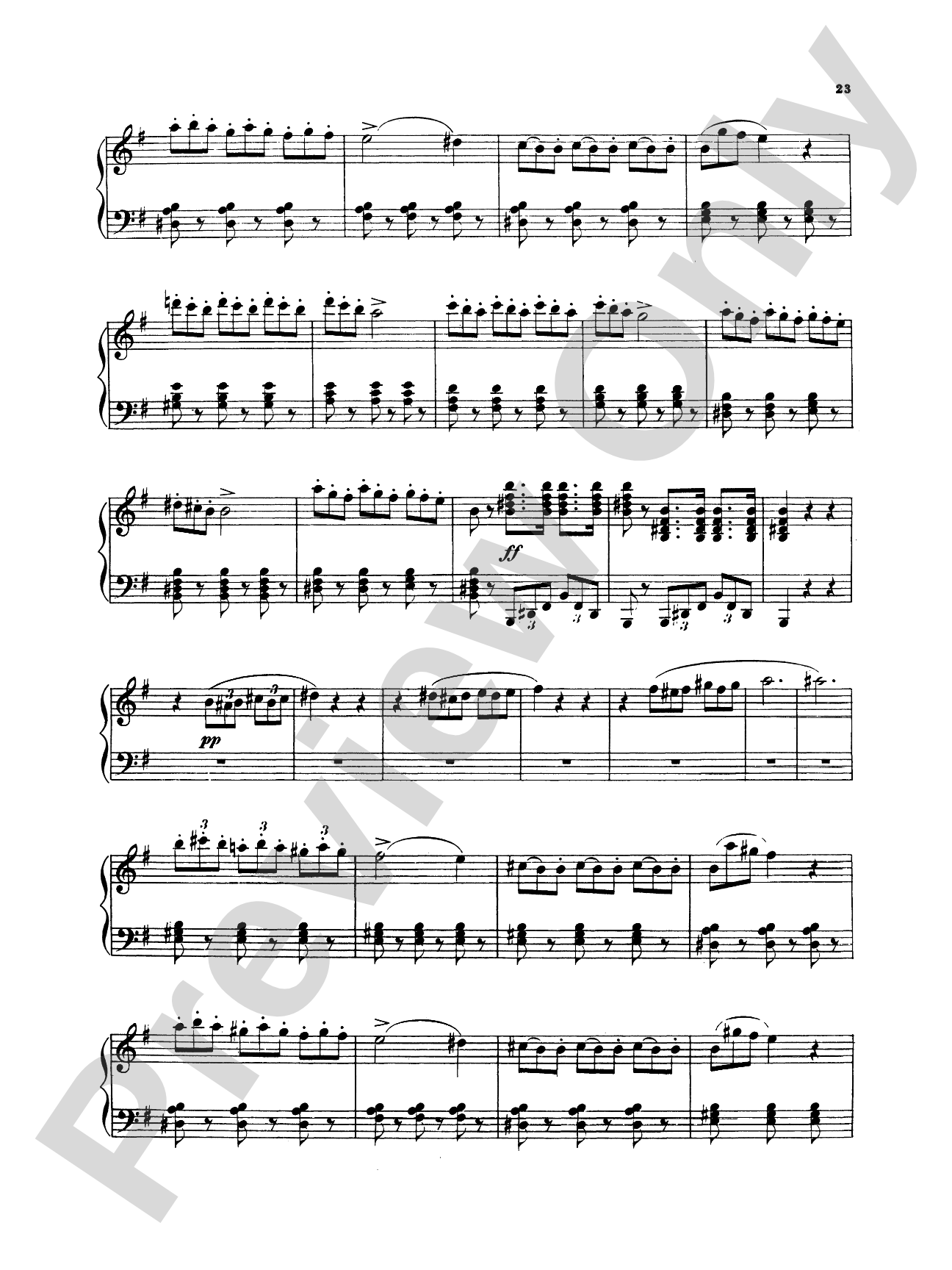
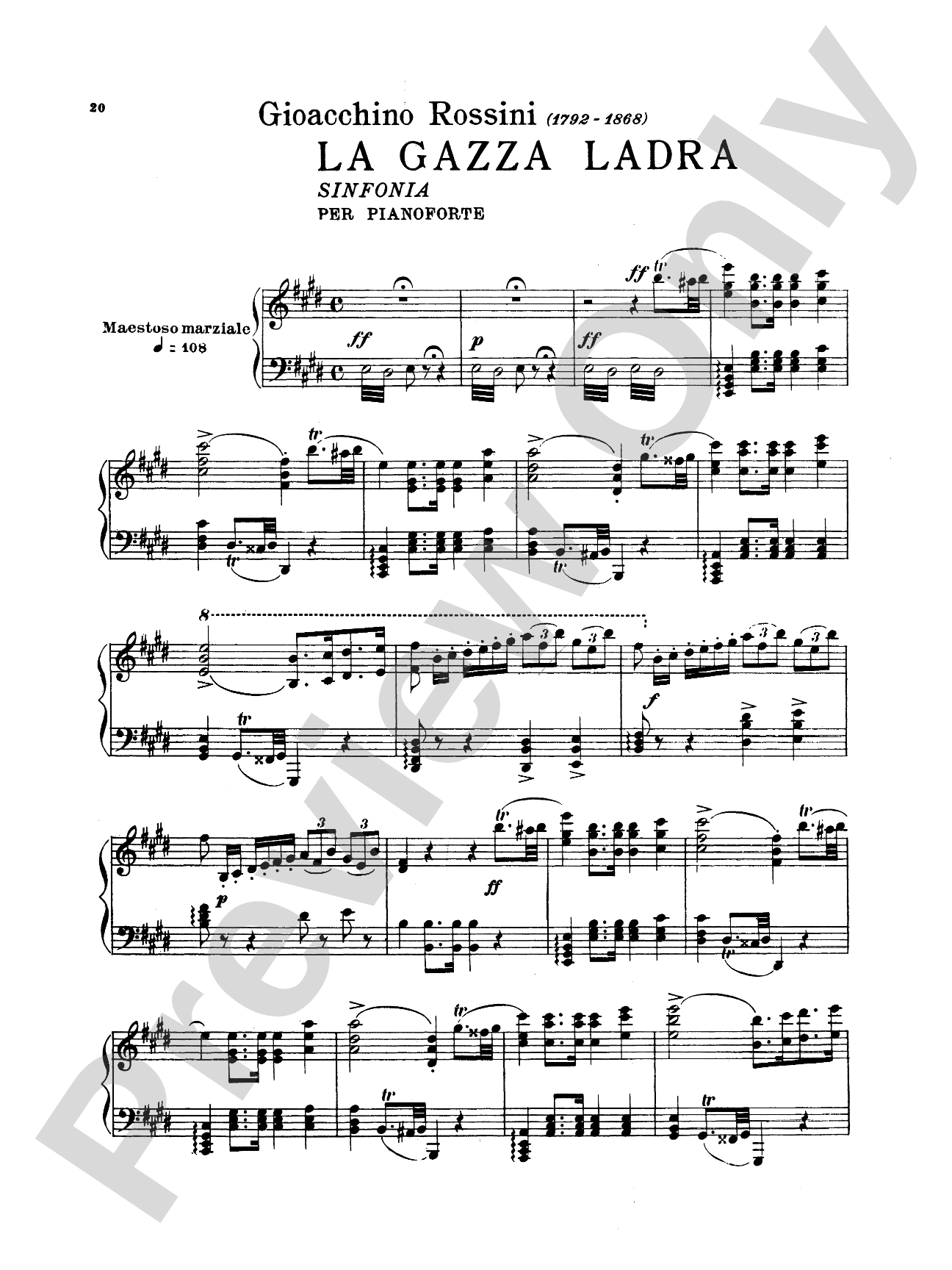
Rossini: Album of Six Overtures Sheet Music Preview

Rossini: Album of Six Overtures

By Gioacchino Rossini

Item: 00-PC-0012835

Digital Download
$1.99
Description
(Guglielmo Tell, La Gazza Ladra, Il Barbiere di Siviglia, Mose, Trancredi, La Scala di Seta)

Don't just read it, hear it, play along with it, and watch your students grow with it. In MakeMusic Cloud, Rossini: Album of Six Overtures comes alive with professional accompaniment, adjustable tempo, and built-in practice tools that turn solo practice into real progress.

Sample Audio
No sample audio found.
Sample Video
Additional Details
Series: Kalmus Edition
Publisher: Alfred Music
Page Count: 68
SKU: 00-PC-0012835

More about this title

About the Composer: Gioacchino Rossini

Gioacchino Rossini (1792-1868) composed 39 operas in just 19 years before retiring at age 37, establishing himself as one of the most influential composers of the early Romantic era. His gift for melody, rhythmic vitality, and orchestral color made his operatic works instantly popular across Europe, and many of his overtures have become concert standards that showcase his technical brilliance and theatrical genius.

Rossini's overtures are masterclasses in musical structure and dramatic pacing. Written to introduce his operas, they distill the essence of each work into compact, brilliantly orchestrated symphonic forms that audiences adore. For pianists, they represent an accessible gateway to Romantic-era compositional mastery and remain central to both the concert and teaching repertoire.

Why we love this

These six overtures deliver unmatched variety in a single collection. You get sparkle and wit (La Scala di Seta, Il Barbiere di Siviglia), heroic grandeur (Guglielmo Tell), dramatic intensity (Mosè), and lyrical elegance (La Gazza Ladra, Tancredi) all arranged for solo piano. Pianists at the intermediate to advanced level gain exposure to some of the most celebrated operatic themes in existence while developing genuine facility with Romantic-era idiom.

What to expect

Stepping into these overtures feels like discovering the operatic stage through a piano lens. Each piece sparkles with melody and rhythmic energy, moving between passages of exuberant charm, soaring lyricism, and moments of genuine dramatic weight. The familiarity of many of these themes from popular culture meets the intellectual satisfaction of hearing how Rossini structured them for maximum effect.

Who it's for

Pianists working at intermediate-advanced levels who want to expand their repertoire with iconic Romantic overtures that are both musically rewarding and accessible. Teachers seeking substantial material for recital programs or for students preparing auditions will find six complete works spanning a range of moods and technical demands.

How to get the most out of it

  • Maintain rhythmic precision through the rapid passagework and cascading figures that define pieces like La Scala di Seta; these fast runs are more effective when crisp than when blurred.
  • Shape phrase endings with gentle rubato rather than dramatic tempo shifts; Rossini's melodies sing best when given room to breathe without losing their forward momentum.
  • Balance textural layers carefully in the thicker arrangements; secondary voices and accompaniment figures should support rather than obscure the primary melodic line.
  • Exploit the full dynamic range across the collection; the contrast between fortissimo passages and piano sections drives much of the theatrical character Rossini intended.

How to use it

These overtures work beautifully as individual recital selections or as a curated set within a larger program. You might pair one with Romantic-era character pieces or use them as compelling closers for a concert devoted to musical theater. In a teaching studio, rotate through them across the year to build repertoire knowledge while maintaining student engagement with recognizable, gratifying material.

Skills your students will build

  • Sight-reading complex rhythmic patterns and rapid scalar passages
  • Executing clean articulation and clarity in fast, ornamented figurations
  • Shaping extended melodies with controlled phrasing and dynamic contour
  • Managing hand independence in arrangements with distinct melodic and accompaniment voices
  • Interpreting Romantic-era harmonic language and cadential structures

You May Also Like