
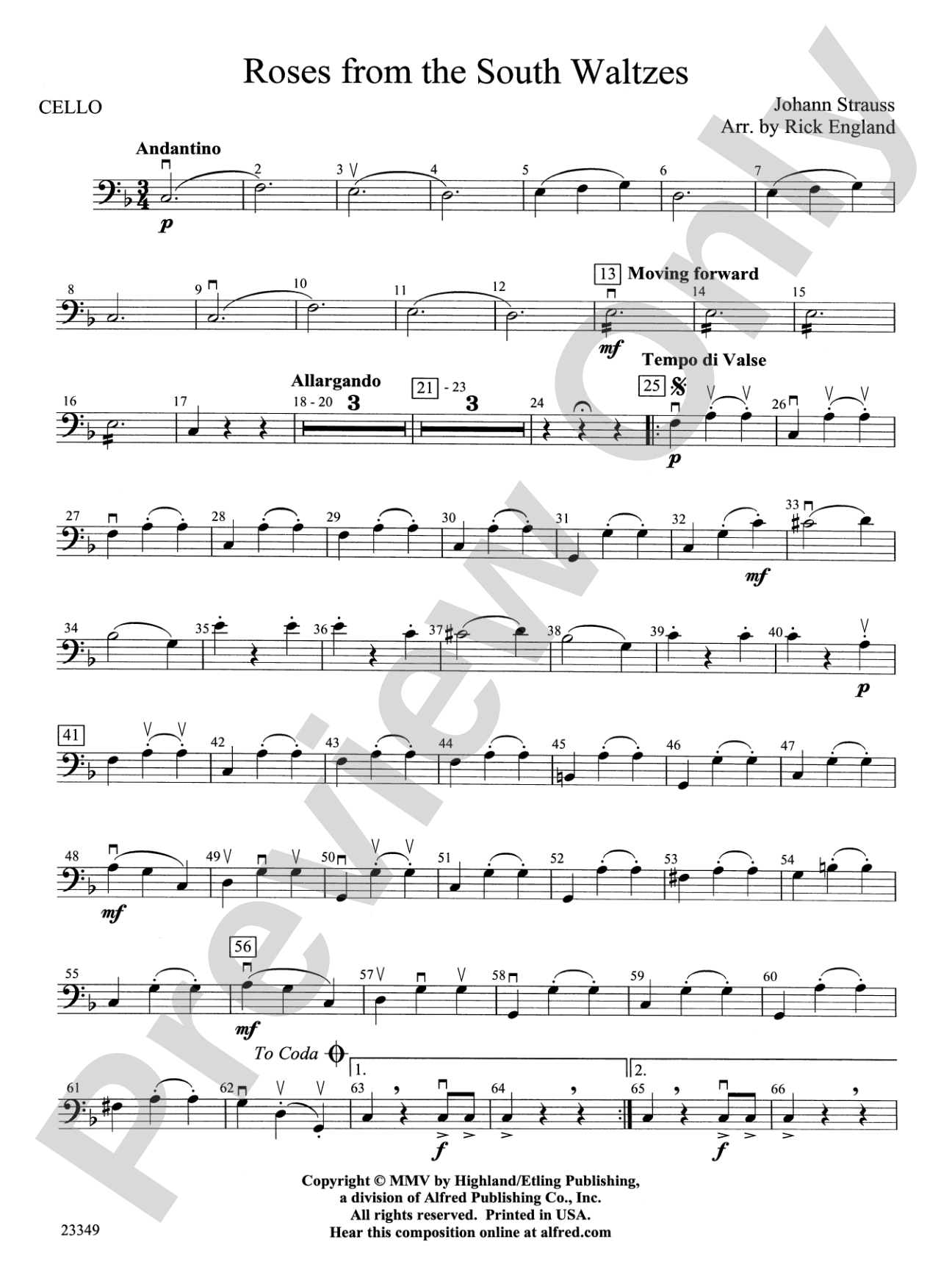

Roses from the South Waltzes: Cello
By Johann Strauss / arr. Rick England
Grade: 3
Item: 00-PC-0000694_VC1
$5.99
Pickup currently not available
Description
Representing some of the best music from the Hapsburg Dynasty, this arrangement of Strauss' Roses from the South includes two waltz melodies in the key of F and B-flat along with a memorable coda. The addition of a piano part and a simple bell part make this a great addition to any springtime concert.


Don't just read it, hear it, play along with it, and watch your students grow with it. In MakeMusic Cloud, Roses from the South Waltzes: Cello comes alive with professional accompaniment, adjustable tempo, and built-in practice tools that turn solo practice into real progress.
Open in the Player
Jump straight in and assign it today.
Start Your Free Trial
Open this title and explore the full library in minutes.
Sample Audio
1
Audio File
--:--
0:00
0:00
Sample Video
No sample videos found.
Additional Details
Series:
Highland/Etling String Orchestra
Publisher:
Alfred Music
Page Count:
136
SKU:
00-PC-0000694_VC1
More about this title
About the Composer: Johann Strauss
Johann Strauss II (1825–1899) earned the title "Waltz King" by composing over 500 dance pieces that defined the sound of Vienna during the Hapsburg era. His waltzes transformed a simple ballroom dance into an art form, blending the sophistication of classical composition with the infectious energy of popular music. Strauss's melodies became the soundtrack to imperial court life, and his works remain central to orchestral repertoire across all educational levels.
For music educators, Strauss represents the perfect bridge between accessibility and artistry. His orchestrations are transparent and teachable, his melodies are instantly memorable, and his harmonic language introduces students to Romantic-era conventions without overwhelming them. Programming Strauss validates students' musical instincts while expanding their understanding of what orchestral music can accomplish.
Why we love this
Rick England's arrangement preserves the charm and elegance of Strauss's original while making it genuinely playable by young orchestras. The addition of piano and optional bell parts creates textural variety and gives additional players meaningful contributions, turning a Grade 3 piece into an inclusive concert vehicle. The two contrasting waltz themes in different keys provide natural formal interest without requiring elaborate interpretation, making it an ideal springtime selection that sounds polished with straightforward preparation.
What to expect
Elegant and buoyant, with the warmth of a Viennese ballroom captured in orchestral sound. The waltzing rhythms invite natural expression and dancing body language from players, while the memorable melodies give everyone something lyrical to hold onto. There's joy in this music without sentimentality, and sophistication without pretense.
Who it's for
String orchestras at the intermediate level, especially those building confidence in classical repertoire and looking for Romantic-era music with immediate appeal. Directors seeking a piece that sounds more advanced than its Grade 3 difficulty will find this arrangement rewards students with a genuinely satisfying concert experience. Young players benefit from learning how Strauss's tunefulness and transparent orchestration create musical coherence without excessive technical demand.
How to get the most out of it
- Balance the melody between first violins and violas in the opening sections; this piece depends on singing lines, so encourage sustaining tone even in ensemble passages.
- Use the piano part to establish harmonic foundation and help younger cellists and basses lock onto the waltz rhythm; the keyboard doubles key voices and steadies the ensemble.
- Shape each waltz theme with gentle dynamic contours rather than playing straight forte or piano; the coda will land with more impact if preceding sections breathe.
- Maintain consistent, lilting pulse throughout without rushing; waltzes collapse when tempo becomes unmoored, so a metronome check before performance is worthwhile.
How to use it
Program this during spring or early summer concerts when lighter, celebratory repertoire fits the season. It pairs beautifully alongside other Romantic salon pieces or orchestral pops programming, and it provides an excellent counterpoint to heavier contemporary works on the same bill. The piece also works well as an opening number or as part of a themed concert featuring Viennese composers.
Skills your students will build
- Reading compound meter (3/4) with consistent pulse and rhythmic independence from melody
- Sustaining singing tone in an ensemble setting while balancing against solo voices
- Playing syncopated accompaniment figures typical of waltz orchestration
- Responding to subtle dynamic shaping and phrasing that convey Romantic-era style
- Coordinating string bowings across sections to maintain textural cohesion