Rose-Marie Sheet Music Preview

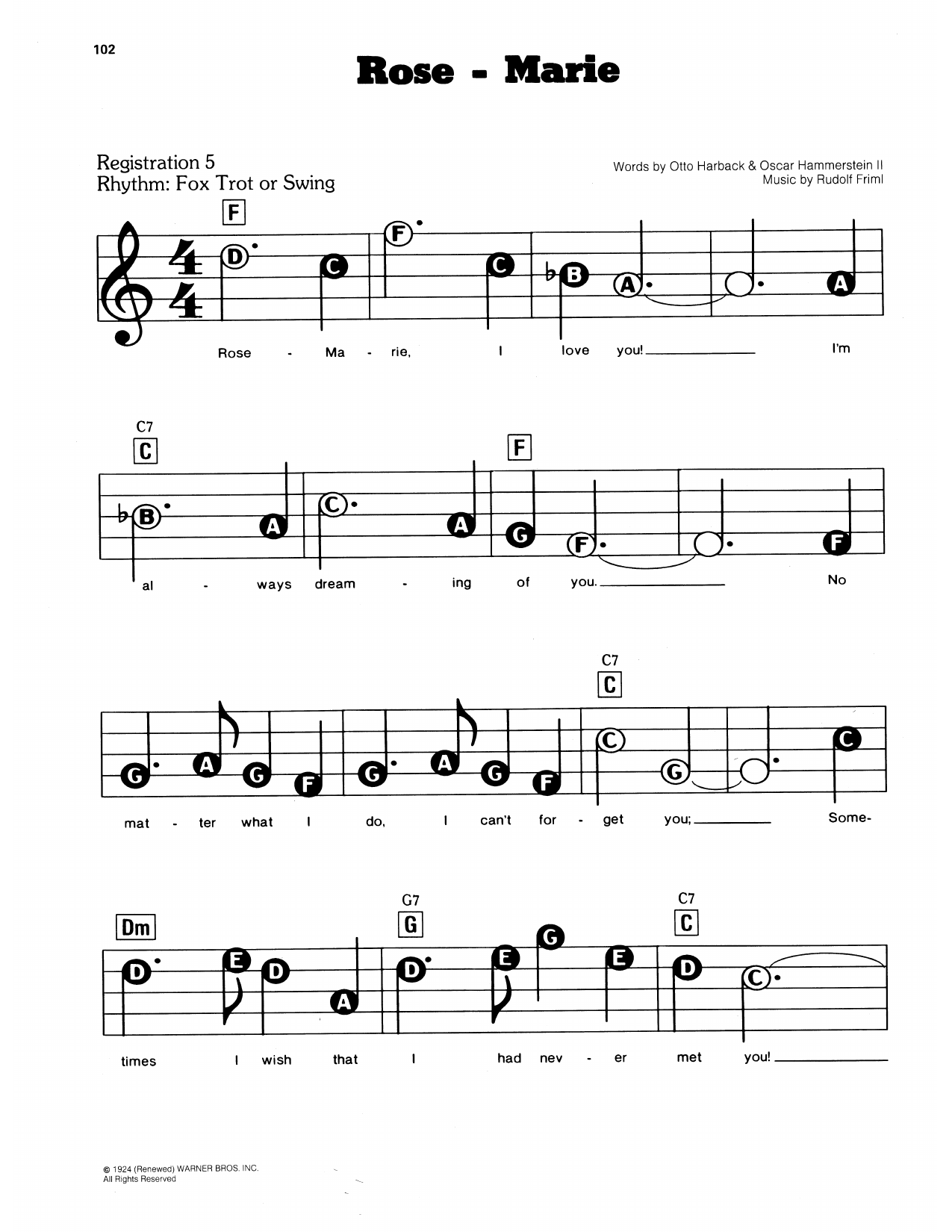
Rose-Marie: E-Z Play Today

As performed by Otto Harbach

Item: 35-DS01874782

Digital Download
$4.99
Description

Rose-Marie: E-Z Play Today isn't in MakeMusic Cloud just yet...but it could be. Let us know you'd like to see it, and you'll help shape what comes next. In the meantime, start a free trial and dive into thousands of interactive titles your students can play along with today.

Sample Audio
No sample audio found.
Sample Video
Additional Details
Publisher: Hal Leonard
Page Count: 2
SKU: 35-DS01874782

More about this title

About the Artist: Otto Harbach

Otto Harbach shaped the American musical theater landscape in the early twentieth century as a librettist and lyricist of uncommon craft. His collaboration with composer Rudolf Friml on operettas like Rose-Marie established a template for accessible, emotionally direct storytelling set to memorable melodies that audiences could leave the theater humming.

Why we love this

This arrangement captures the romantic sweep of a genuine Broadway standard without demanding virtuosity, making it ideal for students who want to connect with golden age theater music. The two-page format respects rehearsal reality: it's substantial enough to feel like a real song, brief enough to learn thoroughly in a reasonable timeframe.

What to expect

Rose-Marie carries the lushness of operetta combined with the directness of American song. The melody unfolds with genuine warmth, inviting performers and listeners alike into the romantic world Harbach and Friml created.

Who it's for

Students working toward fluency with Broadway repertoire and teachers building a jazz or theater music unit will find this both playable and historically grounded. This works for intermediate pianists who want exposure to song literature beyond classical forms.

How to get the most out of it

  • Lean into the lyrical quality of the melody rather than rushing the phrasing; Harbach's words and Friml's tune belong together, so sing the line even when playing instrumentally.
  • Balance the accompaniment texture so that chords support rather than overwhelm the tune, particularly in the left hand.
  • Observe any tempo indications closely; theatrical songs live or die by their sense of forward motion and emotional pacing.

How to use it

Pair this with other early Broadway standards to construct a concert exploring how American musical theater evolved from operetta into the modern musical. It also serves beautifully as a solo feature for a pianist in a jazz or vocal concert context.

Skills your students will build

  • Phrasing and expression within a song form
  • Balancing melody and accompaniment texture
  • Understanding harmonic language of early Broadway
  • Interpreting theatrical style markings and tempo indications

You May Also Like