
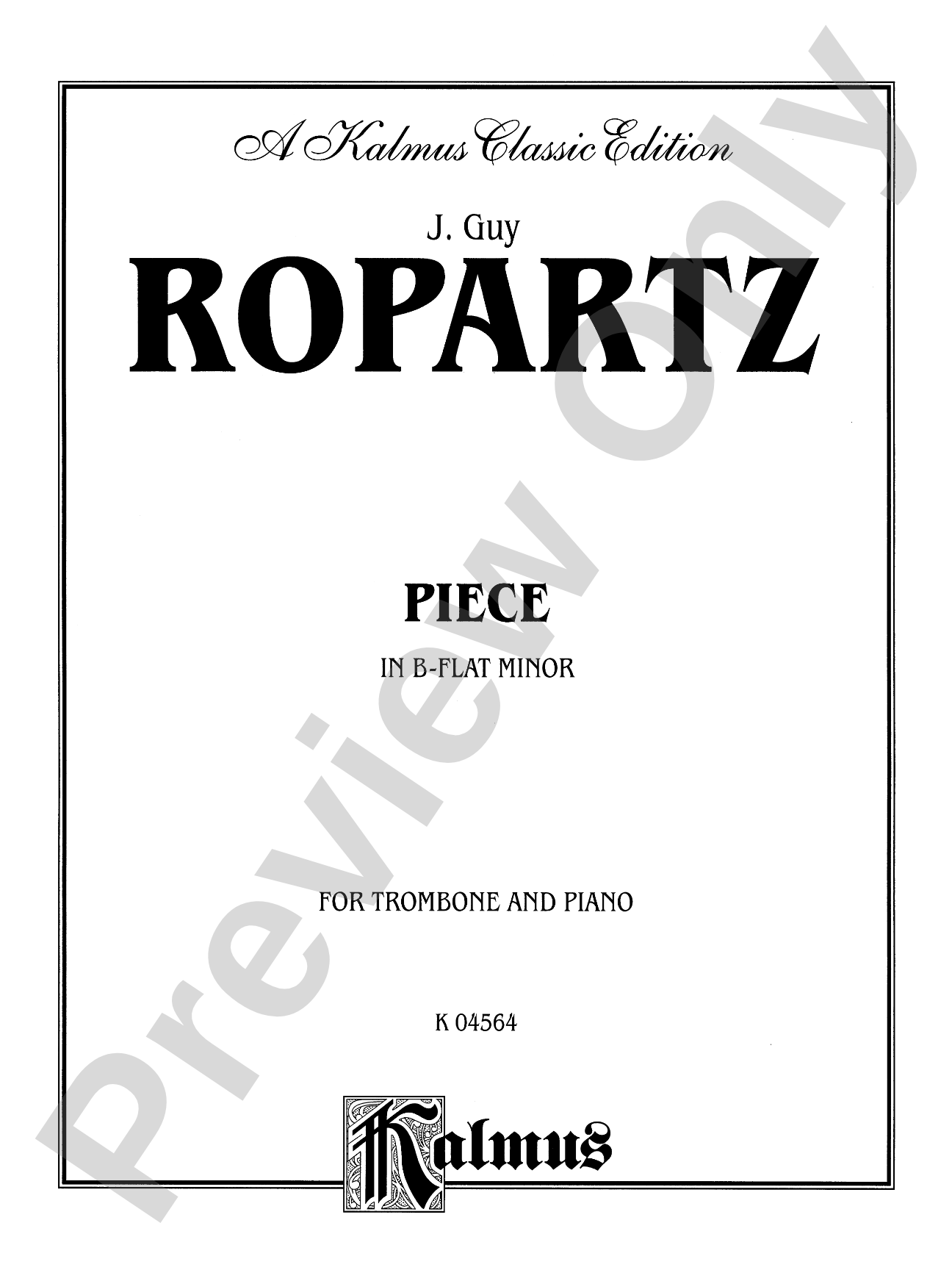

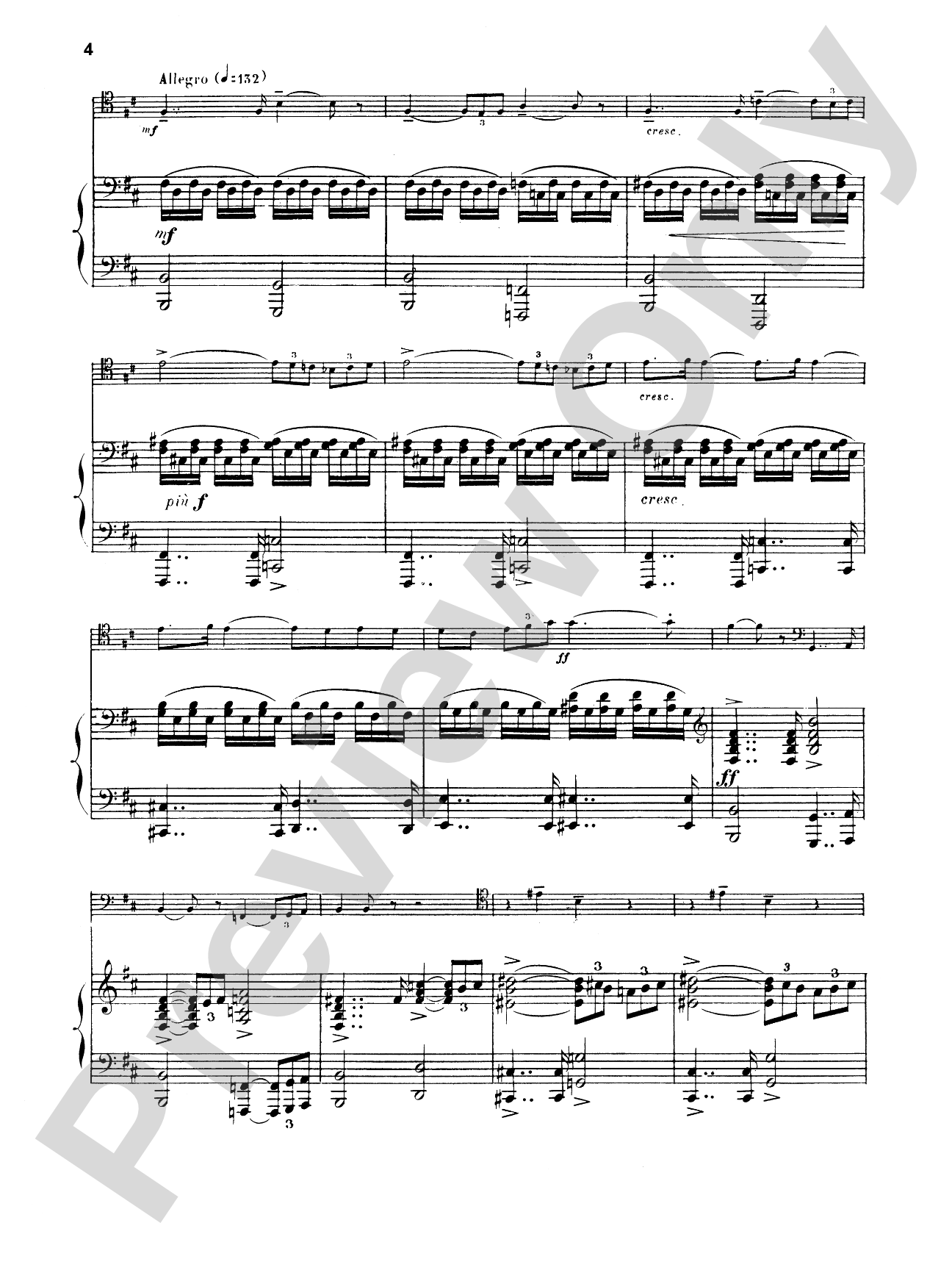
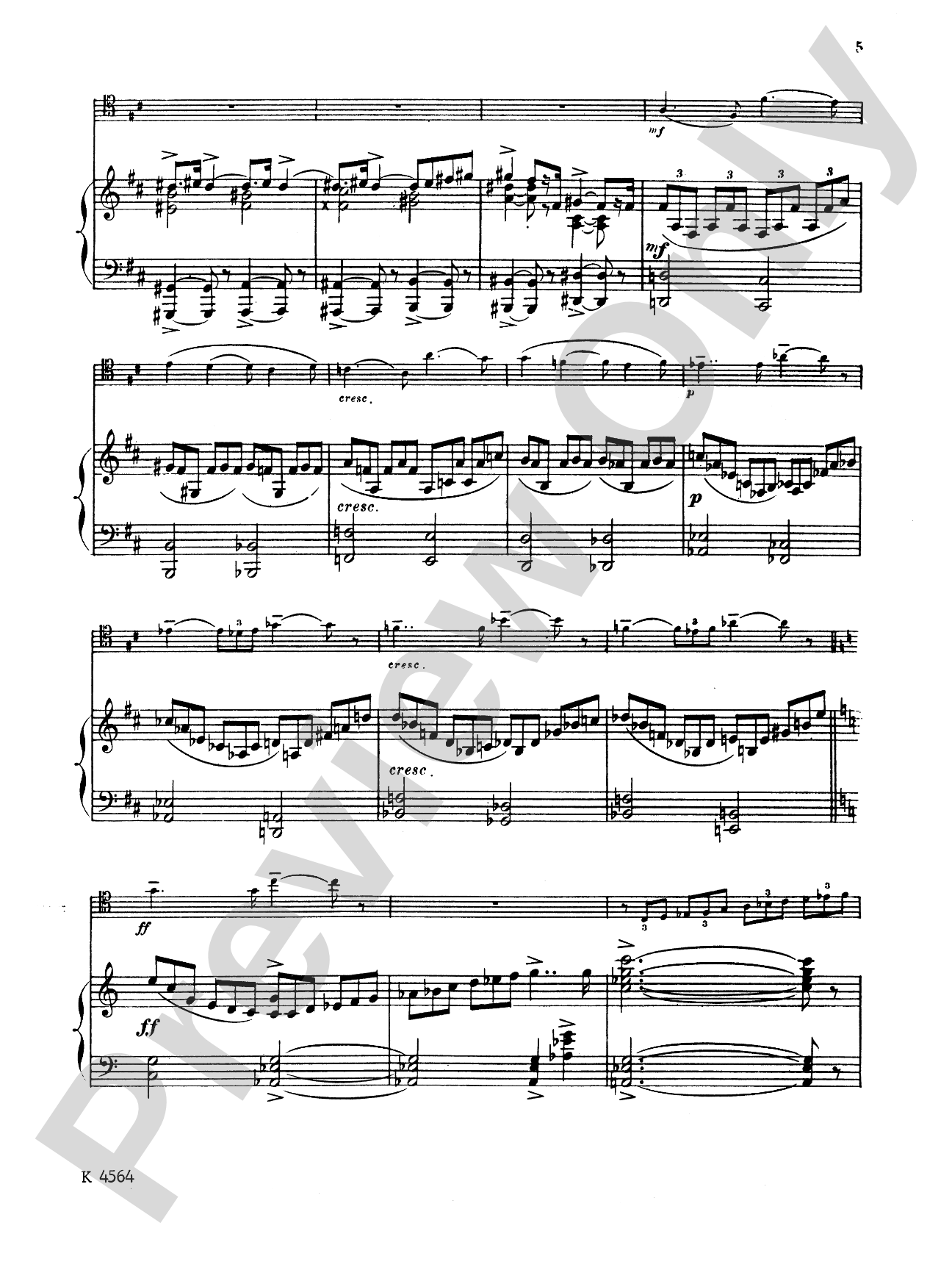
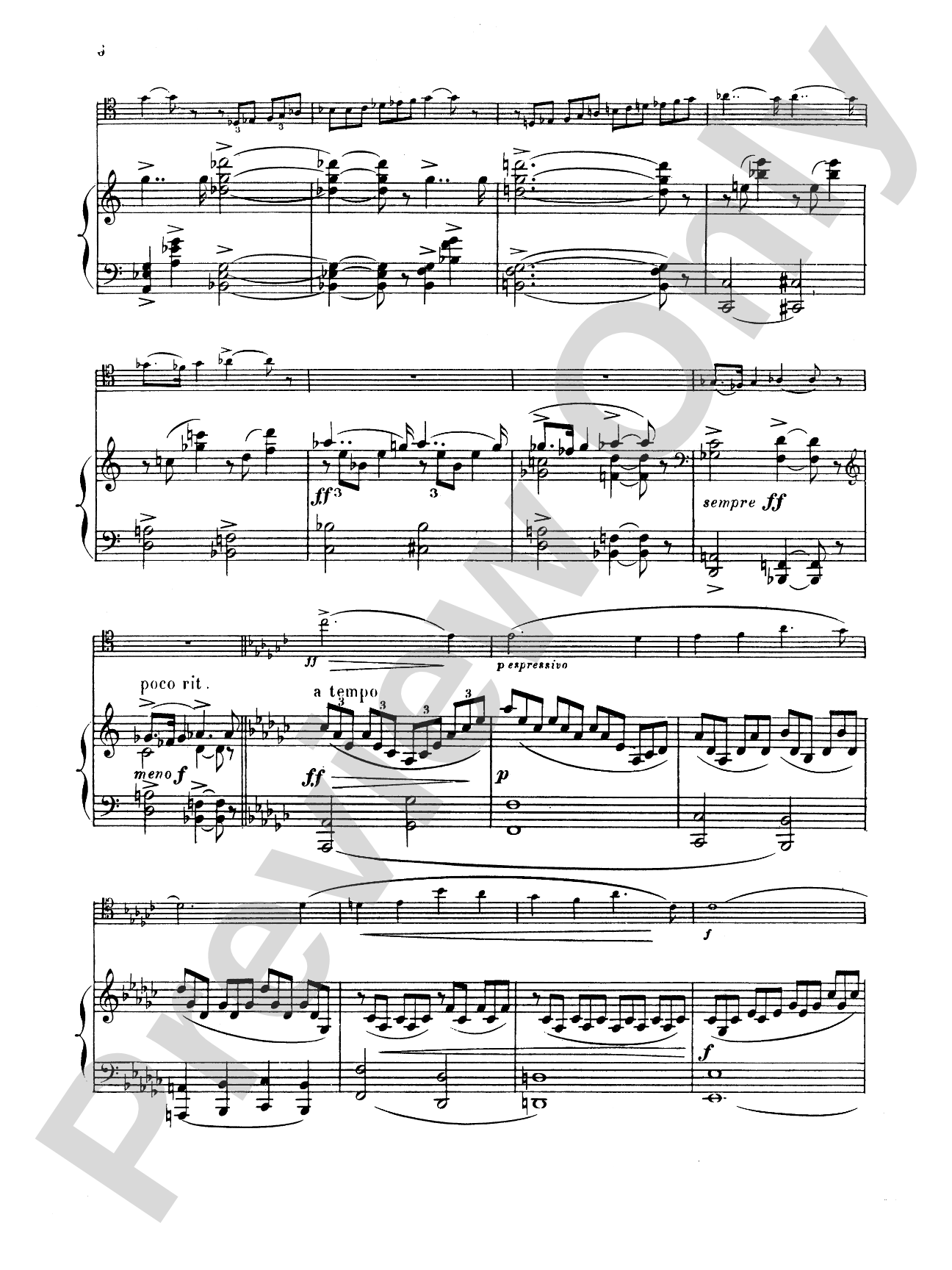
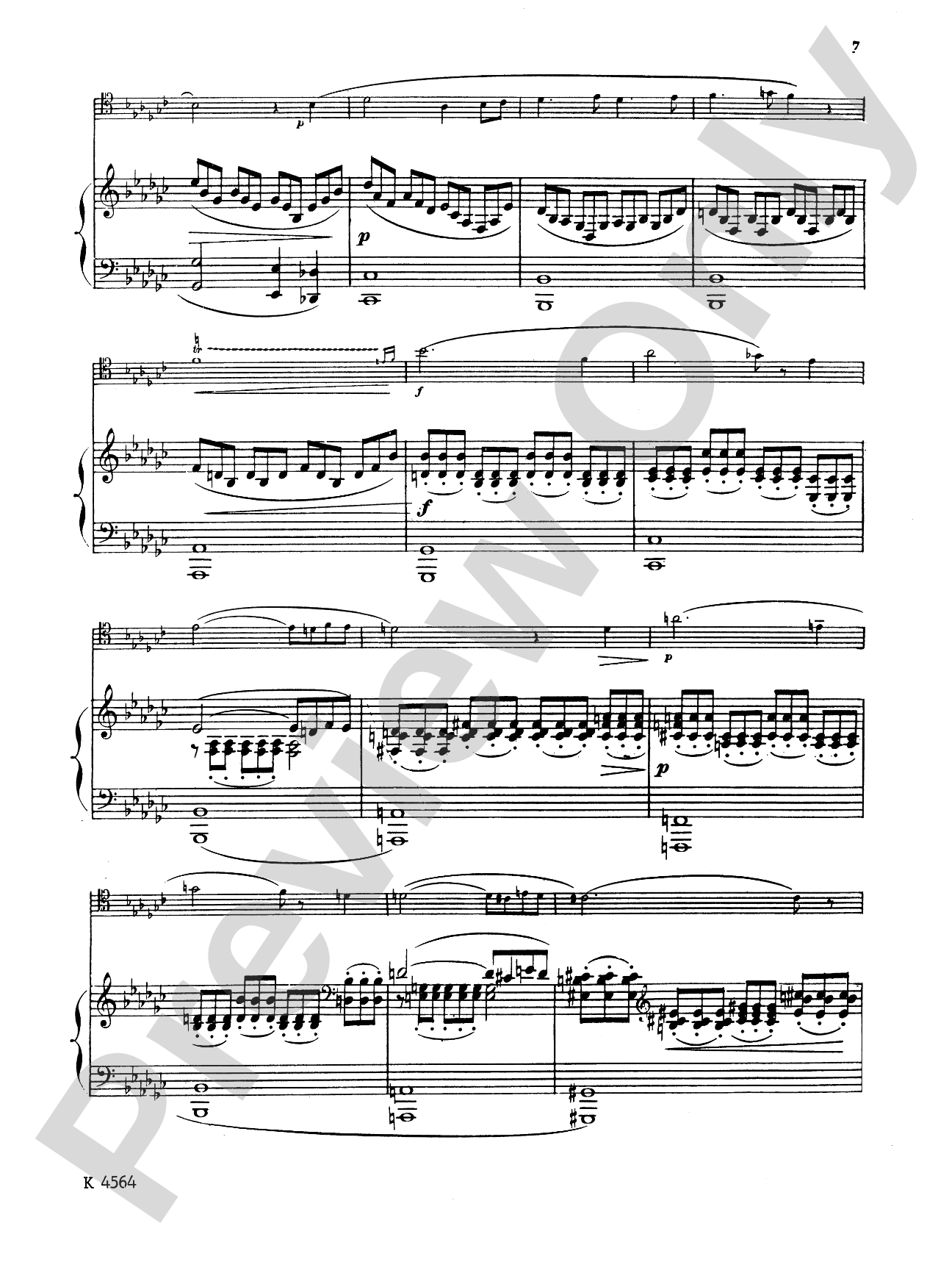
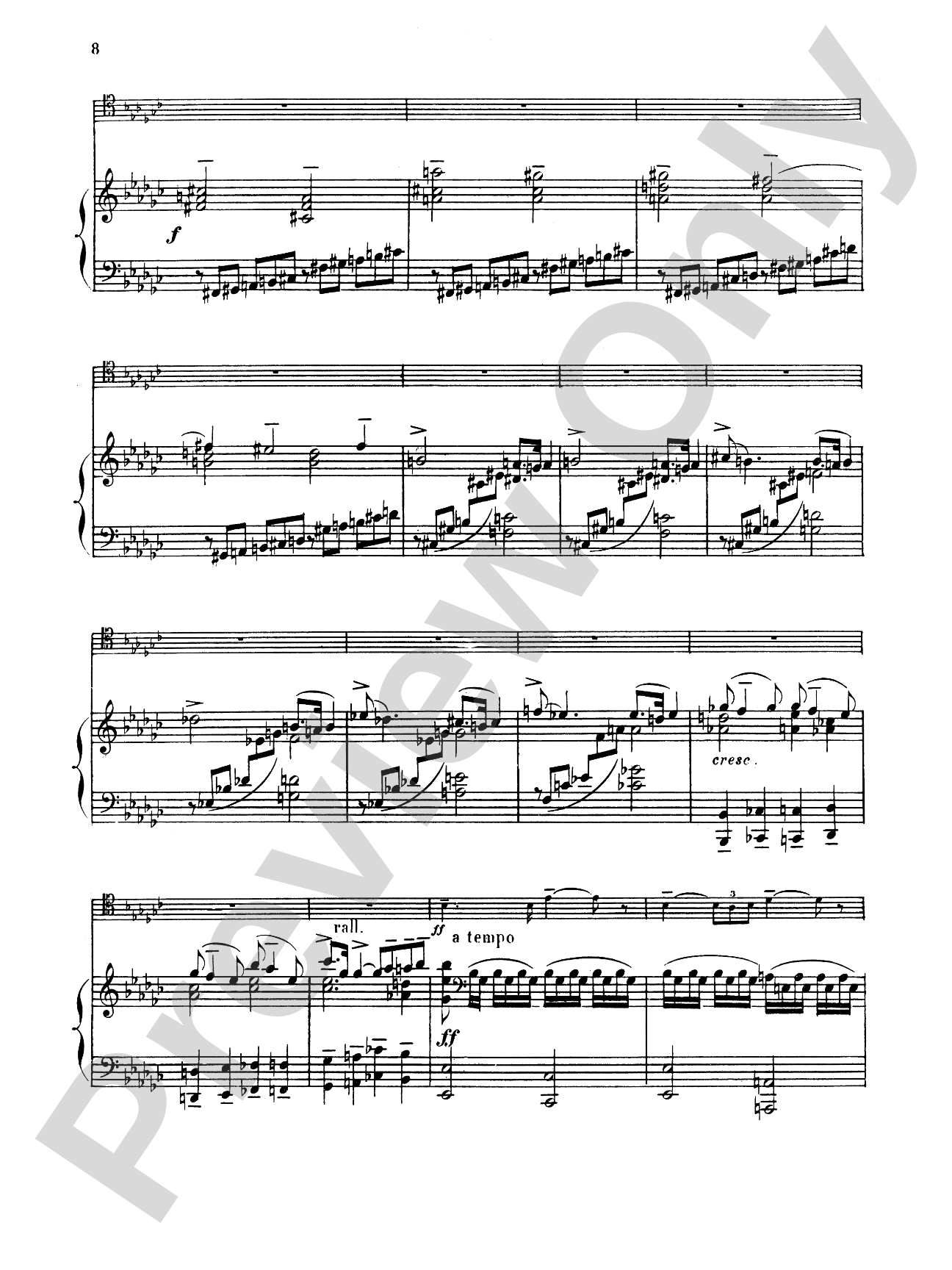
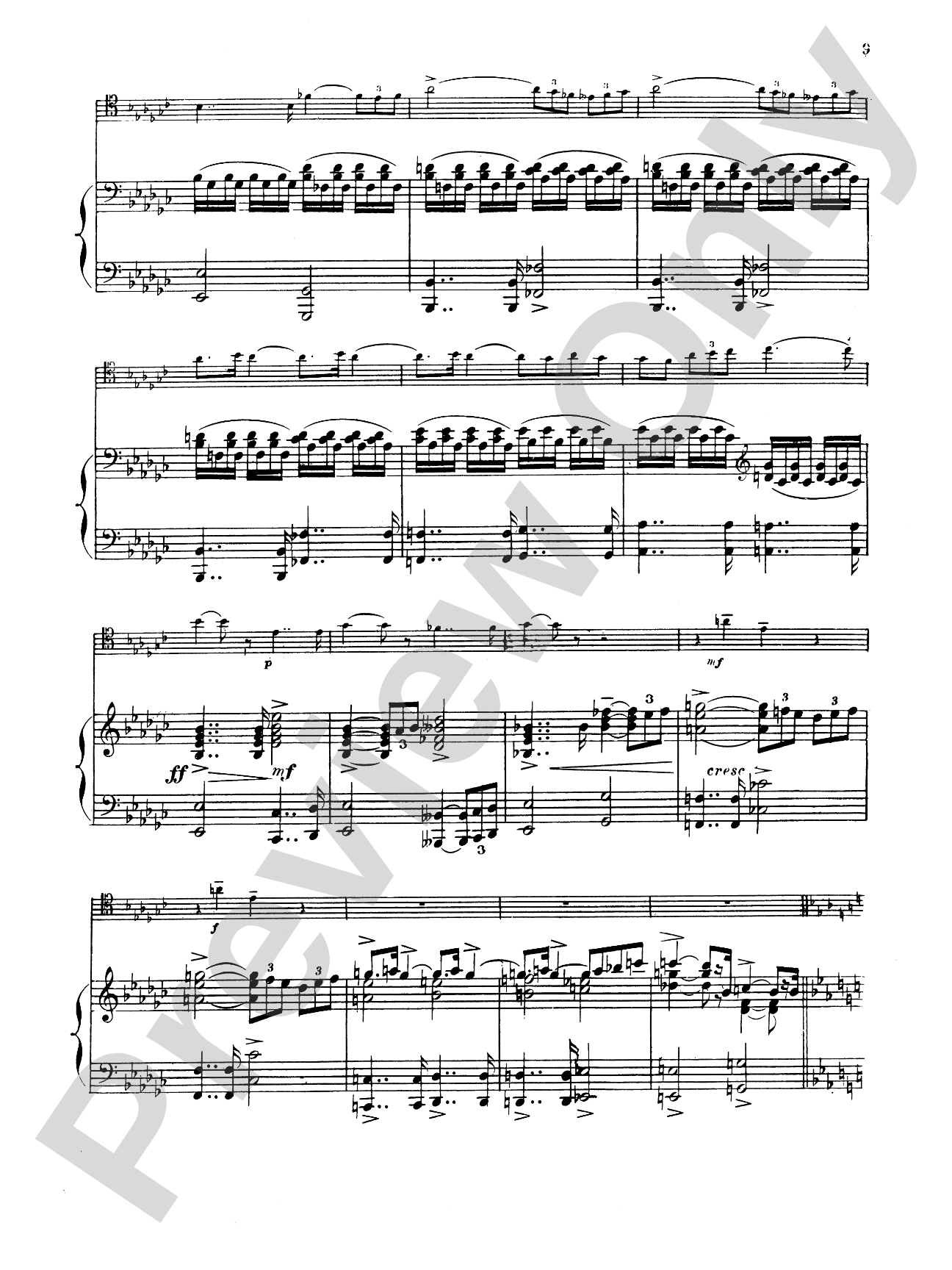
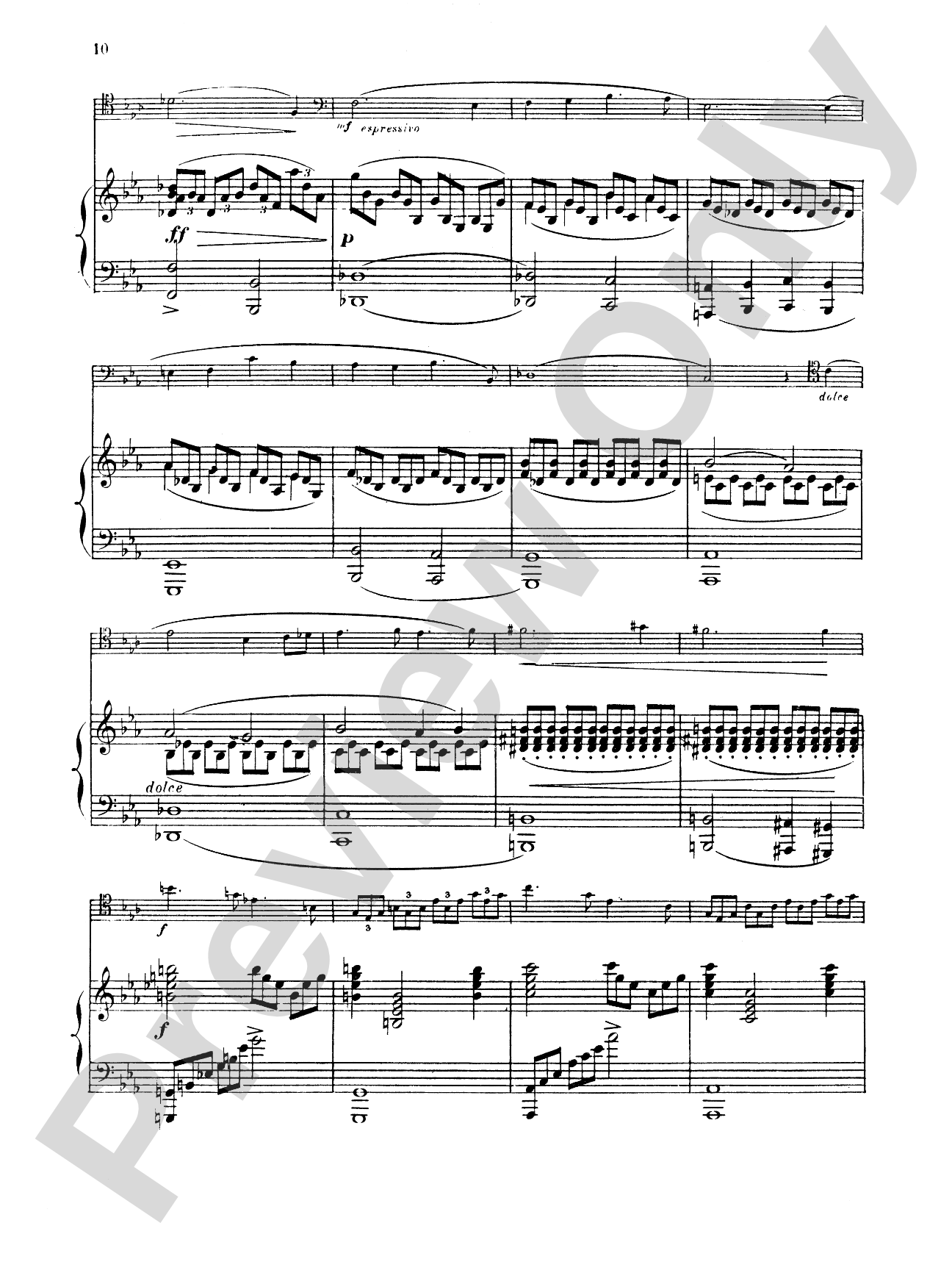
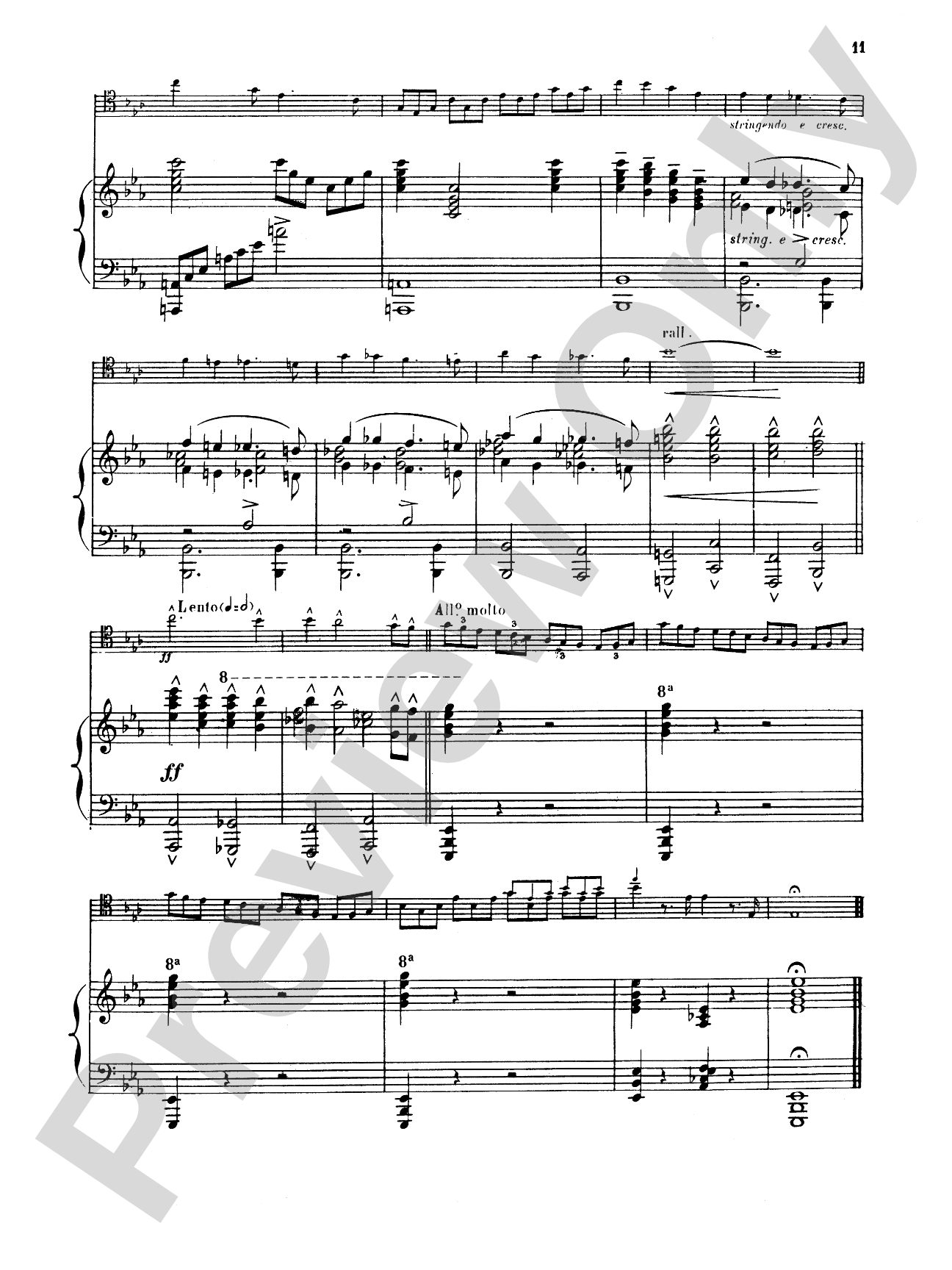




Ropartz: Piece in B flat Minor: Trombone Part(s)
By Joseph Guy Ropartz
Item: 00-PK-0003557

$7.99
Pickup currently not available
Parts Added to Cart!
Related Items
Piece in B-flat Minor: Trombone Part(s) |
$7.95
|
View |
Description
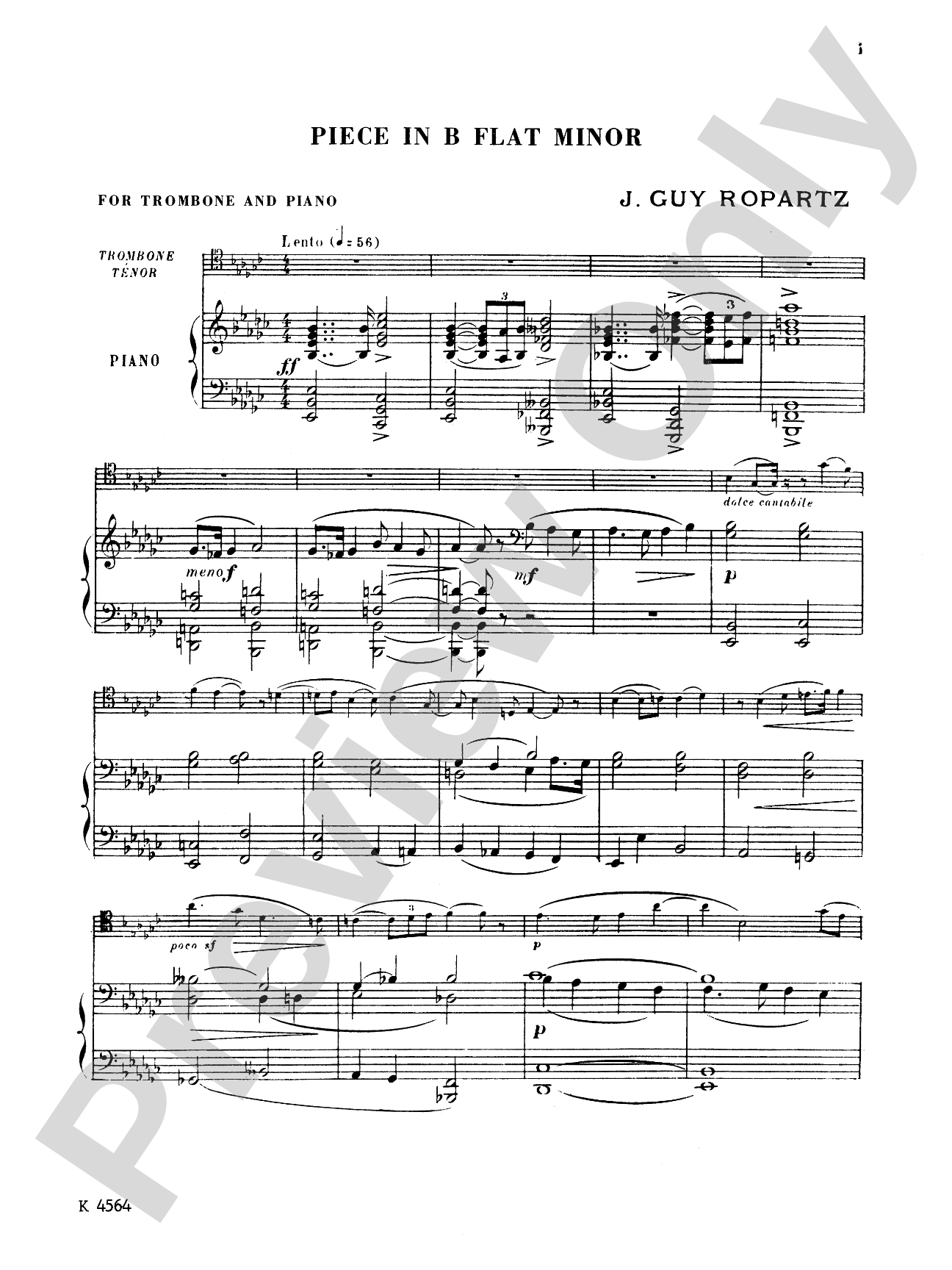
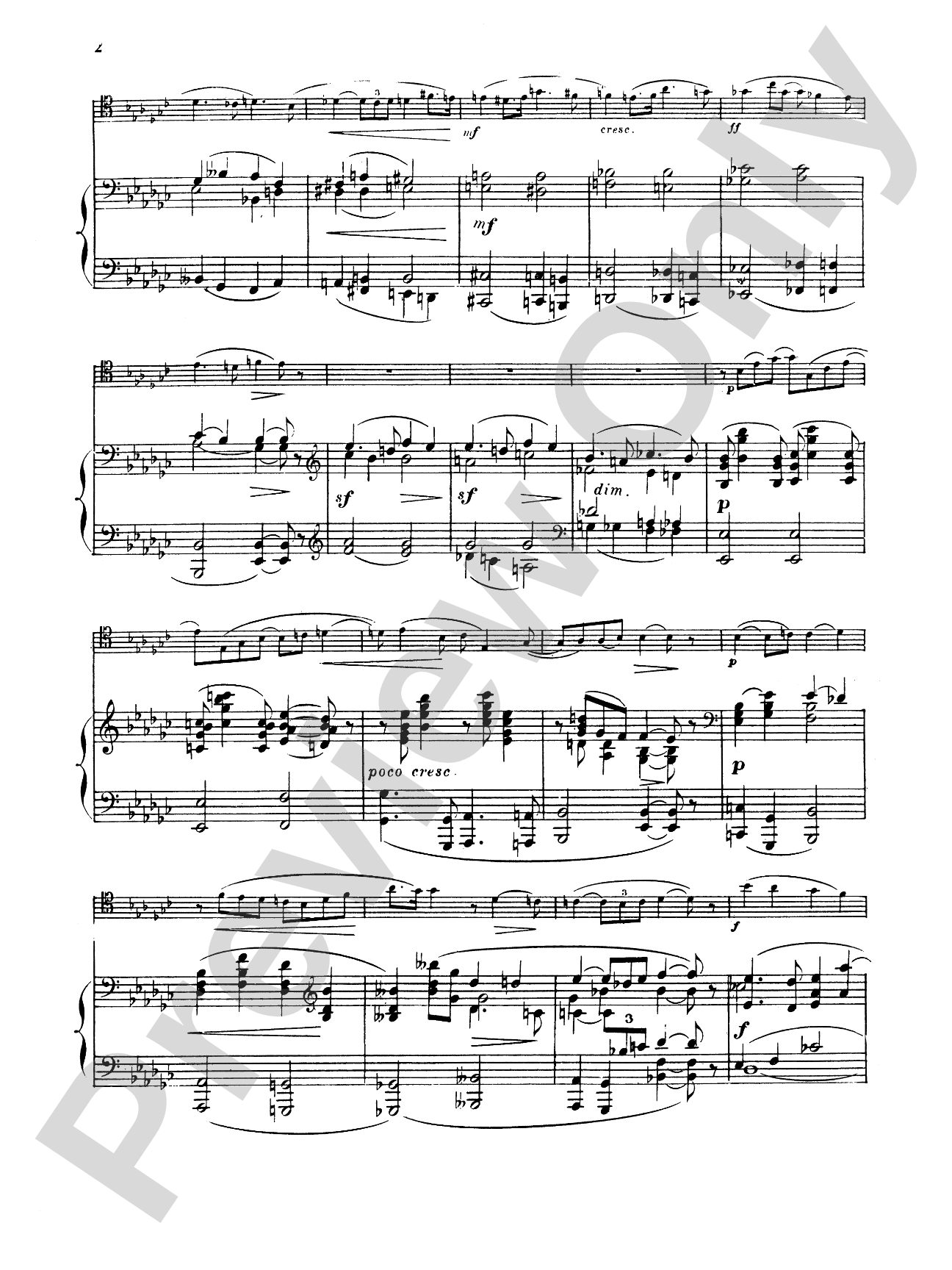
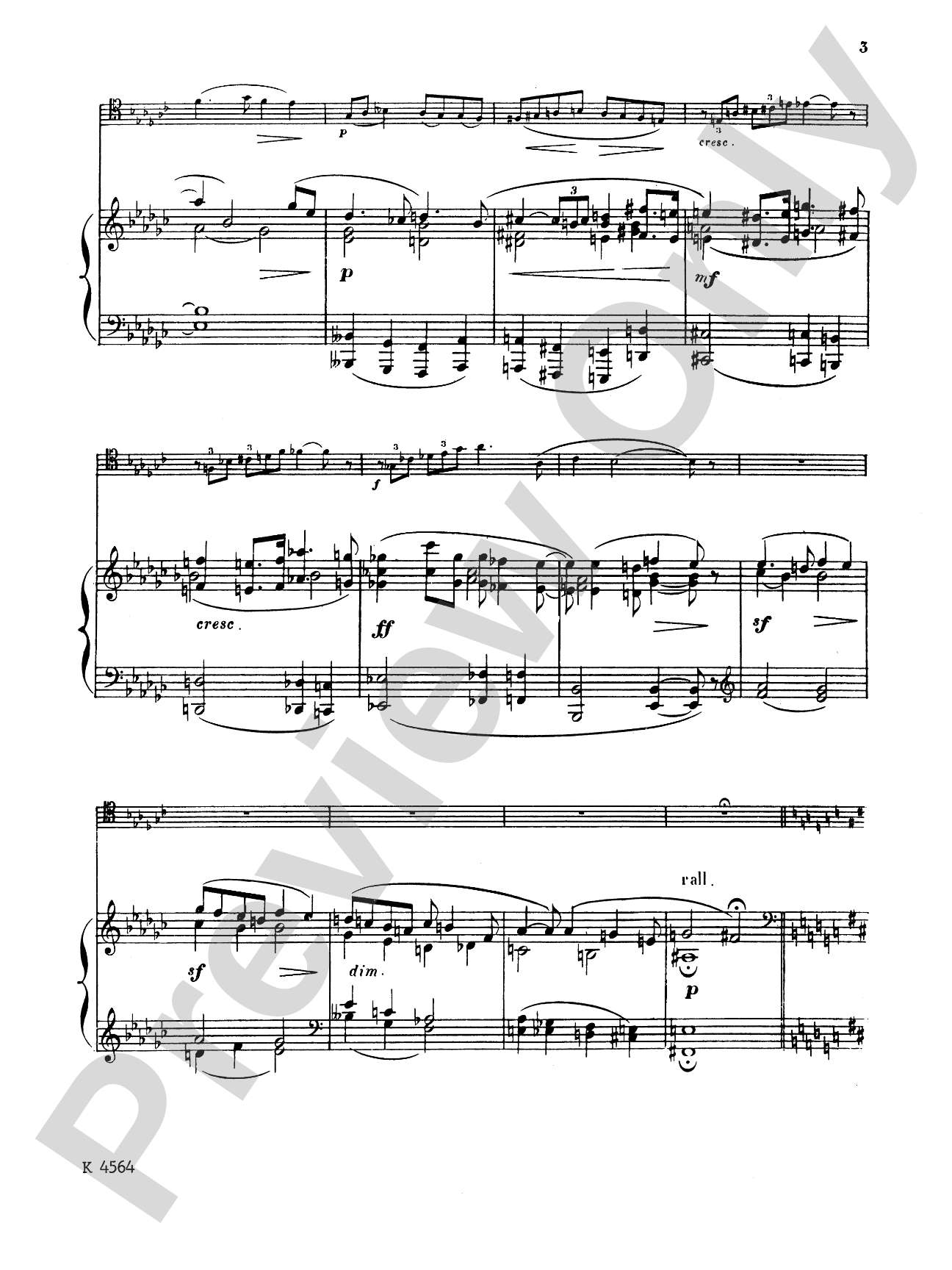
Joseph Guy Marie Ropartz (1864--1955) was a French composer and conductor. His musical style was influenced by Claude Debussy and Cesar Franck. His "Piece in B-flat Minor" for trombone and piano shows the influence of both the romantic and impressionistic eras. Score for trombone and piano, and a separate score for the trombonist.


Don't just read it, hear it, play along with it, and watch your students grow with it. In MakeMusic Cloud, Ropartz: Piece in B flat Minor: Trombone Part(s) comes alive with professional accompaniment, adjustable tempo, and built-in practice tools that turn solo practice into real progress.
Open in the Player
Jump straight in and assign it today.
Start Your Free Trial
Open this title and explore the full library in minutes.
Sample Audio
No sample audio found.
Sample Video
No sample videos found.
Additional Details
Series:
Kalmus Edition
Publisher:
Alfred Music
Page Count:
20
SKU:
00-PK-0003557
More about this title
About the Composer: Joseph Guy Ropartz
Joseph Guy Marie Ropartz (1864–1955) was a French composer, conductor, and administrator whose career spanned the transition from Romantic to modern music. He served as director of the Strasbourg Conservatory and later the Nancy Conservatory, positions from which he championed contemporary French music while remaining rooted in the harmonic language of his predecessors.
Ropartz's compositional voice absorbed influences from Claude Debussy and César Franck, two towering figures of late 19th-century France. Rather than abandon Romantic structure entirely, he wove impressionistic colors and harmonic ambiguity into forms that still honored melody and emotional directness. This synthesis appears throughout his chamber and solo works, which remain essential repertoire for advancing musicians seeking 20th-century French literature.
Why we love this
Ropartz's Piece in B-flat Minor sits in the sweet spot between late Romanticism and impressionism—it demands expressive maturity and technical assurance without requiring virtuosic fireworks. The work has earned its place in trombone repertoire at regional and national contests precisely because it rewards thoughtful interpretation while remaining musically genuine, never formulaic. A trombonist tackling this will encounter sophisticated harmonic language and intimate collaboration with piano that mirrors the chamber works of Franck.
What to expect
The minor key and impressionistic harmony create an atmosphere of quiet introspection tinged with yearning. Melodies emerge from rich harmonic textures and dissolve back into them, giving the work an almost nocturnal character despite its classical sense of structure and direction.
Who it's for
This piece serves advanced trombone students preparing for college-level study or regional/state competitions. It's also ideal for experienced amateurs and semi-professional trombonists seeking chamber repertoire that speaks to artistic growth beyond standard pedagogical fare.
How to get the most out of it
- Attend to the relationship between trombone and piano as true partners rather than accompaniment. Ropartz's harmonic language often divides thematic weight; listen to where the piano voice carries the primary melodic line and match your phrasing accordingly.
- Shape phrases through dynamic gradation rather than sudden contrasts. Impressionistic influence suggests that color shifts happen within a range, not through stark binary changes.
- Balance the minor key's inherent introspection with the melodic generosity Romanticism demands. Avoid playing B-flat minor as uniformly dark; search for warmth and lyricism in the upper register passages.
How to use it
Program this on a recital alongside Romantic-era chamber works or as a bridge between 19th-century and contemporary trombone literature. It works especially well in programs exploring French compositional tradition or in concert contexts that highlight the trombone's lyrical capabilities beyond large ensemble settings.
Skills your students will build
- Interpretive control of minor-key lyricism and impressionistic color
- Subtle dynamic shaping within a restricted range
- Collaborative listening and phrasing with piano accompaniment
- Understanding of early 20th-century French harmonic language
- Sustained legit tone production and vibrato management in expressive contexts