Rondo Presto (from String Quartet K. 157): Viola Sheet Music Preview

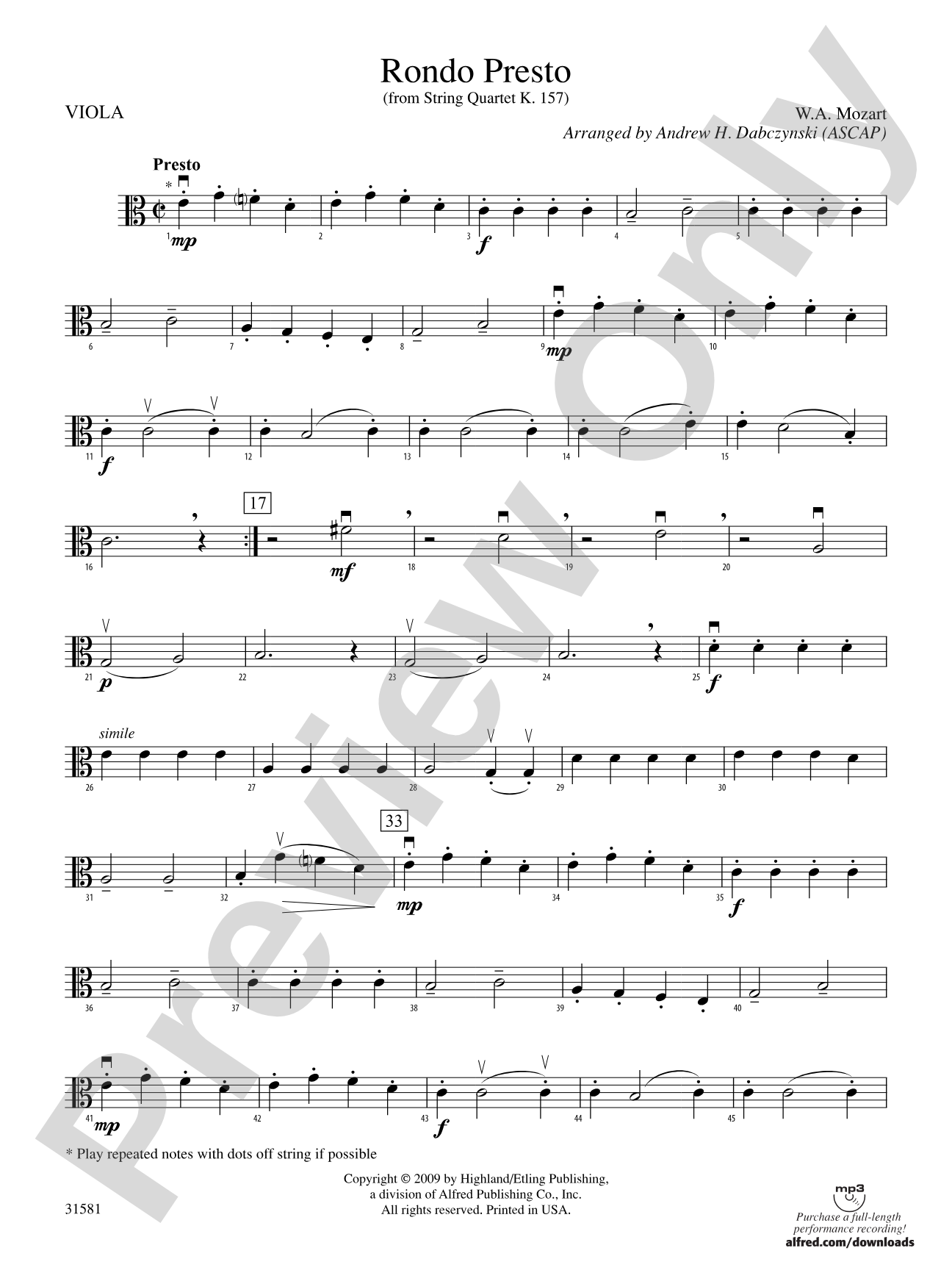
Rondo Presto (from String Quartet K. 157): Viola

By Wolfgang Amadeus Mozart / arr. Andrew H. Dabczynski

Grade: 2

Item: 00-PC-0014846_VA1

Digital Download
$5.99
Description
Mozart's "Early Quartet" collection is recognized as a crown of string chamber music. This accessible arrangement, from an arranger recognized for his careful and creative adaptations, is very true to the original. An interesting bass part has been added, and the more taxing rhythms, accidentals and embellishments have been simplified. Playable by younger players, yet advanced students also will find this piece delightfully satisfying---even challenging---when played at a faster tempo. Here's a centerpiece for any string orchestra concert program! Correlates with String Explorer Book One, unit 13. This title is available in MakeMusic Cloud.

Don't just read it, hear it, play along with it, and watch your students grow with it. In MakeMusic Cloud, Rondo Presto (from String Quartet K. 157): Viola comes alive with professional accompaniment, adjustable tempo, and built-in practice tools that turn solo practice into real progress.

Sample Audio
0:00
0:00
Sample Video
Additional Details
Series: Highland/Etling String Explorer
Publisher: Alfred Music
Page Count: 140
SKU: 00-PC-0014846_VA1

More about this title

About the Composer: Wolfgang Amadeus Mozart

Wolfgang Amadeus Mozart (1756-1791) composed prolifically across every major genre during the Classical era, creating works of structural clarity and melodic invention that remain central to the repertoire. His string quartets, written throughout his career, represent the height of chamber music craftsmanship and continue to define the standard for the genre.

Why we love this

This arrangement strips away the technical barriers of the original quartet without sacrificing the elegance of Mozart's writing. The added bass part gives younger orchestras a harmonic foundation that deepens the ensemble sound, while the simplified rhythms and embellishments keep the Classical idiom intact. Programming a Mozart masterwork at Grade 2 opens doors for students who might not otherwise encounter this essential repertoire.

What to expect

The Presto sparkles with the efficiency and grace typical of Mozart's mature string writing. Playful and bright, it moves with forward momentum that feels effortless when the ensemble locks into its rhythmic groove, offering young players a satisfying taste of Classical style without the technical walls that often gate serious Mozart.

Who it's for

Grade 2 string orchestras and advanced intermediate ensembles looking for accessible yet substantial Classical repertoire. This arrangement works well for students who play in younger orchestras or those building foundational skills in ensemble intonation and phrasing.

How to get the most out of it

  • Shape the melodic lines with clear phrase direction rather than treating them as a series of individual notes; younger players often play measure-to-measure instead of line-to-line.
  • Keep the Presto tempo proportional to your ensemble's technical comfort; this piece is satisfying even at a moderate tempo, and rushes flatten the articulation.
  • Balance the string sections carefully so the viola and cello lines (including the added bass part) support rather than cover the violins.
  • Mark the simplified accidentals and articulations distinctly in parts so players see the character changes and don't default to uniform playing.

How to use it

This arrangement pairs naturally with other Grade 2-3 accessible masterworks for a concert that celebrates the breadth of string literature. Its manageable length and charming character make it an excellent opener or closer, and it coordinates directly with String Explorer Book One unit 13 for classroom and rehearsal reinforcement.

Skills your students will build

  • Classical phrasing and articulation patterns
  • Rhythmic precision in fast-moving passages
  • Balance between melodic and harmonic voices
  • Intonation awareness in diatonic harmonic progressions
  • Reading simplified dynamic and stylistic markings

You May Also Like