Rondo Picoso: B-flat Tenor Saxophone Sheet Music Preview

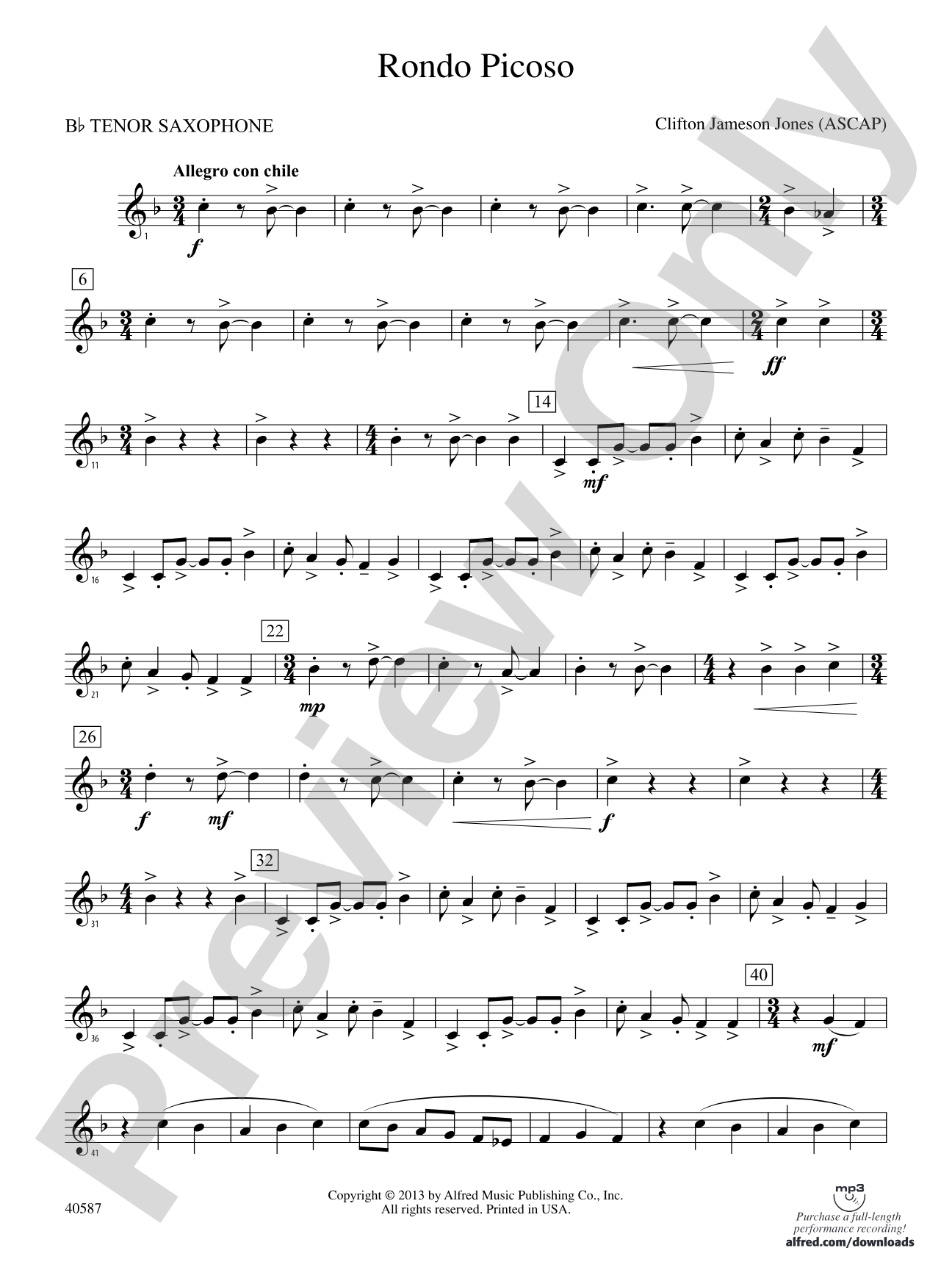
Rondo Picoso: B-flat Tenor Saxophone

By Clifton Jameson Jones

Grade: 3 (Medium)

Item: 00-PC-0016037_TX1

Digital Download
$3.00
Description
An energetic, rhythmic work for band in the classic rondo form, this piece was the winner of the National Band Association Young Band Composition Contest. Written in rondo form, this spicy hot, multi-meter offering features a Latin percussion flavor throughout. (3:30)

Don't just read it, hear it, play along with it, and watch your students grow with it. In MakeMusic Cloud, Rondo Picoso: B-flat Tenor Saxophone comes alive with professional accompaniment, adjustable tempo, and built-in practice tools that turn solo practice into real progress.

Sample Audio
0:00
0:00
Sample Video
Additional Details
Series: Young Symphonic
Publisher: Alfred Music
Page Count: 264
SKU: 00-PC-0016037_TX1

More about this title

About the Composer: Clifton Jameson Jones

Clifton Jameson Jones

Clifton Jameson Jones composes and arranges across multiple ensembles: concert band, orchestra, jazz groups, and woodwind combinations. He studied composition and theory at Trinity University under Dr. William Thornton and later at the University of Houston with Dr. Michael Horvit, while developing his arranging craft with Shelly Berg at San Jacinto College. Jones is based in Texas, where he performs clarinet with the Austin Symphonic Band and has created numerous works for that ensemble.

In his teaching role at College Station Independent School District and as director of the jazz ensemble at A&M Consolidated High School, Jones brings practical classroom and rehearsal experience to his writing. He holds membership in the Texas Music Educators Association, Texas Jazz Educators Association, and ASCAP.

Why we love this

This National Band Association Young Band Composition Contest winner combines the structural clarity of rondo form with genuine rhythmic excitement that keeps ensembles engaged throughout. The Latin percussion elements and shifting meters give Grade 3 students exposure to contemporary concert band writing without overwhelming them, and the 3:30 duration fits perfectly into concert programs that need a confident, spicy opener.

What to expect

Energetic and propulsive, with a spicy Latin heartbeat running through the entire piece. The rondo form creates a satisfying sense of return and familiarity even as rhythmic and metrical surprises keep the music feeling fresh and unpredictable.

Who it's for

Grade 3 concert bands seeking a contest-quality work that combines classical form with contemporary rhythmic language. Students benefit from navigating metric changes and Latin-influenced percussion textures while experiencing a formally coherent structure that reinforces musical architecture.

How to get the most out of it

  • Establish the Latin percussion flavor early in sectional rehearsals. Have your percussion section lock the rhythmic foundation before adding the melodic voices.
  • Navigate the multi-meter changes by conducting through the transitions rather than stopping. Mark beat patterns clearly in the score so the band follows the harmonic motion even when the meter shifts.
  • Balance the ensemble so the rondo returns remain recognizable. The A sections should feel like familiar ground returning after contrasting episodes.
  • Let the rhythmic energy speak for itself. This piece thrives on forward momentum and clarity of articulation rather than expressive rubato.

How to use it

Program this as a concert opener to establish an energized, contemporary tone for the evening. Its combination of accessibility and competition-winning credentials makes it equally valuable for festival performances or as the anchor piece in a program of contrasting works.

Skills your students will build

  • Reading mixed meters within a single continuous work
  • Interpreting Latin percussion influences in concert band texture
  • Recognizing and executing rondo form (ABACA or similar structures)
  • Maintaining ensemble cohesion during metric transitions
  • Balancing rhythmic precision with sustained melodic lines

You May Also Like