
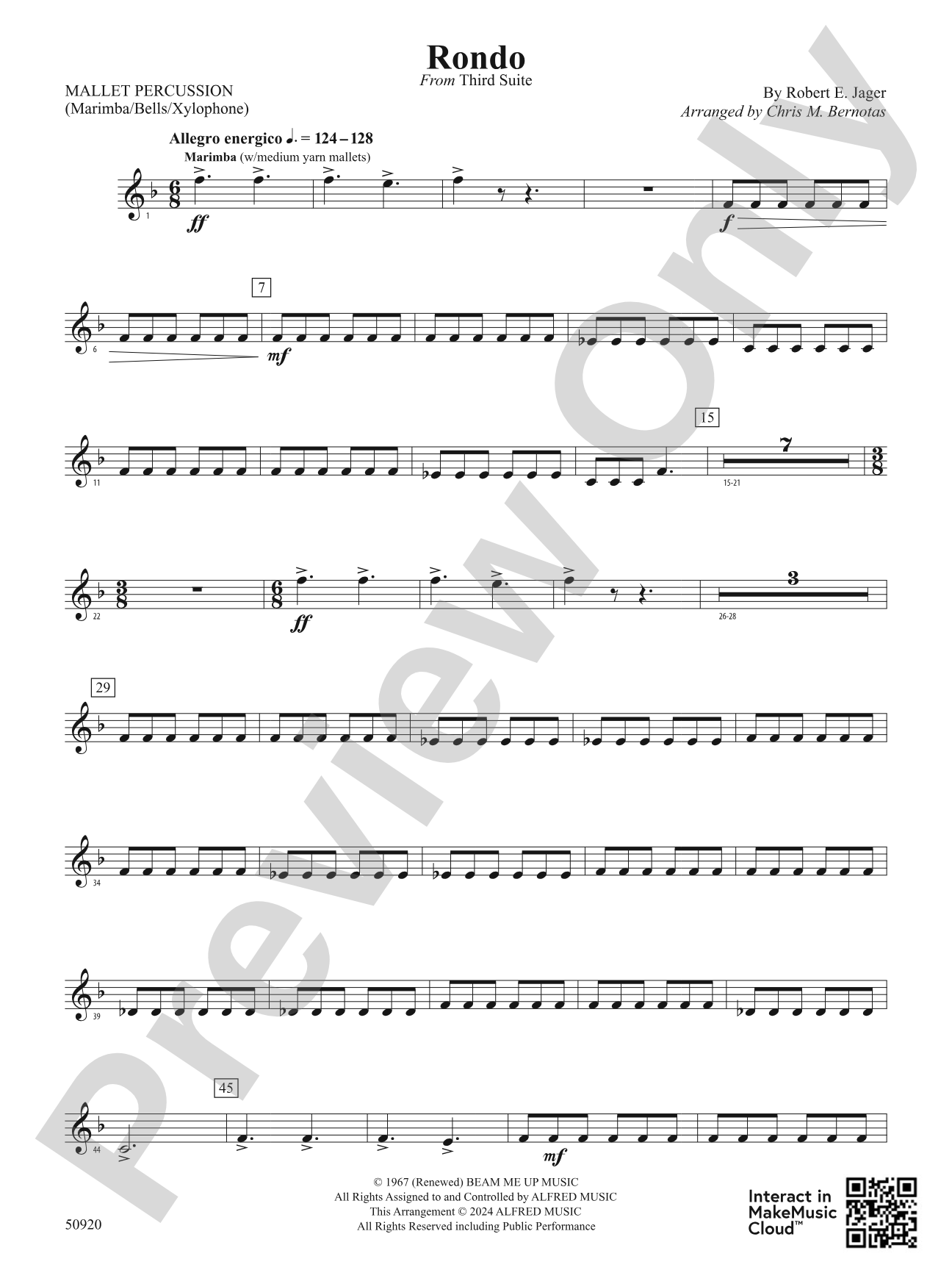

Rondo: Mallets
From Third Suite
By Robert E. Jager / arr. Chris M. Bernotas
Grade: 3
Item: 00-PC-0019314_M1
$3.00
Pickup currently not available
Description
Arranged by Chris M. Bernotas, this rendition of "Rondo" from Jager's timeless Third Suite is thoughtfully scored for intermediate-level bands. The opening five-chord sequence connects each of the sections in this rondo. Memorable main themes and countermelodies, coupled with rhythmic drive, propel the music forward with momentum and excitement straight through to the end. Rondo is rich with teachable moments, making it an excellent choice for your concert's opening or closing piece. (2:20)


Don't just read it, hear it, play along with it, and watch your students grow with it. In MakeMusic Cloud, Rondo: Mallets comes alive with professional accompaniment, adjustable tempo, and built-in practice tools that turn solo practice into real progress.
Open in the Player
Jump straight in and assign it today.
Start Your Free Trial
Open this title and explore the full library in minutes.
Sample Audio
1
Audio File
--:--
0:00
0:00
Sample Video
Additional Details
Series:
Belwin Concert Band
Publisher:
Alfred Music
SKU:
00-PC-0019314_M1
More about this title
About the Composer: Robert E. Jager
Robert E. Jager stands as one of the most prolific and performed composers in American band music. His catalog spans decades of writing for wind ensembles at all levels, earning him recognition as a composer who understands the pedagogical and performance needs of student musicians.
Jager's Third Suite remains a cornerstone of intermediate band repertoire, balancing musical sophistication with accessibility. His approach to composition emphasizes clear structure, memorable thematic material, and scoring that challenges students without overwhelming them.
Why we love this
The five-chord unifying device creates a satisfying architectural framework that students hear clearly, making the rondo form tangible rather than abstract. Jager's orchestration balances tutti moments with opportunities for individual sections to shine, so every student in the band has something compelling to play. It's the kind of piece that builds momentum naturally, which means your students will feel the forward propulsion without needing constant conductor reminders about tempo.
What to expect
Propulsive and purposeful, with a rhythmic energy that feels composed rather than imposed. The main theme lands comfortably in the ear, and the interplay between sections creates constant forward motion. By the final section, the piece builds to a satisfying, clean arrival that feels earned.
Who it's for
Intermediate concert bands seeking a piece that combines structural clarity with genuine musical interest. This works equally well for bands preparing for festival competition or looking for a polished concert opener that showcases ensemble cohesion without excessive technical demands.
How to get the most out of it
- Establish the five-chord progression in sectionals before full band rehearsals so every section recognizes it as the connective tissue holding the rondo together. This pays dividends when students self-correct during transitions.
- Differentiate the main theme from the countermelodies through articulation choices in your sectionals; even Grade 3 players can handle the textural independence if it's rehearsed deliberately.
- Resist the urge to rush the final section. The rhythmic drive is already built into the writing; precision and controlled energy will land the ending better than accelerating through it.
- Use the opening five-chord moment as your primary tuning and balance reference. Once that sounds centered and warm, the rest of the piece will sit more naturally in the ensemble.
How to use it
Open a concert with this piece to establish command and polish right from the start; its 2:20 length means it respects concert pacing without feeling rushed. Alternatively, place it as a closing number if you want to send the audience out with momentum and a clear sense of ensemble accomplishment.
Skills your students will build
- Recognizing and responding to structural unification (rondo form with a recurring five-chord anchor)
- Balancing melody and countermelody within the same harmonic structure
- Rhythmic precision during sections marked by drive and momentum
- Sectional independence while maintaining ensemble cohesion