
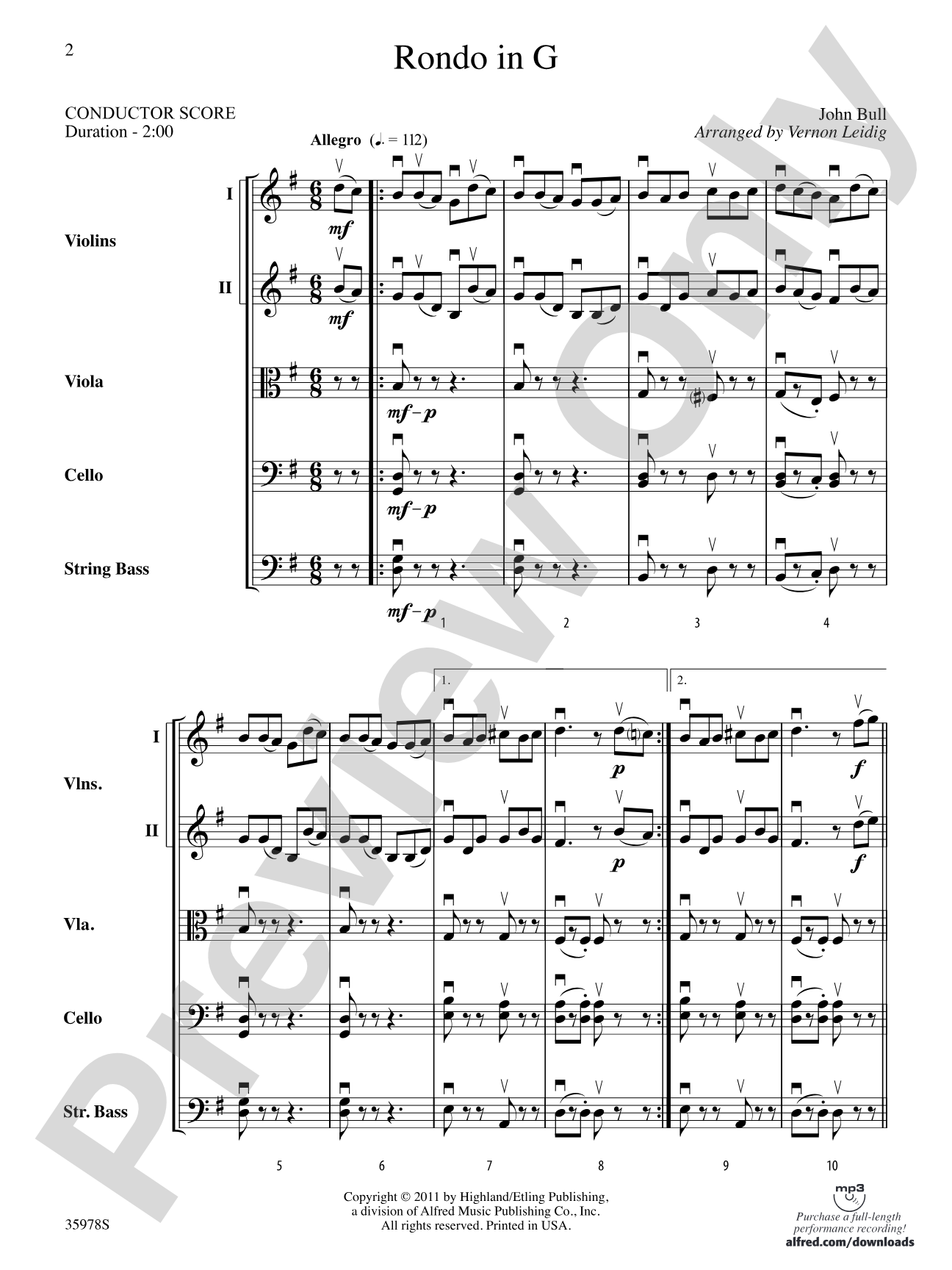
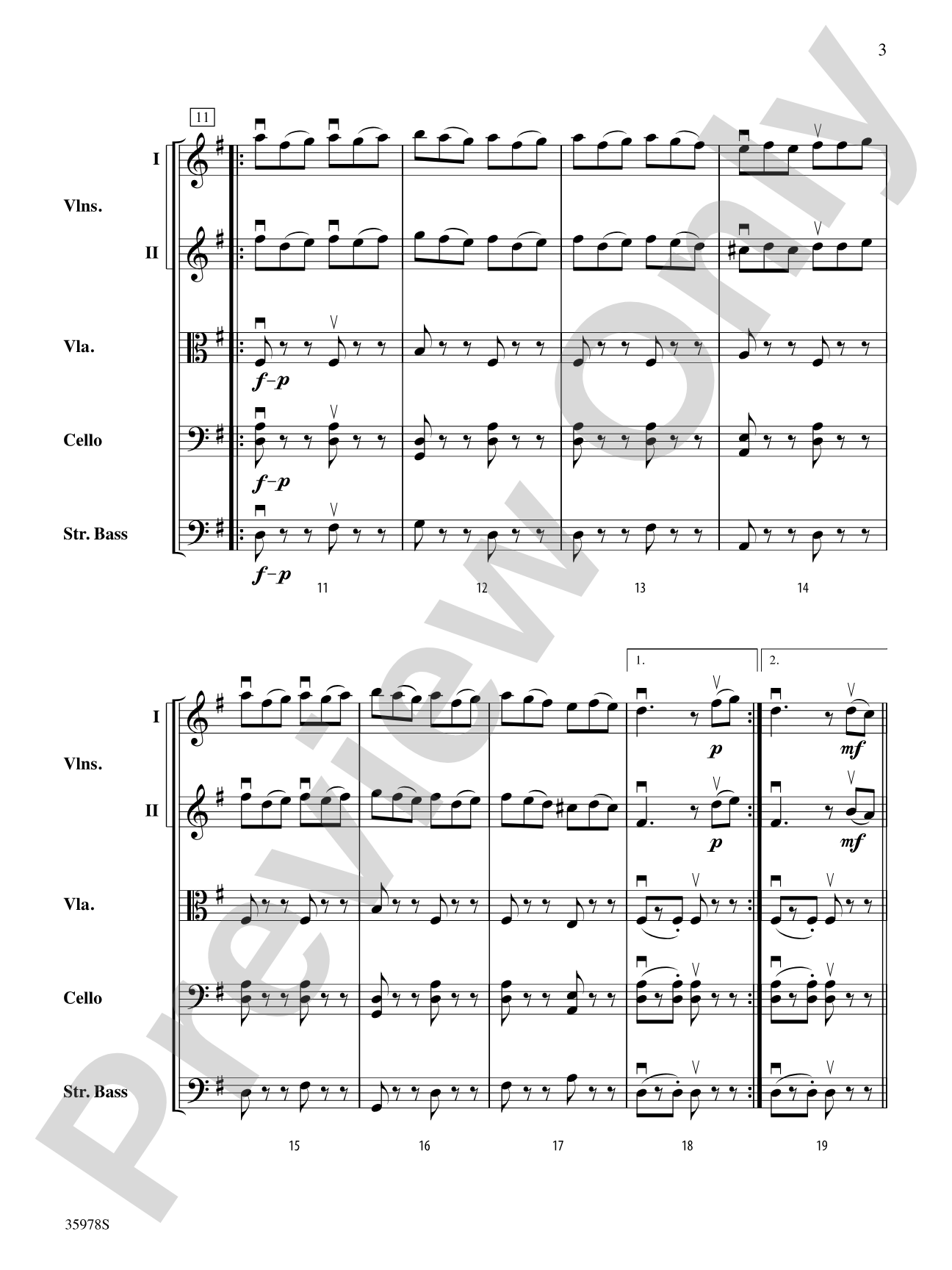
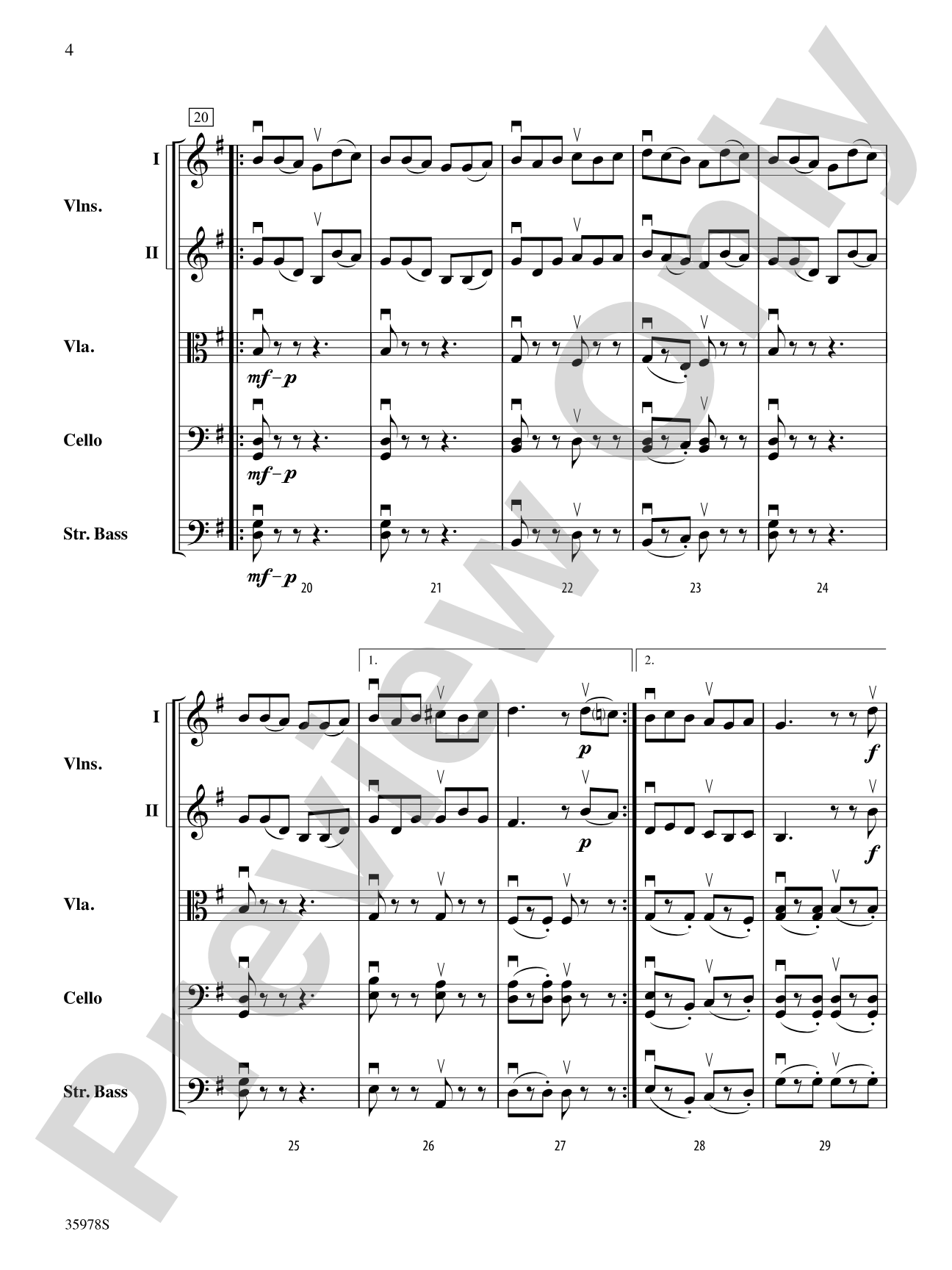
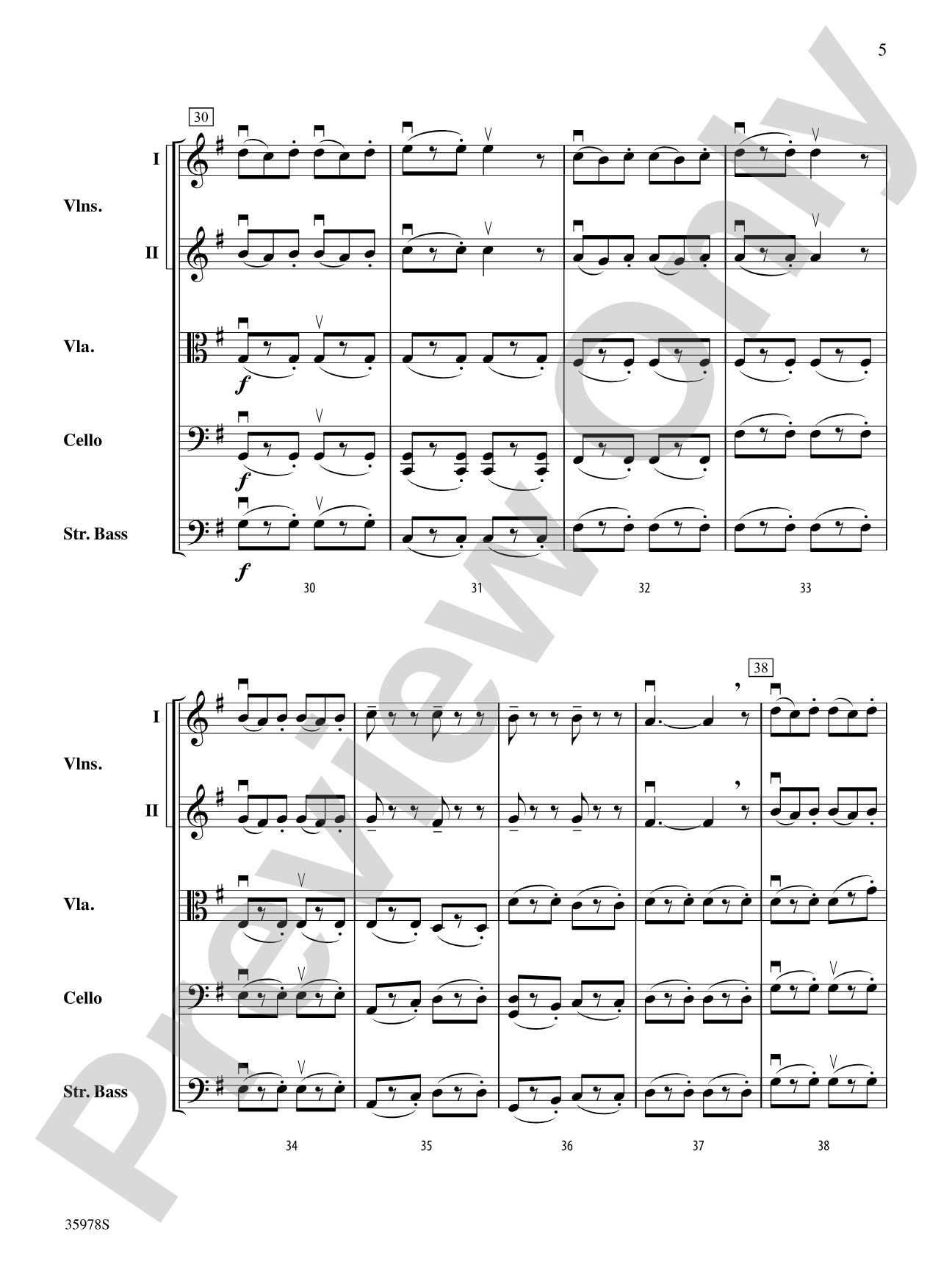
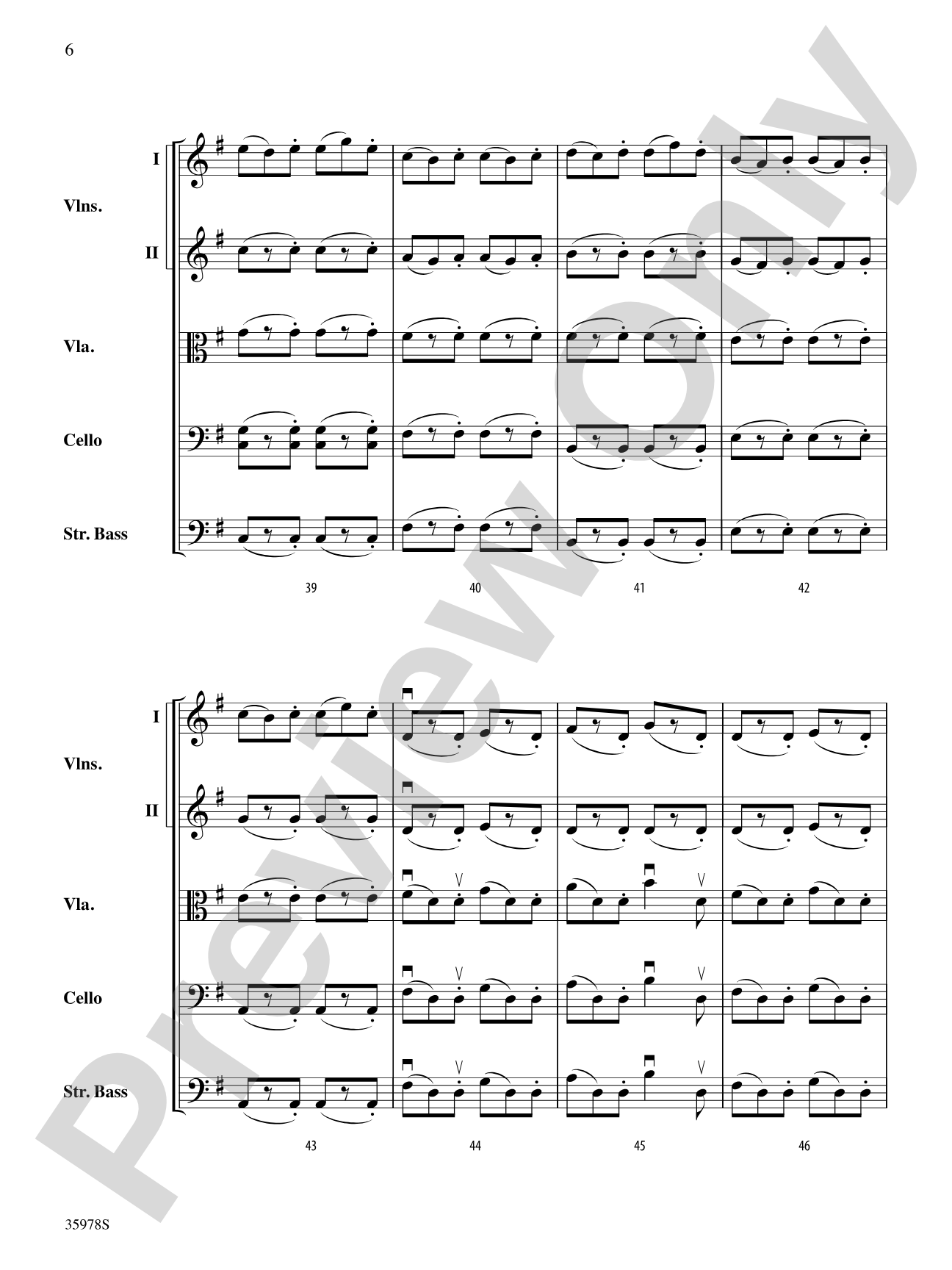
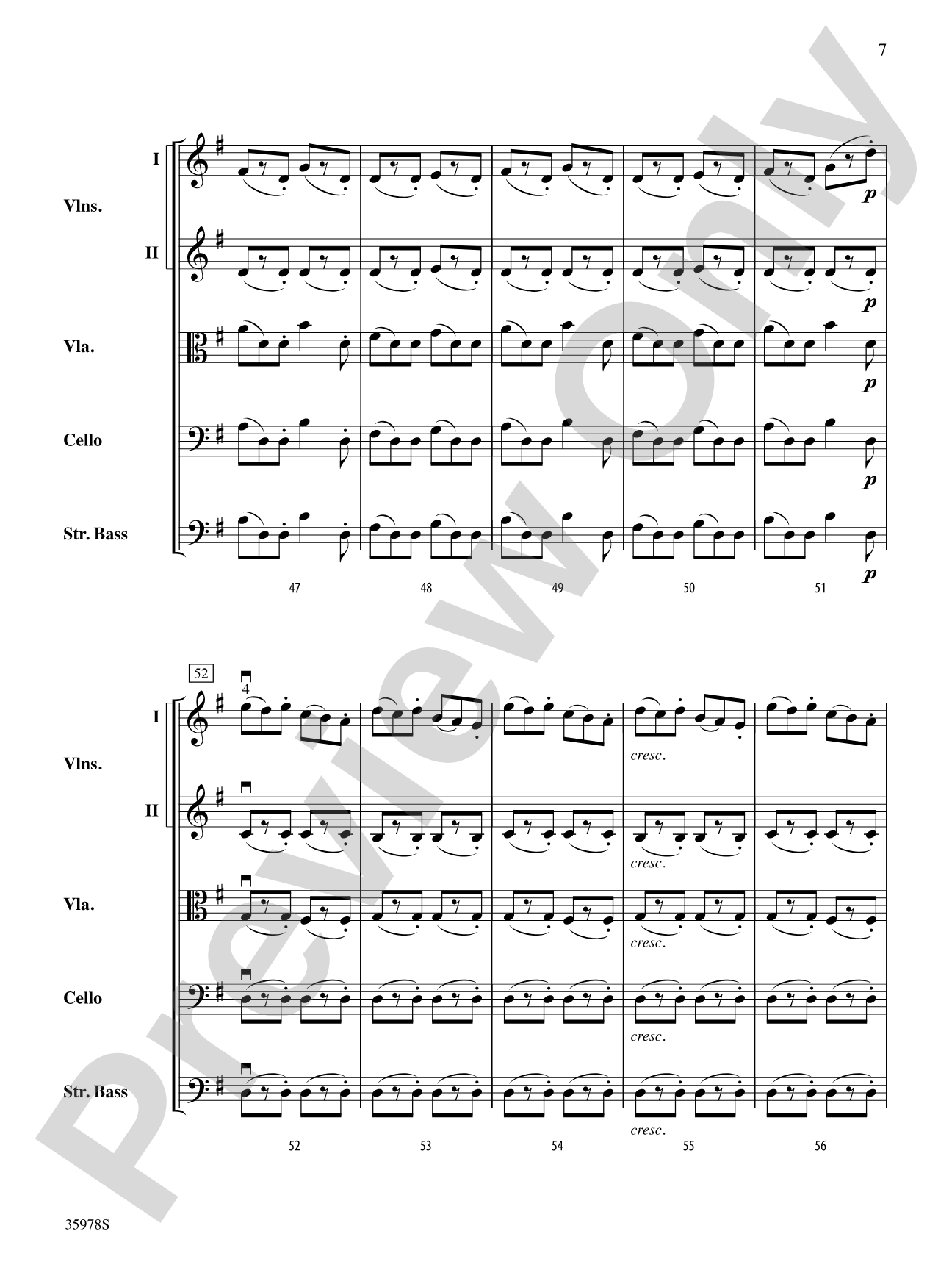
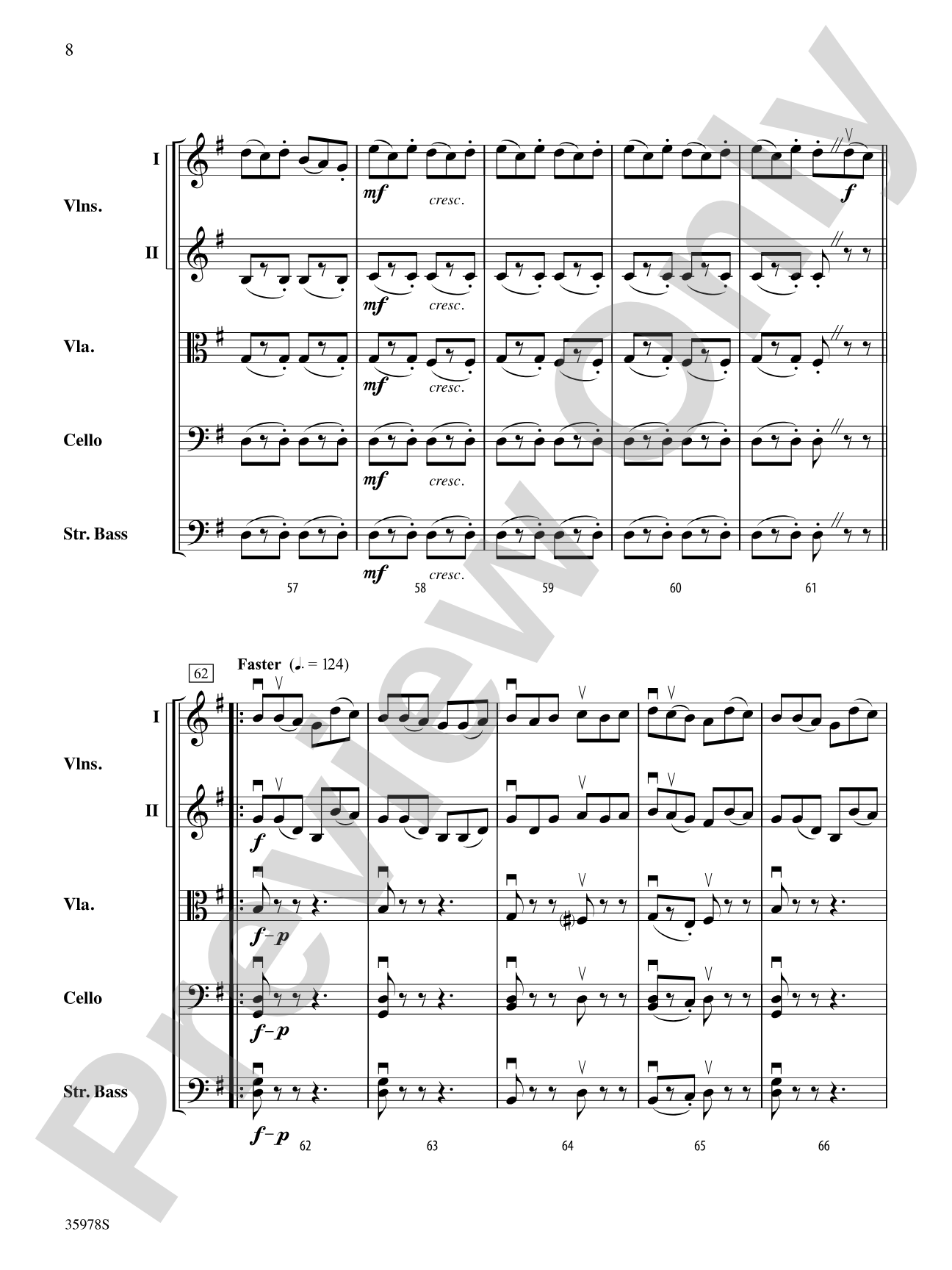
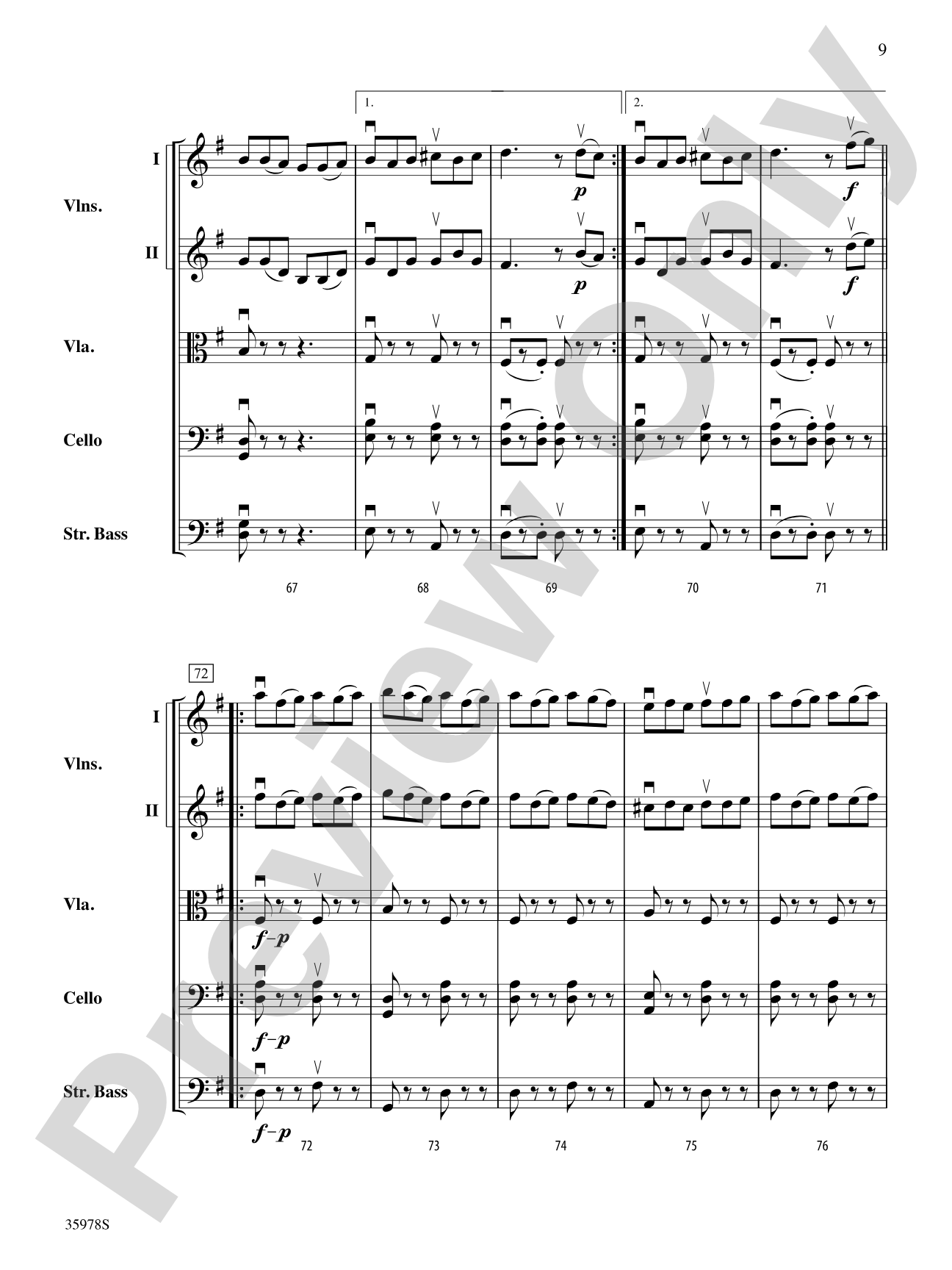
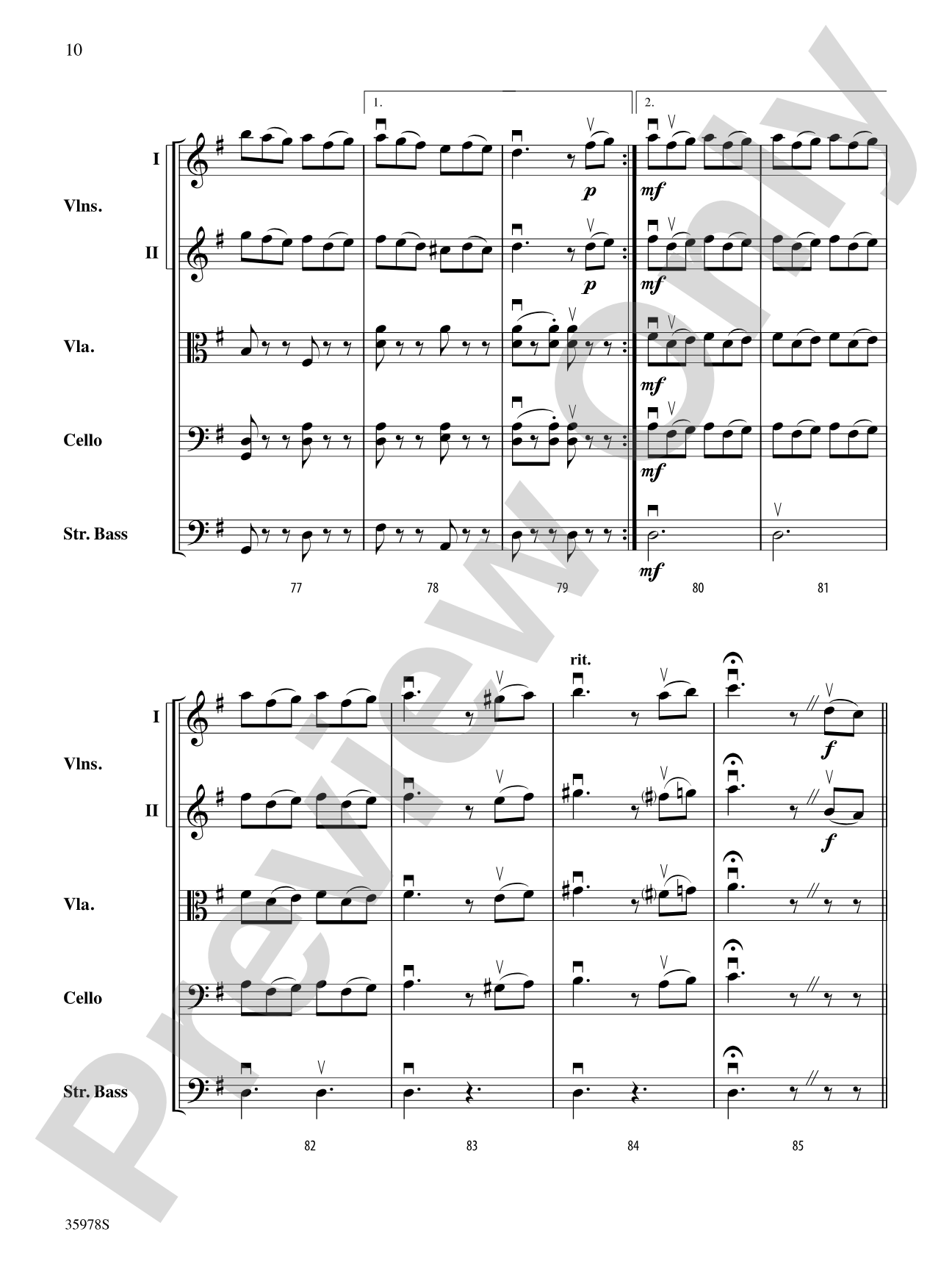
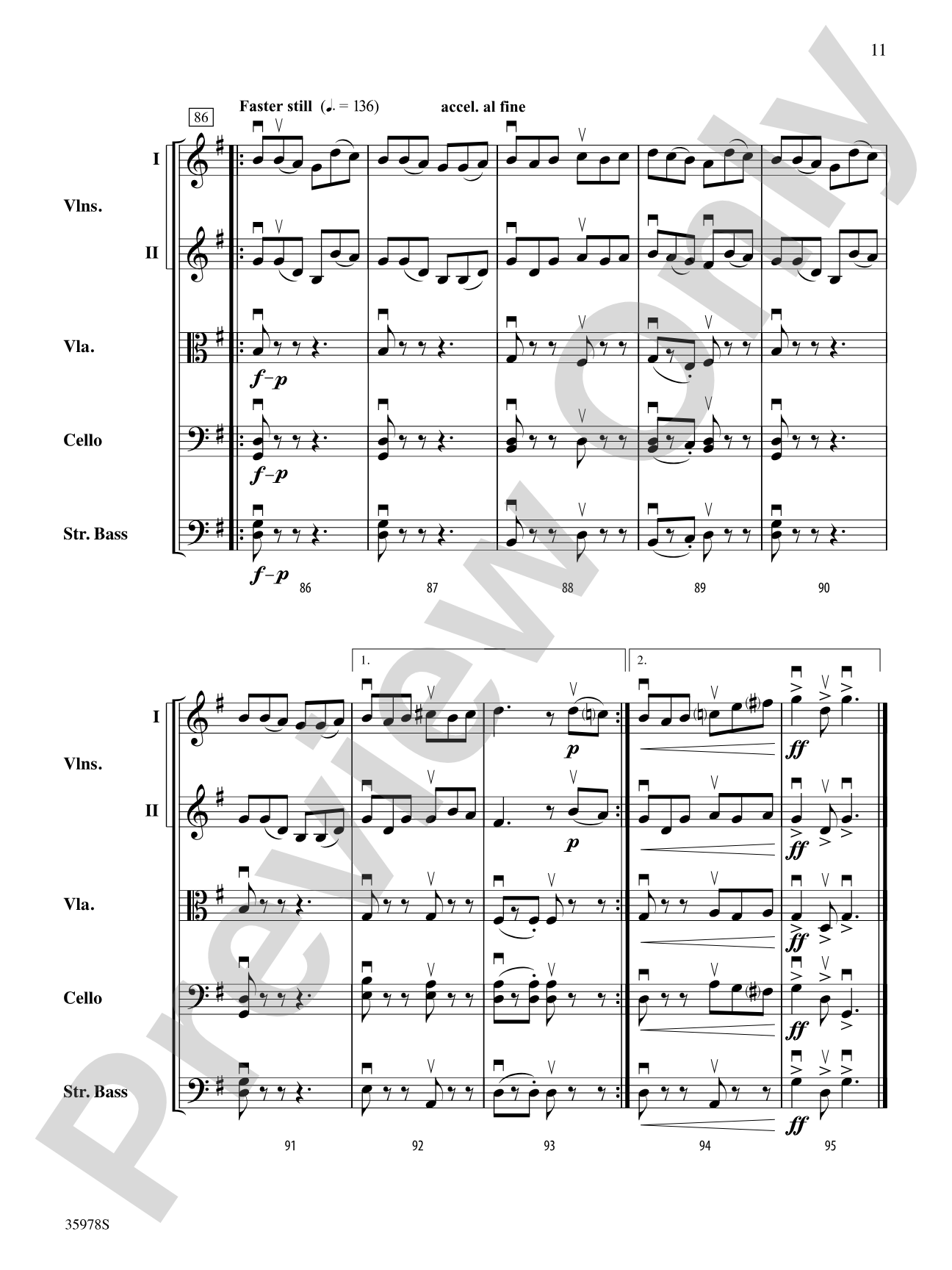


Rondo in G: Score
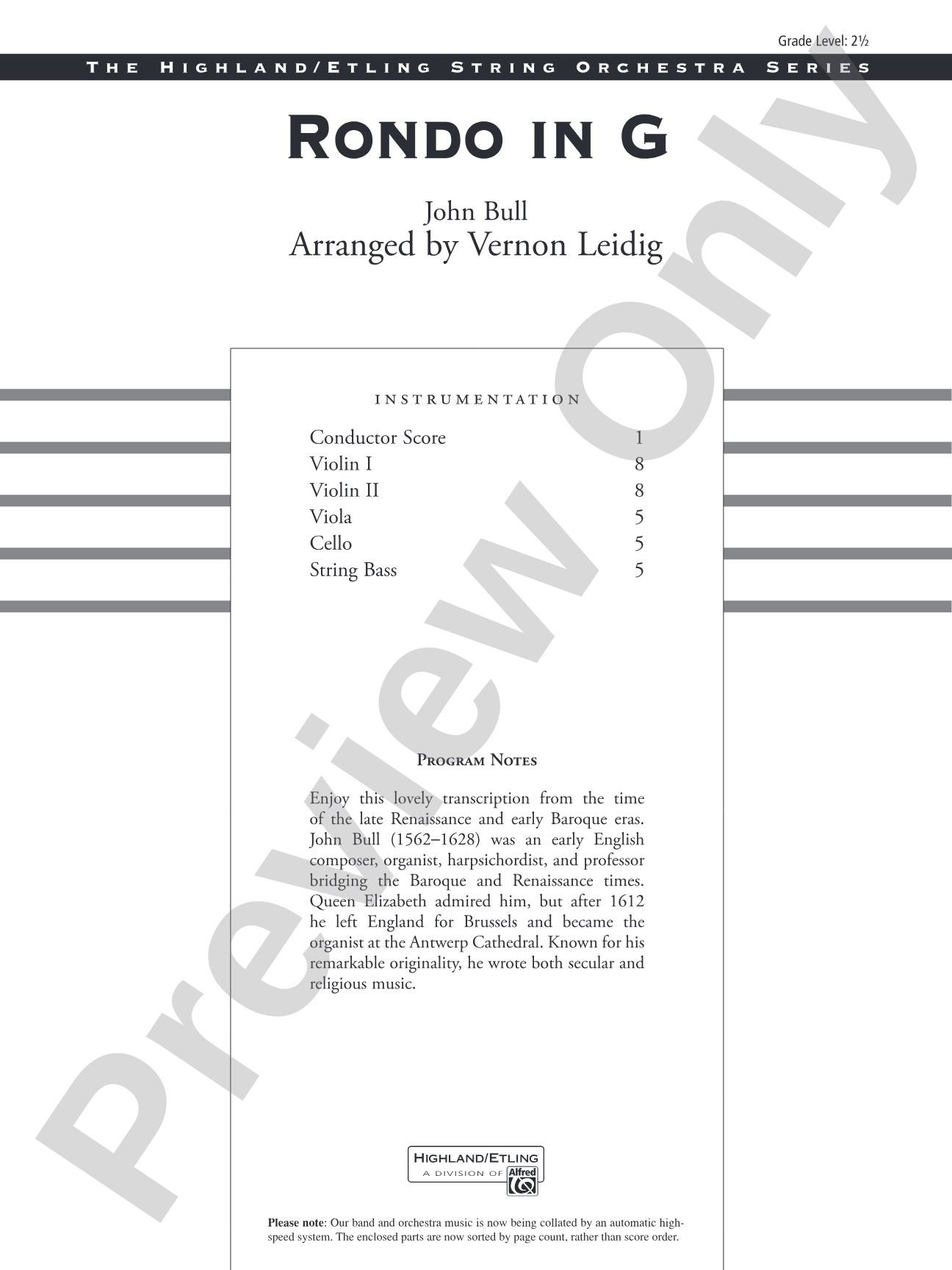
By John Bull / arr. Vernon Leidig
Grade: 2.5
Item: 00-PR-0003370
$7.00
Pickup currently not available
Description
Enjoy this lovely transcription from the time of the late Renaissance and early Baroque eras. Sure to delight audiences while bringing an English piece that is heard less frequently to your students. This title is available in MakeMusic Cloud.


Don't just read it, hear it, play along with it, and watch your students grow with it. In MakeMusic Cloud, Rondo in G: Score comes alive with professional accompaniment, adjustable tempo, and built-in practice tools that turn solo practice into real progress.
Open in the Player
Jump straight in and assign it today.
Start Your Free Trial
Open this title and explore the full library in minutes.
Sample Audio
1
Audio File
--:--
0:00
0:00
Sample Video
No sample videos found.
Additional Details
Series:
Highland/Etling String Orchestra
Publisher:
Alfred Music
Page Count:
124
SKU:
00-PR-0003370
Instrumentation:
string
More about this title
About the Composer: John Bull
John Bull (1562-1628) was one of the most accomplished keyboard composers of the Renaissance and early Baroque periods, renowned for his virtuosic organ and virginal music. As a leading figure in the English musical establishment, he served as organist at the Chapel Royal and later at Antwerp Cathedral, composing works that bridged the polyphonic traditions of the Renaissance with emerging Baroque harmonic language.
Why we love this
Vernon Leidig's arrangement makes Bull's keyboard writing sing across your string section, offering students a sophisticated piece that sounds far more complex than its Grade 2.5 difficulty suggests. The Rondo form gives young players a satisfying architectural experience: clear sections that repeat and develop, building confidence with each rehearsal. You're programming a genuinely unfamiliar work from the standard repertoire, which means your students and audience both walk away having encountered something beyond the usual suspects.
What to expect
Stately and elegant, with the clarity of English keyboard writing translated to strings. The Rondo form creates moments of gentle lift and return, unfolding with the unhurried grace of the early 1600s.
Who it's for
Developing string orchestras with solid fundamental skills and enough sectional confidence to balance multiple voices. This works well for conductors seeking Grade 2.5 repertoire that reaches toward early music without requiring specialized historical knowledge from their players.
How to get the most out of it
- Balance the melodic line so it emerges clearly from the harmonic foundation; the organ-like texture of Bull's original can muddy if all voices sit at equal dynamic weight.
- Shape phrases across the sections of the Rondo rather than treating each repeat as a reset; continuity keeps the form alive.
- Allow slight flexibility in tempo when you repeat sections to freshen them, especially if Bull's original style suggests subtle ornamental variation.
- Tune carefully at the section joins, where key areas may shift; a brief attention to intonation during sectional rehearsals pays off in performance.
How to use it
Pair this with other Baroque offerings to build a coherent concert segment, or use it as an accessible gateway to early music for student audiences unfamiliar with pre-Classical repertoire. It works equally well as a contest piece, where its structural clarity and moderate difficulty appeal to festival adjudicators.
Skills your students will build
- Balancing multiple melodic lines within a single texture
- Sustaining consistent tone across repeated sections
- Reading Baroque phrase structure and understanding formal architecture through the Rondo
- Intonation in harmonic progressions characteristic of early Baroque writing