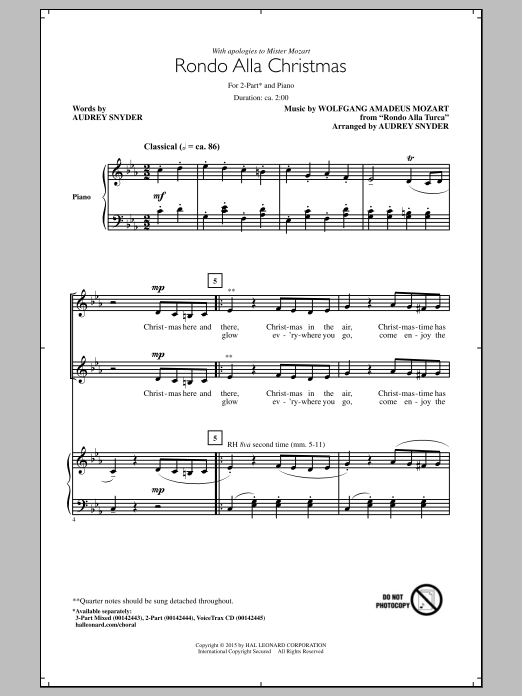
Wolfgang Amadeus Mozart (1756–1791) stands among history's most prolific composers, producing over 600 works across every major genre before his death at 35. His mastery of melody, harmonic innovation, and structural clarity shaped the Classical era and continue to define how we teach music fundamentals. Mozart's genius for elegant simplicity makes his music exceptionally valuable in the classroom, where students can study pure compositional craft without unnecessary complexity.
For choral educators, Mozart's vocal writing is a gift. His melodies sit naturally in the voice, his textures remain transparent even in arrangements, and his harmonic language rewards careful listening. Teaching Mozart builds students' ear for phrase structure, voice leading, and the relationship between text and music.