
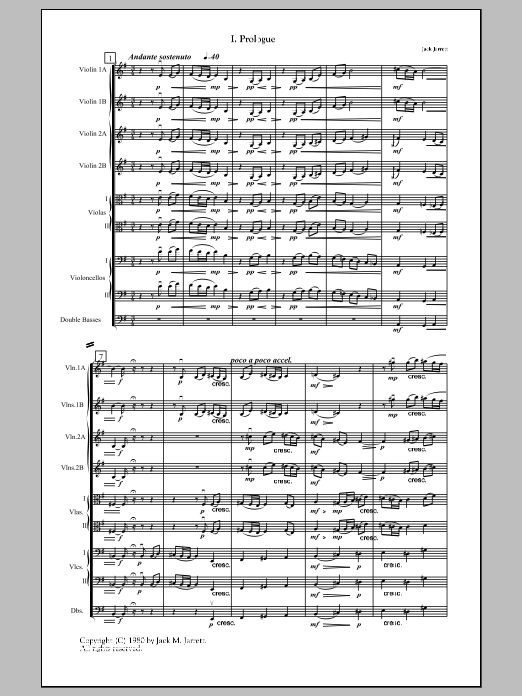

Romeo and Juliet, Symphonic Suite for Strings: String Orchestra Conductor Score & Parts
Arranged by Jack Jarrett
Item: 35-PK00279737
$34.25
Pickup currently not available
Buy Extra Parts (Digital PDF Download)
Parts Added to Cart!
Description
Five moveents for String Orchestra, depicting scenes from Shakespeare's play. Has been performed by the Rochester Philharmonic, the Richmond Symphony, the London Symphony, the Eastern Musc Festival, the National Gallery Orchestra and others. Duration: 24:00


Romeo and Juliet, Symphonic Suite for Strings: String Orchestra Conductor Score & Parts isn't in MakeMusic Cloud just yet...but it could be. Let us know you'd like to see it, and you'll help shape what comes next. In the meantime, start a free trial and dive into thousands of interactive titles your students can play along with today.
Request This Title
Tell us you want it.
Start Your Free Trial
Explore everything that's ready to play right now.
Sample Audio
No sample audio found.
Sample Video
No sample videos found.
Additional Details
Publisher:
Hal Leonard
SKU:
35-PK00279737
More about this title
Why we love this
Jarrett's five-movement structure captures the emotional arc of Shakespeare's tragedy without requiring singers or soloists, making it accessible for orchestras focused on pure instrumental storytelling. The piece has earned performances by respected ensembles across multiple continents, signaling both musical substance and practical durability for concert programming.
What to expect
A cinematic journey through passion, celebration, conflict, and sorrow. The music honors Shakespeare's emotional stakes while remaining orchestrally elegant, never overshadowing the strings themselves.
Who it's for
String orchestras seeking substantial, concert-length repertoire with literary resonance. This works for groups with mature reading skills and a conductor comfortable shaping extended dramatic arcs across multiple movements.
How to get the most out of it
- Balance the dramatic intensity across movements; the arc from courtship through conflict to tragedy needs clear sectional contrast so each scene reads distinctly to the audience.
- Attend to the string section's inner voices, especially in slower movements where violas and cellos often carry crucial harmonic color that gets lost if players focus only on the melody.
- Use dynamic contrast strategically rather than constantly. The most powerful moments arrive when the orchestra has genuinely held back in the passages before.
How to use it
Use this as your concert anchor when programming around a Shakespeare theme or when you want a single substantive work that showcases your ensemble's artistry without requiring supplementary vocal or instrumental soloists. The 24-minute duration positions it naturally on programs where you'd otherwise program a concerto and additional shorter pieces.
Skills your students will build
- Executing long-form musical narratives across contrasting tempos and characters
- Balancing ensemble sonority across five movements with consistent string tone
- Responding to subtle conducting gestures in transitions between distinct scenes
- Sustaining focus and ensemble cohesion over extended rehearsal and performance periods