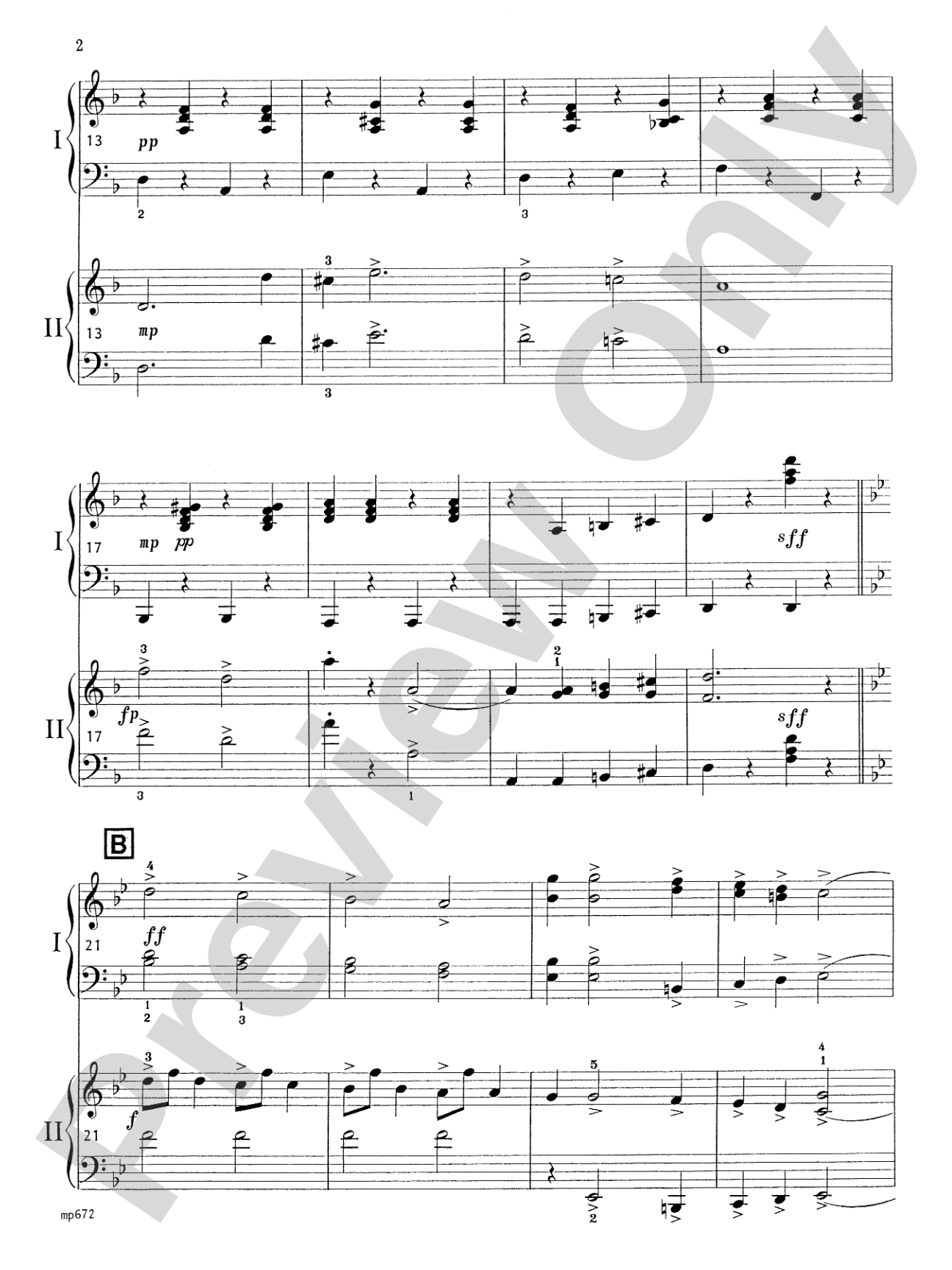
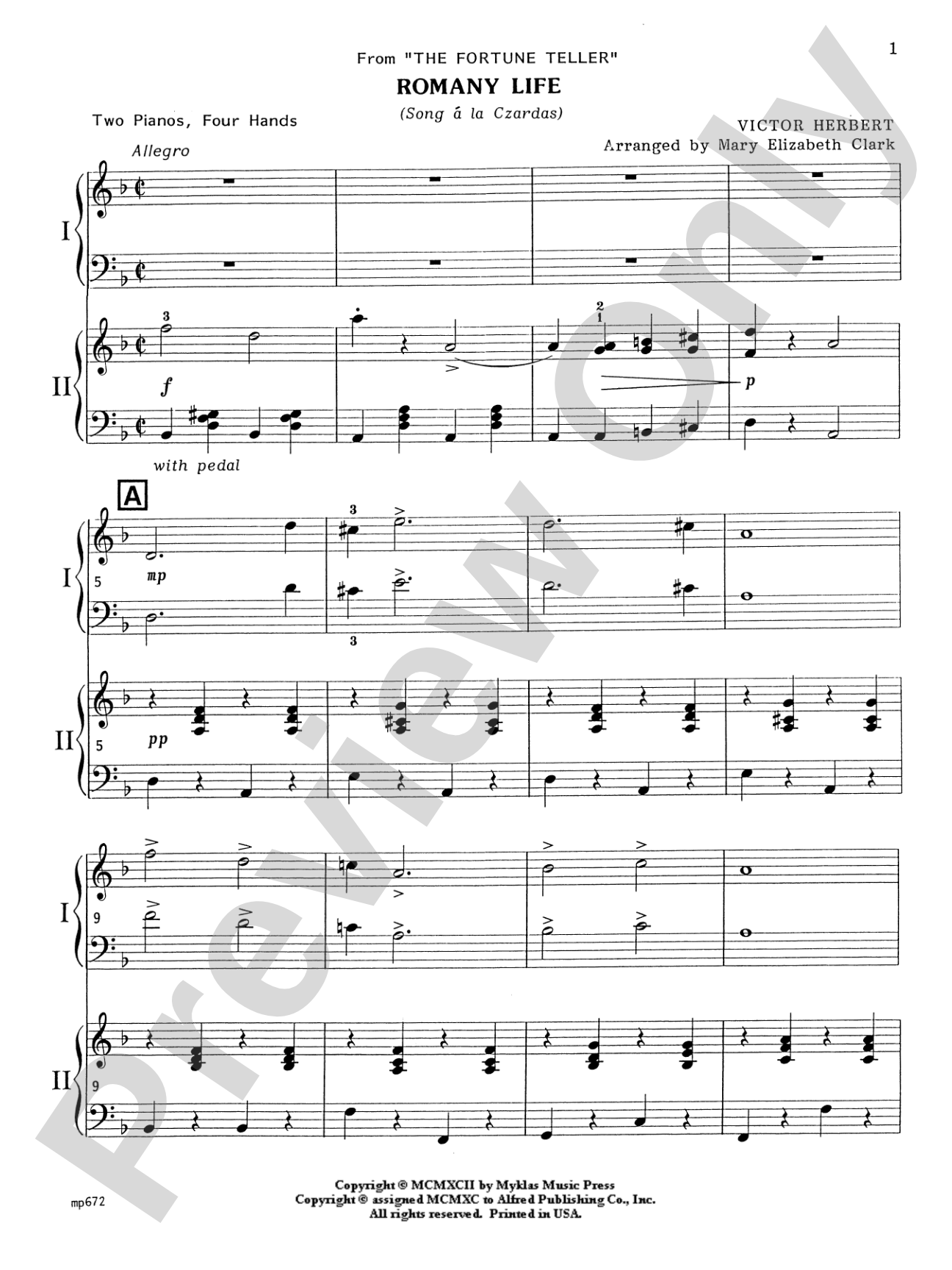
Romany Life - Piano Duo (2 Pianos, 4 Hands) Sheet Music Preview

Romany Life - Piano Duo (2 Pianos, 4 Hands): Piano Duets & Four Hands

By Victor Herbert / arr. Mary Elizabeth Clark

Level: Late Intermediate

Item: 00-PB-0000662

Digital Download
$8.95
Description
A popular song from the late 19th century operetta, The Fortune Teller by Victor Herbert is arranged by Mary Elizabeth Clark for early intermediate piano duet---two pianos, four hands. This lively and robust piece in cut time begins in D minor and modulates through several keys before ending boldly in D major. Two copies are included. A Federation Festivals 2024-2028 selection.

Romany Life - Piano Duo (2 Pianos, 4 Hands): Piano Duets & Four Hands isn't in MakeMusic Cloud just yet...but it could be. Let us know you'd like to see it, and you'll help shape what comes next. In the meantime, start a free trial and dive into thousands of interactive titles your students can play along with today.

Sample Audio
No sample audio found.
Sample Video
Additional Details
Publisher: Alfred Music
Page Count: 20
SKU: 00-PB-0000662

More about this title

About the Composer: Victor Herbert

Victor Herbert (1859, 1924) was an Irish-born composer who became one of America's most prolific and beloved operetta composers. He arrived in the United States in 1886 and quickly established himself as a master of theatrical music, crafting works that balanced sophisticated harmonies with immediately memorable melodies. His operettas dominated American stages in the early 20th century and remain central to the repertoire today.

Herbert's gift for melody made him a favorite among arrangers and educators. His themes appear frequently in duet and ensemble literature because they capture performers' attention while remaining accessible to developing musicians. The Fortune Teller, from which Romany Life comes, showcases his ability to write music that feels both urgent and joyful.

Why we love this

Mary Elizabeth Clark's arrangement taps into what makes Herbert's writing so effective: clear lines that sit comfortably under the hands, harmonic interest that rewards listening, and a character strong enough to keep two piano players engaged. The modulations through different keys add real substance without demanding advanced technique, and that shift from D minor to D major at the end gives you a clean, confident conclusion that students love to perform.

What to expect

A piece brimming with theatrical energy and rhythmic drive. The lively cut-time meter and the minor-to-major trajectory create momentum that feels almost inevitable, while the key modulations add color and surprise without ever letting you settle into one place too long.

Who it's for

Late intermediate duet teams looking for repertoire with real character and musical substance. This works equally well for festivals, recitals, or teaching partnerships where both players want something that sounds impressive and feels genuinely fun to rehearse together.

How to get the most out of it

  • Establish the cut time feel from the opening by keeping the pulse moving without rushing; think of it as one strong beat per measure rather than four.
  • Balance the two pianos so neither one disappears, especially where the accompaniment and melody exchange roles across the key modulations.
  • Shape the harmonic movement through the key changes by listening for where the colors shift; this keeps the piece from feeling static even as it stays rhythmically driven.
  • Use the ending modulation from D minor to D major as a moment to brighten tone and intensity, making the final arrival feel earned rather than sudden.

How to use it

Pair this with other late 19th-century operetta arrangements for a concert that celebrates that era's gift for tunefulness and charm. It's also a perfect choice for young pianists preparing for Federation festivals, where its approachable level and concert-hall polish make a strong impression. The two-piano setup means it works as a standalone feature or as one element in a multi-ensemble evening.

Skills your students will build

  • Reading and maintaining cut time (alla breve) in both parts
  • Tracking chromatic modulations and harmonic color changes
  • Balancing melody and accompaniment roles between two instruments
  • Sustaining rhythmic momentum through repetitive figures
  • Ensemble listening and coordination at the piano

You May Also Like