Romantic Masters Cover Image

Romantic Masters: String Orchestra Conductor Score

$6.00 USD
Sale price  $6.00 USD Regular price 
Skip to product information
Romantic Masters Cover Image

Romantic Masters: String Orchestra Conductor Score

Arr. Bob Cerulli

Grade: 2.5

Item: 00-33648S

$6.00
Shipped

One moment…

Description
True teaching repertoire! Each movement can stand alone or be played as a suite. Opportunities for technical development range from learning positions, to extended position for celli, to chromatic alterations. Many, many opportunities to reinforce your curriculum in "Morning Prayer" by Tchaikovsky, "Waltz" by Franz Schubert and "The Wild Horseman" by Robert Schumann!

Romantic Masters: String Orchestra Conductor Score isn't in MakeMusic Cloud just yet...but it could be. Let us know you'd like to see it, and you'll help shape what comes next. In the meantime, start a free trial and dive into thousands of interactive titles your students can play along with today.

Sample Pages

Sample Audio
No sample audio found.
Sample Video
Additional Details
Series: Belwin Beginning String Orchestra
Publisher: Alfred Music
Page Count: 12
UPC: 038081376899
SKU: 00-33648S

More about this title

About the Arranger: Bob Cerulli
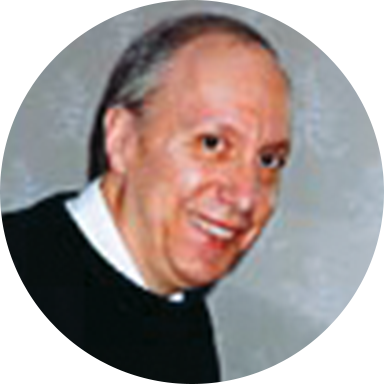
Bob Cerulli

Bob Cerulli studied double bass at the Curtis Institute of Music under Roger Scott, then earned degrees in music education from the University of the Arts and conducting from the College of New Jersey. His performing career included membership in the Buffalo Philharmonic under Josef Kripps and principal bass positions with the Greater Trenton Symphony, New Jersey Capital Philharmonic, and Delaware Valley Philharmonic. He performed extensively as a freelancer in Philadelphia and Atlantic City, collaborating with Broadway artists, film composers (Henry Mancini, Bill Conte, Michel LeGrand, Marvin Hamlish), and opera singers including Luciano Pavarotti and Andrea Bocelli.

Cerulli spent 29 years teaching music in public schools and currently serves as a Senior Adjunct Professor at Rowan College at Burlington County. His compositions have been performed by major ensembles, including Celebration by the Philadelphia Orchestra and Romance in D Major, a cello and piano work commissioned by Philadelphia Orchestra Principal Cellist William Stokking. He has conducted orchestral performances and reading sessions at regional music festivals.

Why we love this

Cerulli crafted these arrangements with the teaching orchestra in mind, scaling three beloved Romantic masterworks to meet Grade 2.5 students exactly where they are. The genius lies in the structural flexibility: each movement works as a standalone piece or combines into a cohesive suite, giving you programming options that don't feel patched together. The technical demands build thoughtfully across the three works, progressing from foundational position work through extended positions for cellos to chromatic alterations that stretch without overwhelming.

What to expect

These three movements capture the Romantic era's lyrical warmth and gentle drama. Tchaikovsky's morning meditation opens with hushed reverence, Schubert's waltz dances with lightness and grace, and Schumann's wild horseman gallops with rhythmic vitality and character that young players find immediately engaging and fun to perform.

Who it's for

String orchestra directors teaching Grade 2 to 3 students who are ready to engage with recognizable concert repertoire without sacrificing developmental clarity. This score serves teachers building curriculum around the Romantic era, offering authentic masterworks arranged at an accessible level rather than simplified imitations.

How to get the most out of it

  • Open with Tchaikovsky's 'Morning Prayer' to establish ensemble focus and balance; its lyrical character rewards attention to phrase shaping and dynamic contrast.
  • Use the Schubert waltz as a rhythmic checkpoint, ensuring dancers can maintain the triple meter across all sections before moving to more complex chromatic material.
  • Isolate the cello extended positions in 'The Wild Horseman' during sectionals; mark the specific passages during rehearsal so players understand why the shift happens musically.
  • Consider the three-movement arc as a complete rehearsal or performance unit; the contrasting tempos and textures naturally refresh ensemble energy across the full 12 pages.

How to use it

Open a winter or spring concert with this three-movement suite to anchor the program in familiar Romantic repertoire while showcasing your string orchestra's technical progress. The 12-page length makes it suitable for contest or festival play, and the flexible structure lets you program individual movements separately if you're building a longer concert from multiple pieces.

Skills your students will build

  • Reading and executing extended positions for cello
  • Interpreting chromatic alterations and accidentals in context
  • Sustaining lyrical phrasing across multiple phrases
  • Maintaining steady triple meter and rhythmic precision
  • Balancing ensemble texture across contrasting movement styles
  • Transitioning between different position shifts within a single movement

You May Also Like