
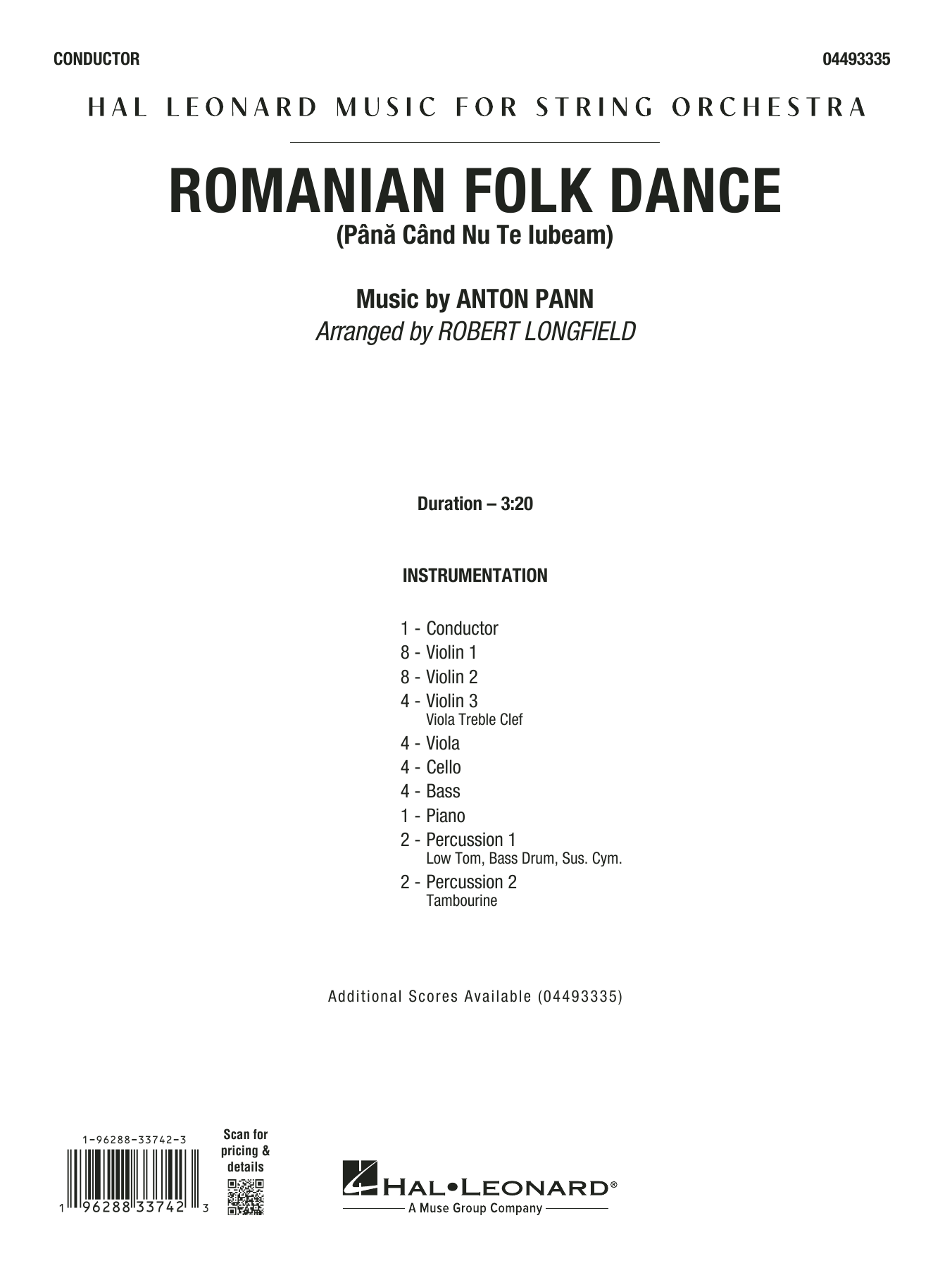

Romanian Folk Dance (arr. Robert Longfield): String Orchestra Conductor Score & Parts
Arranged by Robert Longfield
Item: 35-PK01677654
$55.00
Pickup currently not available
Buy Extra Parts (Digital PDF Download)
Parts Added to Cart!
Description
Bring the energy and power of Eastern Eurpoean folk music to your next concert program while teaching your students about minor modes and 16th notes. Tambourine part included.


Romanian Folk Dance (arr. Robert Longfield): String Orchestra Conductor Score & Parts isn't in MakeMusic Cloud just yet...but it could be. Let us know you'd like to see it, and you'll help shape what comes next. In the meantime, start a free trial and dive into thousands of interactive titles your students can play along with today.
Request This Title
Tell us you want it.
Start Your Free Trial
Explore everything that's ready to play right now.
Sample Audio
No sample audio found.
Sample Video
No sample videos found.
Additional Details
Publisher:
Hal Leonard
SKU:
35-PK01677654
More about this title
Why we love this
Longfield captures the raw vitality of Romanian folk idiom without sanitizing it for strings. The inclusion of a tambourine part adds authentic color while giving percussionists meaningful work beyond basic timekeeping, and the writing sits perfectly in the range where young orchestras sound assured rather than strained.
What to expect
The minor mode creates a restless, searching quality that builds into bright moments of clarity. Energy pulses throughout; this is folk music that moves, full of the kind of rhythmic drive that makes audiences sit forward in their seats.
Who it's for
String orchestras at the intermediate level who are ready to explore non-Western musical traditions while building technical facility. This works equally well for ensembles preparing for a multicultural concert or simply looking to expand beyond standard European repertoire.
How to get the most out of it
- Emphasize the rhythmic precision in 16th note passages; they should feel inevitable, not rushed. A steady conductor's pulse helps strings lock together across the rapid figures.
- Balance the melodic lines between sections so the folk melody reads clearly even when accompanied by rhythmic accompaniment. Minor mode writing can obscure the tune if upper voices don't project.
- Let the tambourine player feel the pulse independently during their passages. This instrument thrives on a slightly forward placement in the mix and releases the rhythm section from over-controlling the tempo.
How to use it
Pair this with other world music selections to create a coherent concert theme, or place it as an energizing contrast in a program otherwise filled with Baroque and Romantic works. The accessible difficulty and vivid character make it an ideal encore or second-half opener.
Skills your students will build
- Reading and executing 16th note passages in minor modes
- Rhythmic precision when accompanying melodic material
- Balancing folk melody against accompaniment patterns
- Ensemble coordination across articulation changes
- Responding to the tambourine as a rhythm section partner