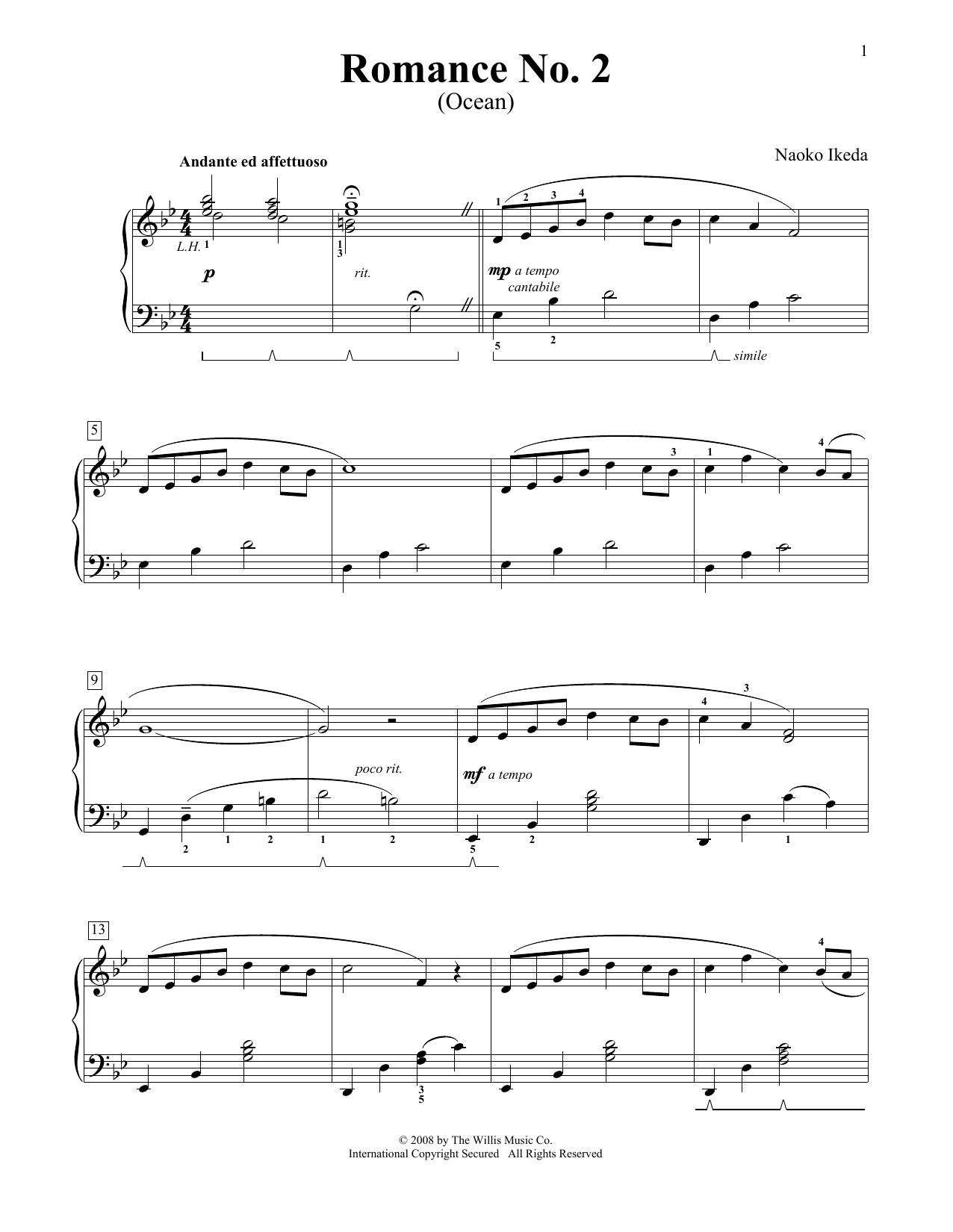
Naoko Ikeda is a Japanese composer known for writing accessible yet musically sophisticated works for piano students. Her compositions bridge the gap between technical study pieces and genuine artistic expression, making her a valued voice in educational piano literature.
Why we love this
Ikeda's descriptive approach in Romance No. 2 invites students to connect visual imagery with musical phrasing, encouraging them to think beyond the mechanics of the score. The piece rewards sensitive playing without demanding virtuosity, making it equally satisfying for recitals and festivals where musicality matters as much as technical precision.
What to expect
Romance No. 2 evokes the contemplative mood of gazing at open water, with gentle motion and moments of quiet reflection. The writing creates space for rubato and personal interpretation, inviting performers to discover their own connection to the ocean's rhythm.
Who it's for
Intermediate piano students seeking repertoire that develops musical expression alongside technical facility. Teachers looking for recital pieces that engage young performers emotionally while building interpretive skills.
How to get the most out of it
Shape the melodic line with a clear sense of direction; let longer phrases breathe naturally rather than chopping them into smaller segments.
Listen carefully to the harmonic movement underneath the melody. This awareness will help you color shifts in mood and prevent the piece from sounding predictable.
Approach dynamics as an organic part of storytelling. Resist the urge to return to the opening intensity; allow each section to unfold with its own character.
How to use it
This work pairs beautifully with other descriptive, moderate-length pieces in a student recital, offering contrast to more technically driven selections. It also serves as an excellent choice for festivals that emphasize interpretation and artistic communication over complexity.
Skills your students will build
Controlling tone color across different dynamic levels
Shaping long melodic phrases with appropriate breathing points
Interpreting expressive markings and translating them into musical choices
Balancing melody and accompaniment textures
You May Also Like
Scan to Complete Your Purchase
Use your phone's camera to scan the code below
You'll log in on your phone and the order will be added to your account