Romance No. 2 In F Major, Op. 50 Sheet Music Preview

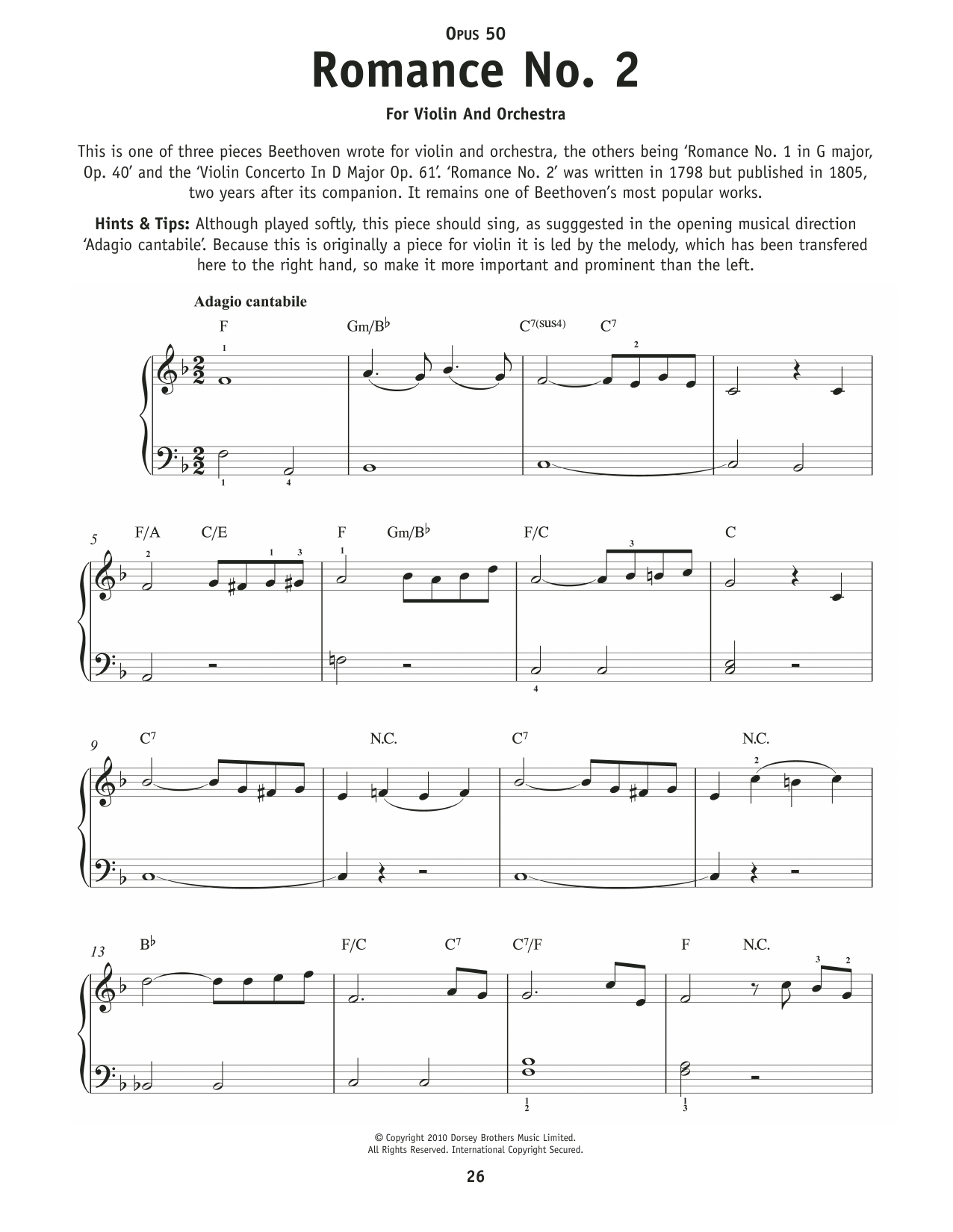
Romance No. 2 In F Major, Op. 50: Really Easy Piano

As performed by Ludwig Van Beethoven

Item: 35-DS01575200

Digital Download
$4.99
Description

Discover MakeMusic Cloud: thousands of interactive titles your students can play along with today.

Sample Audio
No sample audio found.
Sample Video
Additional Details
Publisher: Hal Leonard
Page Count: 2
SKU: 35-DS01575200

More about this title

About the Artist: Ludwig Van Beethoven

Beethoven composed two romances for violin and orchestra during his middle period, works that occupy a distinctive space between the Classical concerto and the emerging Romantic character piece. These intimate compositions showcase his gift for songful melody and transparent orchestration, revealing a side of his writing that privileges lyricism over the heroic gestures for which he is often remembered.

Both romances remain staples of the violin repertoire, prized by students and professionals alike for their musical substance, manageable technical demands, and the opportunity they provide to develop a singing tone. The Op. 50 in F Major, in particular, exemplifies Beethoven's ability to sustain a beautiful melodic line while maintaining structural coherence across a modest but complete musical statement.

Why we love this

This work offers violinists a genuinely musical challenge that doesn't rely on virtuosic display. The F Major tonality sits comfortably under the fingers, allowing students to focus entirely on tone quality, phrase shape, and the subtle expressive flexibility that distinguishes a merely correct performance from a compelling one.

What to expect

Graceful and contemplative, with an unhurried elegance that invites the performer to sing through the instrument. The F Major key bathes the melody in warmth, while the clear harmonic language creates a sense of intimate conversation rather than public declaration.

Who it's for

Intermediate to early advanced violinists working toward fluent, expressive playing rather than technical display. Teachers seeking a substantial but approachable Beethoven work for recital or orchestra performance will find this efficient and musically rewarding.

How to get the most out of it

  • Shape the opening melody with slight dynamic swells at phrase peaks; avoid the temptation to play it straight through at a single dynamic level.
  • Listen carefully to the orchestral accompaniment on any recording, then mirror that balance in your own sound. The violin should sing without overshadowing the ensemble.
  • Take time in the middle section to explore the harmonic movement. This quieter material rewards patient, deliberate playing.
  • Return to the opening theme with fresh ears. The repetition is an opportunity to deepen expression, not to coast.

How to use it

Pair this with another Beethoven romance or a Classical concerto movement for a recital focused on his chamber and concertante works. It also sits naturally on a student showcase or orchestra concert where a brief, high-quality solo moment would enhance the program flow without requiring extended preparation time.

Skills your students will build

  • Sustaining a singing tone across multiple phrases without tension
  • Balancing solo line with accompaniment in an ensemble setting
  • Shaping longer melodic arcs through subtle dynamic inflection
  • Reading and responding to Classical harmonic language

You May Also Like