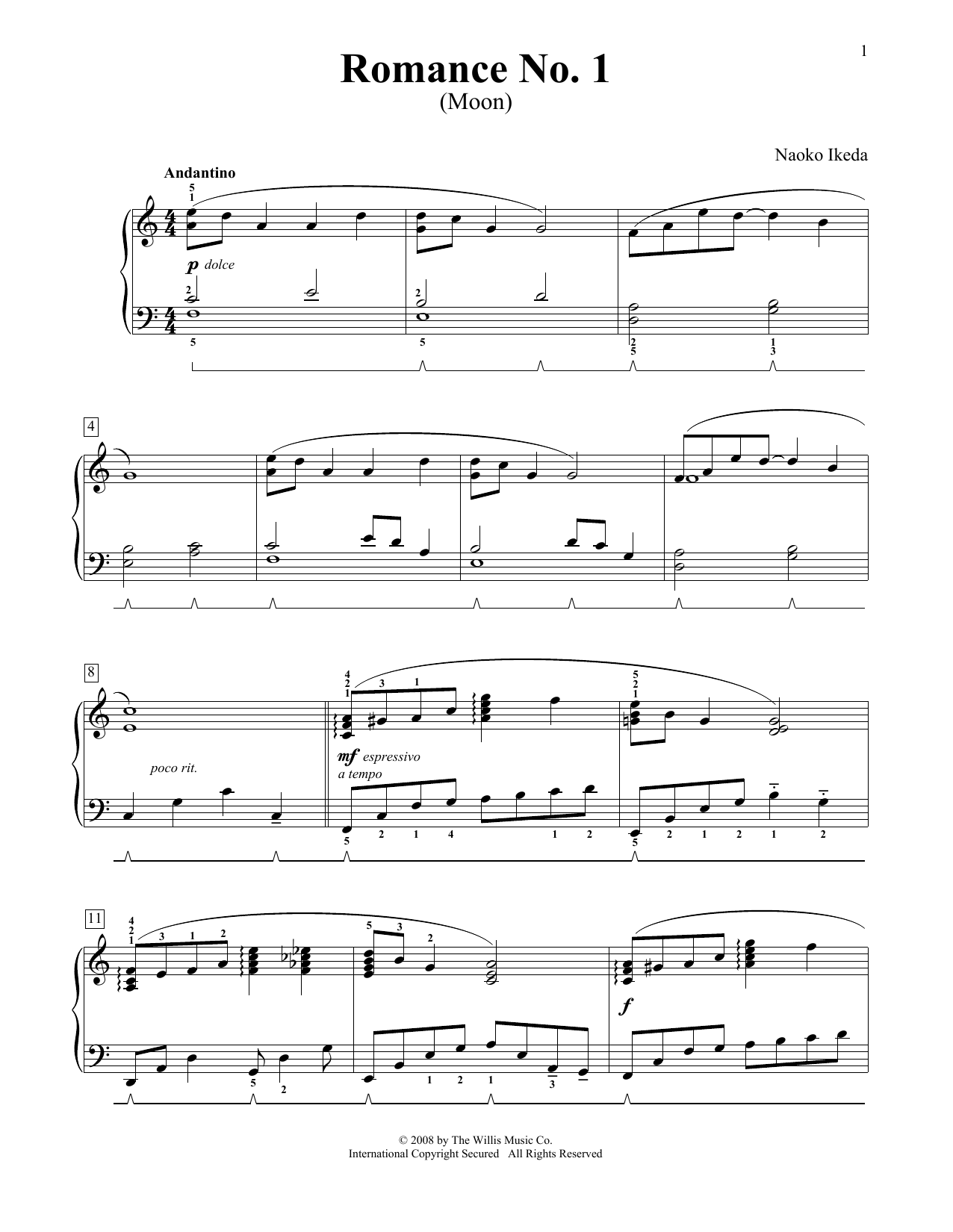
Naoko Ikeda is a Japanese composer known for writing accessible yet musically substantive works for piano students. Her compositions bridge the gap between pedagogical material and genuine artistic expression, giving young pianists pieces that reward both technical development and interpretive thinking.
Why we love this
Ikeda's Romance captures genuine lyricism without resorting to sentimentality. The piece sits comfortably in the intermediate repertoire space where students can finally inhabit a complete musical idea rather than drill isolated techniques, making it ideal for recitals or as a centerpiece in a mixed program.
What to expect
A quiet, introspective moment that unfolds like a personal reflection. The moon imagery suggests stillness and gentle luminosity rather than drama; the piece breathes with restraint and invites the listener into an intimate emotional space.
Who it's for
Intermediate pianists ready to work with extended phrasing and emotional nuance will find this piece both welcoming and substantial. It works well for students preparing for competitions, recitals, or simply wanting to experience Romantic era sensibility through a contemporary composer's lens.
How to get the most out of it
Shape the melody through weight distribution rather than dynamic marking alone; let the harmonic movement guide your phrase direction naturally.
Establish the accompaniment pattern consistently in the opening measures so it becomes transparent support rather than competing with the upper voice.
Explore the emotional temperature of the piece before performance; small adjustments in rubato and pedal will reveal different facets of the romantic character.
Listen across the full arc to identify the moment of greatest intensity, then plan your pacing so that arrival feels organic rather than imposed.
How to use it
This pairs beautifully in a recital alongside other character pieces or short works where variety matters more than structural weight. Consider placing it as a lyrical interlude between technically demanding repertoire to create contrast and give audiences a moment to rest.
Skills your students will build
Sustaining long melodic lines over repeating accompaniment patterns
Pedal control for textural clarity in Romantic era writing
Tempo flexibility and rubato in service of phrase shape
Interpretive decision-making within a compact form
Voice leading awareness across register changes
You May Also Like
Scan to Complete Your Purchase
Use your phone's camera to scan the code below
You'll log in on your phone and the order will be added to your account