
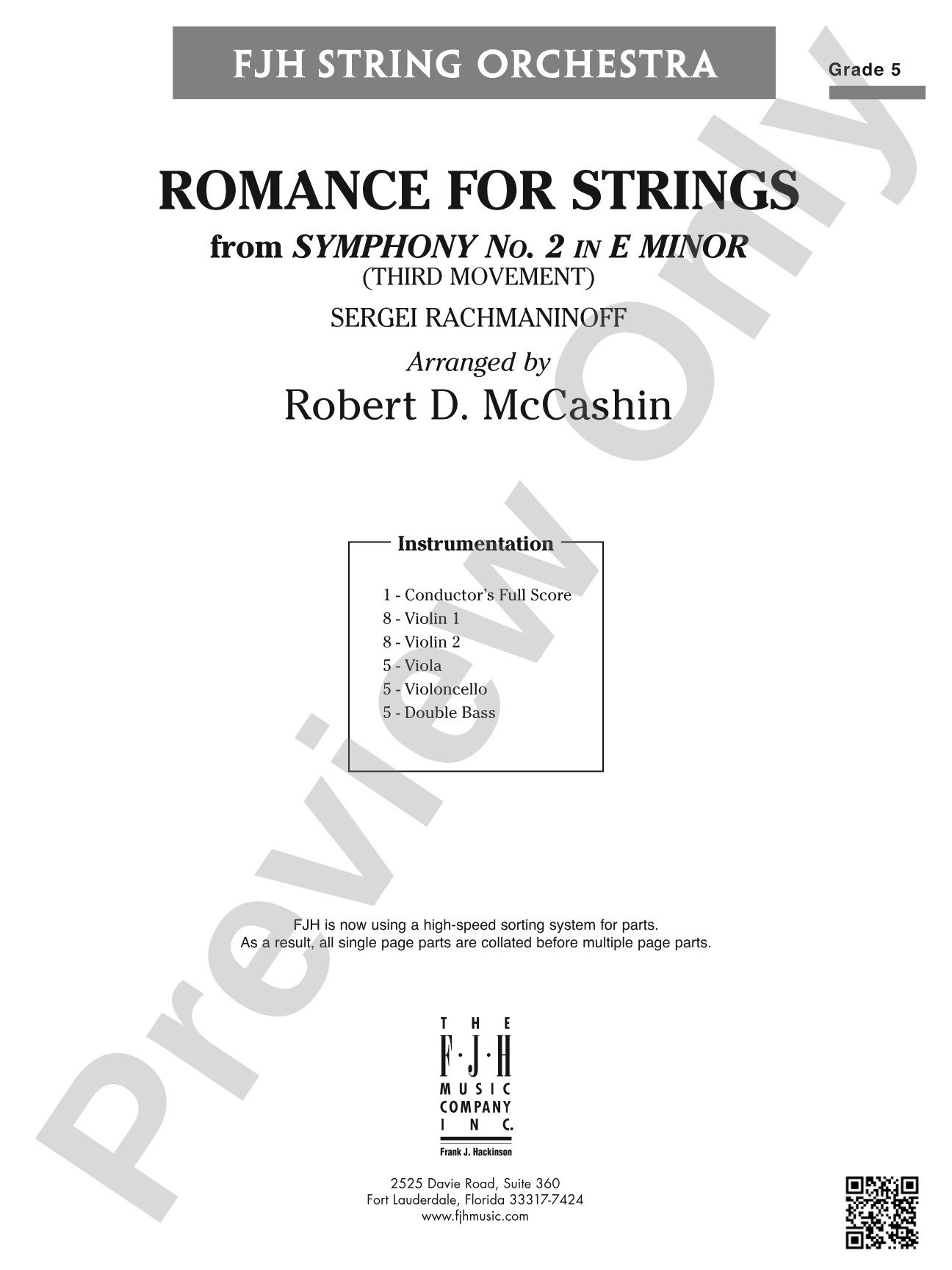
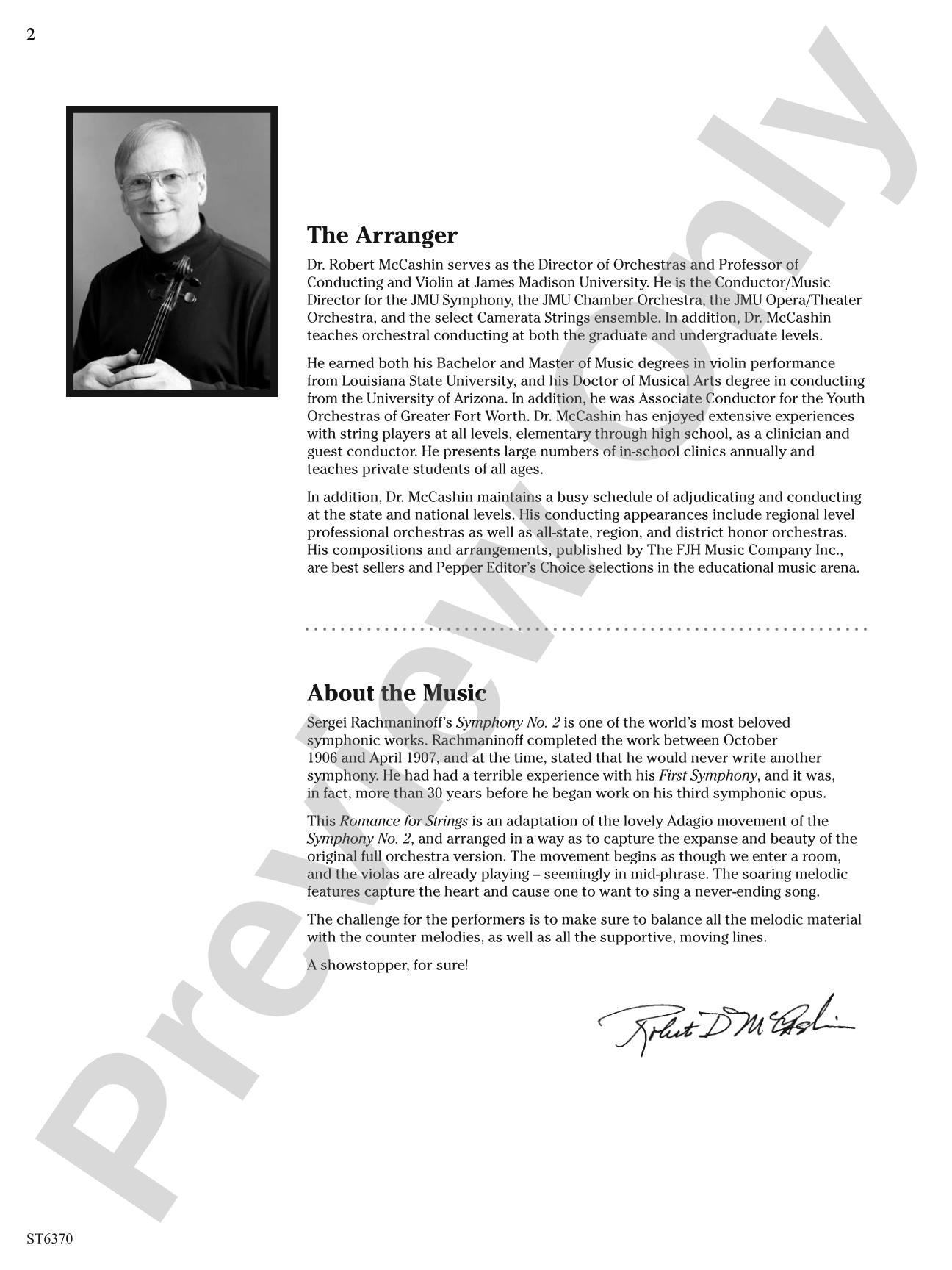
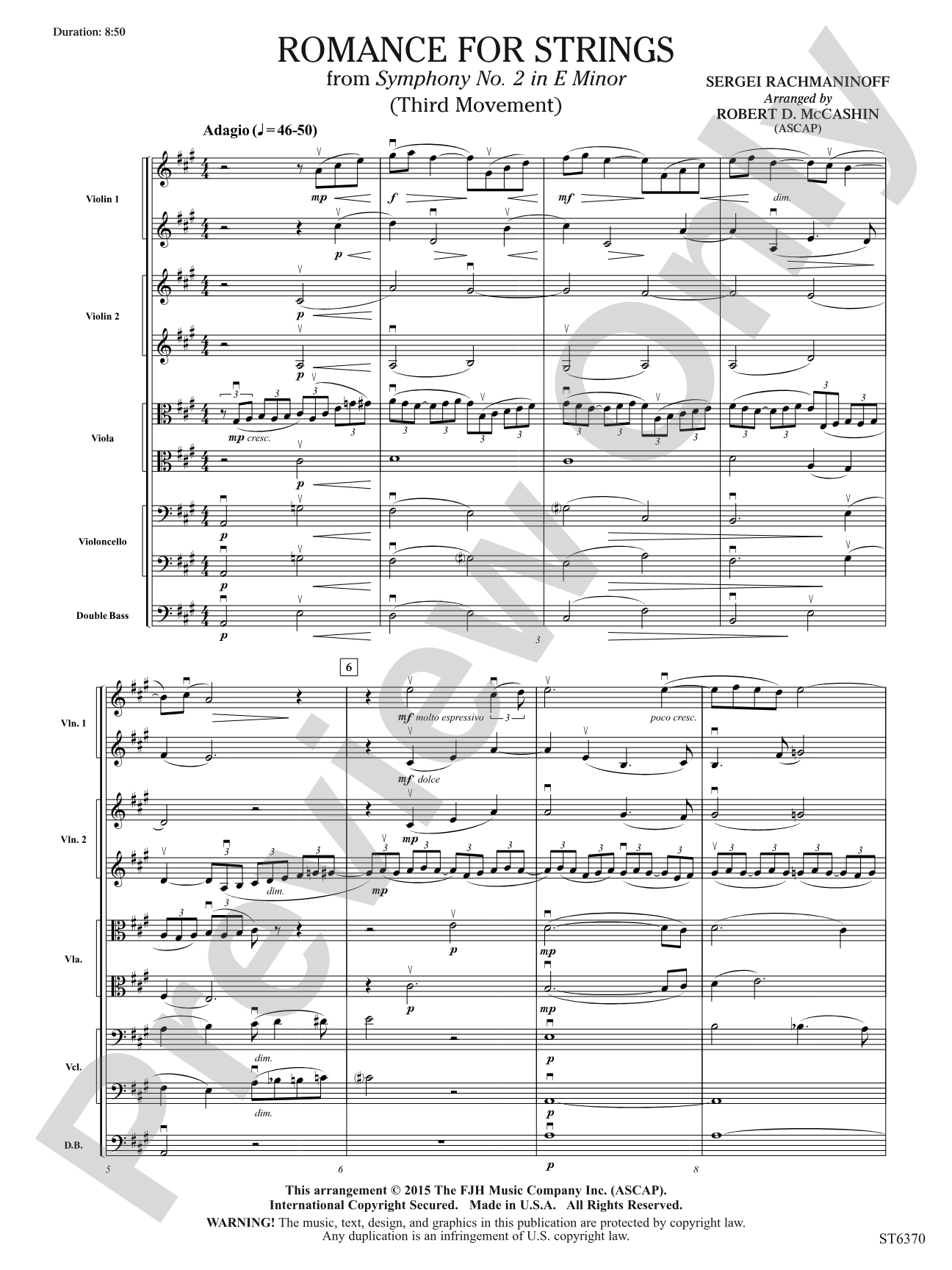
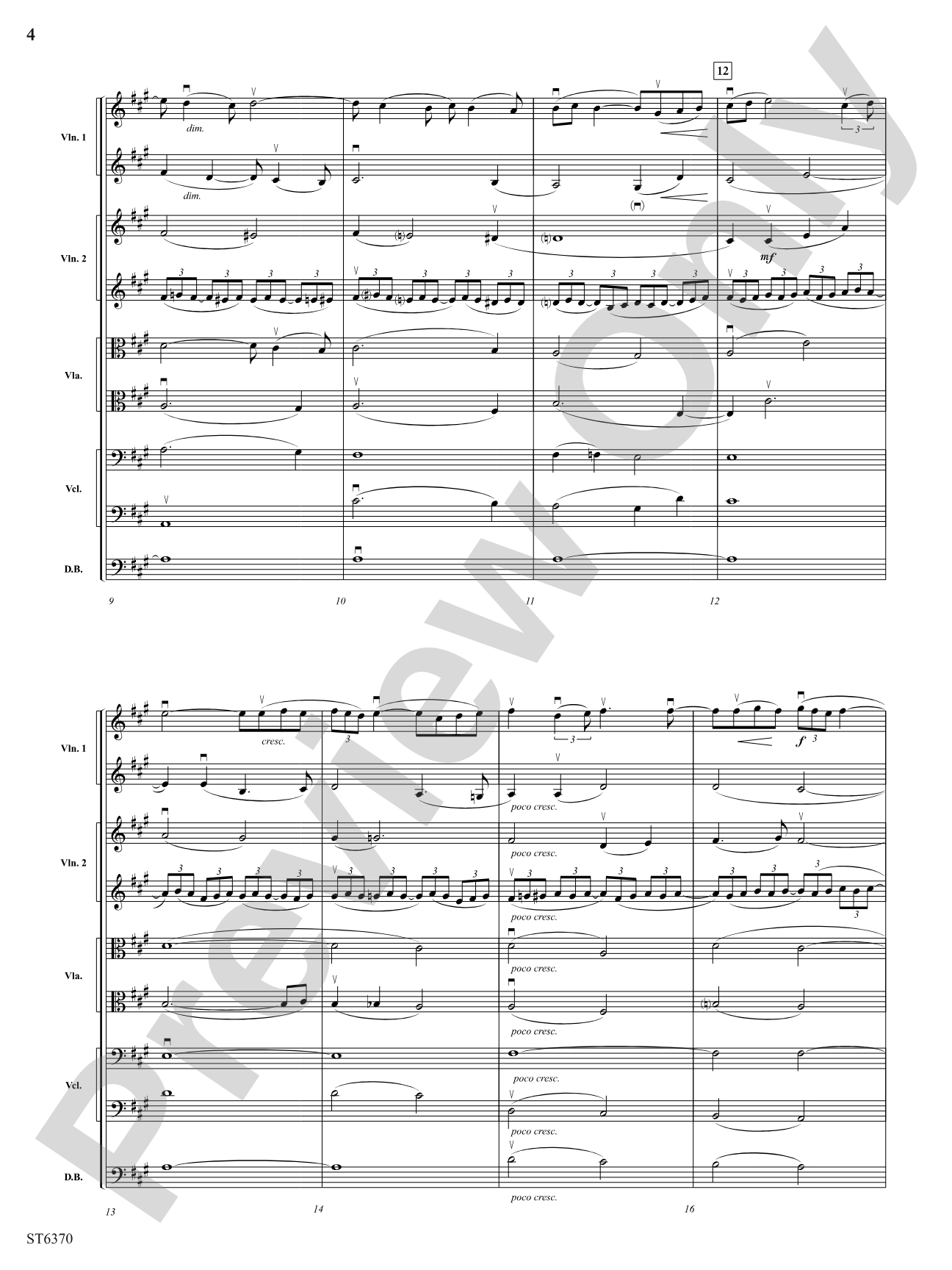
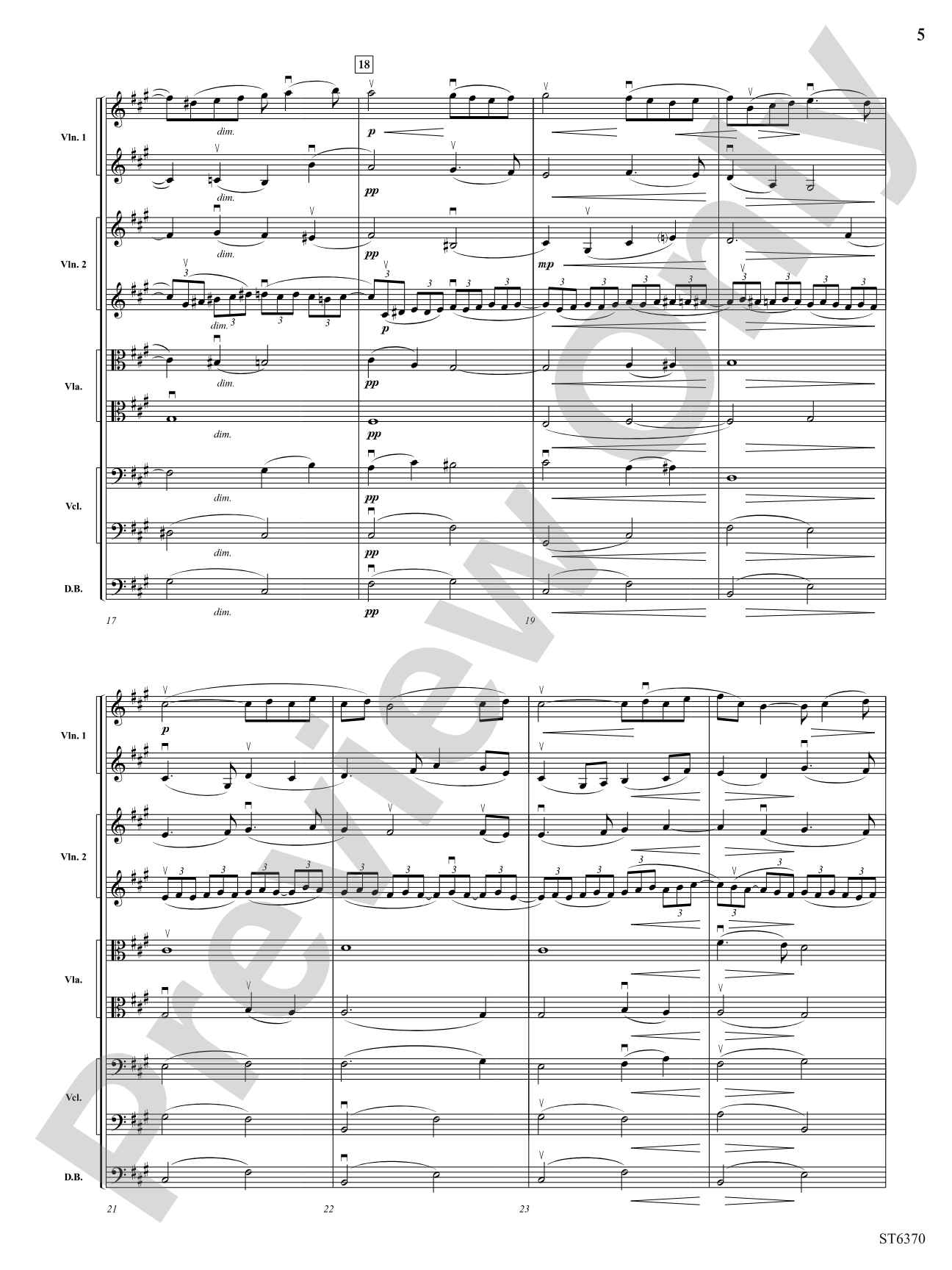
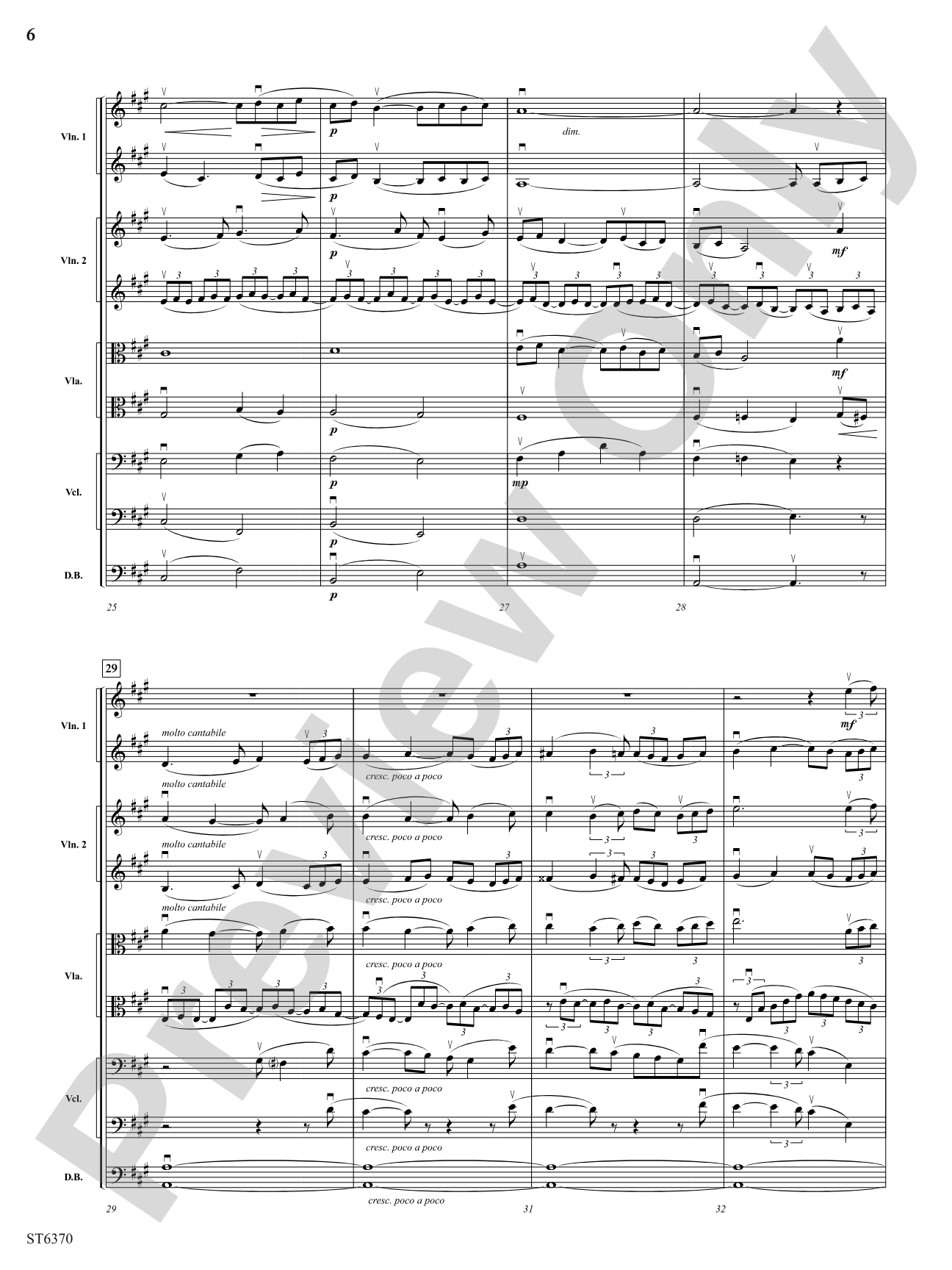
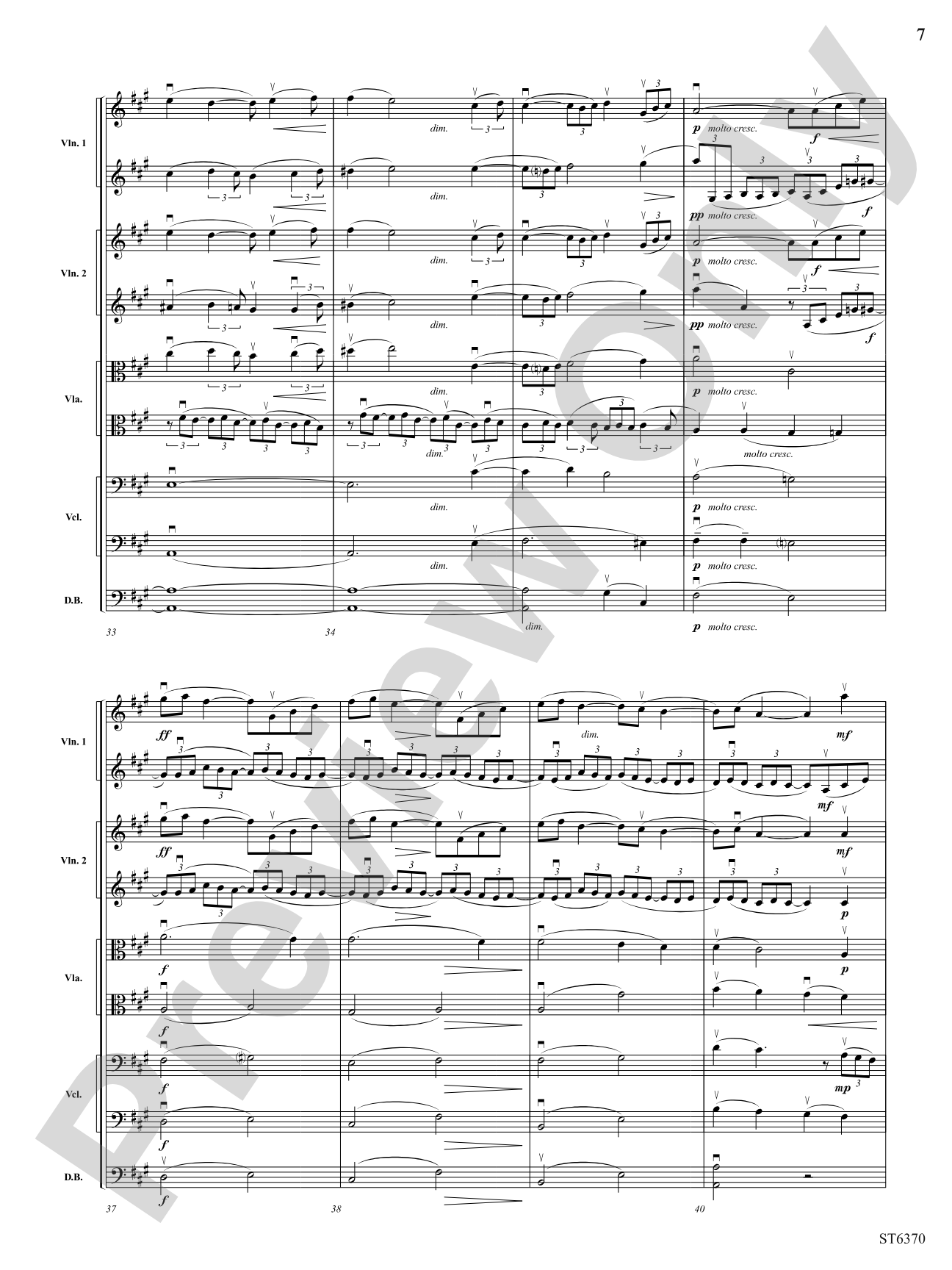
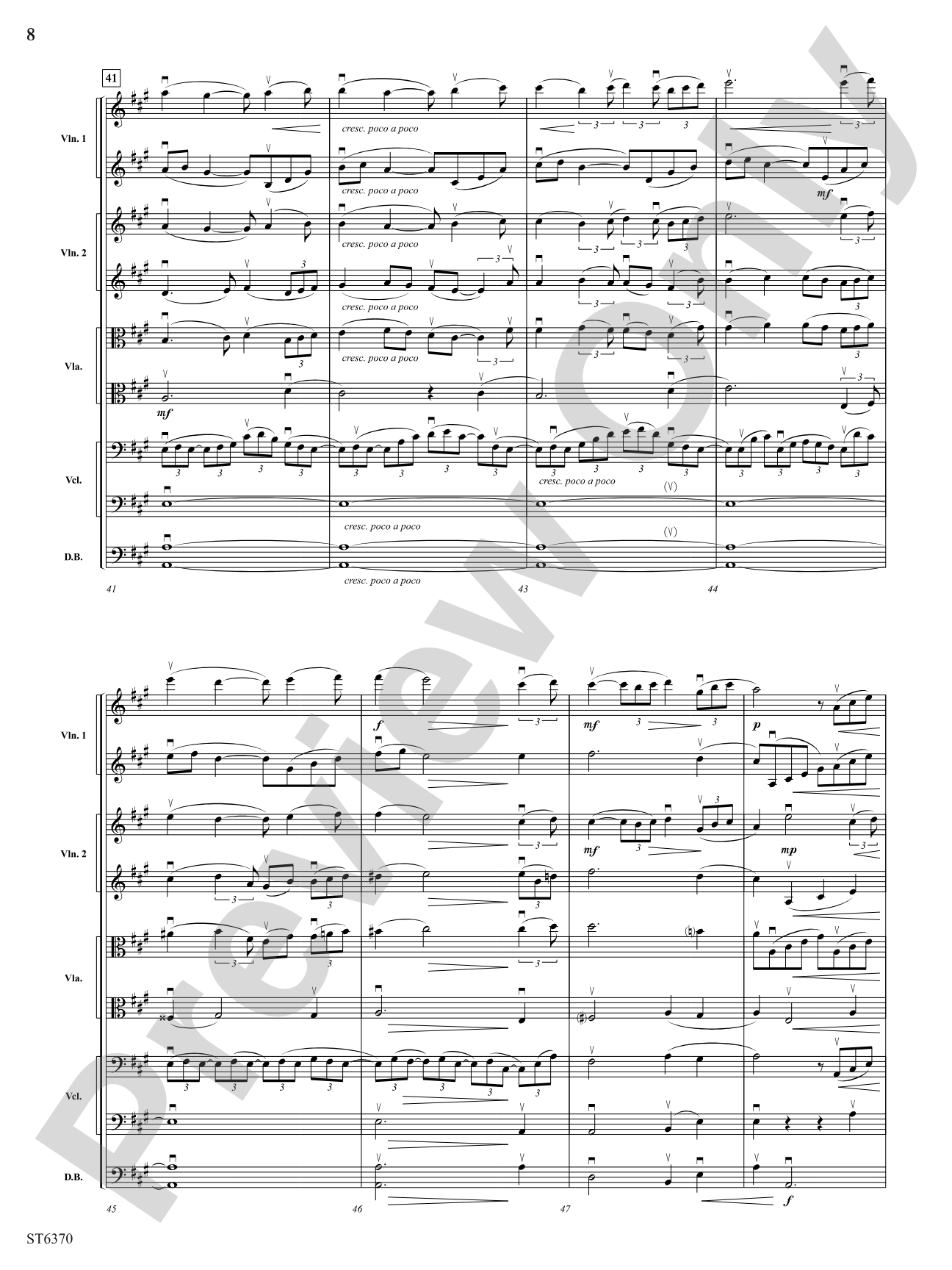
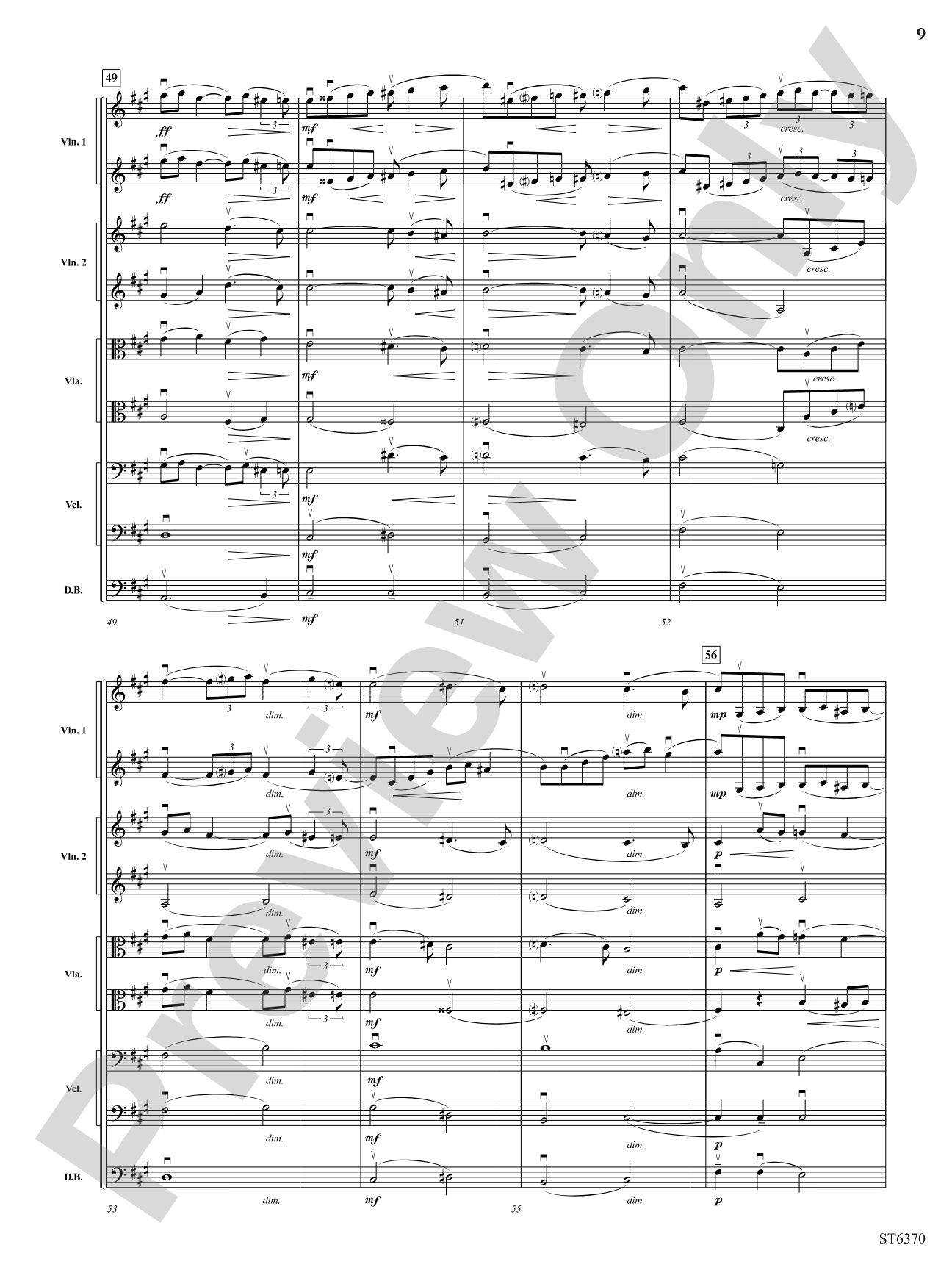
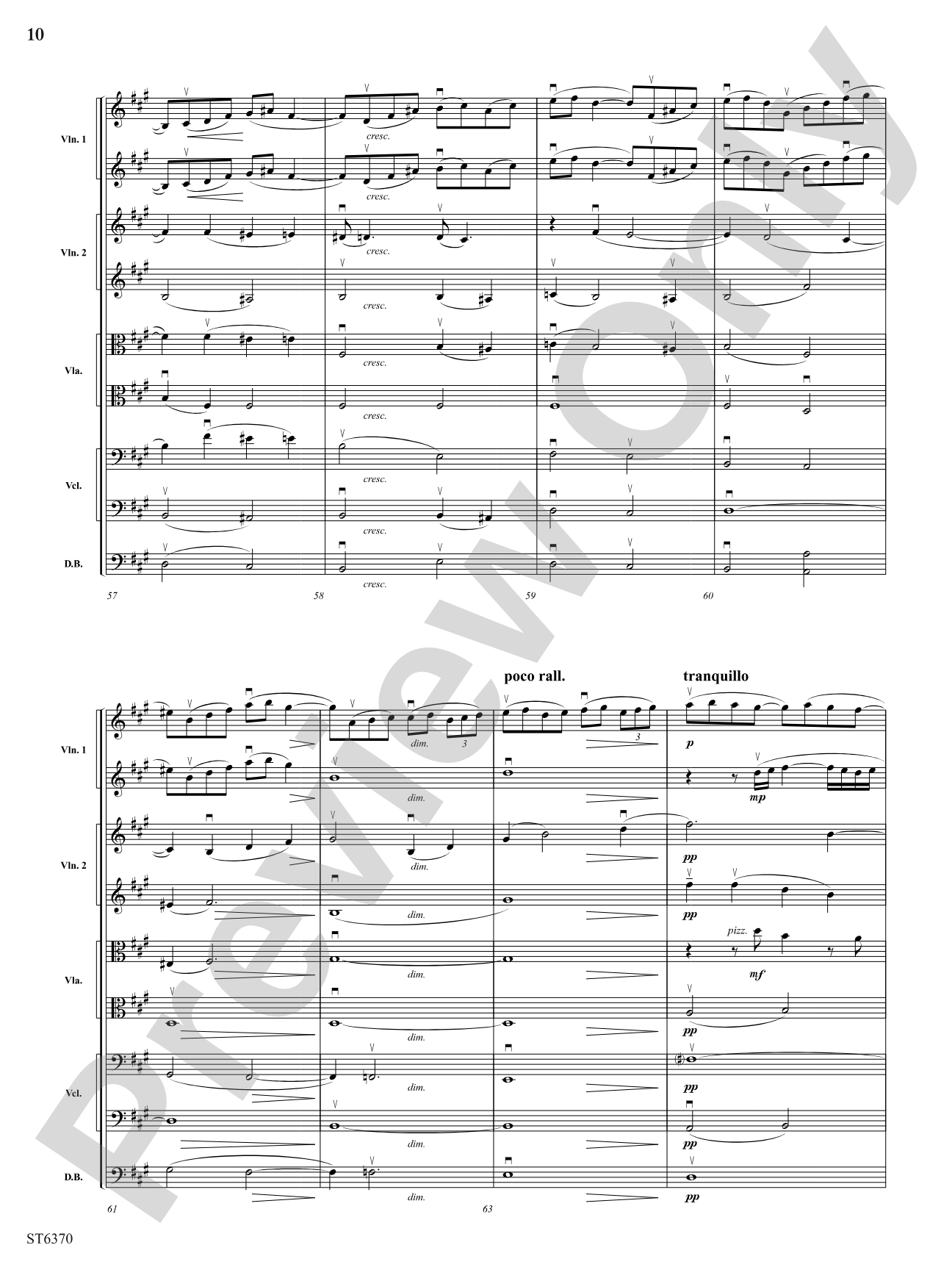
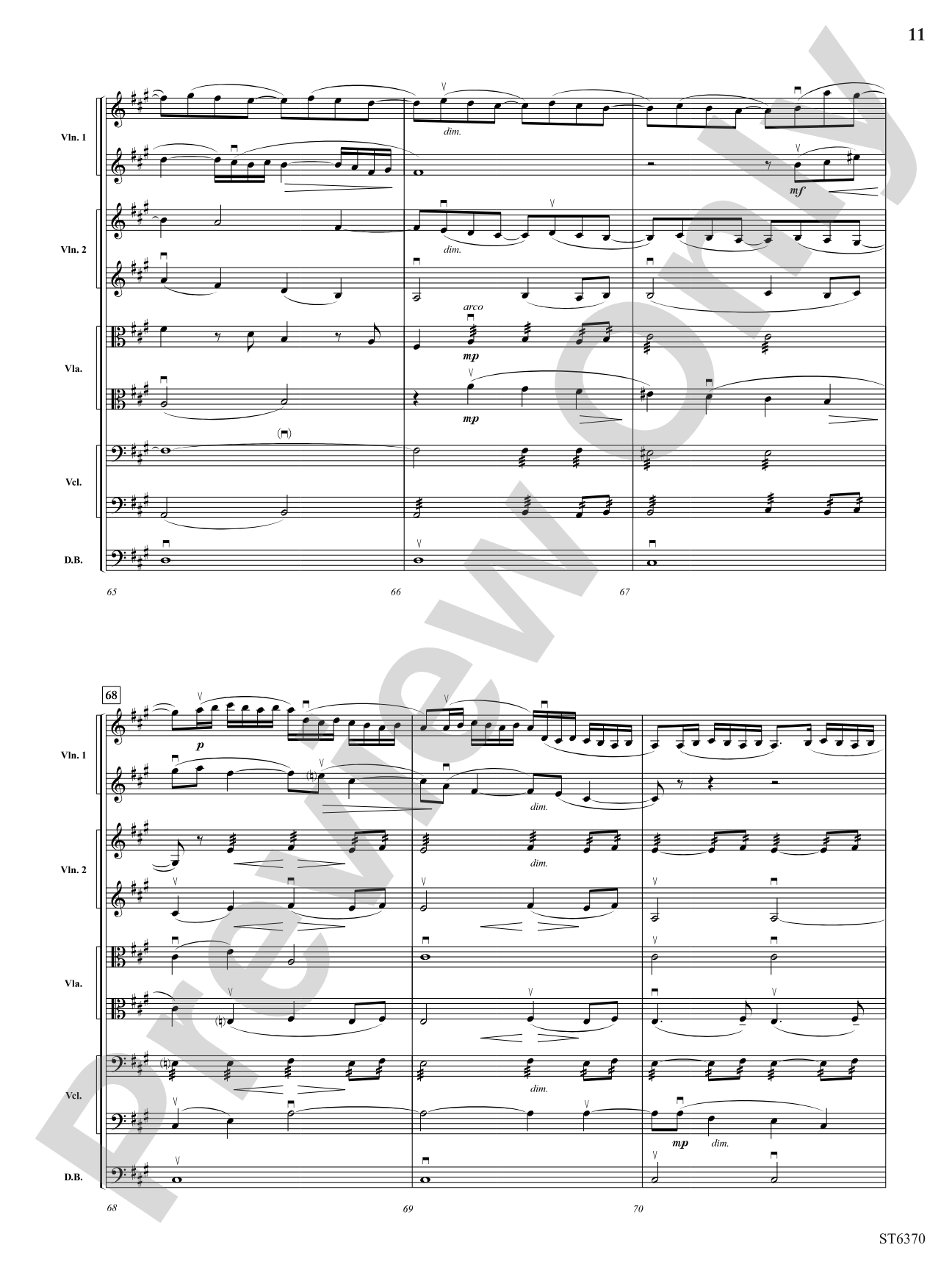
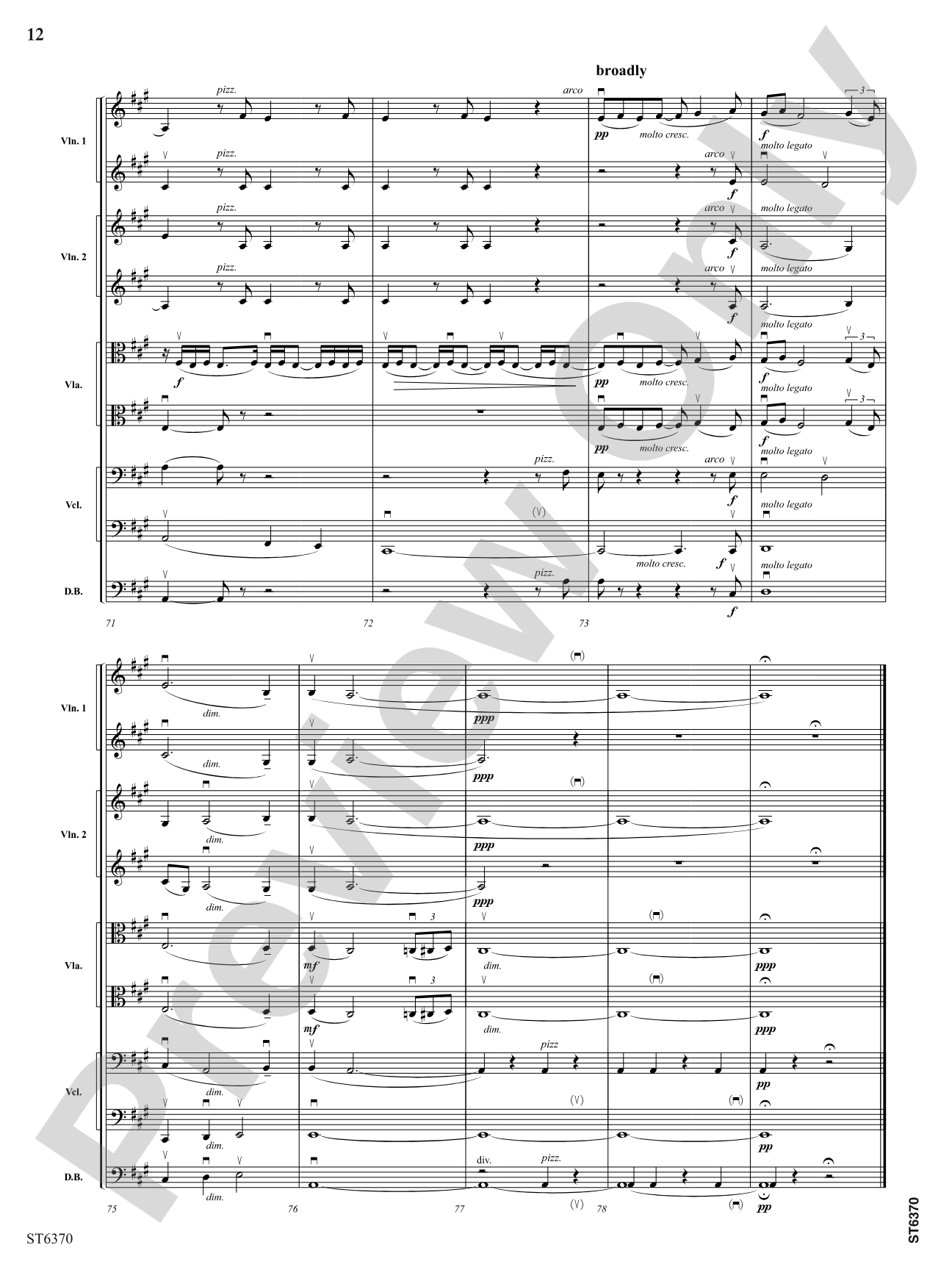

Romance for Strings: String Orchestra Conductor Score & Parts
By Sergei Rachmaninoff / arr. Robert D. McCashin
Grade: 5
Item: 98-DST6370
$70.00
Pickup currently not available
Buy Extra Parts (Digital PDF Download)
| Product | Price | Quantity |
|---|---|---|
| Romance for Strings: Score | $5.00 | |
| Romance for Strings: Violin 1 | $7.00 | |
| Romance for Strings: Violin 2 | $7.00 | |
| Romance for Strings: Viola | $7.00 | |
| Romance for Strings: Violoncello | $7.00 | |
| Romance for Strings: Double Bass | $7.00 |
Parts Added to Cart!
Description
This stunning arrangement captures the expanse and beauty of Rachmaninoff's original full orchestra version. Deeply moving harmonies seem to melt into each other as the famous melody weaves its way through the work. The soaring musical lines capture the heart and will leave your audience breathless. A true masterwork and an equally powerful arrangement.


Romance for Strings: String Orchestra Conductor Score & Parts isn't in MakeMusic Cloud just yet...but it could be. Let us know you'd like to see it, and you'll help shape what comes next. In the meantime, start a free trial and dive into thousands of interactive titles your students can play along with today.
Request This Title
Tell us you want it.
Start Your Free Trial
Explore everything that's ready to play right now.
Sample Audio
1
Audio File
--:--
0:00
0:00
Sample Video
No sample videos found.
Additional Details
Series:
FJH String Orchestra
Publisher:
The FJH Music Company, Inc.
SKU:
98-DST6370
More about this title
About the Composer: Sergei Rachmaninoff
Sergei Rachmaninoff (1873-1943) shaped the sound of late Romanticism through his gift for sweeping melody and lush harmonic language. A virtuoso pianist and conductor as well as composer, Rachmaninoff understood the orchestra intimately and wrote for strings with particular eloquence, creating works that remain cornerstones of the concert repertoire.
His music bridges the 19th and 20th centuries, combining Russian soul with European sophistication. For string players and conductors, Rachmaninoff's works offer unparalleled opportunities to explore lyrical phrasing, tonal depth, and the emotional power of sustained melodic lines.
Why we love this
McCashin's arrangement opens this masterwork to orchestras that might otherwise lack the resources for a full orchestra version, preserving every essential harmonic gesture and melodic arc. String orchestras at this level can deliver the intimate intensity and expressive sweep the piece demands, and the conductor score provides clear leadership without sacrificing the music's natural flow.
What to expect
Expansive and deeply introspective at once, with a melody that seems to float above supportive harmonies that shift like clouds. The work draws listeners into quiet contemplation, then swells with profound emotion, creating moments of genuine catharsis through pure string sound.
Who it's for
String orchestras with solid intonation and secure rhythmic foundation who are ready to tackle lyrical, sustained writing. This works equally well for advanced high school orchestras and community or preprofessional ensembles seeking repertoire that demonstrates technical control and musical maturity.
How to get the most out of it
- Establish the character in rehearsal by identifying the arch of each phrase. This piece lives in the space between individual lines and their collective resonance; unison passages should bloom rather than blend uniformly.
- Shape the accompaniment voices with as much care as the melody. Inner string parts often carry harmonic color that elevates the work from moving to transcendent.
- Balance vibrato across all sections so the sound integrates rather than fragments. A string orchestra at grade 5 benefits from conscious attention to how individual vibrato colors combine into a unified tone.
- Allow time for the melody to breathe at key cadential points. Rachmaninoff's phrasing often asks for gentle releases that let the audience absorb what they've just heard.
How to use it
Program this as a centerpiece for a concert devoted to Romantic string music, or pair it with shorter contemporary pieces to create contrast. It works particularly well as a closing selection, where its emotional depth and beauty can settle over an audience as the final impression of the evening.
Skills your students will build
- Sustaining long melodic lines with consistent tone quality and vibrato
- Balancing principal melody against harmonic accompaniment in divisi sections
- Responding to conductor phrasing cues and shape in lyrical, through-composed music
- Controlling dynamic gradations over extended passages
- Ensemble listening and tonal blending across multiple string parts