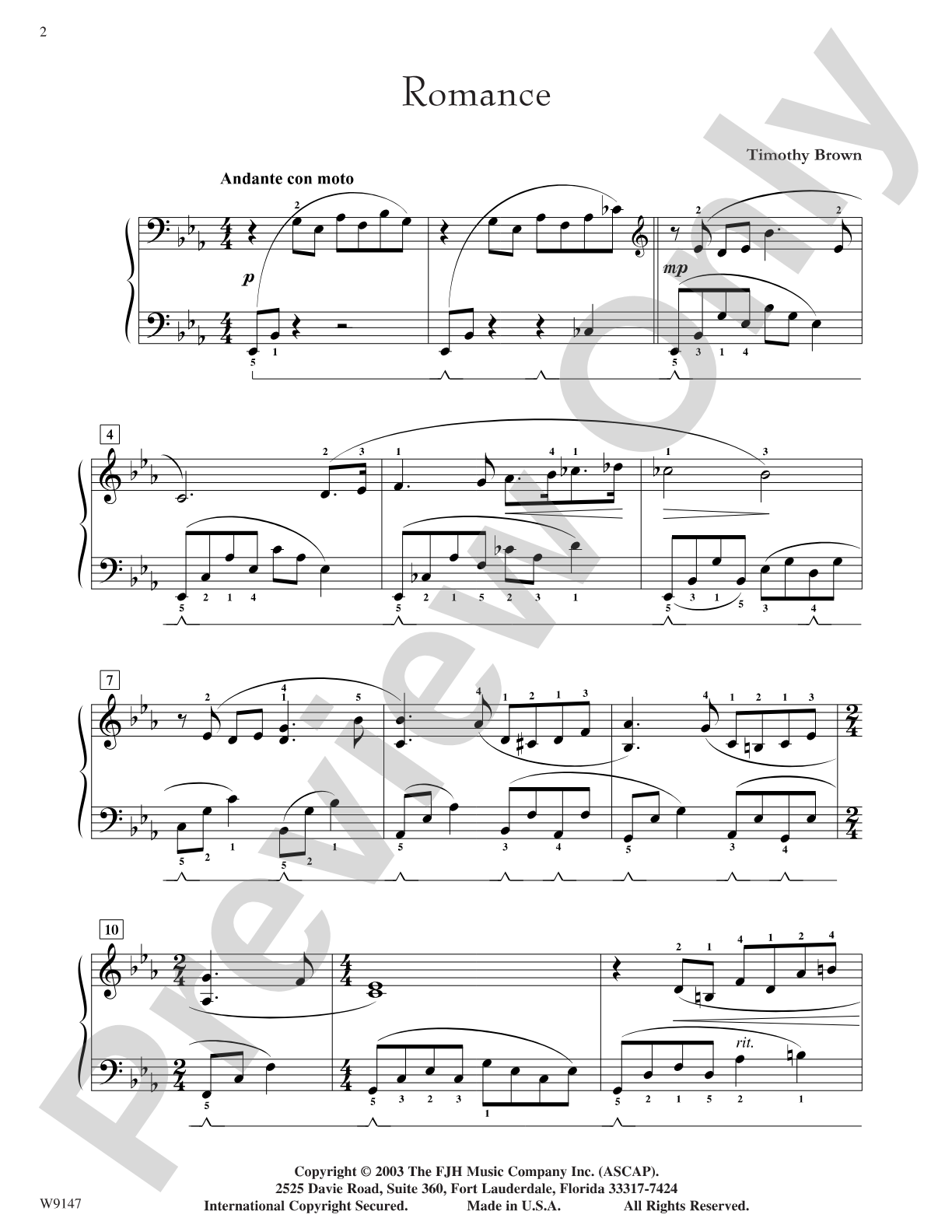
Romance Sheet Music Preview

Romance: Piano

By Timothy Brown

Item: 98-DW9147

Digital Download
$2.95
Description
Very expressive piece features a beautiful melody which students will be inspired to play again and again. A good composition for teaching C-minor and E, this solo also offers melodic phrasing and color.

Romance: Piano isn't in MakeMusic Cloud just yet...but it could be. Let us know you'd like to see it, and you'll help shape what comes next. In the meantime, start a free trial and dive into thousands of interactive titles your students can play along with today.

Sample Audio
No sample audio found.
Sample Video
Additional Details
Series: Written For You
Publisher: The FJH Music Company, Inc.
SKU: 98-DW9147

More about this title

Why we love this

Timothy Brown's Romance captures what makes teaching tonality rewarding: students encounter genuine harmonic color and expressive depth within a piece they'll actually want to play multiple times. The melodic writing is shaped for pianists who are ready to think beyond notes on the page and into phrasing, dynamics, and the emotional arc of a phrase.

What to expect

Romance unfolds with the warmth of C minor's introspective character, then opens into the brighter territory of E major. Throughout, the melody invites singers and storytellers to the piano; the piece feels intimate and unhurried, shaped for quiet concentration and genuine emotional connection.

Who it's for

This solo suits intermediate pianists who've moved past early elementary repertoire and are beginning to explore expressive playing. It's ideal for students ready to grapple with minor tonality and to think about how melody and harmony work together to create mood.

How to get the most out of it

  • Shape the melody with subtle dynamic swells rather than rigid forte and piano markings. The piece's expressiveness lives in how you breathe with the line.
  • Explore the harmonic colors of C minor and E major by listening carefully to how chord changes shift the mood. These key areas deserve attention as character moments, not just technical shifts.
  • Let your tempo breathe. A steady pulse doesn't mean mechanical; Romance benefits from slight flexibility at phrase peaks and gentle settling at cadences.
  • Balance accompaniment and melody so the supporting harmonies frame rather than compete with the singing line.

How to use it

This works beautifully in a recital setting where it can stand alone as a substantive short work or anchor a group of character pieces. It also fits naturally into a studio or school concert demonstrating students' progress in harmonic awareness and expressive control.

Skills your students will build

  • Reading in C minor and E major tonalities
  • Melodic phrasing and dynamic shaping
  • Harmonic listening and awareness of key color
  • Balance between melody and accompaniment

You May Also Like