
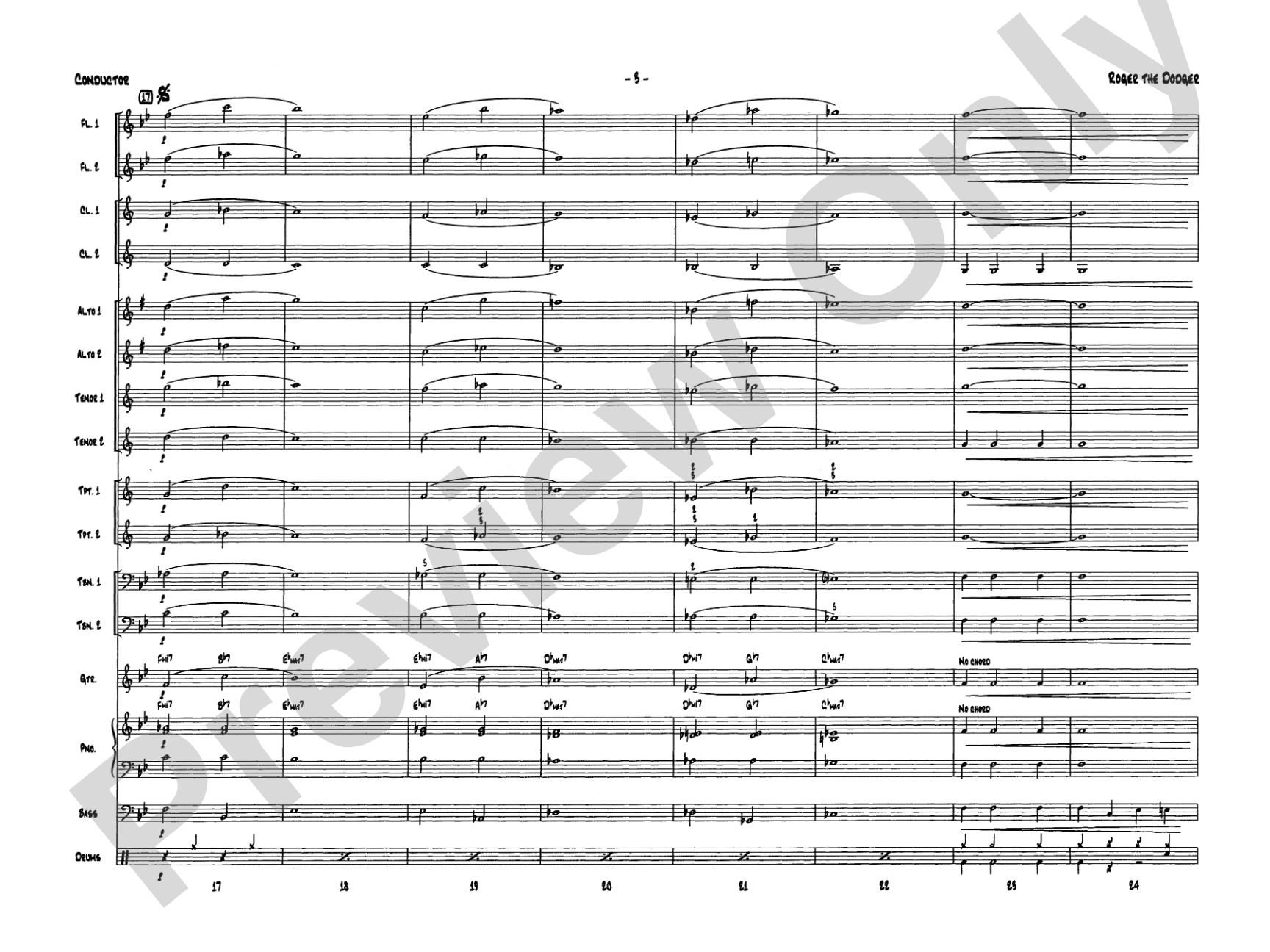
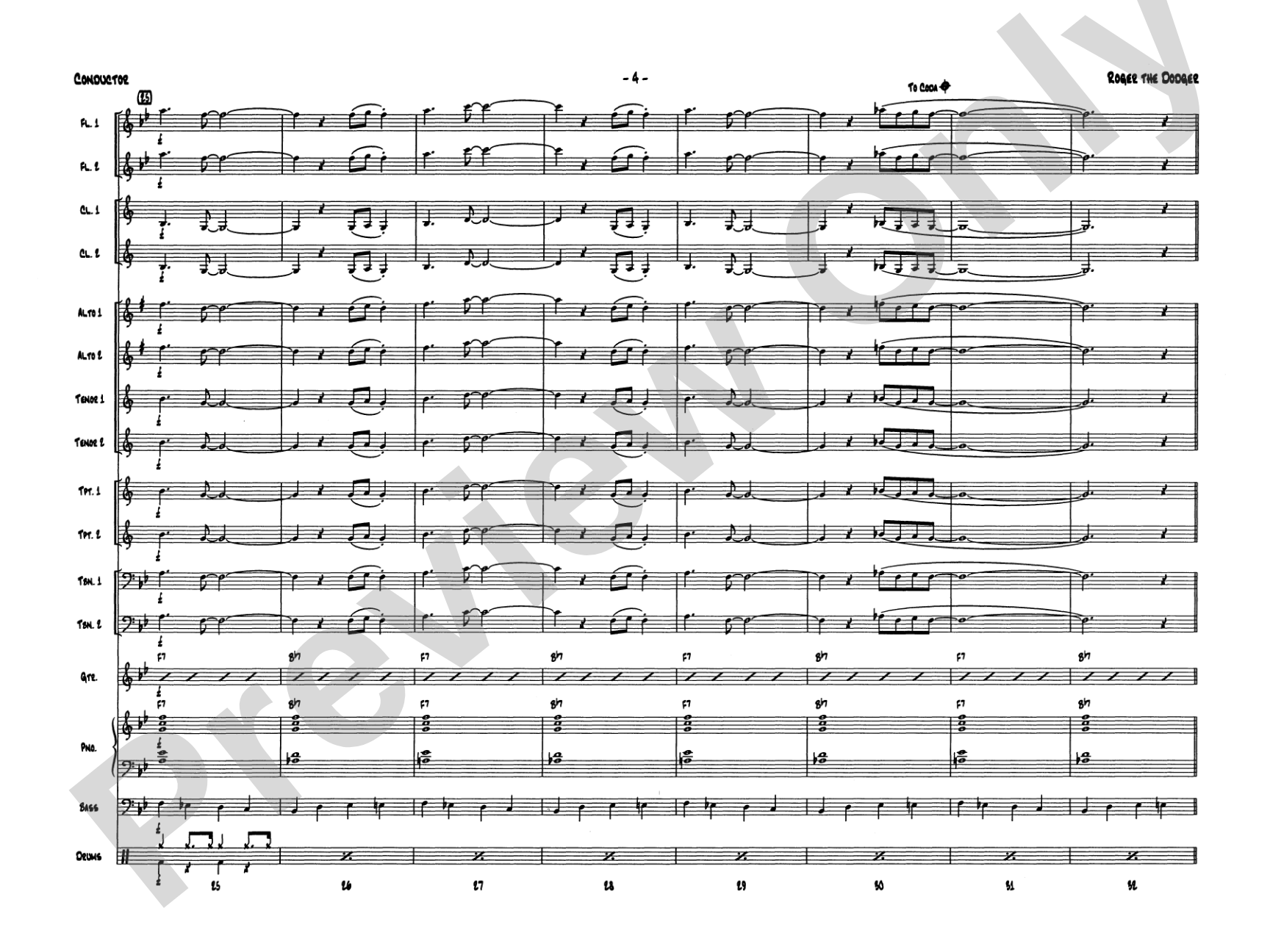
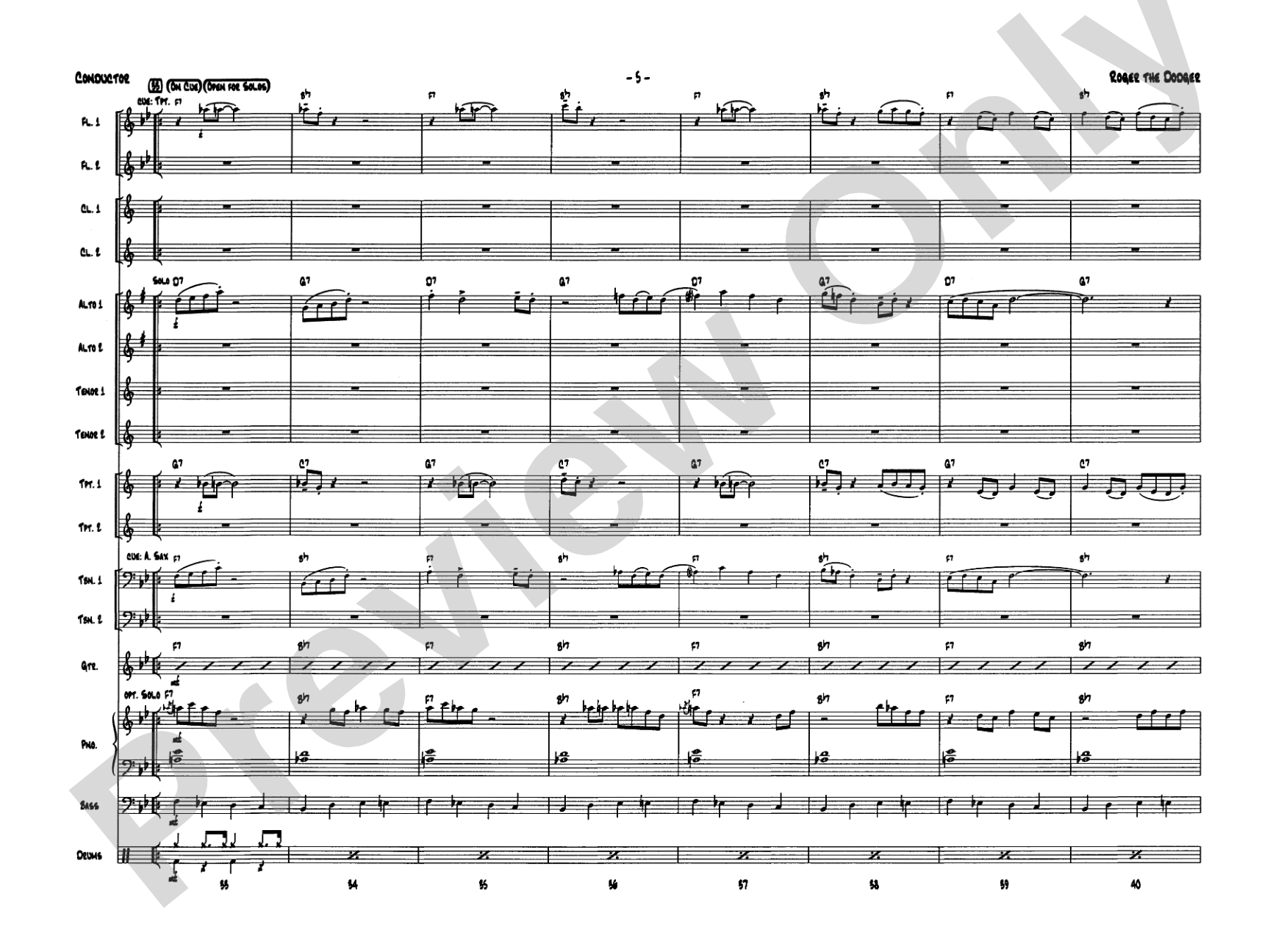
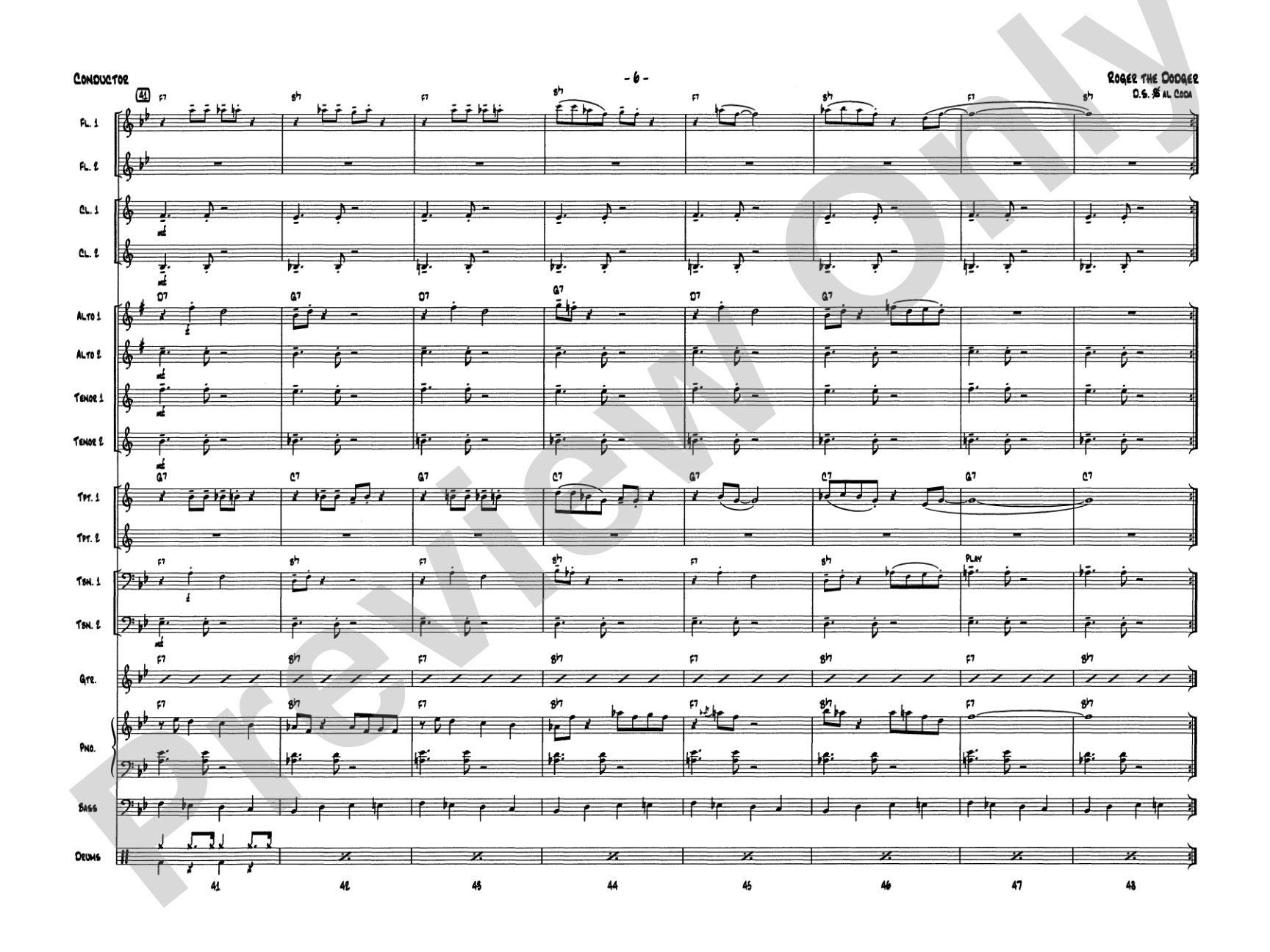
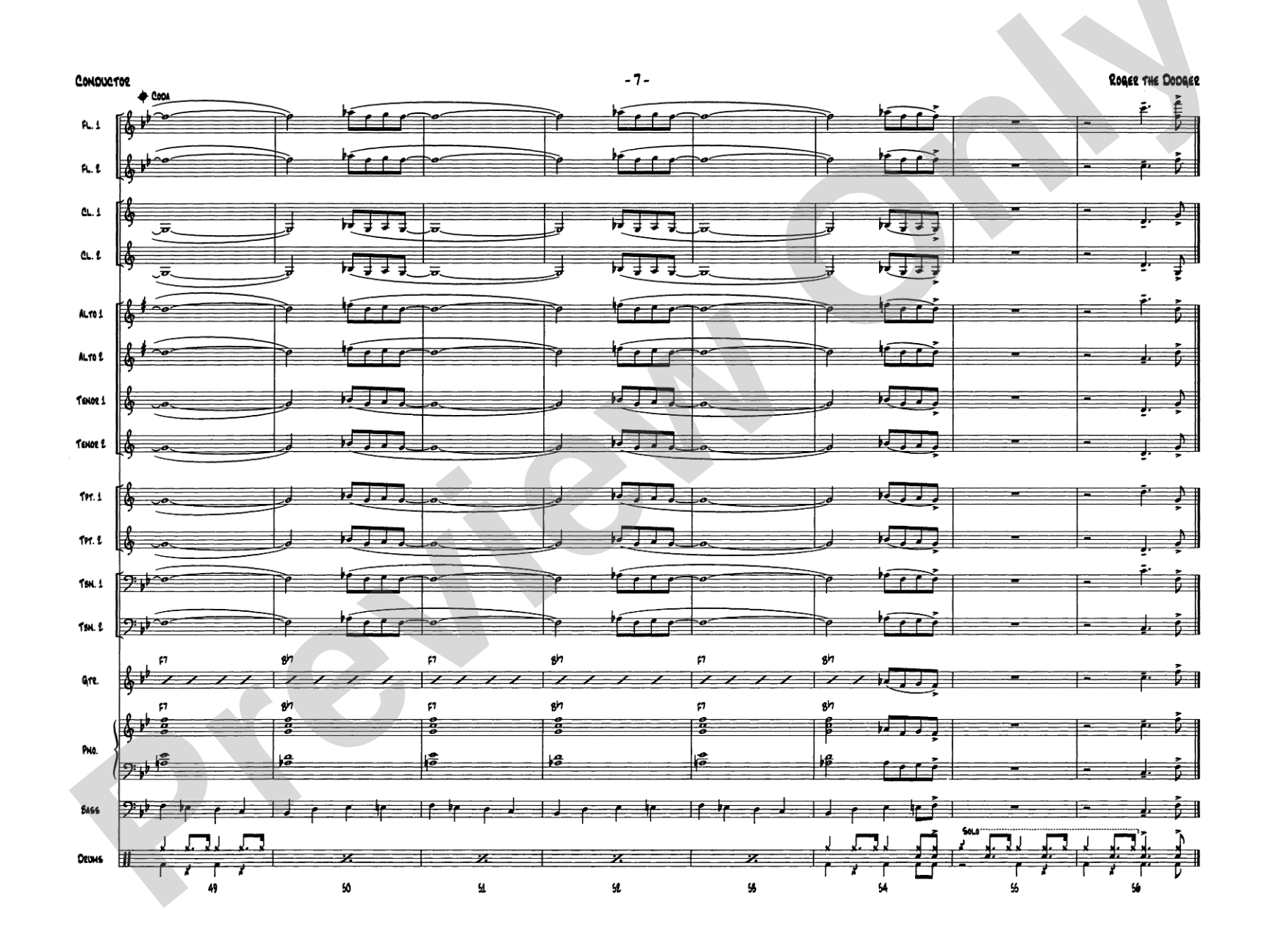




Roger the Dodger: Score
By Victor López
Grade: 0.5 (Very Easy)
Item: 00-PR-0003558
$7.00
Pickup currently not available
Description
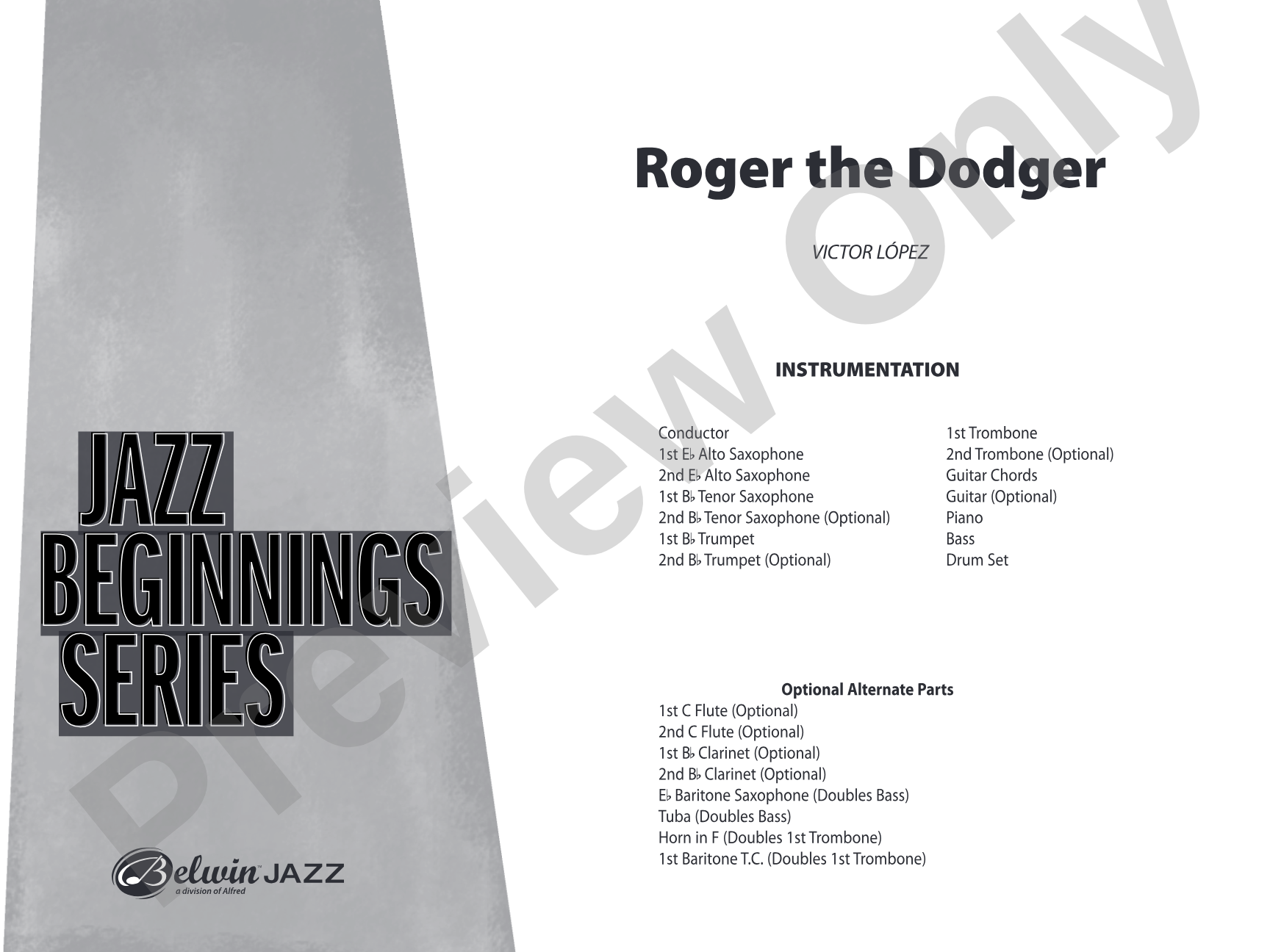
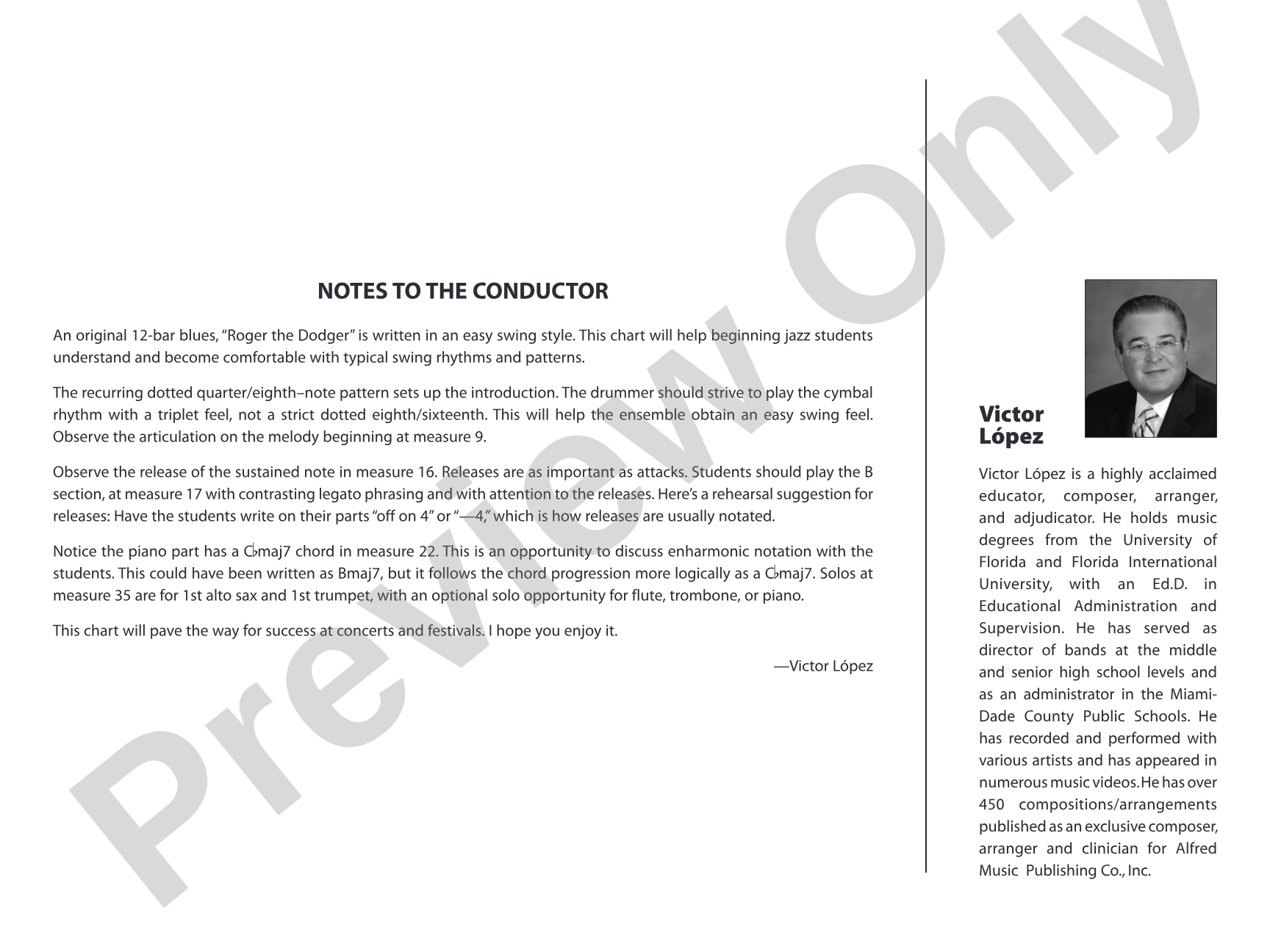
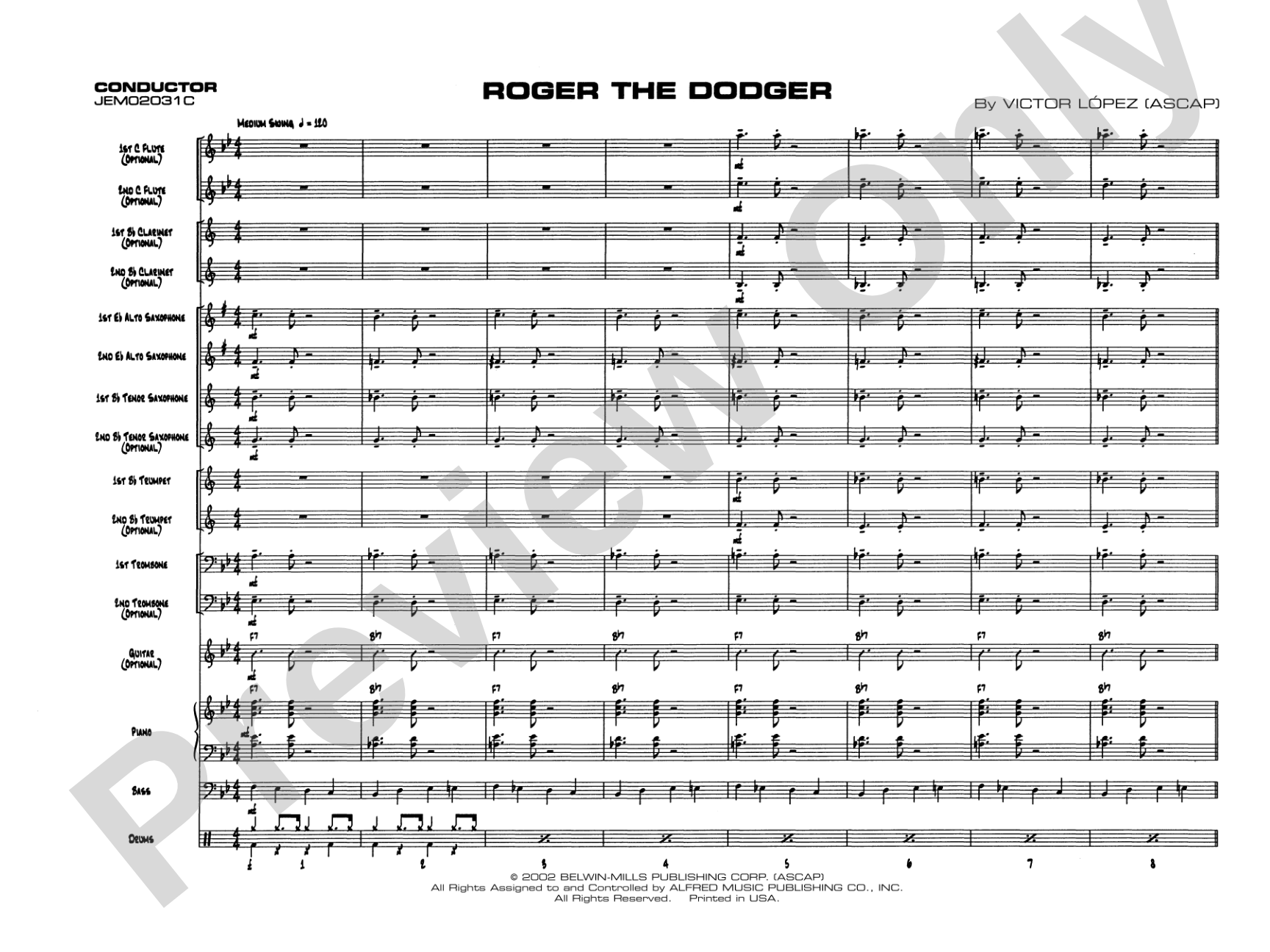
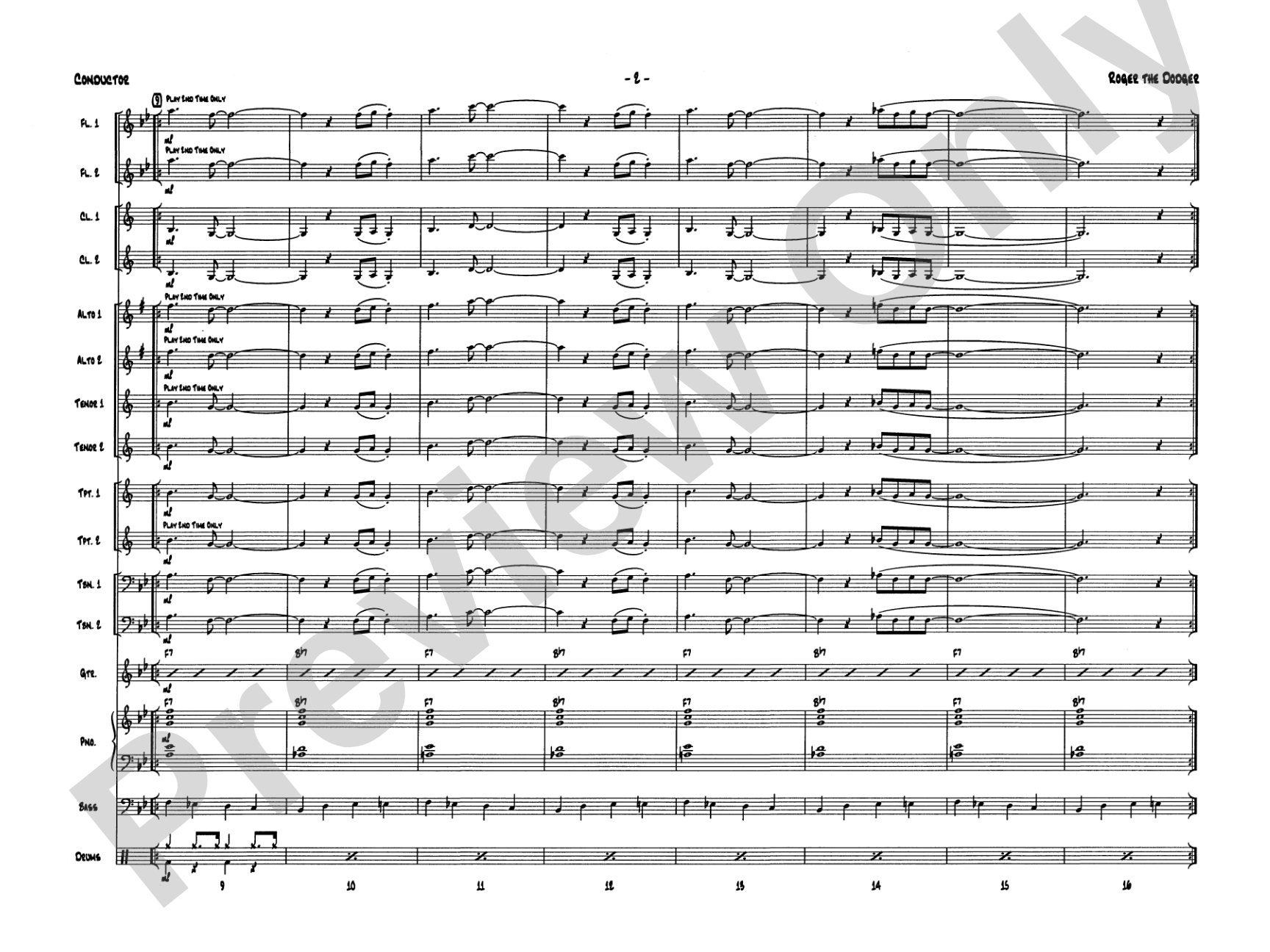
Warner Bros. jazz presents the Jazz Beginnings Series This is a new series designed for very basic jazz ensemble playing using limited ranges, rhythms and flexible instrumentation and it parallels beginning method books. An easy swing original by our man Victor López, this chart is based on a simple two-chord pattern similar to the tune "Killer Joe." Solos are written out with ensemble backgrounds and include solo opportunities for alto saxophone, trumpet, flute, trombone and piano. With the simple but catchy melody, clearly written ariculations and phrasing, you will easily educate, motivate and inspire. Achieve success, have fun! (3:13)


Don't just read it, hear it, play along with it, and watch your students grow with it. In MakeMusic Cloud, Roger the Dodger: Score comes alive with professional accompaniment, adjustable tempo, and built-in practice tools that turn solo practice into real progress.
Open in the Player
Jump straight in and assign it today.
Start Your Free Trial
Open this title and explore the full library in minutes.
Sample Audio
1
Audio File
--:--
0:00
0:00
Sample Video
No sample videos found.
Additional Details
Series:
Jazz Beginnings Series
Publisher:
Alfred Music
Page Count:
44
SKU:
00-PR-0003558
More about this title
About the Composer: Victor Lopez
Victor López is a composer and arranger with deep roots in jazz education and accessible ensemble writing. His work across multiple series for beginning and intermediate jazz ensembles has made him a trusted voice for directors building programs from the ground up.
Why we love this
López writes for real beginner jazz ensembles without sacrificing groove or musicality. The two-chord foundation and written solos mean your students can sound polished from day one, even as they're still learning to swing, and the multiple solo opportunities keep everyone engaged.
What to expect
A bouncy, accessible swing tune with plenty of personality. The simple harmonic framework lets the melody do the talking, and the written solos give each section a moment to shine without overwhelming younger players navigating jazz vocabulary for the first time.
Who it's for
Directors launching new jazz programs or adding repertoire for students reading at jazz level 0.5. This works equally well for a first jazz ensemble or as a stepping stone between concert band and more demanding big band literature.
How to get the most out of it
- Keep the swing feel relaxed and ahead of the beat rather than forced. Beginning ensembles often rush swing, so anchor the rhythm section on the back half of each beat.
- Balance the written backgrounds behind solos so the soloist cuts through clearly. These aren't thick orchestrations, so restraint from the ensemble makes the featured voice shine.
- Work the articulation markings carefully in rehearsal. They're written out for clarity, and respecting them will tighten the ensemble sound from your first read-through.
- Give soloists space to breathe and interpret. Even though the solos are written, leaving room for slight rubato and personal phrasing makes the performance feel alive.
How to use it
Program this early in your jazz concert to build confidence and set the groove for the evening, or use it as a closing opener after intermission when energy tends to dip. It pairs naturally with other early jazz ensemble charts and works well in casual performance settings where younger players benefit from an immediate musical win.
Skills your students will build
- Swing feel and rhythmic interpretation in a groove context
- Reading and executing written articulations in jazz style
- Solo improvisation and accompaniment within a simple harmonic framework
- Balancing individual voice within an ensemble texture
- Range and flexibility across multiple instruments (alto sax, trumpet, flute, trombone, piano)