
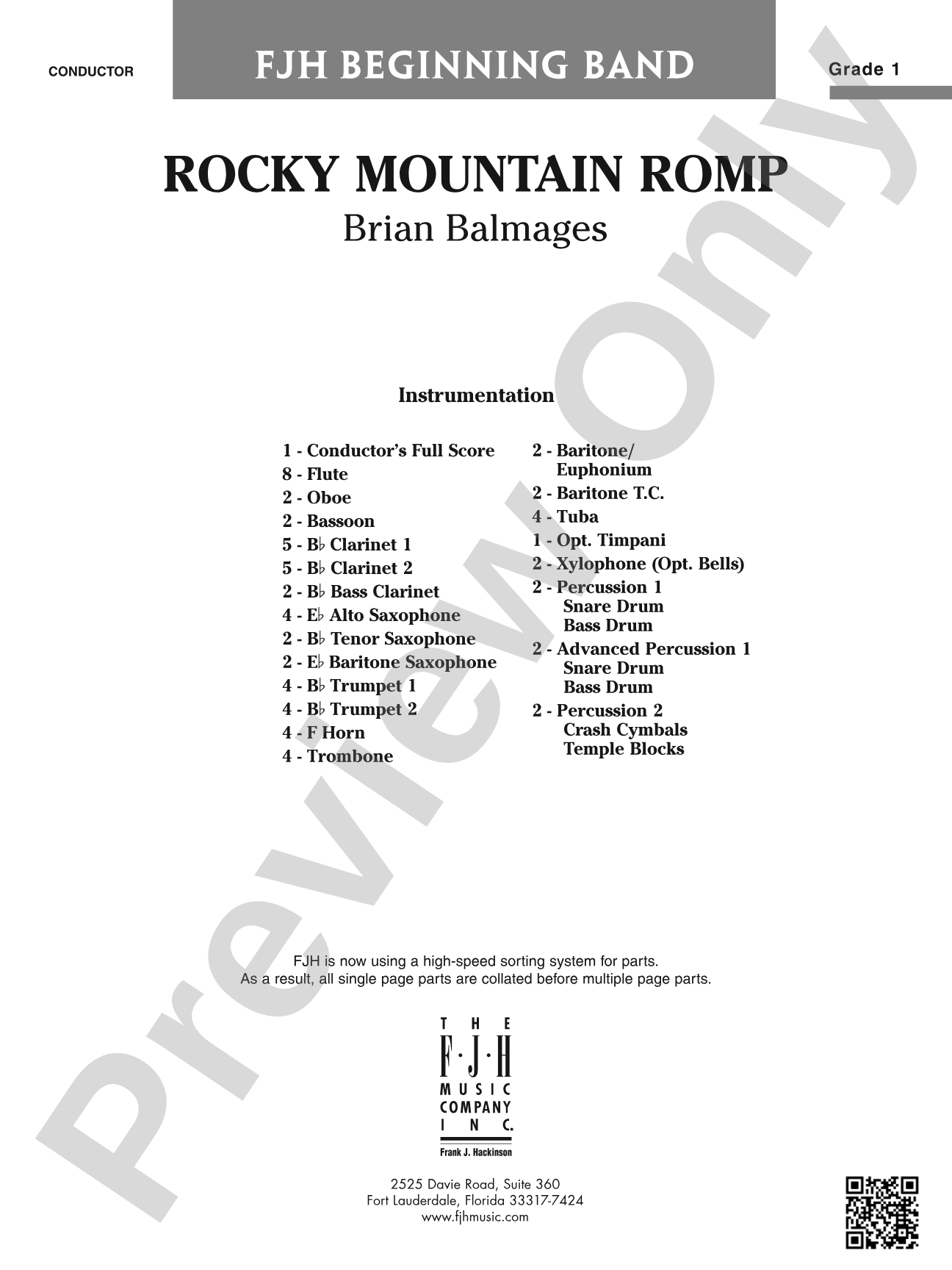
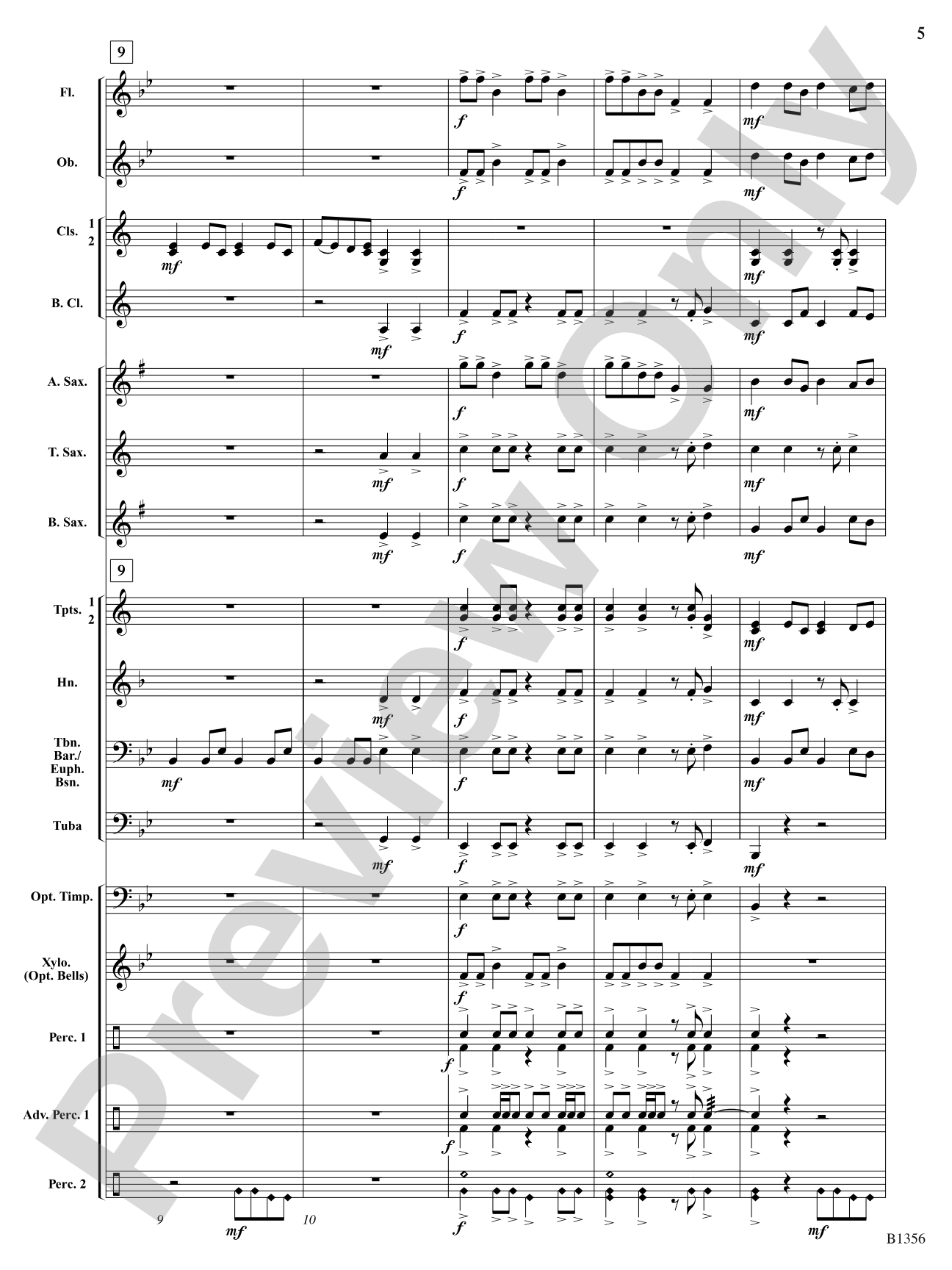
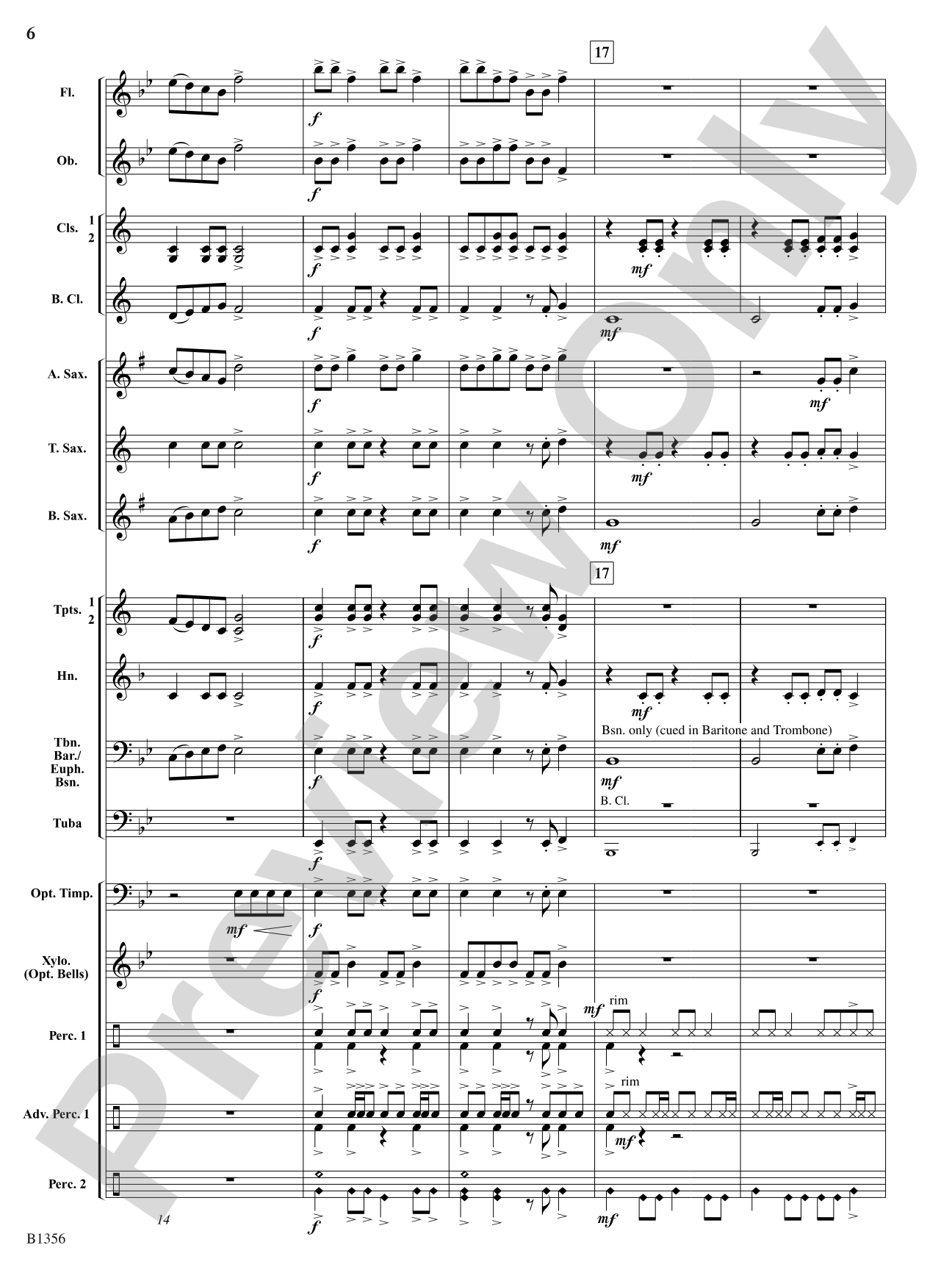
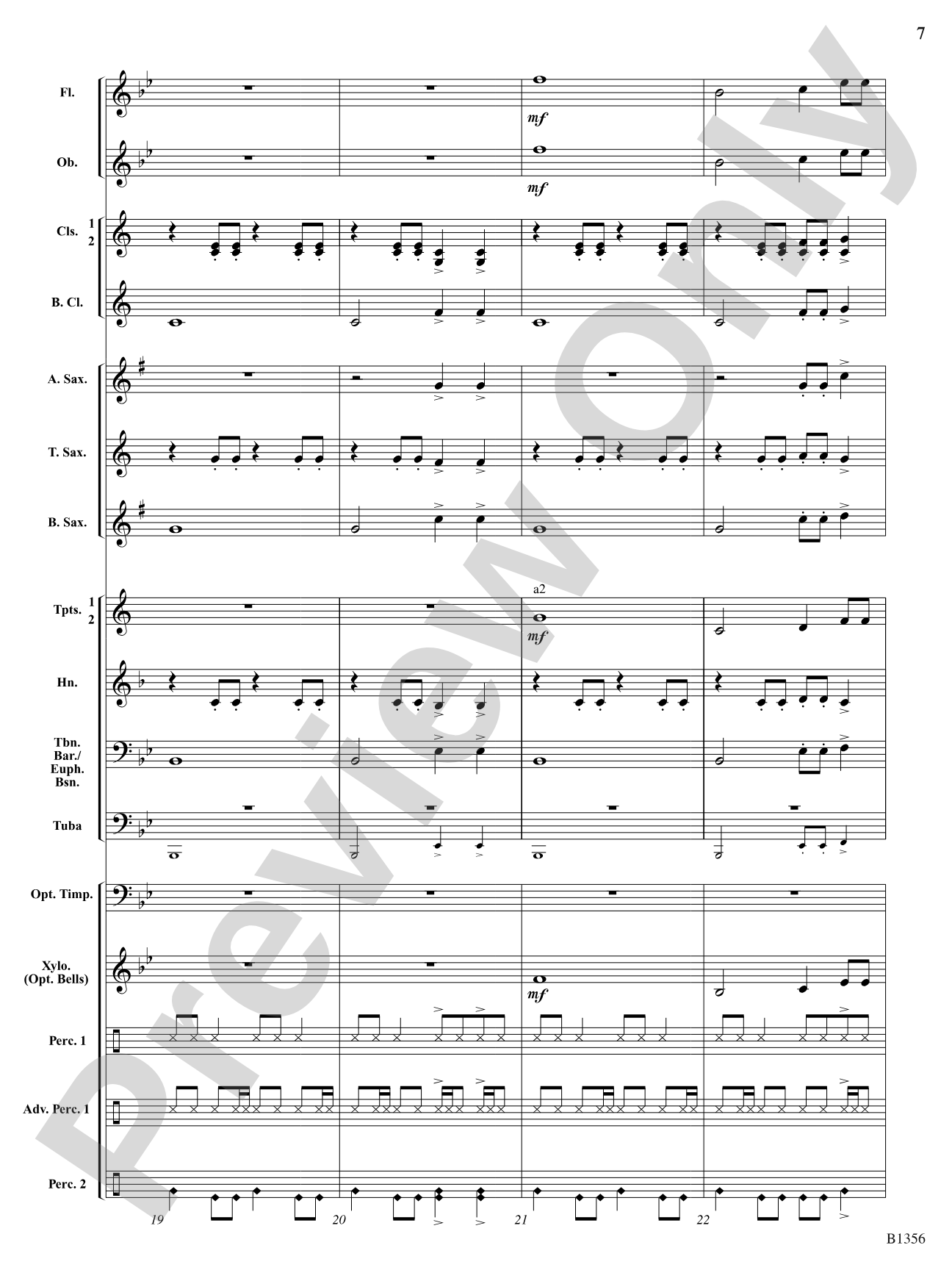
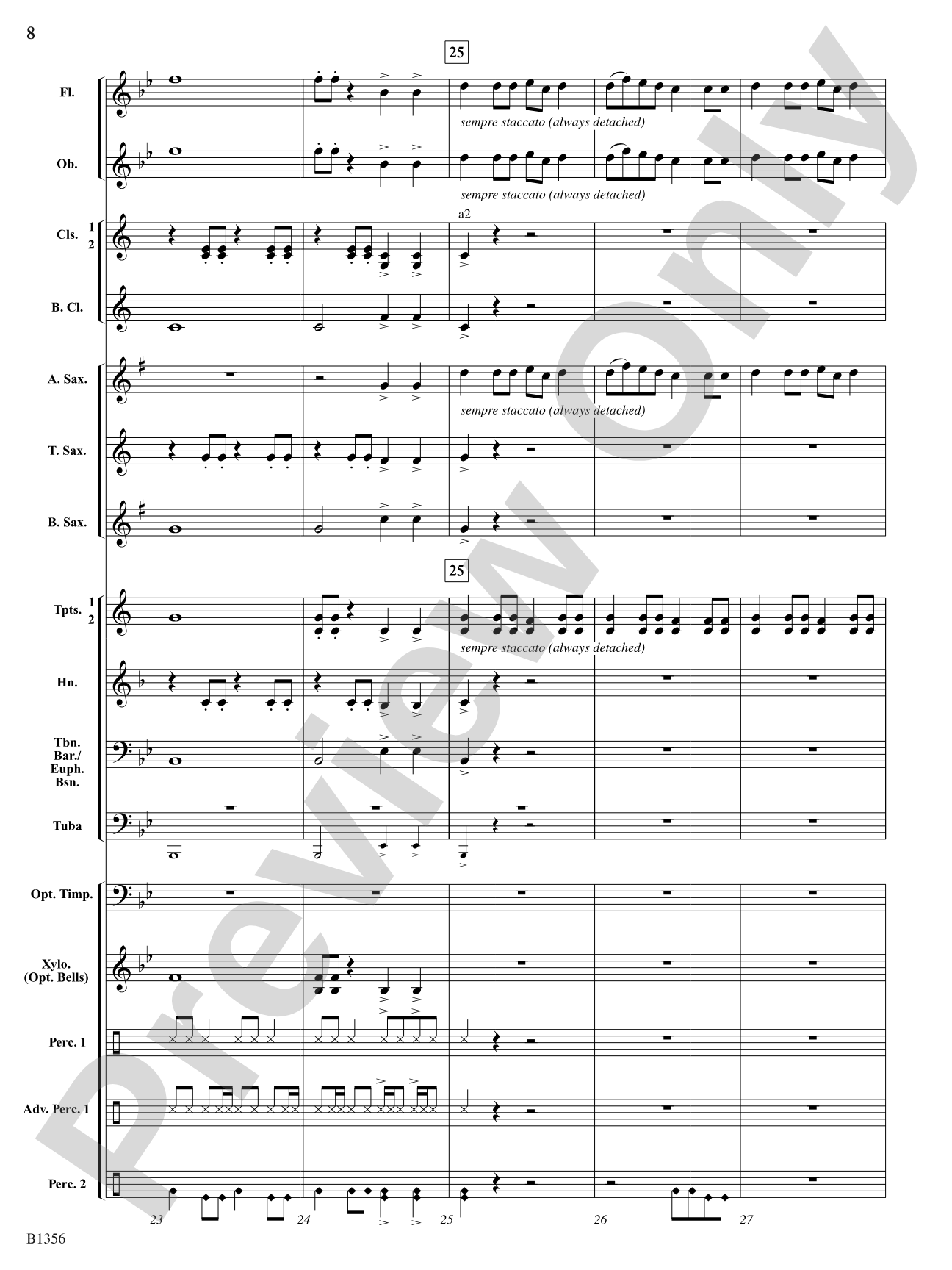
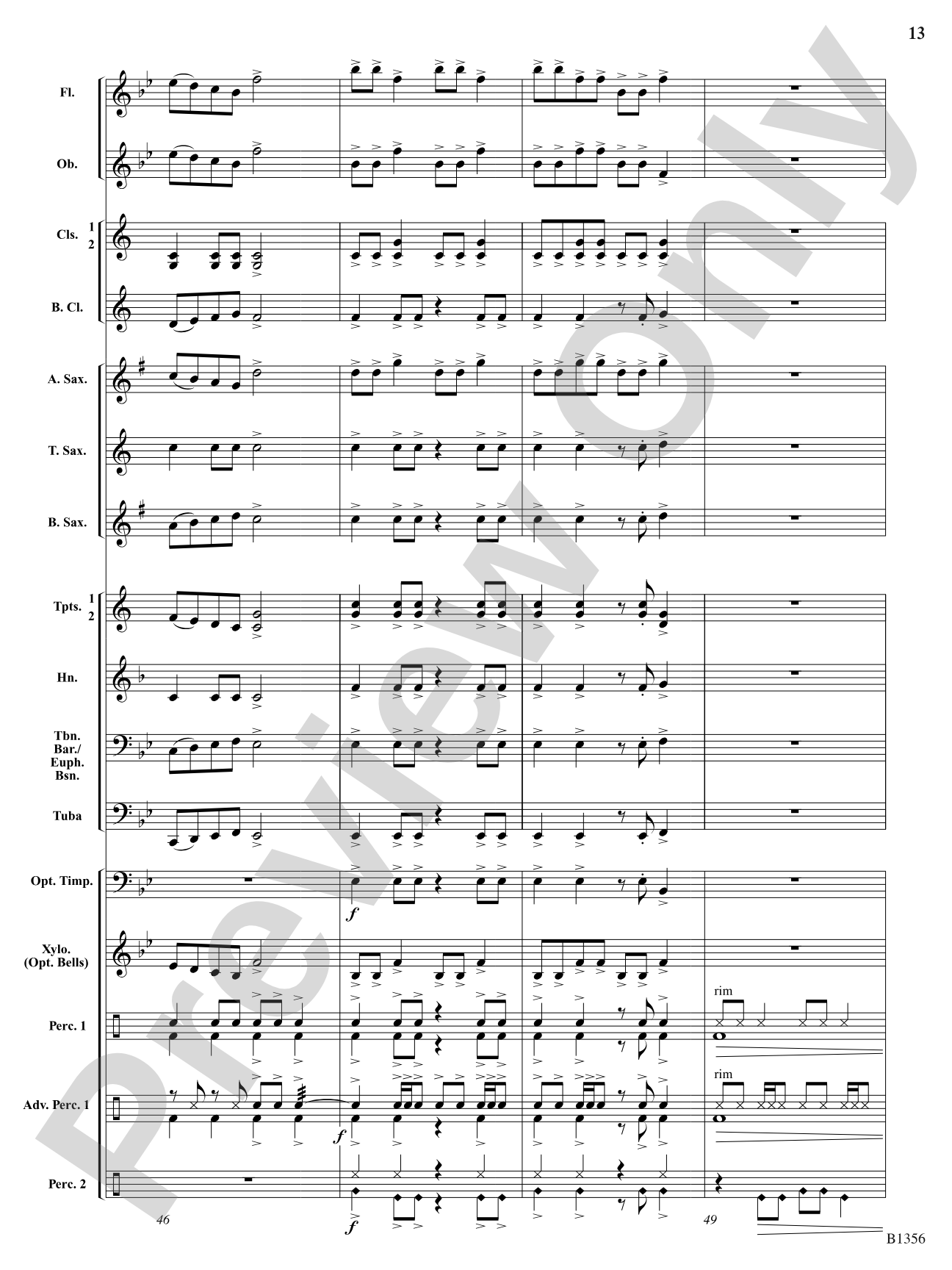
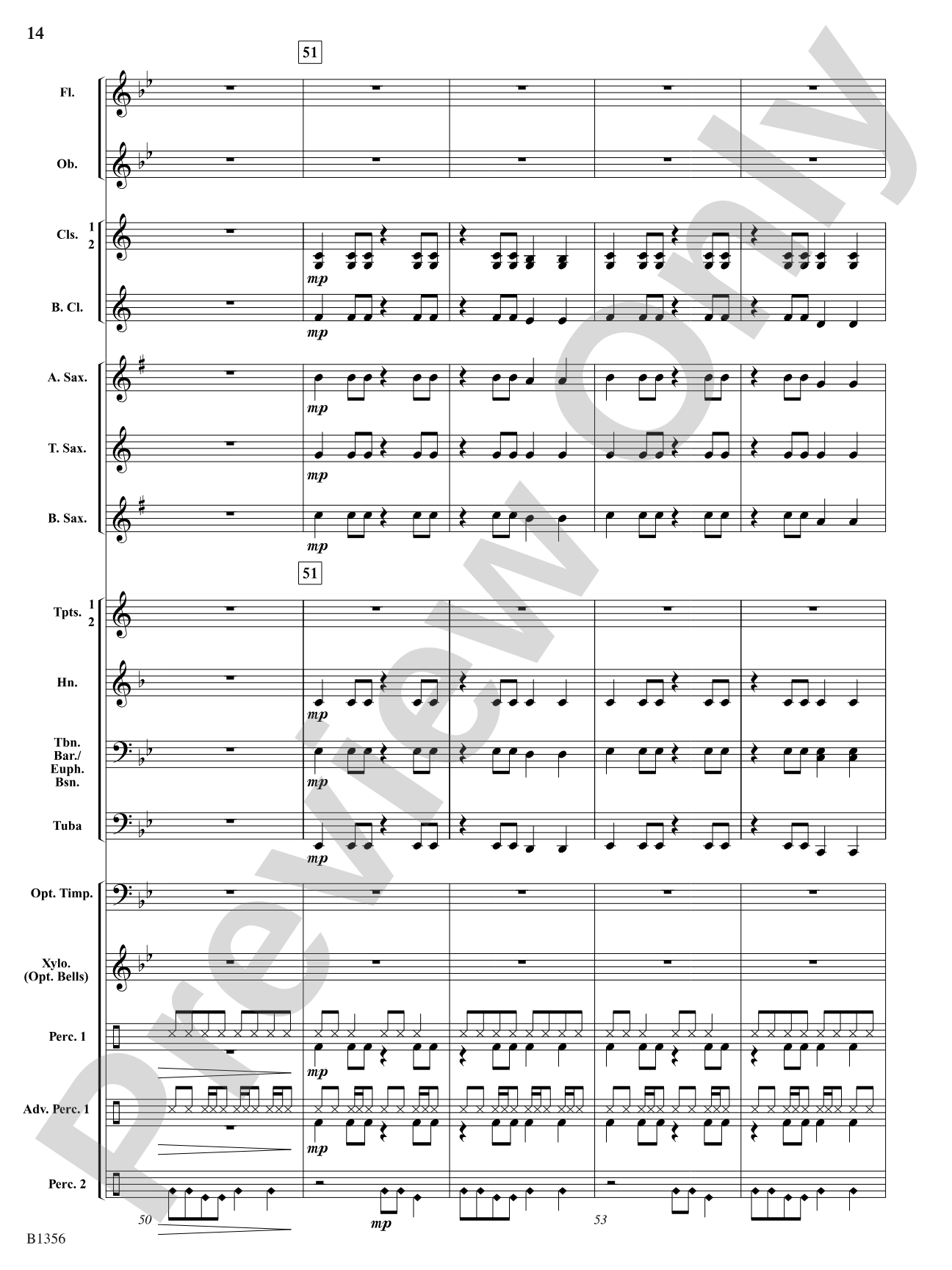
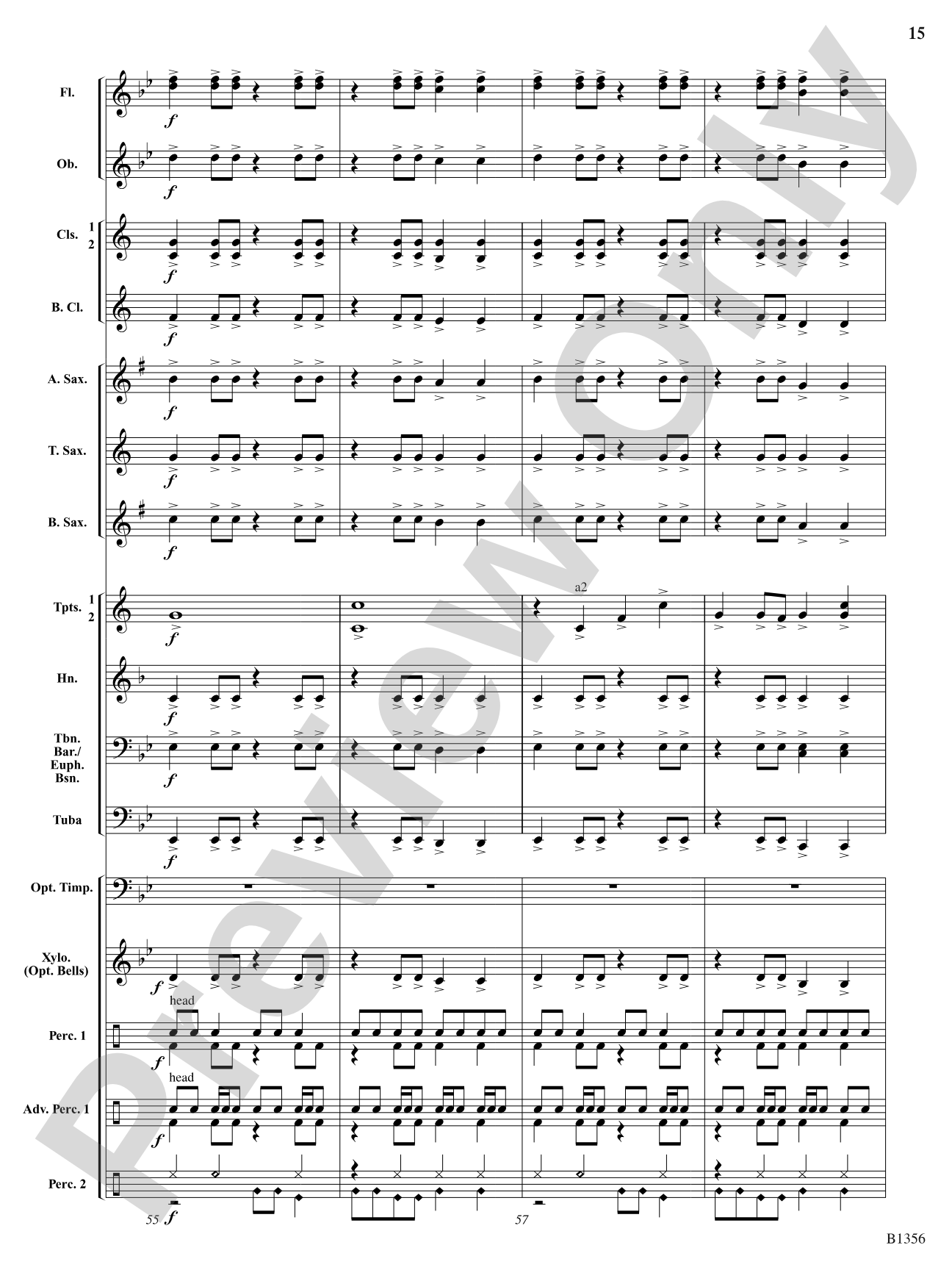
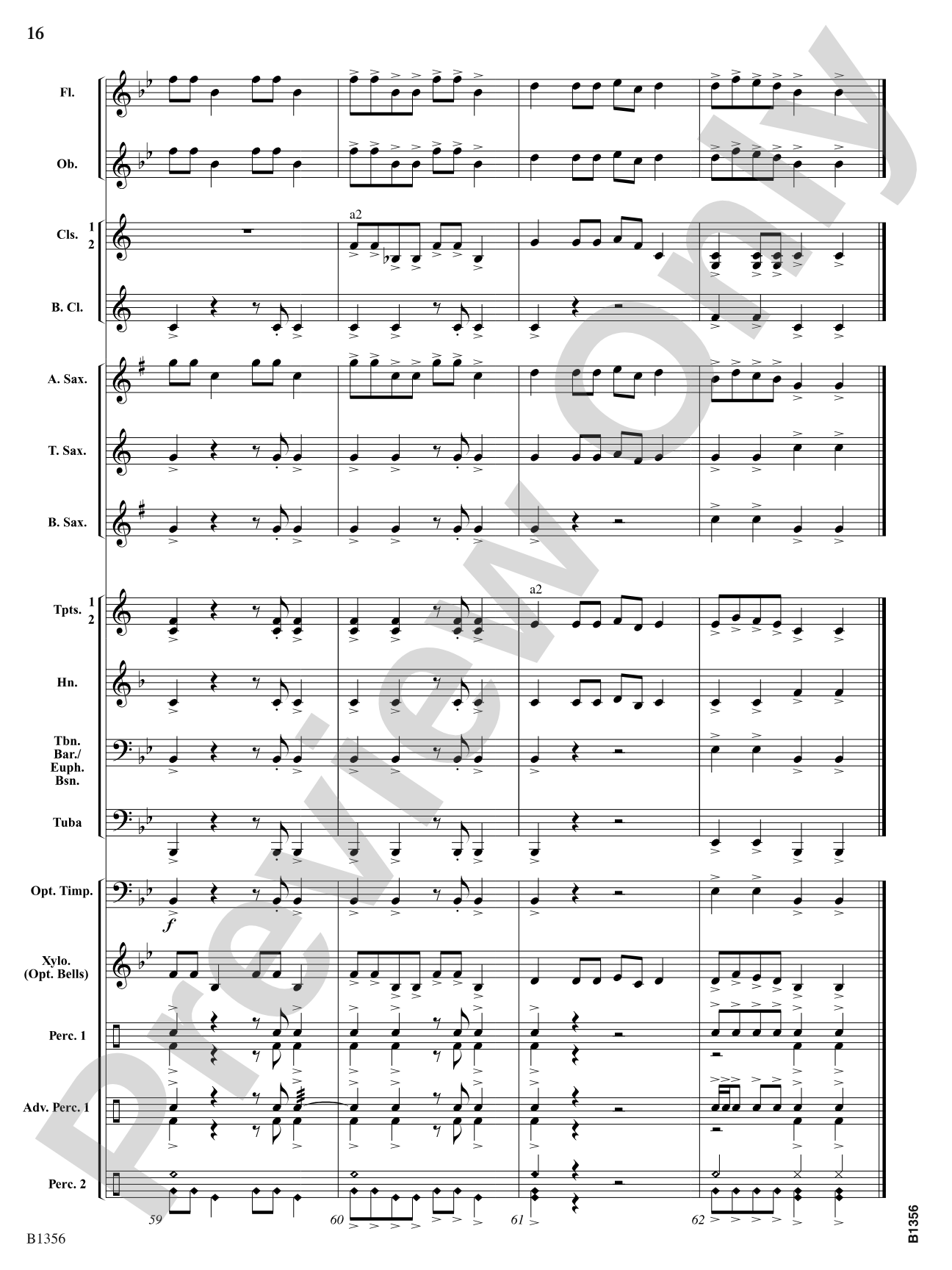

Rocky Mountain Romp: Concert Band Conductor Score & Parts
By Brian Balmages
Grade: 1
Item: 98-DB1356
$55.00
Pickup currently not available
Buy Extra Parts (Digital PDF Download)
Parts Added to Cart!
Description
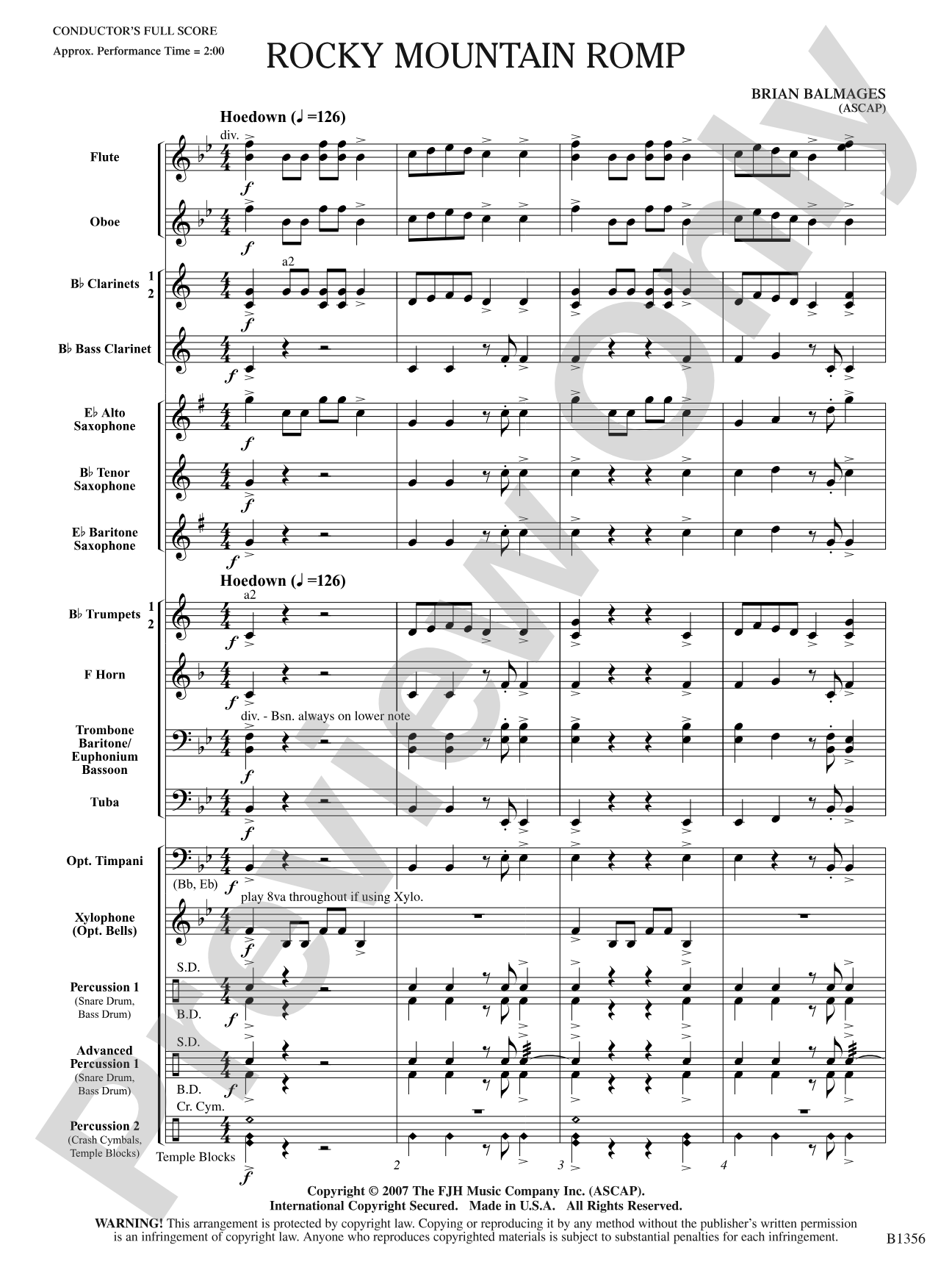
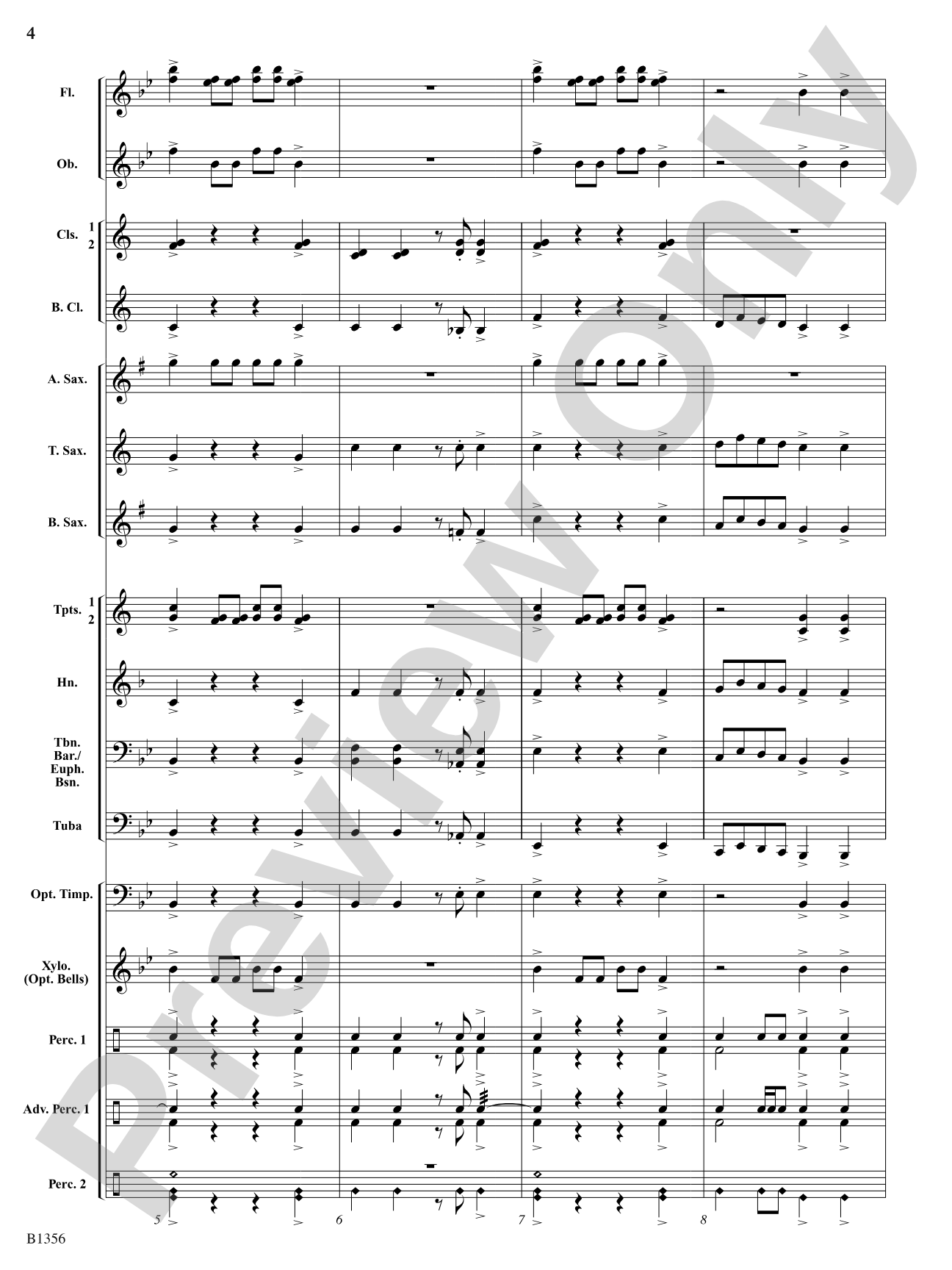
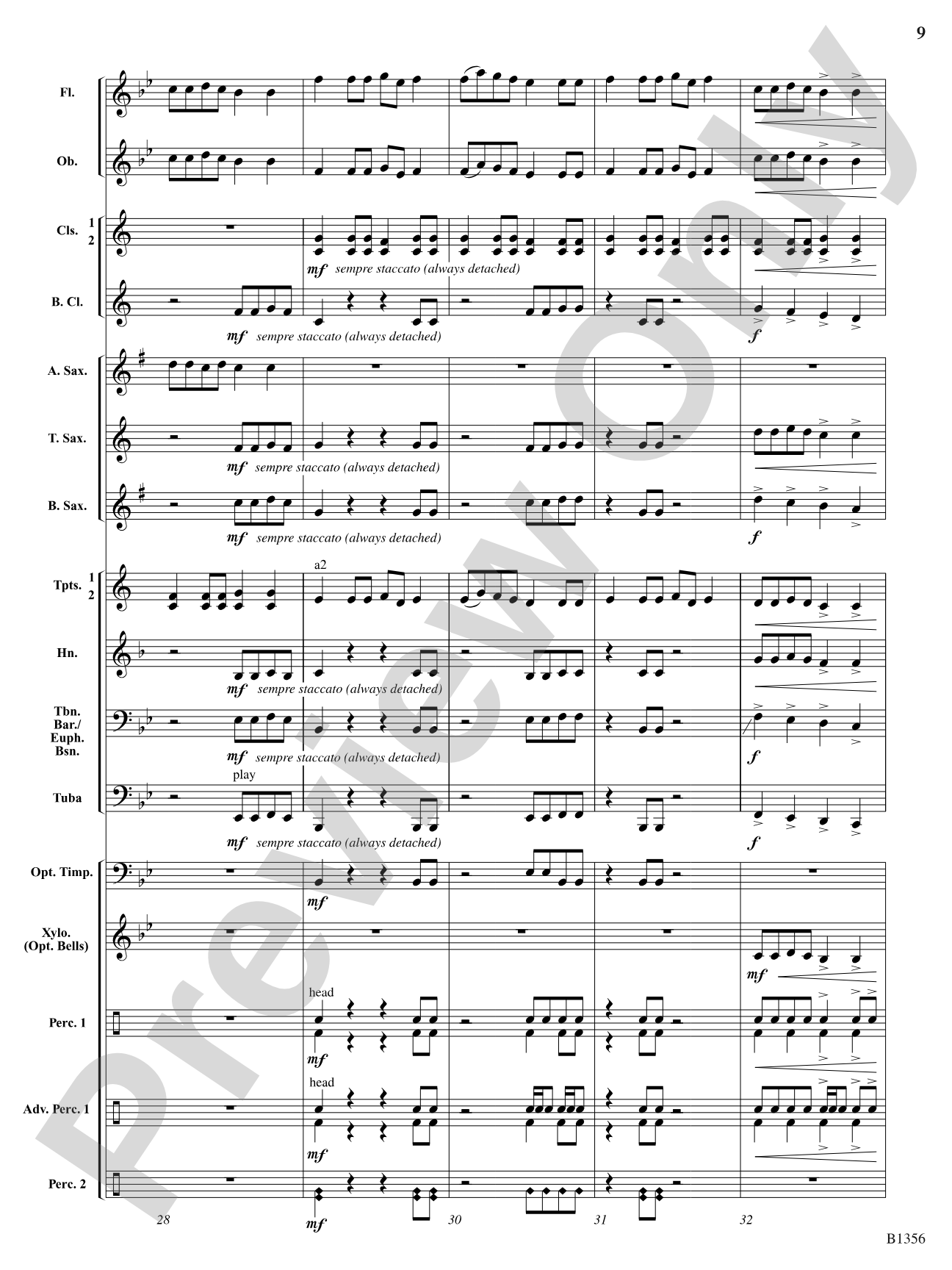
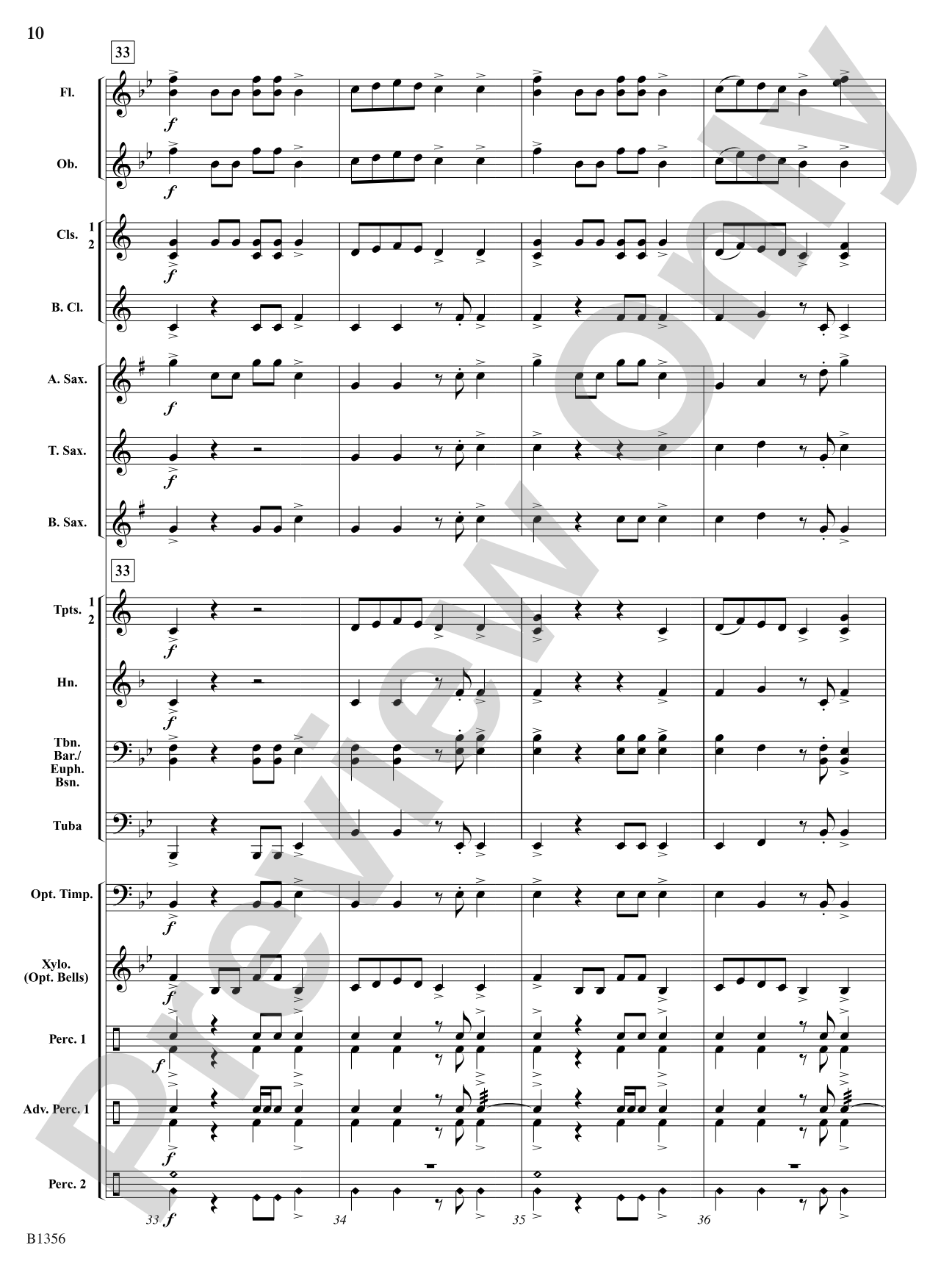
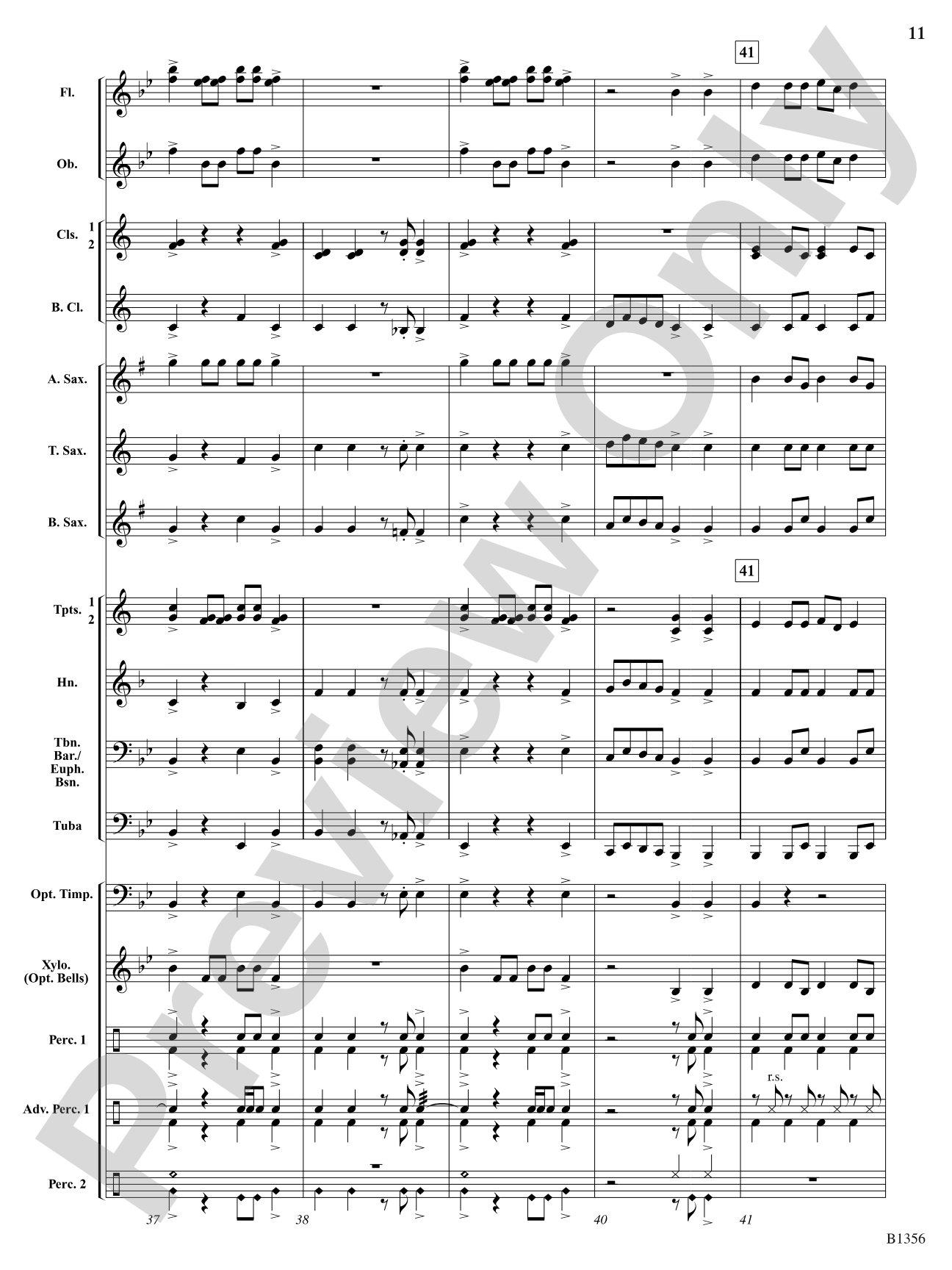
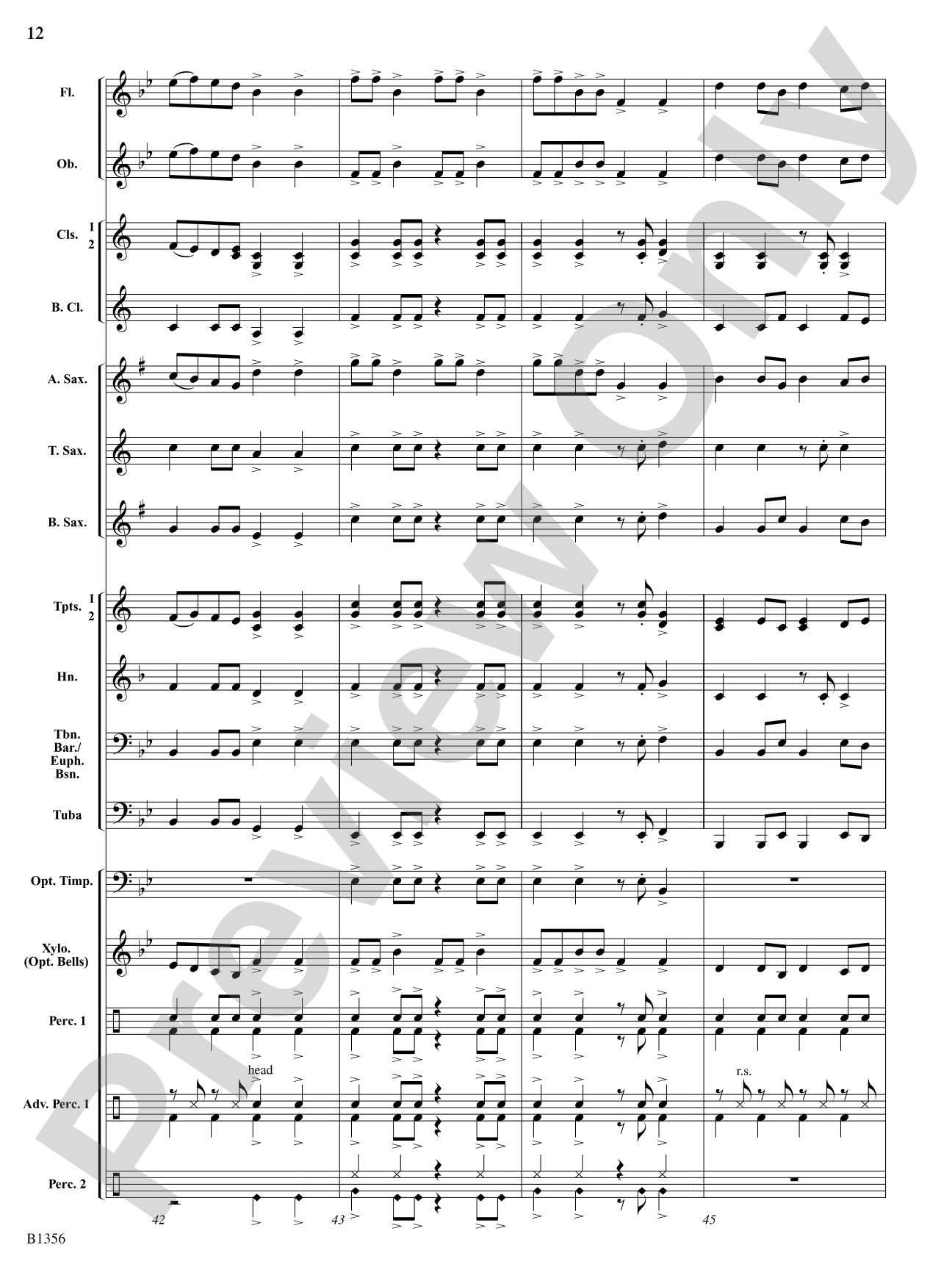
This symphonic hoedown is reminiscent of Aaron Copland and salutes the rich traditions of the Rocky Mountains. Spirited melodies intertwine with engaging, easily achievable rhythms as the work evokes images of the West. Ideal for contest or festival, this piece will also work well for the lighter portion of your program. An optional advanced snare drum part is included for your developing percussionists.


Rocky Mountain Romp: Concert Band Conductor Score & Parts isn't in MakeMusic Cloud just yet...but it could be. Let us know you'd like to see it, and you'll help shape what comes next. In the meantime, start a free trial and dive into thousands of interactive titles your students can play along with today.
Request This Title
Tell us you want it.
Start Your Free Trial
Explore everything that's ready to play right now.
Sample Audio
1
Audio File
--:--
0:00
0:00
Sample Video
No sample videos found.
Additional Details
Series:
FJH Beginning Band
Publisher:
The FJH Music Company, Inc.
SKU:
98-DB1356
More about this title
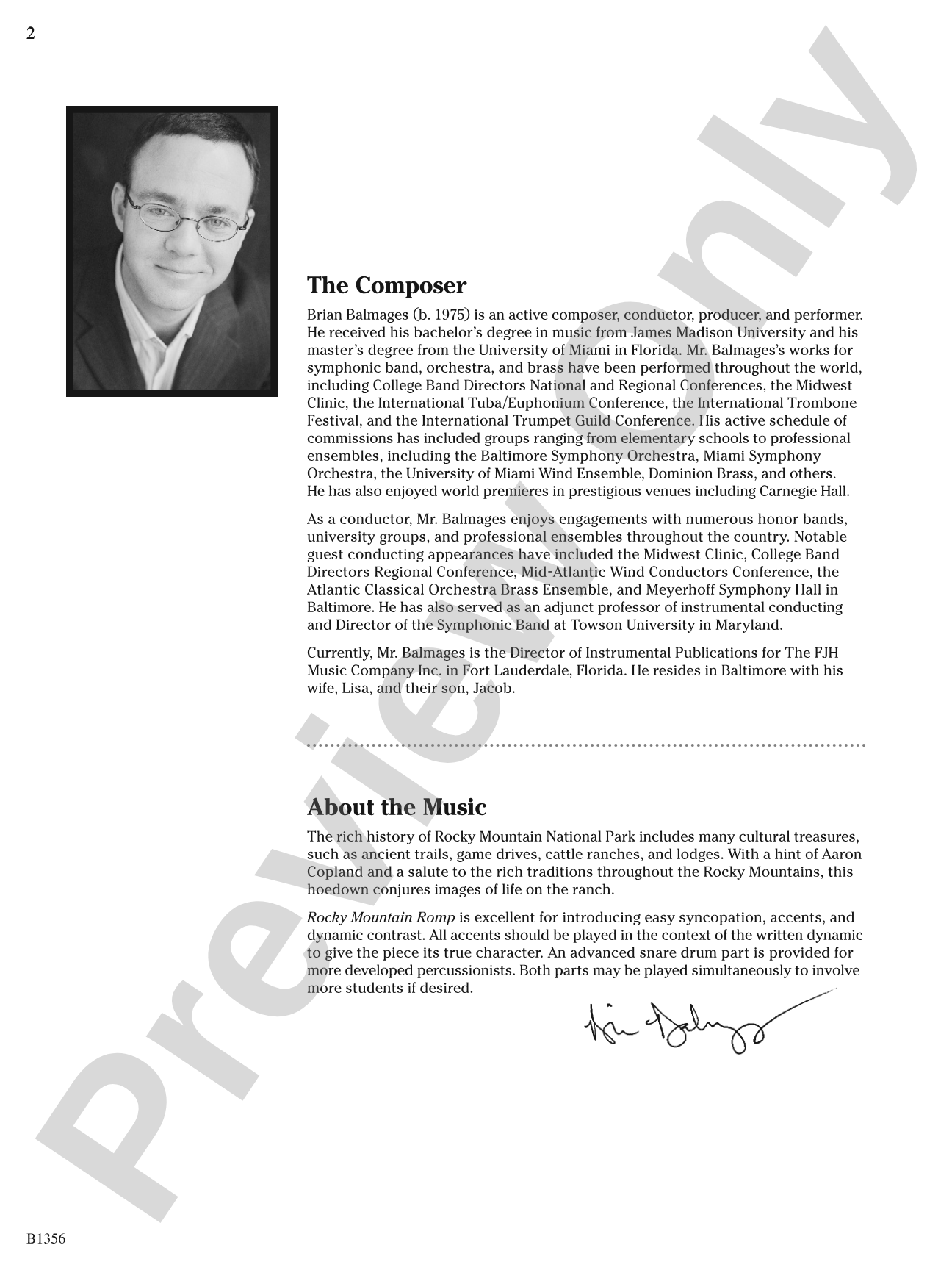
About the Composer: Brian Balmages

Brian Balmages is a prolific composer and conductor whose works span orchestral, band, and chamber music idioms. His compositions have been performed worldwide by ensembles ranging from professional symphony orchestras to elementary school bands in landmark venues including Carnegie Hall, the Kennedy Center, and the Sydney Opera House.
Balmages is an elected member of the American Bandmasters Association and received the A. Austin Harding Award from the American School Band Directors Association. He won the 2020 NBA William D. Revelli Composition Contest, was commissioned by the University of Miami to compose music for a presidential inauguration, and has enjoyed regular guest conducting engagements at major conferences and university ensembles throughout the world. He currently serves as Director of MakeMusic Publications and Digital Education for Alfred and MakeMusic.
Why we love this
Balmages captures the energy of the American West without sacrificing accessibility for Grade 1 students. The piece channels Copland's spirit while keeping rhythmic demands achievable for developing bands, making it genuinely fun to rehearse rather than frustrating. The optional advanced snare part offers a meaningful challenge for your percussion section without forcing everyone into technical complexity.
What to expect
Rocky Mountain Romp gallops with infectious Western charm. Spirited melodies dance over accessible rhythmic foundations, creating a work that sounds larger than its grade level suggests while remaining genuinely playable by students still developing their technical foundation.
Who it's for
Concert bands in Grades 1 and 2 seeking vibrant festival or contest repertoire that feels substantial without technical overreach. This piece works equally well for bands building confidence and musicianship as it does for programs looking to showcase stylistic range on a concert.
How to get the most out of it
- Bring out the melodic material in the upper woodwinds during the main theme; this is where your audience hears the character of the piece, so shape phrases generously even at a moderately quick tempo.
- Balance the lower brass and woodwinds carefully in the rhythmic accompaniment figures to keep them supportive rather than blaring; they anchor the energy without overpowering the melody.
- If you're using the optional advanced snare part, give that percussionist space in rehearsal to lock the rhythmic patterns; their articulation will either propel the piece forward or muddy the texture depending on precision.
- Emphasize the lilting, lifted quality in the rhythms rather than letting them feel plodding; think "hoedown" lightness rather than heavy marching energy.
How to use it
Program this as the centerpiece of a lighter concert section or as a strategic choice for festival competition where you want judges to hear youthful energy and musicality without dense technical writing. It pairs naturally with more serious or formal works, giving your band a chance to stretch stylistically and have fun in front of an audience.
Skills your students will build
- Reading melodies across multiple voices in a tutti texture
- Executing rhythmic patterns that maintain forward momentum (quarter notes, eighth notes, and rests in mixed subdivisions)
- Balancing ensemble sound between melodic and accompaniment roles
- Responding to conductor direction on tempo and dynamic shaping in a stylistically coherent way
- Counting and executing 8-measure and 16-measure sections with phrase awareness