Rocks in My Bed: Piano Digital Sheet Music

Rocks in My Bed: Piano Digital Sheet Music

Duke Ellington

Item: 00-PS-0008181

Digital Download
$2.95
Description

Rocks in My Bed: Piano Digital Sheet Music isn't in MakeMusic Cloud just yet...but it could be. Let us know you'd like to see it, and you'll help shape what comes next. In the meantime, start a free trial and dive into thousands of interactive titles your students can play along with today.

Sample Audio
No sample audio found.
Sample Video
Additional Details
SKU: 00-PS-0008181

More about this title

About the Artist: Duke Ellington

Duke Ellington (1899-1974) stands as one of the most consequential composers in American music history. His output spanned over fifty years and encompassed nearly a thousand compositions, from short piano pieces to extended suites and ballets. Ellington's genius lay in his ability to write for the specific voices in his orchestra while also creating music that transcends the ensemble; his piano works capture the harmonic sophistication, rhythmic nuance, and emotional depth that defined his larger compositions.

As a pianist, Ellington developed a distinctive style that influenced generations of jazz players. His compositions demand both technical facility and interpretive sensitivity, rewarding musicians who approach them with serious study. For music educators, his catalog offers an entry point into understanding jazz composition, orchestration, and the evolution of American concert music.

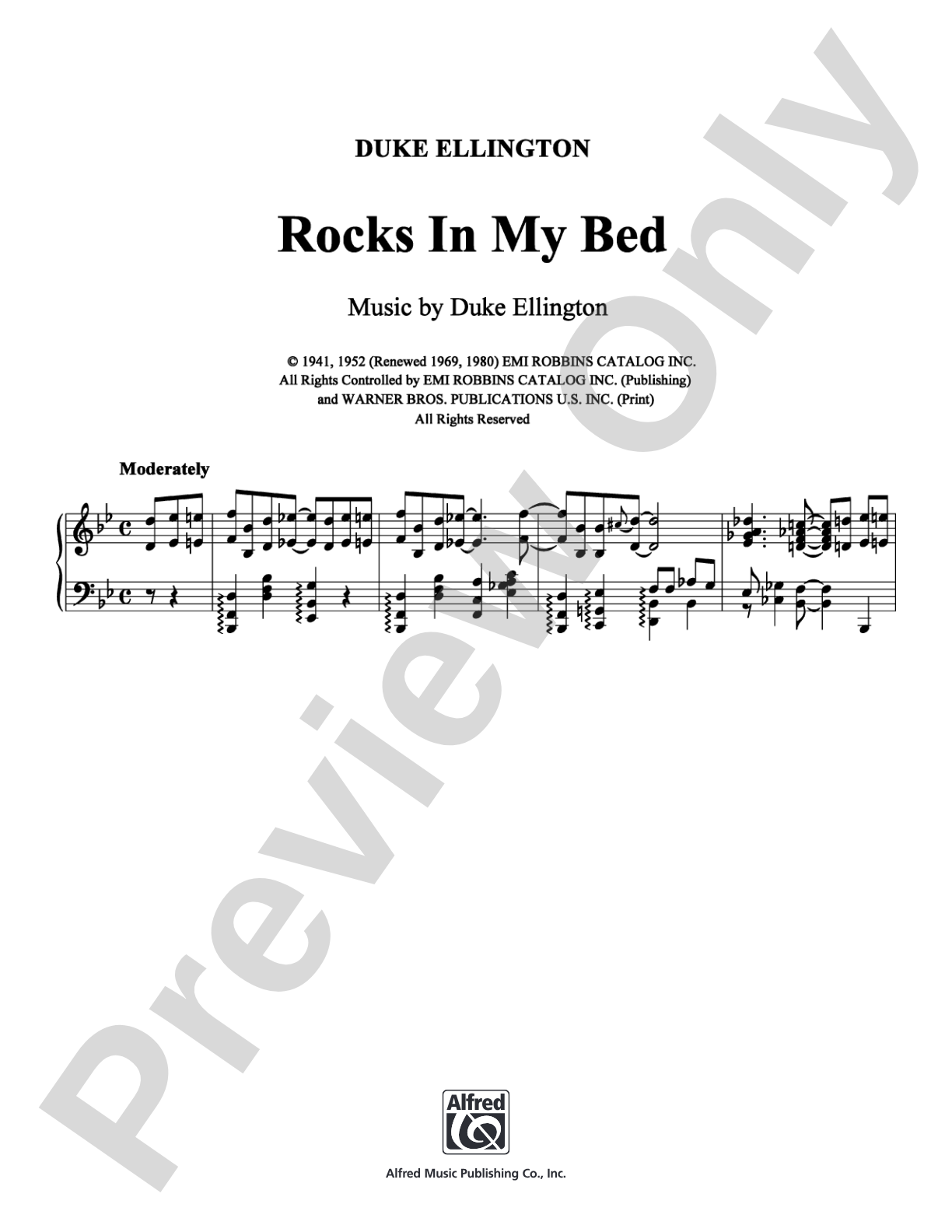
Why we love this

Ellington's piano works bridge jazz tradition and concert hall legitimacy in ways that few composers achieve. This standard sits comfortably within a recital program of American repertoire, offering audiences something genuinely sophisticated without the academic distance of much contemporary classical music. Pianists gain both a historically important standard and a window into how a master orchestrator voices ideas at the keyboard.

What to expect

The piece carries an unhurried ease, the musical equivalent of settling into a comfortable space. Beneath that relaxation runs a current of sophisticated harmony; Ellington's voice leading and chord substitutions keep the ear engaged even as the overall mood remains intimate and introspective. There is both humor and genuine feeling in the title and musical character.

Who it's for

This digital sheet music serves pianists at the intermediate to advanced level who want to expand beyond classical repertoire into jazz standards. Jazz students building their solo repertoire, as well as classical pianists seeking to develop facility in swing styles and blues harmony, will find substantial musical content here. Recital pianists and practice room explorers alike benefit from Ellington's accessible yet demanding voice.

How to get the most out of it

  • Treat the left hand as a conversation partner, not accompaniment. Ellington's bass lines contain harmonic and rhythmic ideas that deserve clarity and independence.
  • Lean into the blues language. Listen to recordings by Ellington himself and other jazz pianists to absorb the inflection, timing, and note choices that bring authenticity to the harmonic language.
  • Balance swing rhythms with precision. The music breathes in a relaxed temporal feel, but structural clarity about where beats and subdivisions sit remains essential.
  • Use the full range of dynamics. Ellington rarely writes in monotone; dynamic shading across phrases creates the emotional arc the piece requires.

How to use it

Program this alongside other American standards to build a set focused on jazz composition and piano artistry. It works particularly well in recitals that mix classical and jazz traditions, offering audiences a bridge between concert music they may know well and styles they want to understand better. Consider pairing it with other Ellington compositions or with standards by composers working in similar harmonic language.

Skills your students will build

  • Reading and interpreting swing rhythms and jazz articulations
  • Analyzing jazz harmony and chord substitutions
  • Developing independence between hands in a contrapuntal jazz texture
  • Stylistic awareness of blues language and blues inflection
  • Improvisation foundations through understanding of the harmonic framework

You May Also Like