
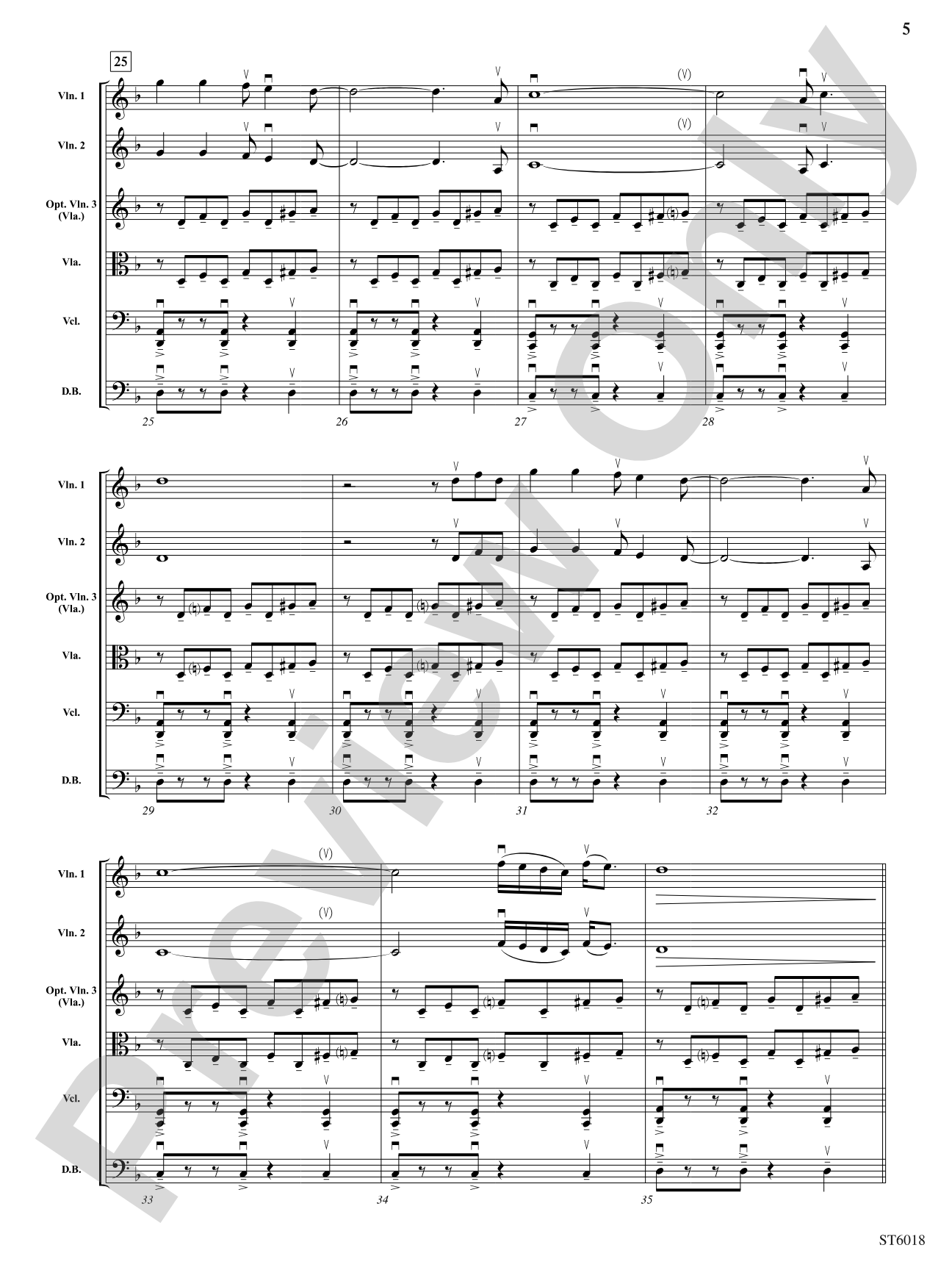
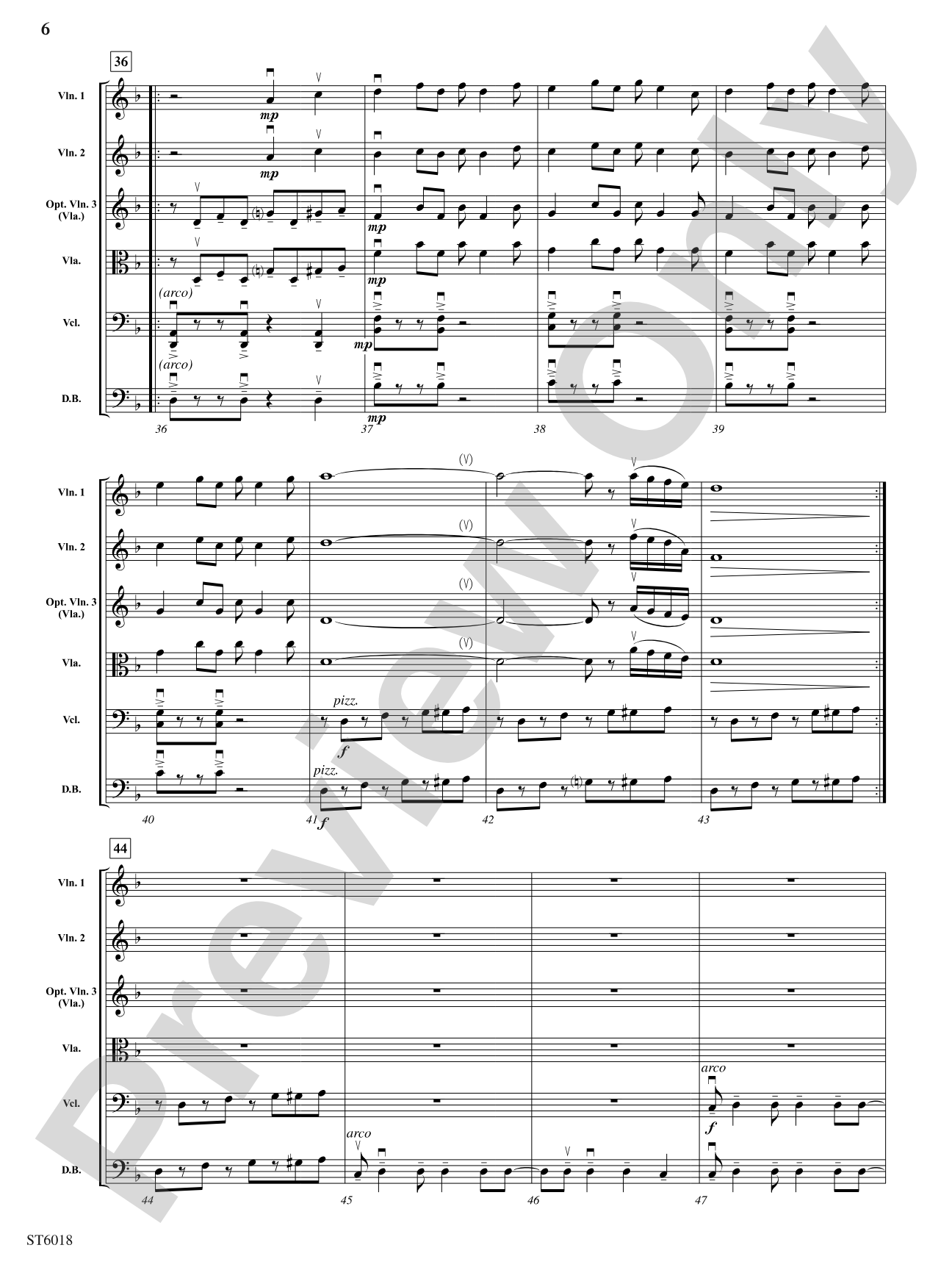
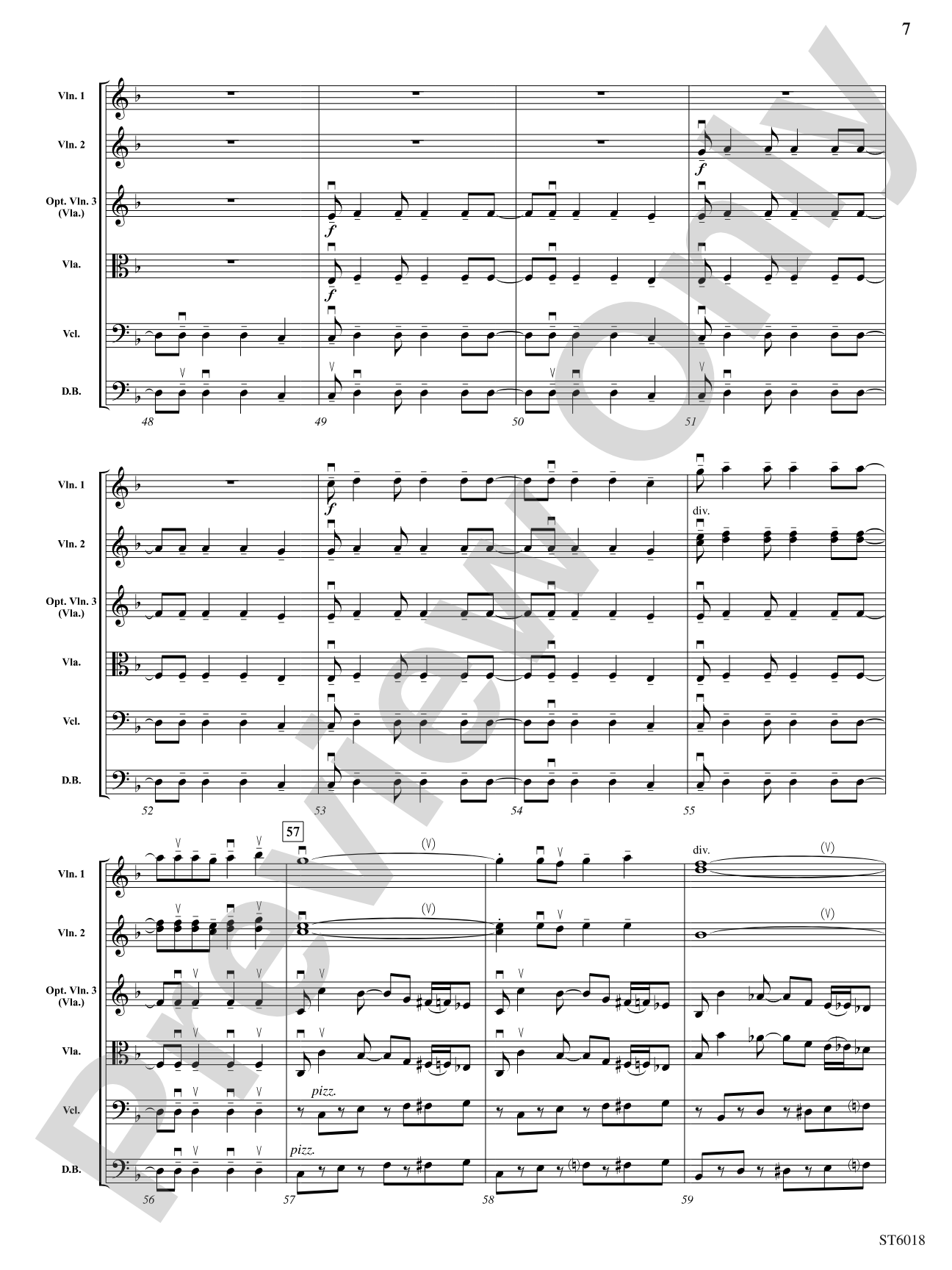
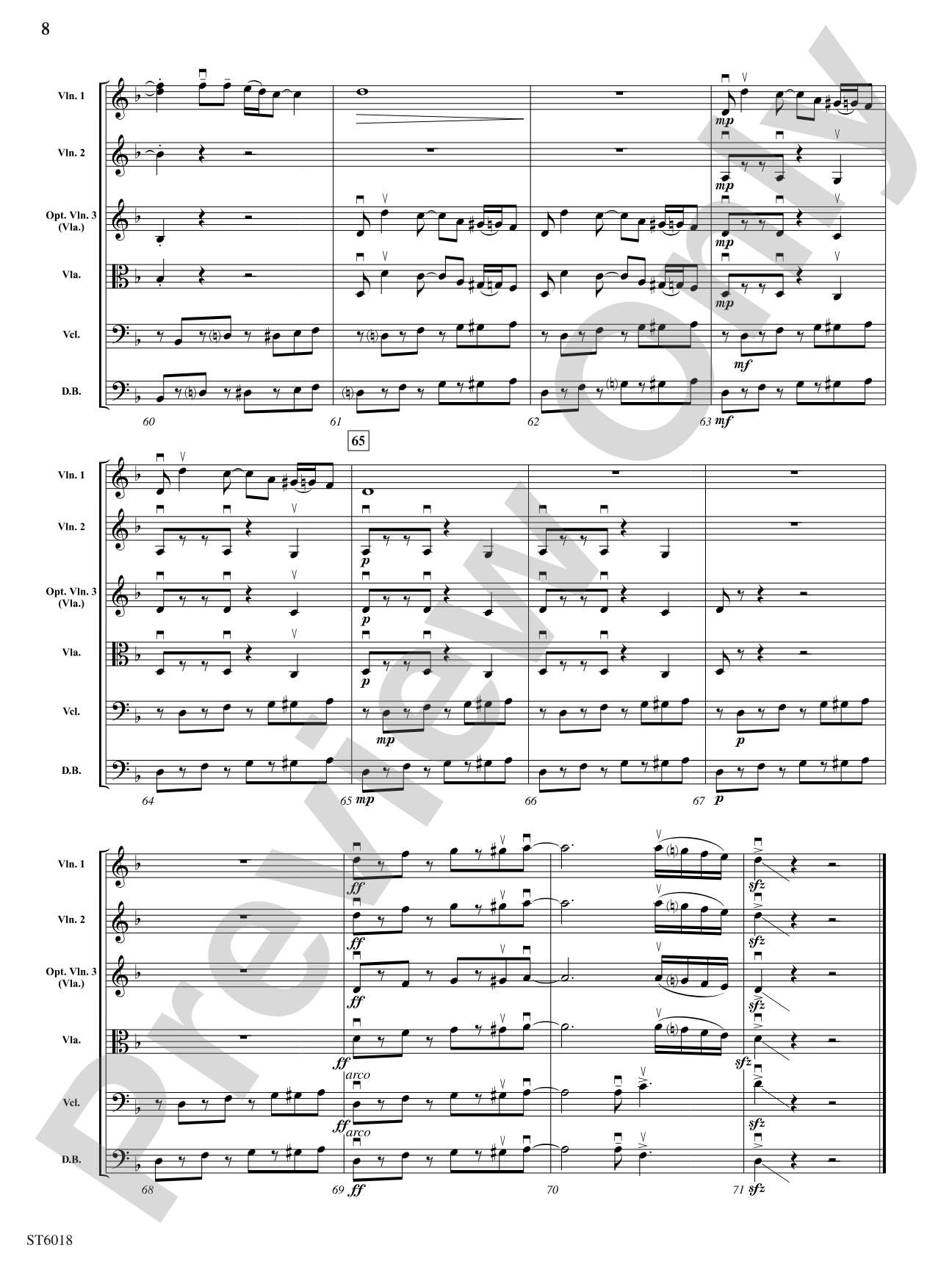

Rockin' Jammin' Swingin': String Orchestra Conductor Score & Parts
By Soon Hee Newbold
Grade: 3
Item: 98-DST6018
$45.00
Pickup currently not available
Buy Extra Parts (Digital PDF Download)
| Product | Price | Quantity |
|---|---|---|
| Rockin' Jammin' Swingin': Score | $5.00 | |
| Rockin' Jammin' Swingin': Violin 1 | $7.00 | |
| Rockin' Jammin' Swingin': Violin 2 | $7.00 | |
| Rockin' Jammin' Swingin': Optional Violin 3 (Viola) | $7.00 | |
| Rockin' Jammin' Swingin': Viola | $7.00 | |
| Rockin' Jammin' Swingin': Violoncello | $7.00 | |
| Rockin' Jammin' Swingin': Double Bass | $7.00 |
Parts Added to Cart!
Description
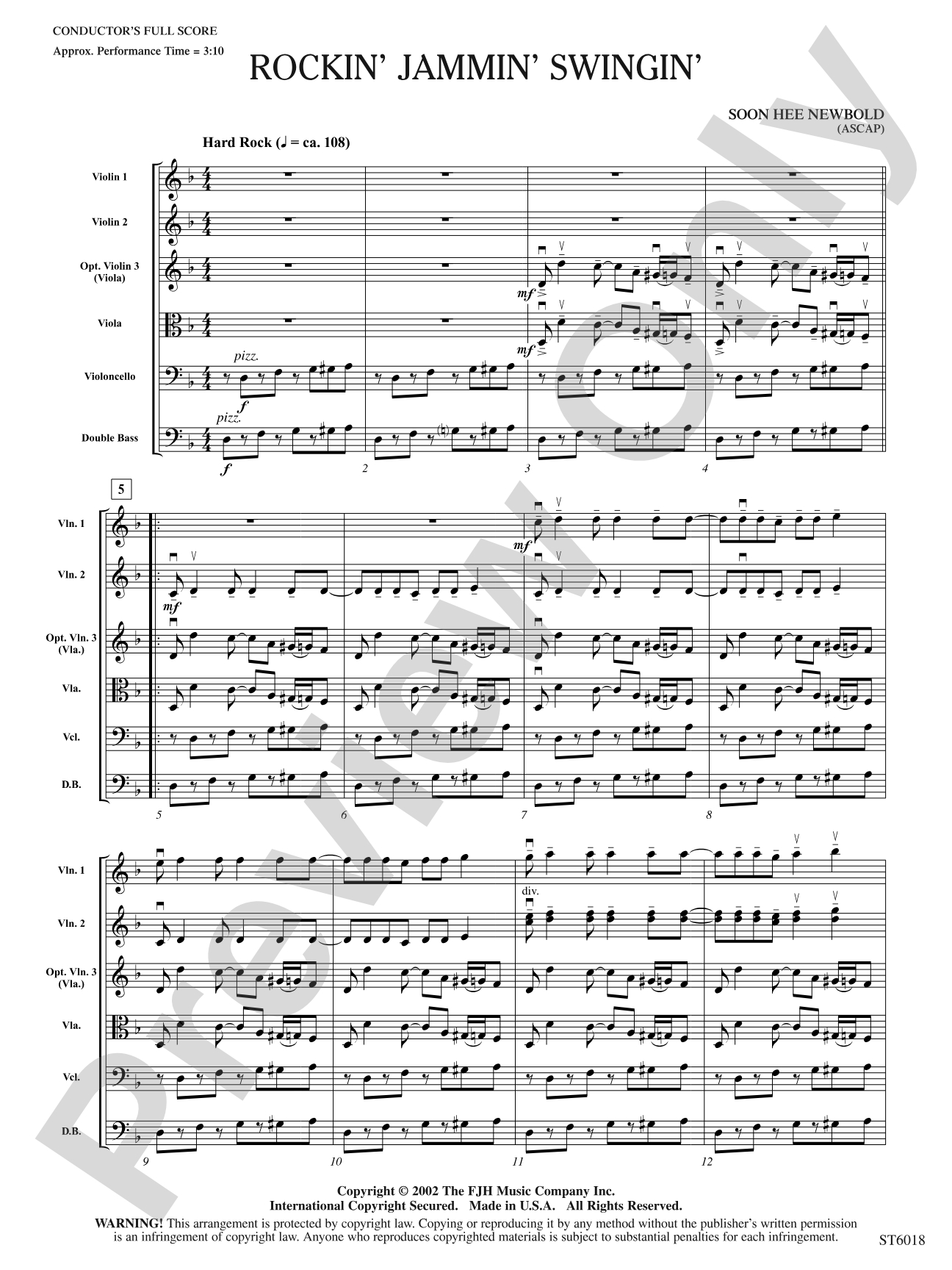
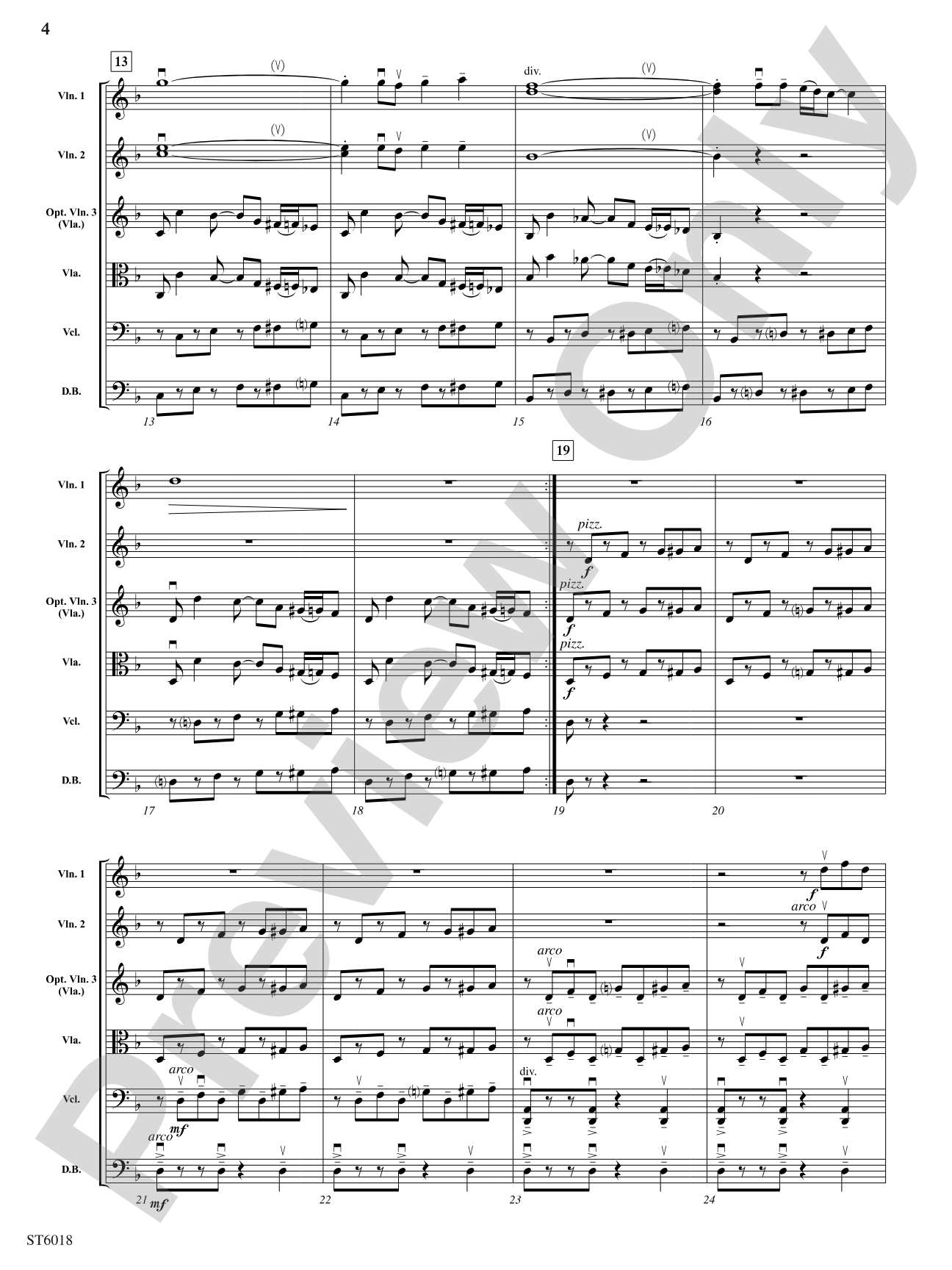
L.A. based composer and violinist Soon Hee Newbold offers this exciting new piece based on a jazz-rock beat. An excellent way to teach a more commercial style of playing, Rockin' Jammin' Swingin' is the perfect change of pace for your next concert.


Rockin' Jammin' Swingin': String Orchestra Conductor Score & Parts isn't in MakeMusic Cloud just yet...but it could be. Let us know you'd like to see it, and you'll help shape what comes next. In the meantime, start a free trial and dive into thousands of interactive titles your students can play along with today.
Request This Title
Tell us you want it.
Start Your Free Trial
Explore everything that's ready to play right now.
Sample Audio
1
Audio File
--:--
0:00
0:00
Sample Video
No sample videos found.
Additional Details
Series:
FJH String Orchestra
Publisher:
The FJH Music Company, Inc.
SKU:
98-DST6018
More about this title
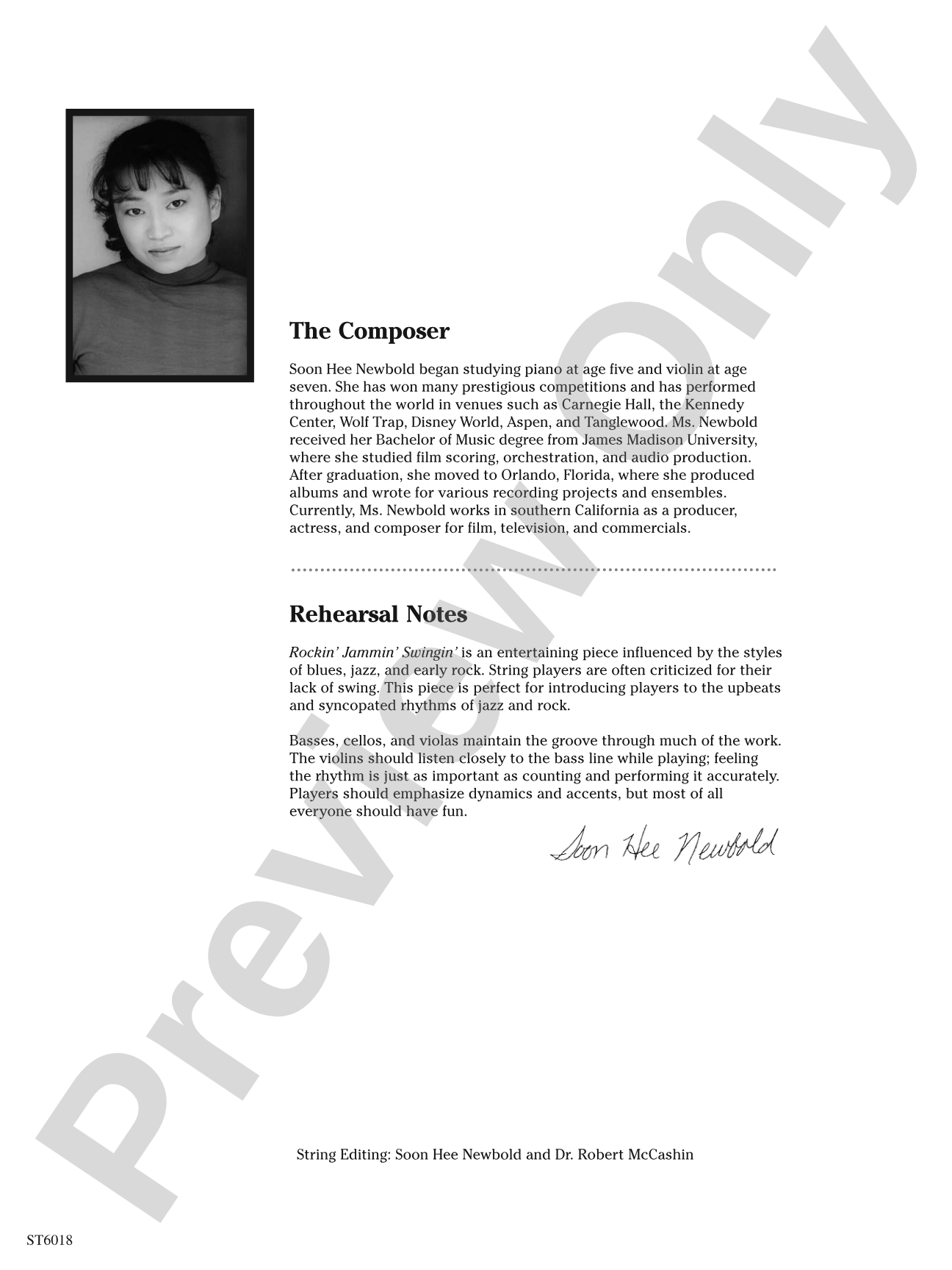
About the Composer: Soon Hee Newbold

Soon Hee Newbold began her musical training at five on piano, adding violin at seven, and went on to perform as a concert artist with professional ensembles across the globe. Her compositional voice draws from diverse cultural and ethnic traditions shaped by extensive travel and lived experience, resulting in works that bridge classical training with contemporary idioms.
Newbold's music appears regularly on stages ranging from Carnegie Hall and the Kennedy Center to regional festivals and school concerts worldwide. She maintains an active career as a guest clinician and keynote speaker, conducting and collaborating with orchestras and bands throughout North America, Europe, Asia, and Australia. Beyond concert music, her work extends to film and recording projects in Los Angeles.
Why we love this
This piece gives string orchestras at Grade 3 a genuine entrée into contemporary commercial idioms without sacrificing musicianship or ensemble discipline. The jazz-rock foundation energizes young players while the conductor score provides clear support for teaching stylistic nuance that they won't find in traditional classical repertoire.
What to expect
The piece crackles with contemporary energy, grounded in a driving jazz-rock beat that keeps young players engaged and excited. It's the sound of string instruments stepping out of the concert hall and into modern musical territory, immediate and infectious.
Who it's for
String orchestras in the upper elementary through early middle school range, especially those ready to explore styles beyond the classical canon. Directors seeking engaging, age-appropriate repertoire that broadens students' understanding of how strings function in contemporary musical contexts will find this rewarding.
How to get the most out of it
- Emphasize the jazz-rock feel by working the rhythm section (cellos and basses) first; lock in the groove before layering in the melodic voices so the pulse becomes the foundation everyone plays off.
- Balance brightness in the upper strings against the weight of the rhythm section so the piece swings rather than sits heavily on the beat.
- Coach players on stylistic articulation specific to rock and jazz (less separation than classical, more connected through the phrase) to capture the commercial sound the composer intends.
- Record a rehearsal to let students hear how the texture builds across parts; many young players benefit from hearing themselves as part of a larger groove.
How to use it
Program this as an exciting change of pace in a concert mixed with traditional selections; audiences respond to the contrast, and students get the thrill of playing something current and stylistically different. It works especially well in spring concerts or festival settings where novelty programming is welcome and expected.
Skills your students will build
- Jazz-rock rhythmic feel and groove awareness
- Stylistic articulation in a commercial idiom
- Listening and responding to rhythm section leadership
- Playing with a steady, forward-moving pulse in a non-classical context
- Blend and balance in an ensemble texture centered on groove rather than melodic prominence