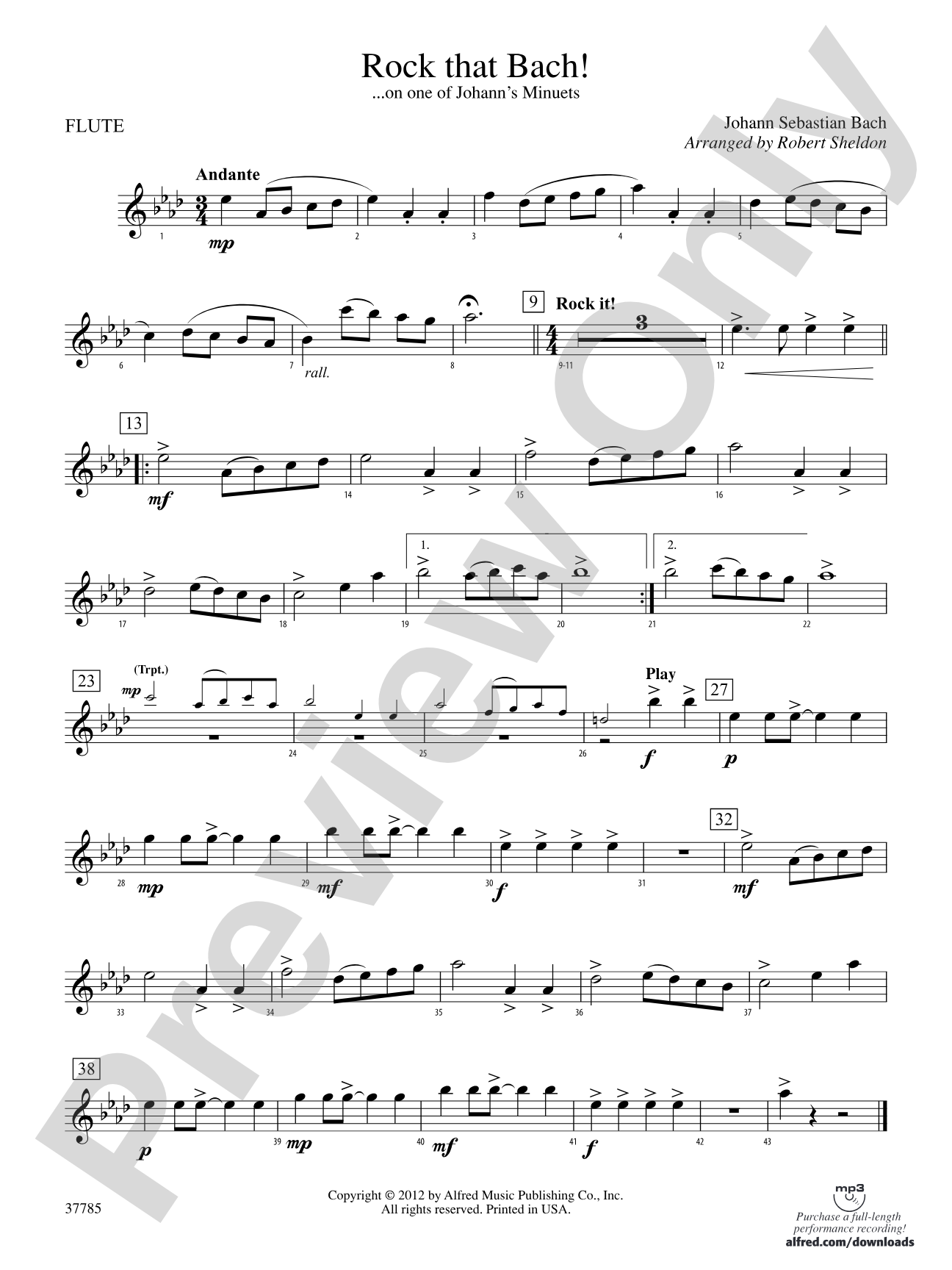
Rock That Bach!: Flute Sheet Music Preview

Rock That Bach!: Flute

... on one of Johann's minuets

Johann Sebastian Bach / arr. Robert Sheldon

Grade: 1 (Very Easy)

Item: 00-PC-0015316_F1

Digital Download
$3.00
Description
Bach's "Minuet in G Major" provides the inspiration for this lively rock-style piece for young bands. A statement of the original theme gives way to a rousing rock version of this famous melody. Correlated to Book 1, Level 5 of Sound Innovations for Concert Band, this selection is playable by young players in their first year of training and provides a great toe-tapping tune for your appreciative audience. (1:30)

Don't just read it, hear it, play along with it, and watch your students grow with it. In MakeMusic Cloud, Rock That Bach!: Flute comes alive with professional accompaniment, adjustable tempo, and built-in practice tools that turn solo practice into real progress.

Sample Audio
0:00
0:00
Sample Video
Additional Details
Series: Sound Innovations for Concert Band
Publisher: Alfred Music
Page Count: 144
SKU: 00-PC-0015316_F1

More about this title

About the Composer: Johann Sebastian Bach

Johann Sebastian Bach (1685-1750) stands as one of the most influential composers in Western music history. His mastery of counterpoint, harmonic innovation, and structural clarity established foundations that shaped every musical era that followed. His works remain central to music education because they teach musicians how to think architecturally about melody, harmony, and form.

Why we love this

Robert Sheldon's arrangement succeeds because it honors Bach's elegant melody while giving young musicians permission to have fun with it. The piece moves beyond mere transcription to create genuine stylistic contrast, showing students that great themes transcend genre and era. For a Grade 1 band, this delivers musical legitimacy alongside the energy and engagement that keeps teenagers invested in rehearsal.

What to expect

The piece opens with Bach's Minuet in its purest form, allowing students to experience the composer's melodic grace and proportional balance. Then the energy shifts: drums kick in, rhythms snap into rock patterns, and the same beloved melody suddenly feels immediate and alive. The effect is joyful recognition paired with rhythmic vitality.

Who it's for

This arrangement serves Grade 1 bands, particularly those using Sound Innovations as their primary curriculum. It works equally well for first-year students building fundamental skills and for more experienced young musicians who benefit from repertoire that connects classical substance with contemporary style.

How to get the most out of it

  • Establish a steady rock groove in the rhythm section from the start. Lock the kick drum and bass line together so the front line can confidently sit into the pocket.
  • Shape the opening statement of the original Bach theme with careful dynamic control and clear phrasing. Let the audience hear Bach's elegant proportions before the rock transformation begins.
  • Keep the rock version driving without rushing. Young players often accelerate slightly when playing rhythmically active passages; a conductor who keeps a steady, grounded beat prevents this.
  • Balance the melody across sections as it passes between upper woodwinds, brass, and reeds. The arrangement's strength lies in how it showcases different instrumental voices within the rock context.

How to use it

This works beautifully as an opening piece on a concert program, setting an approachable, enthusiastic tone while establishing musical credibility. It pairs naturally with other Baroque masterwork arrangements or can stand alone as a refreshing bridge between classical traditions and contemporary popular styles. The 1:30 duration makes it ideal for concert pacing and youth engagement.

Skills your students will build

  • Reading syncopated rhythms and rock-style articulation patterns
  • Maintaining steady tempo while playing rhythmically active accompaniment figures
  • Balancing independent melodic lines across different instrumental sections
  • Responding to contrasting musical styles within a single piece (Baroque to rock transition)
  • Listening critically to harmonic progressions that echo the original while supporting a contemporary groove

You May Also Like