Rock, Roll  Remember: A Tribute To Dick Clark  American Bandstand (Medley) Sheet Music Preview

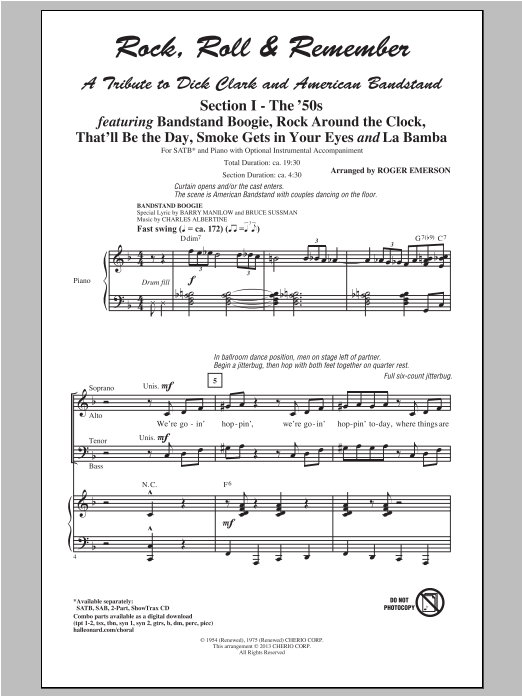
Rock, Roll Remember: A Tribute To Dick Clark American Bandstand (Medley): SATB Choral Octavo

As performed by Glee Cast / Arranged by Roger Emerson

Item: 35-DS00259880

Digital Download
$3.50
Description

Rock, Roll Remember: A Tribute To Dick Clark American Bandstand (Medley): SATB Choral Octavo isn't in MakeMusic Cloud just yet...but it could be. Let us know you'd like to see it, and you'll help shape what comes next. In the meantime, start a free trial and dive into thousands of interactive titles your students can play along with today.

Sample Audio
No sample audio found.
Sample Video
Additional Details
Publisher: Hal Leonard
Page Count: 7
SKU: 35-DS00259880

More about this title

About the Artist: Glee Cast

The Glee Cast emerged from the hit television series Glee, which ran from 2009 to 2015 and became a cultural phenomenon by bringing contemporary pop and rock music into high school choir rooms across America. The ensemble's diverse vocal talent and energetic interpretations of popular songs inspired a generation of young singers to engage with non-traditional choral repertoire and see themselves reflected in modern music performance. Their recordings demonstrated that pop and rock arrangements could achieve genuine artistry while maintaining accessibility for student ensembles.

Why we love this

Roger Emerson's arrangement captures the infectious energy of Dick Clark's American Bandstand through a medley that pulls recognizable hit snippets into a cohesive choral experience. The arrangement balances accessibility with genuine musical interest, allowing your singers to perform something that feels contemporary and fun while developing real ensemble skills. For choirs looking to program something that connects with student interest and audience appeal without sacrificing musicality, this hits the mark.

What to expect

Nostalgia meets high energy in this medley of American Bandstand hits; the arrangement channels the excitement of live music television while maintaining the harmonic sophistication expected in a quality choral octavo. Your singers will feel the drive and joy of classic rock and pop moments woven together into something that plays as fresh and fun rather than dated.

Who it's for

This arrangement serves choirs at the developing to intermediate level who want to program engaging contemporary music that connects with student singers and general audiences. It works particularly well for groups seeking concert repertoire that balances entertainment value with musical substance, or for directors building a setlist that includes modern popular music alongside traditional choral works.

How to get the most out of it

  • Nail the rhythmic precision in the rock sections by drilling the backbeat and off-beat articulations with your rhythm section before blending it with full ensemble lines.
  • The medley structure demands clean transitions between song segments; mark each key change and tempo shift clearly in rehearsal so singers understand the architecture rather than treating it as one long song.
  • Balance the energy across all four parts so the arrangement doesn't collapse into melody-heavy singing; spotlight your alto and tenor lines during verses to maintain textural interest.
  • Record a rehearsal mix emphasizing non-melody parts and have singers listen to it between rehearsals; familiarity with their own lines builds confidence in a medley this energetic.

How to use it

Position this as a concert closer or centerpiece when you want to shift the mood toward something celebratory and audience-friendly after more serious repertoire. It pairs naturally with other pop or rock arrangements as part of a thematic concert exploring popular music across decades, or works as a standalone showstopper for spring pops concerts and school assemblies.

Skills your students will build

  • Managing tempo and rhythmic precision in rock and pop idioms
  • Navigating key changes and modulations between medley segments
  • Balancing melody-driven and harmonic accompaniment roles within the same piece
  • Maintaining ensemble cohesion across multiple distinct musical moments
  • Singing with stylistic authenticity in contemporary pop contexts

You May Also Like