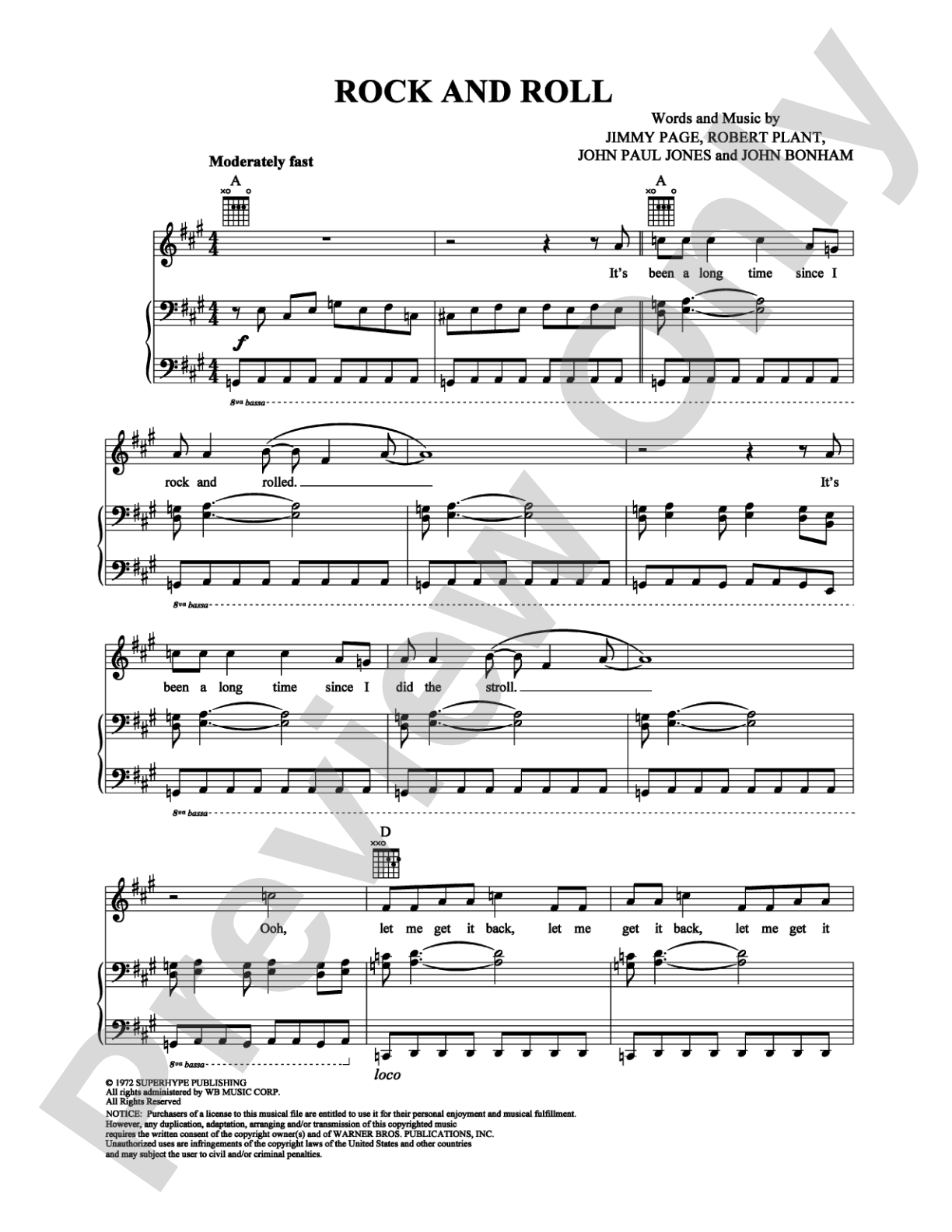
Rock and Roll: Piano/Vocal/Chords Digital Sheet Music

Rock and Roll: Piano/Vocal/Chords Digital Sheet Music

Led Zeppelin, Jimmy Page, Robert Plant, John Paul Jones, John Bonham

Item: 00-PS-0005505

Digital Download
$3.99
Description

Rock and Roll: Piano/Vocal/Chords Digital Sheet Music isn't in MakeMusic Cloud just yet...but it could be. Let us know you'd like to see it, and you'll help shape what comes next. In the meantime, start a free trial and dive into thousands of interactive titles your students can play along with today.

Sample Audio
No sample audio found.
Sample Video
Additional Details
SKU: 00-PS-0005505

More about this title

About the Artist: Led Zeppelin

Led Zeppelin emerged from the British rock scene in 1968 and redefined heavy music by fusing blues traditions with experimental studio techniques and mythic lyricism. The band's influence on rock, metal, and popular music education extends far beyond their era; their arrangements demonstrate sophisticated harmonic movement, dynamic range, and the integration of acoustic and electric textures that remain teaching tools for understanding modern composition.

Why we love this

This song captures the raw energy and blues-rooted swagger that makes Led Zeppelin essential listening in any music program exploring rock history and its connection to blues traditions. The piano/vocal/chords format gives singers and pianists a direct entry point into one of rock music's most iconic arrangements, letting them experience firsthand how traditional song structures adapted to studio innovation.

What to expect

Swaggering and propulsive, with the grit of blues undercurrent beneath stadium-sized confidence. The piano sits in that space between driving rhythm and melodic anchor, grounding a vocal performance that demands both technical control and emotional conviction.

Who it's for

Pianists and vocalists exploring rock repertoire in a classical or jazz-informed practice space will find this arrangement bridges genre conventions. Advanced high school and college musicians benefit from analyzing how a legendary rock recording translates to score format, and how vocal melody and harmonic progression function in popular music.

How to get the most out of it

  • Lock the piano groove into the pocket established by the vocal line; don't rush the rhythm even when the energy builds.
  • Balance the vocal line so lyrics remain clear while the piano provides supportive harmonic weight rather than competing for attention.
  • Use the chord voicings as written to honor the original arrangement, but explore subtle pedal adjustments to shape the tonal color between verses and the chorus.
  • Pay attention to dynamic shifts marked in the chart; the contrast between intimate verses and driving sections defines the song's emotional arc.

How to use it

Include this in a rock history unit or a cross-genre recital exploring how classical training applies to popular repertoire. It works equally well as a solo piece for a vocalist or pianist, or as a collaborative performance that demonstrates ensemble listening between singer and accompanist.

Skills your students will build

  • Reading and interpreting piano/vocal/chords notation
  • Blues-inflected phrasing and swing in a rock context
  • Dynamic contrast and emotional storytelling in vocal performance
  • Harmonic accompaniment that supports rather than competes with melody
  • Understanding rock arrangement conventions and their relationship to blues form

You May Also Like