
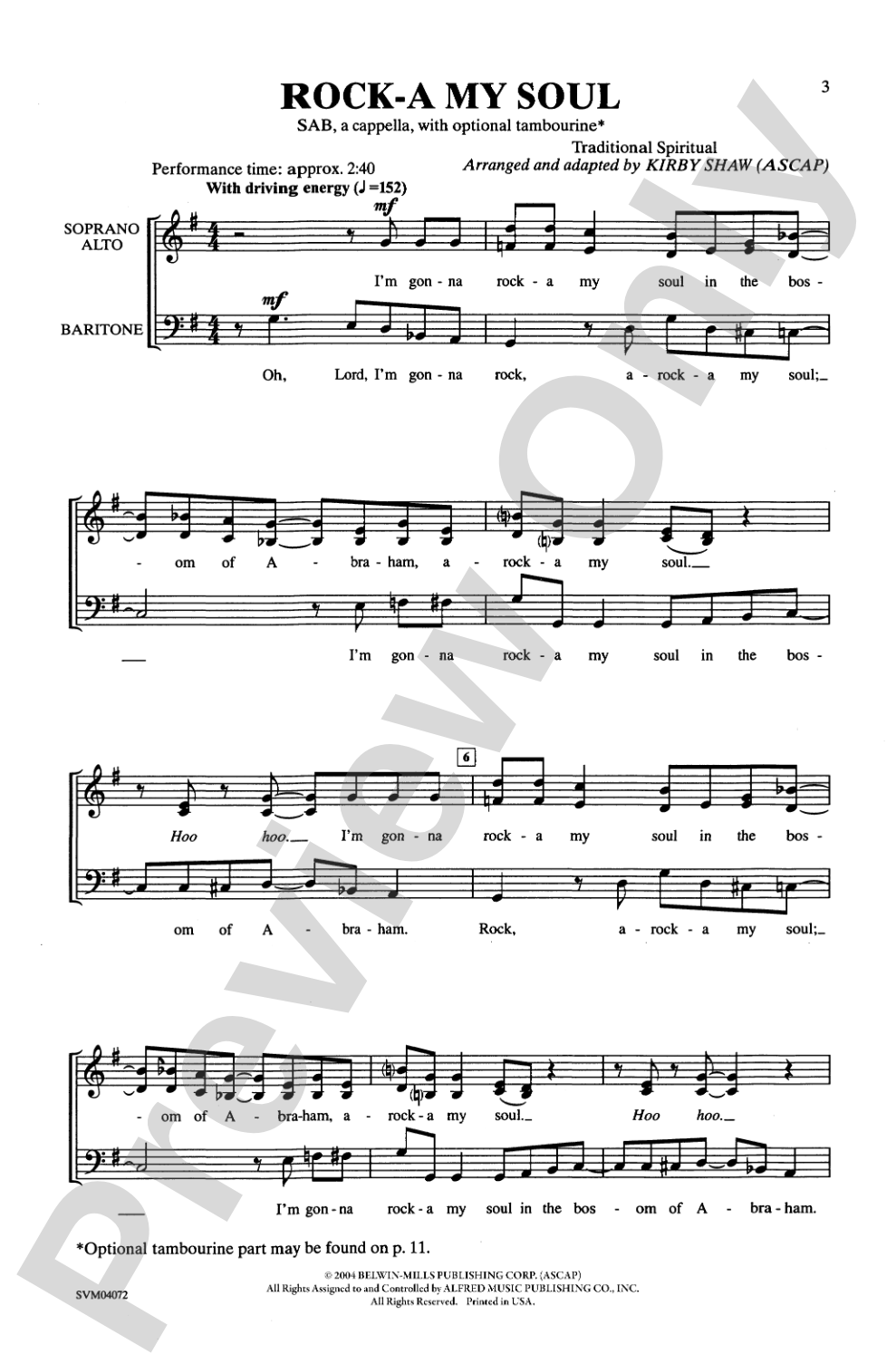
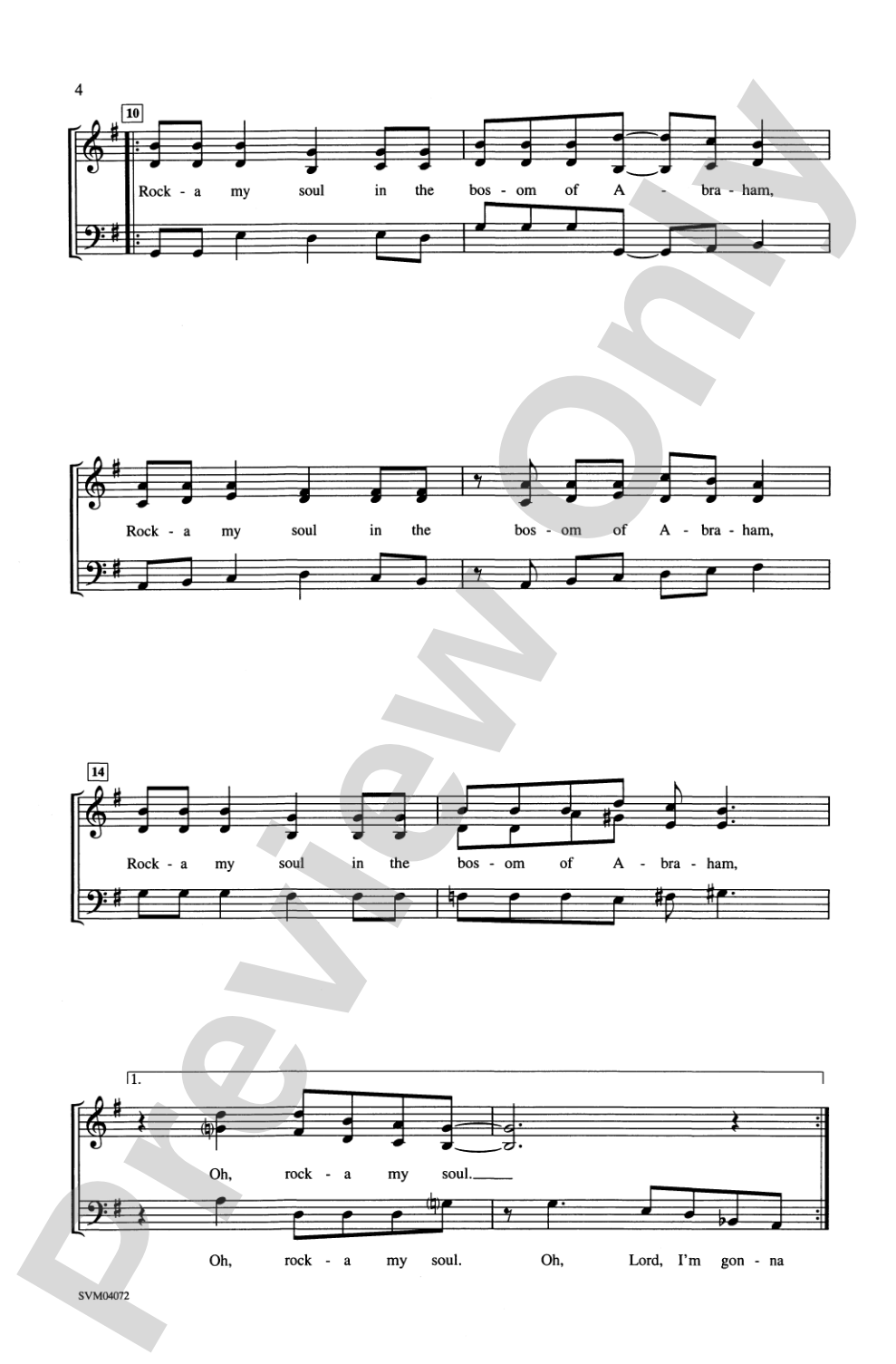

Rock-a My Soul: SAB, a cappella Choral Octavo
Traditional Spiritual / arr. and adapted by Kirby Shaw
Level: Moderate
Item: 00-PO-0005394
$2.25
Minimum order quantity: 20 copies
Pickup currently not available
Description
What would you expect from Kirby Shaw except an extremely creative and energetic setting of the traditional spiritual "Rock-a My Soul." It's fresh, it's fun, and it will bring down the house every time you perform it! A new winner from Kirby Shaw!


Rock-a My Soul: SAB, a cappella Choral Octavo isn't in MakeMusic Cloud just yet...but it could be. Let us know you'd like to see it, and you'll help shape what comes next. In the meantime, start a free trial and dive into thousands of interactive titles your students can play along with today.
Request This Title
Tell us you want it.
Start Your Free Trial
Explore everything that's ready to play right now.
Sample Audio
No sample audio found.
Sample Video
No sample videos found.
Additional Details
Series:
Alfred Archive Edition: Studio PR Catalog
Publisher:
Alfred Music
Page Count:
12
SKU:
00-PO-0005394
Instrumentation:
Opt. Tambourine
More about this title
About the Arranger: Kirby Shaw
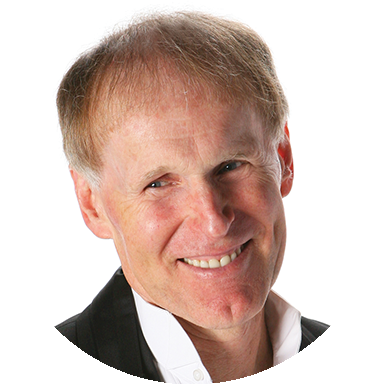
Kirby Shaw has shaped choral music education across North America, Europe, and beyond, presenting his work and conducting workshops in 45 states and countries spanning from Canada to Australia to Italy. He holds degrees in Music Education and Choral Composition from San Jose State University and earned a DMA in Choral Conducting from the University of Washington. His teaching combines rigorous musicianship with infectious humor and an encyclopedic knowledge of choral repertoire and vocal jazz.
Shaw's career reflects deep roots in both ensemble direction and composer-arranger work. He founded and directed the acclaimed Vocal Jazz Ensemble at College of the Siskiyous before leading similar programs at Colorado State University and the University of Missouri at Kansas City; he now directs the Jefferson State Choral Coalition at Southern Oregon University. With over 2,500 choral arrangements and compositions in print, his music has sold nearly 20 million copies worldwide and earned multiple ASCAP awards. He is also a performing member of Just 4 Kicks, a jazz-focused a cappella quartet, and has collaborated one-on-one with legends including Bobby McFerrin, Al Jarreau, and Jon Hendricks.
Why we love this
Shaw's signature blend of accessibility and musicality shines through here. This arrangement captures the energy and forward motion of the spiritual while remaining genuinely fun to sing, with the kind of rhythmic vitality and clever voicing that makes audiences sit up and listen without ever feeling overwrought.
What to expect
From the first moment, this setting radiates joy and spiritual conviction. The writing sparkles with rhythmic drive and clever voice-leading that makes SAB voicing feel fresh rather than predictable. There's an unmistakable buoyancy here, the kind of arrangement that lifts everyone in the room.
Who it's for
This is an ideal choice for developing choirs (grades 5-9) that are ready to tackle contemporary arrangements but still benefit from clear harmonic support and accessible ranges. It also works beautifully for adult community choirs or youth ensembles seeking uplifting repertoire that sings easily and lands reliably in performance.
How to get the most out of it
- Keep the rhythm section tight and deliberate. The optional tambourine part should anchor the pulse, not decorate it. This piece thrives on infectious, locked-in groove.
- Shape the melodic contour through phrasing rather than dynamic swells. Shaw's writing relies on articulation and text clarity to build energy, so let the phrase shape itself naturally.
- Balance the three voices so the top line sings through without overwhelming the inner harmony. In SAB writing at this level, the soprano often carries the tune while soprano and alto support; be intentional about blend.
- Invest in the text. The spiritual's message comes alive when singers connect emotionally to the lyrics, not just rhythmically to the groove.
How to use it
Program this as an opener or closer on a concert featuring spirituals or American roots music. It pairs naturally with other sacred traditions and holds its own on eclectic programs because of its genuine musical substance. The moderate difficulty and reliable crowd-pleasing quality also make it a smart choice for festivals or competitions where you want both vocal challenge and audience connection.
Skills your students will build
- Singing in three-part harmony without instrumental support
- Interpreting rhythmic precision and syncopation in spiritual style
- Maintaining harmonic integrity across divided voice parts
- Balancing text projection with musical line
- Responding to optional percussion integration in choral arranging