
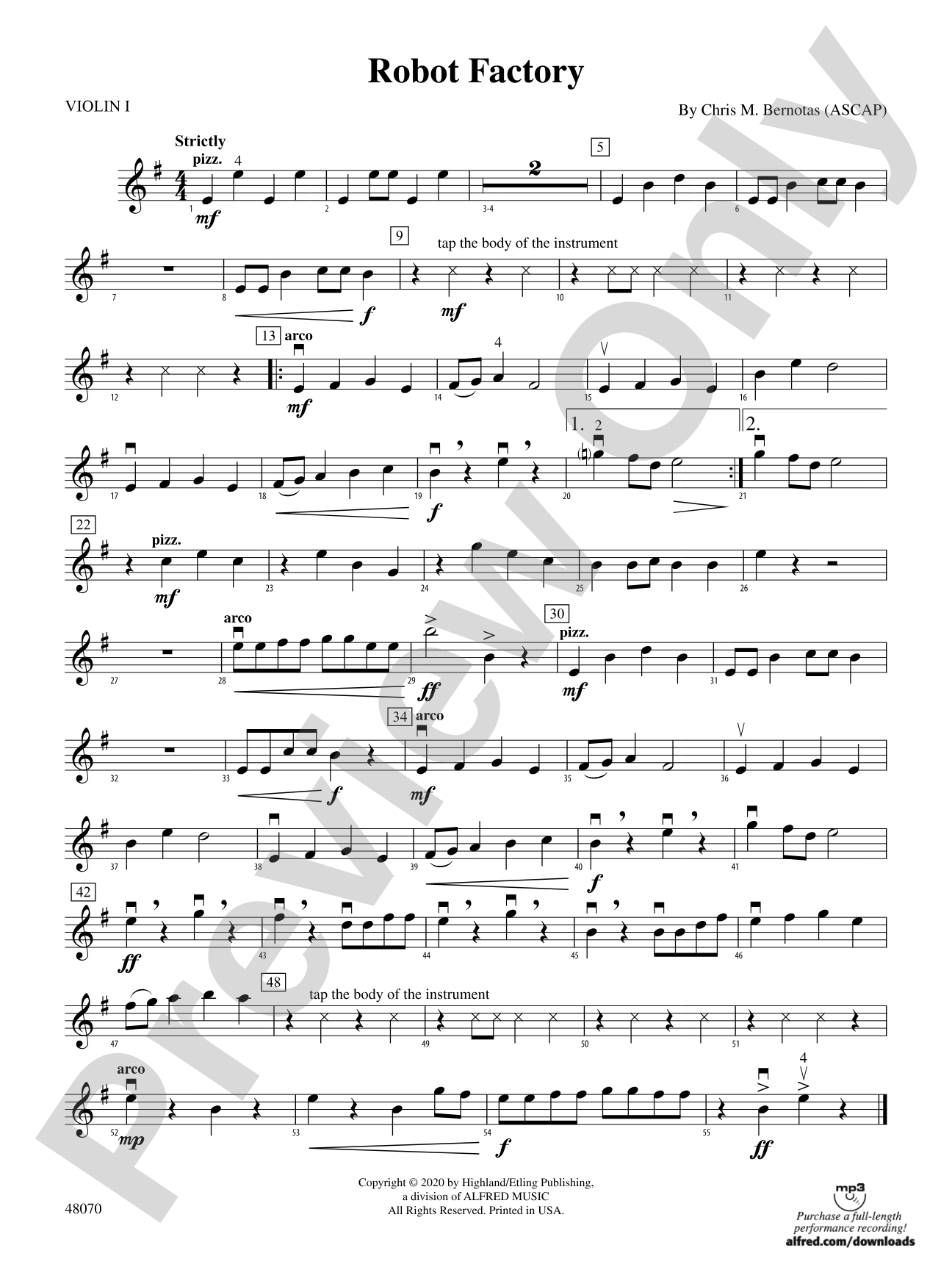

Robot Factory: 1st Violin
By Chris M. Bernotas
Grade: 1
Item: 00-PC-0018511_VN1
$3.00
Pickup currently not available
Description
Special effects, pizzicato, and a variety of dynamics will make Robot Factory by Chris M. Bernotas exciting for your beginning orchestra students. The key of E minor provides a dark sound, and all sections get to play the energetic melody! This piece will be a great feature or perfect closer to any contest or concert. Correlated to Sound Innovations from String Orchestra, Book 1, Level 4. (2:15) This title is available in MakeMusic Cloud.


Don't just read it, hear it, play along with it, and watch your students grow with it. In MakeMusic Cloud, Robot Factory: 1st Violin comes alive with professional accompaniment, adjustable tempo, and built-in practice tools that turn solo practice into real progress.
Open in the Player
Jump straight in and assign it today.
Start Your Free Trial
Open this title and explore the full library in minutes.
Sample Audio
1
Audio File
--:--
0:00
0:00
Sample Video
Additional Details
Series:
Sound Innovations for String Orchestra
Publisher:
Alfred Music
Page Count:
72
SKU:
00-PC-0018511_VN1
More about this title
About the Composer: Chris M Bernotas

Chris M. Bernotas brings over 25 years of music education experience to his work as a composer and conductor. As Director of Instrumental Publications for Alfred Music, he has shaped curriculum and repertoire for band and orchestra programs across the country, combining his classroom insights with his compositional voice to create music that genuinely speaks to where students are in their musical development.
Beyond the page, Bernotas actively conducts honor groups and leads clinics for directors seeking fresh pedagogical approaches. He has co-authored numerous educational resources including the Sound Innovations series, Sound Artistry, and Sound Performance. His output reflects a deep commitment to what teachers actually need: music that builds skills without sacrificing musicality, and repertoire that engages both young musicians and the audiences who hear them perform.
Why we love this
Bernotas writes novelty pieces that don't feel like novelties. Robot Factory deploys its special effects and pizzicato texture to serve the music, not overshadow it; every section gets the energetic melody, which means your entire orchestra feels essential. The E minor tonality gives it real character without requiring advanced harmonic literacy.
What to expect
Robot Factory pulses with mechanical precision and playful energy. The E minor setting gives it a slightly darker, more dramatic tone than typical novelty fare, while pizzicato attacks and dynamic shifts create sonic movement that keeps listeners curious about what comes next.
Who it's for
This is ideal for beginning orchestras working at Sound Innovations Book 1 Level 4, or any Grade 1 ensemble ready for music with personality and technical variety. Pizzicato and special effects appeal to young players while remaining approachable; the energetic melody keeps everyone engaged rather than relegating sections to accompaniment.
How to get the most out of it
- Shape the dynamics deliberately. The variety marked in the score should feel intentional, not arbitrary. Have sections isolate their dynamic arcs before putting the full ensemble together.
- Pizzicato passages benefit from rhythmic precision. Lock the articulation across all strings so the texture stays clean and the energy stays tight.
- Balance the special effects against the melody. These technical moments should highlight the main line, not compete with it. Rehearse in sections first to establish who carries the foreground.
- Use the E minor tonality to your advantage when shaping phrasing. The darker color naturally supports longer lines and greater contrast.
How to use it
This works equally well as a concert opener that hooks an audience immediately, or as a finisher that leaves the ensemble and listeners energized. The 2:15 duration fits easily into contest setlists or festival programming, and its straightforward appeal makes it a natural choice for family concerts where you want to showcase what young orchestras can achieve.
Skills your students will build
- Pizzicato articulation and consistency across string sections
- Dynamic control and shaping across varied ranges
- Balance and blend when special effects are featured
- Rhythmic precision in energetic passages
- Melodic awareness across all string parts