
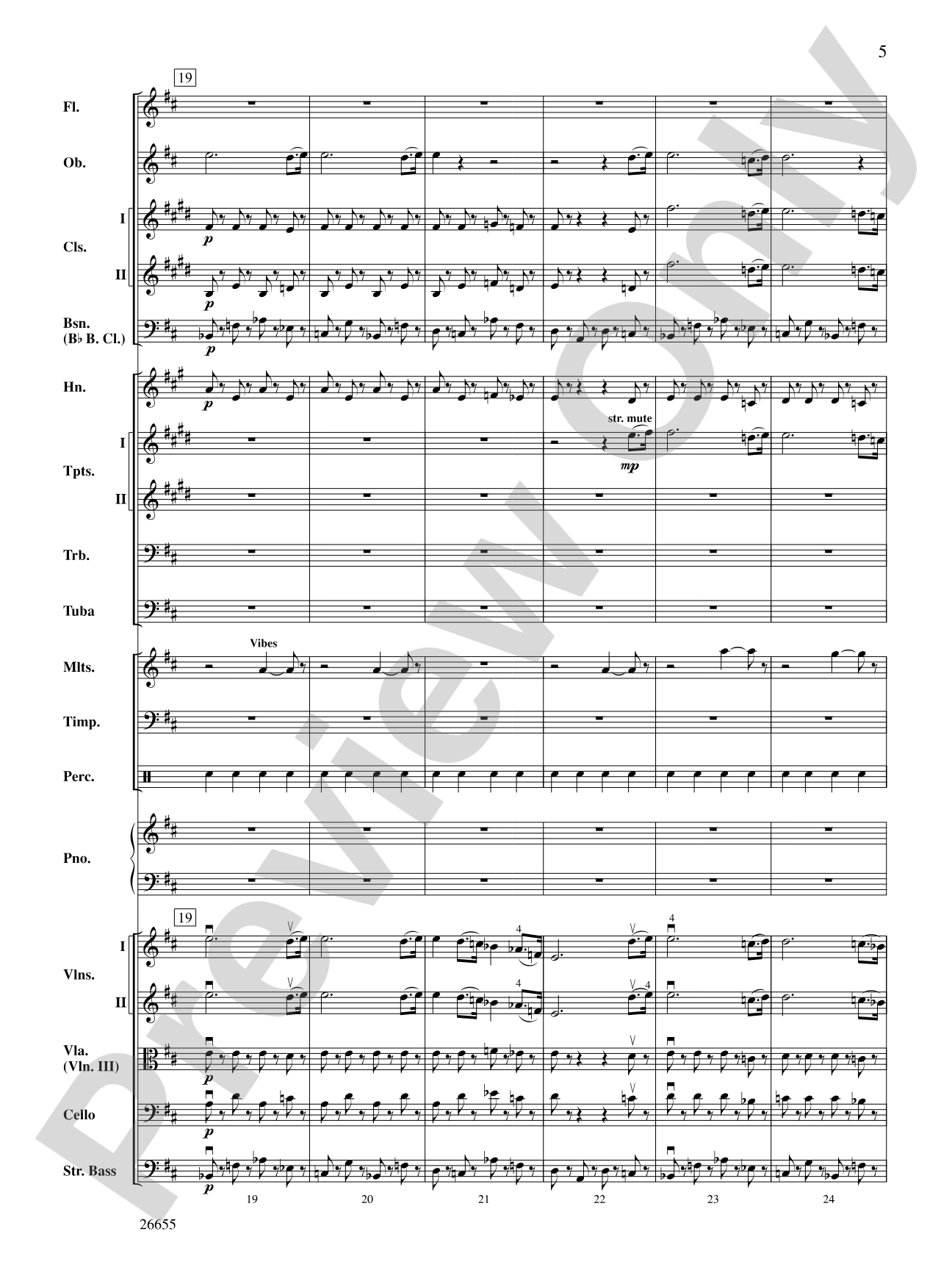
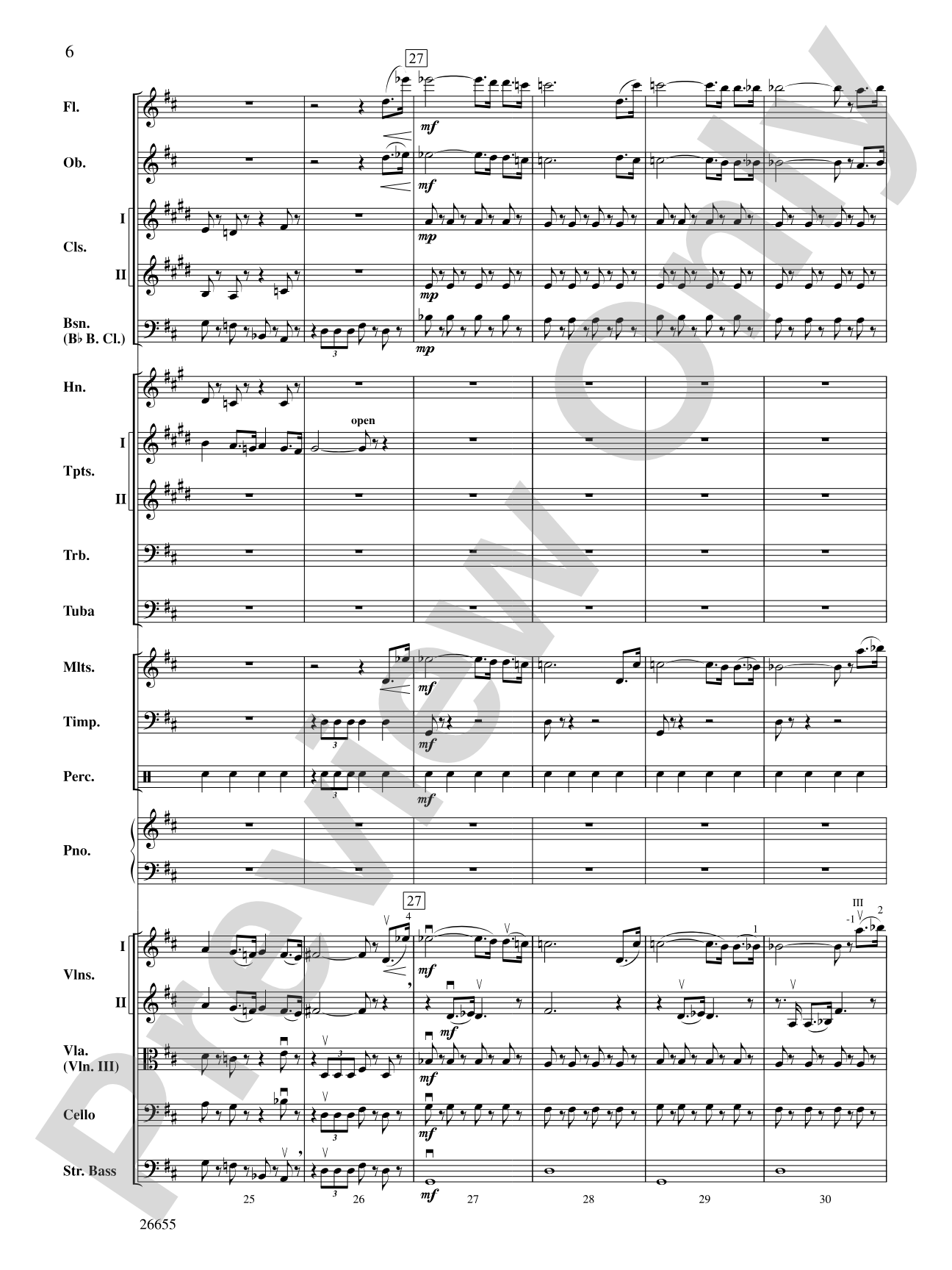
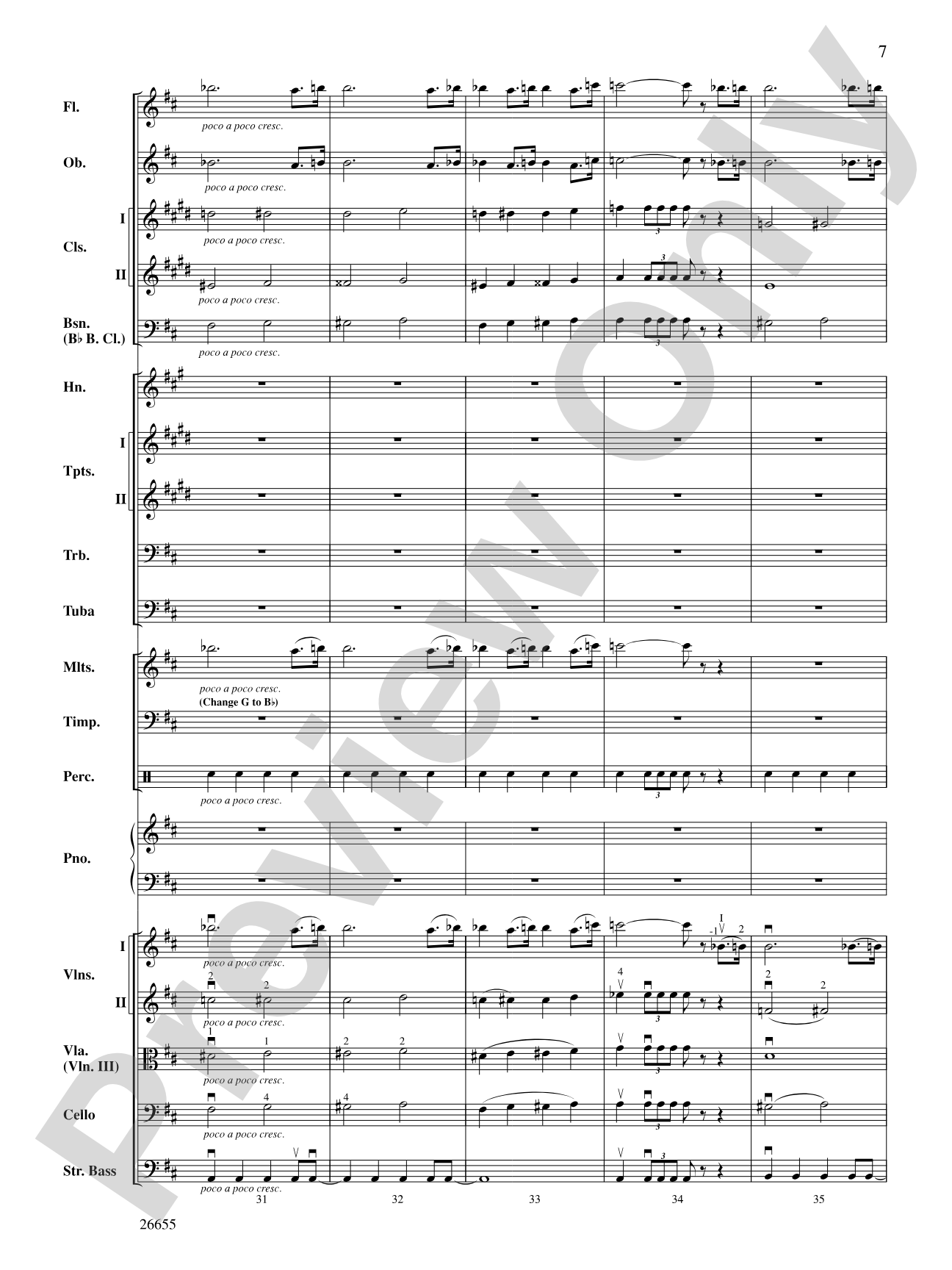
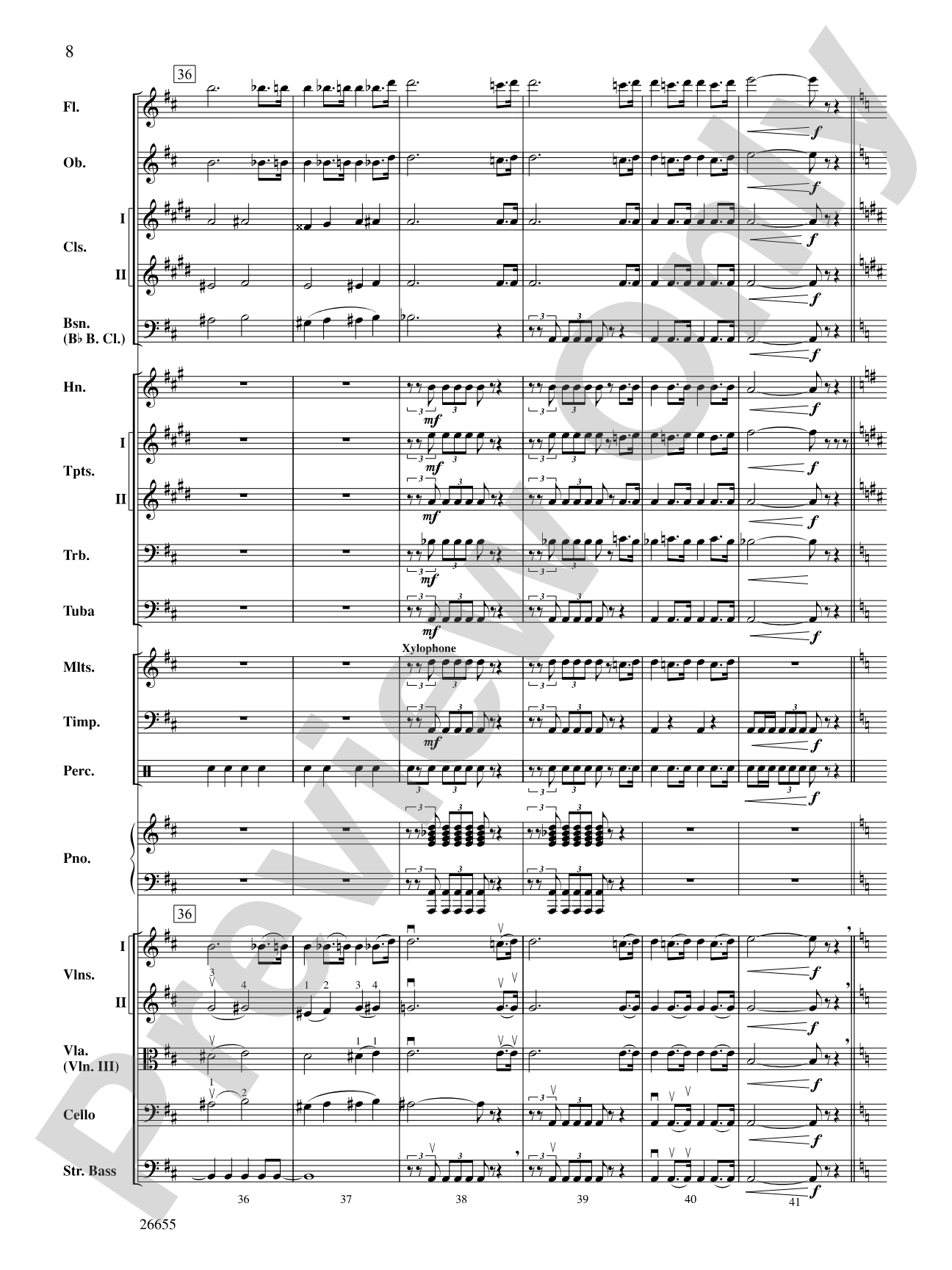
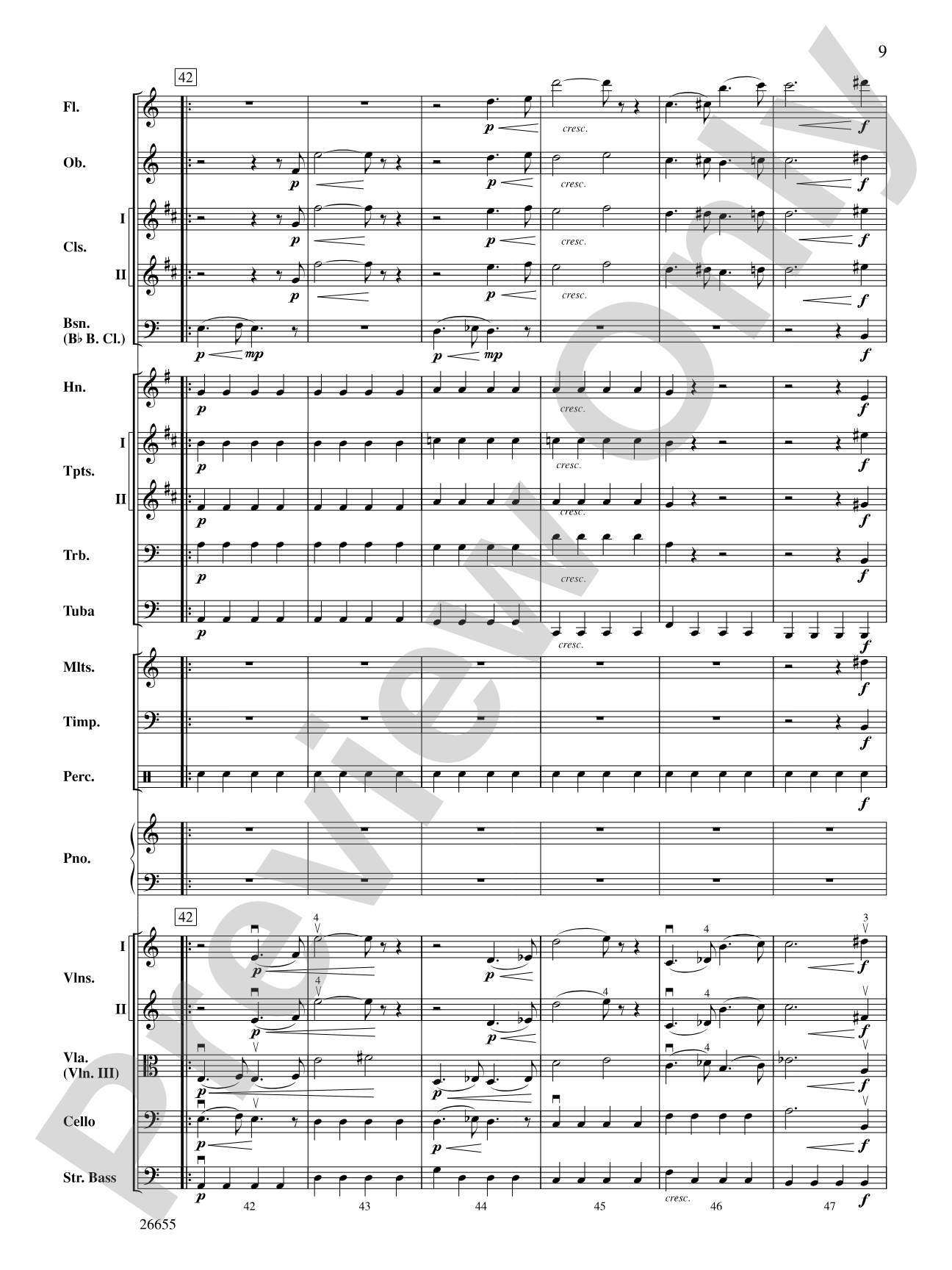
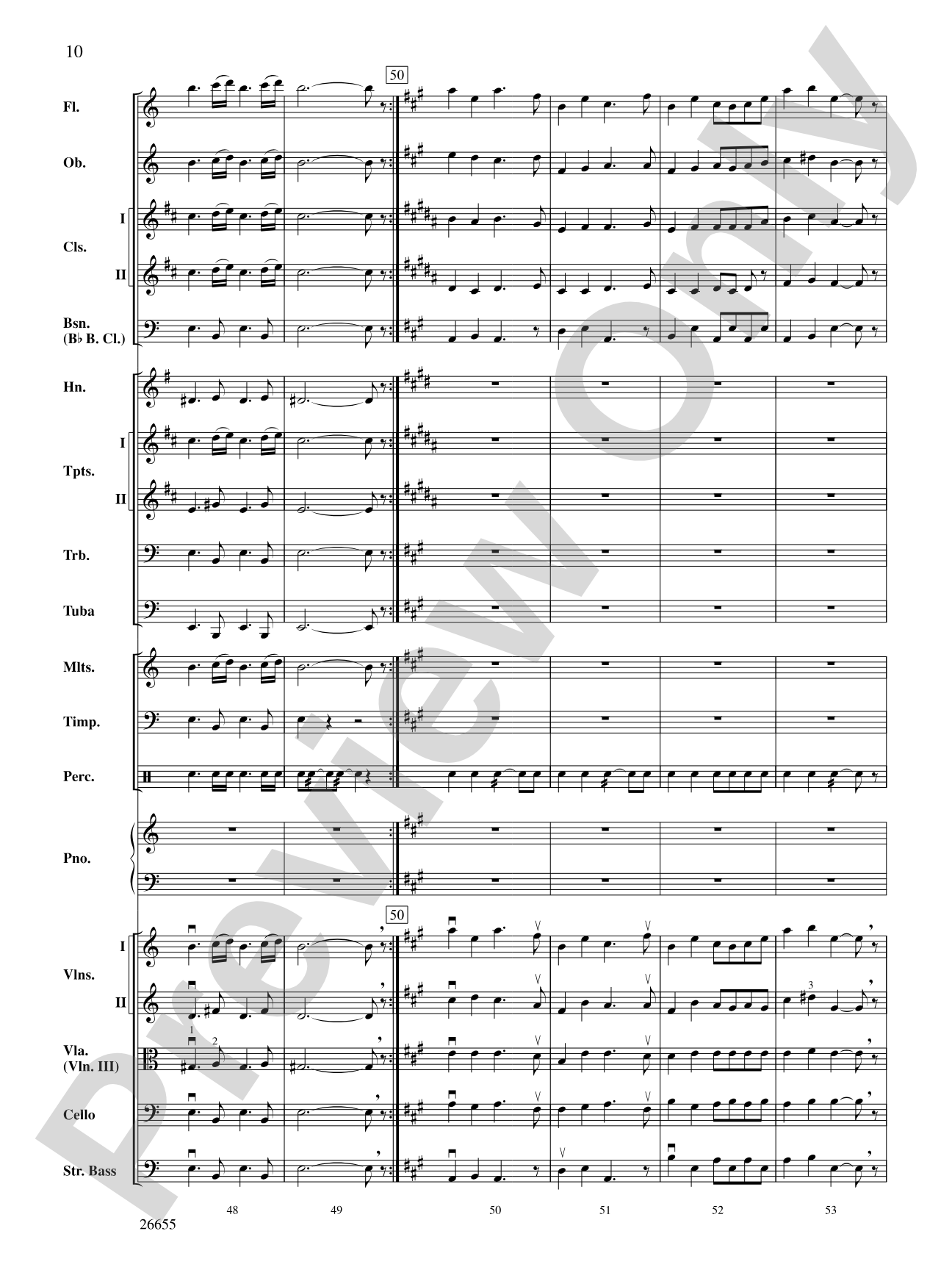
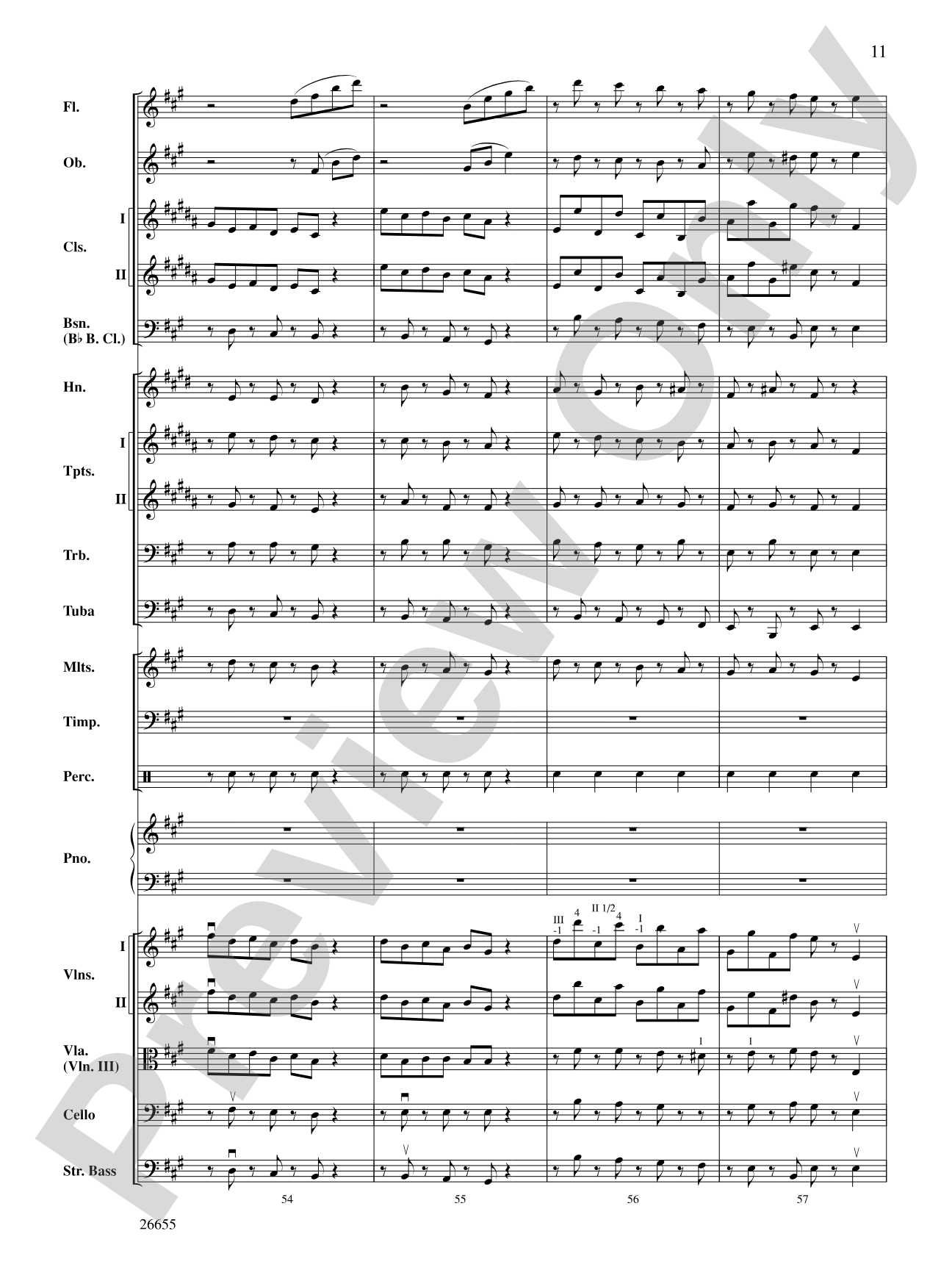
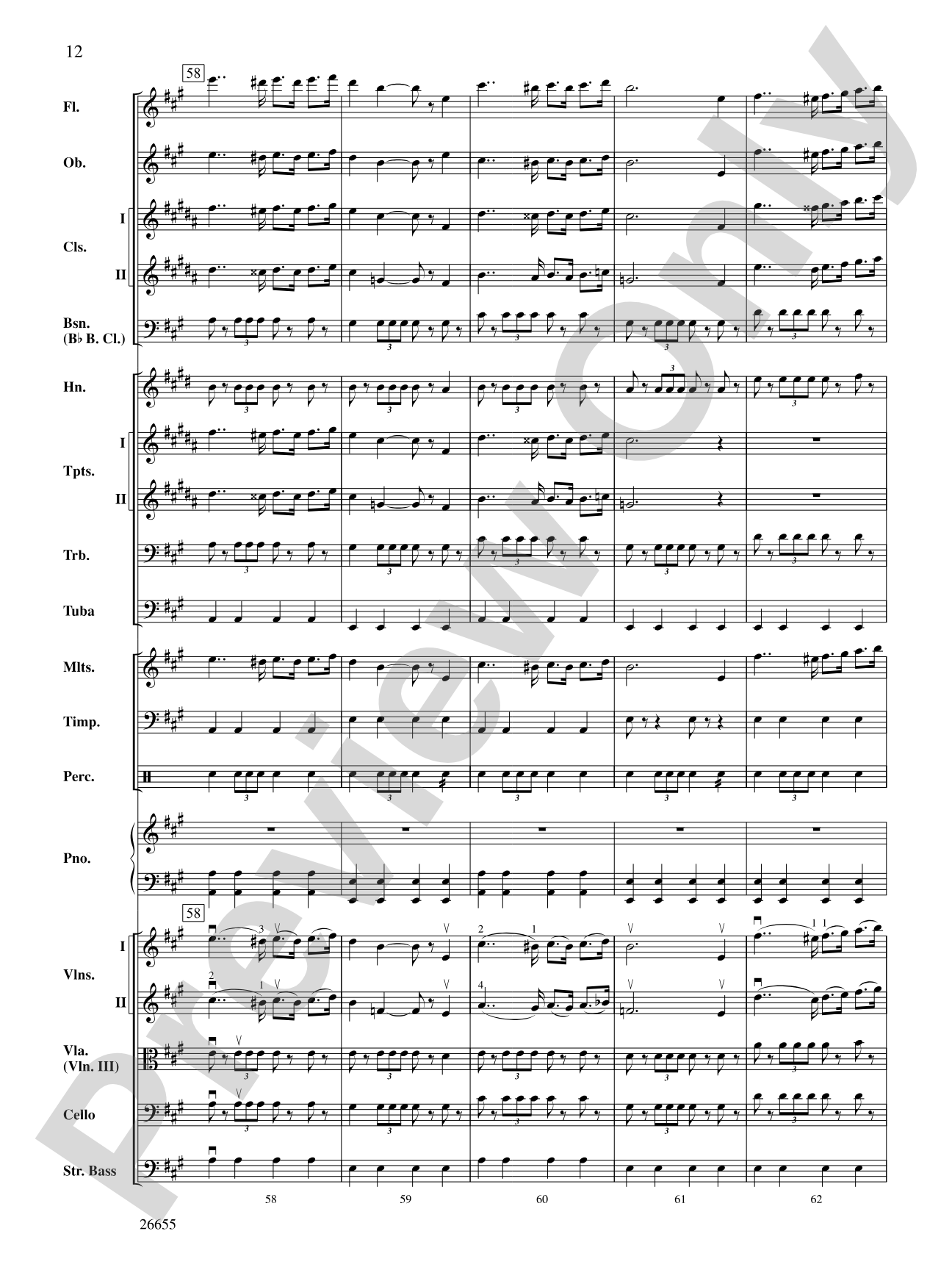
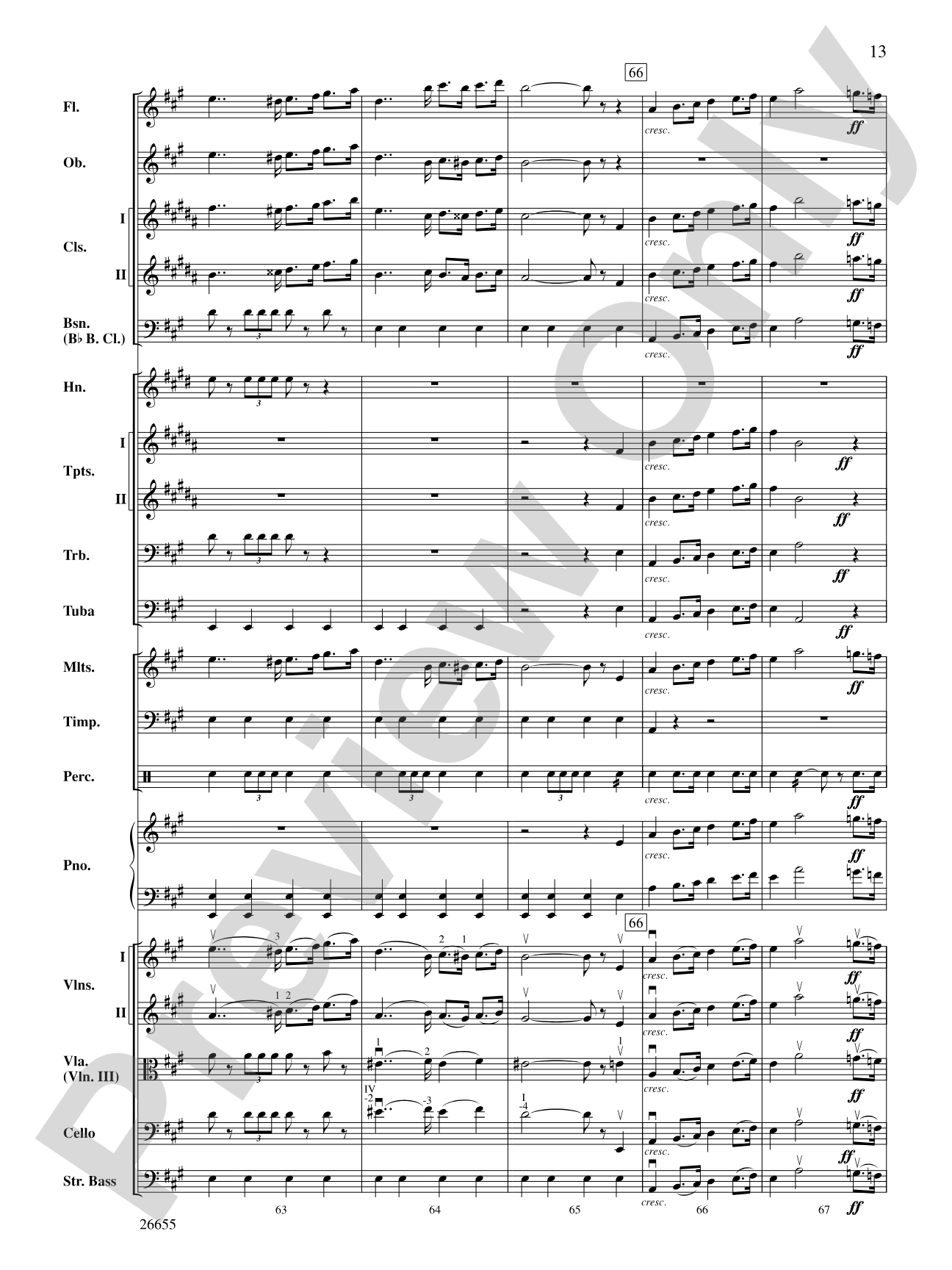
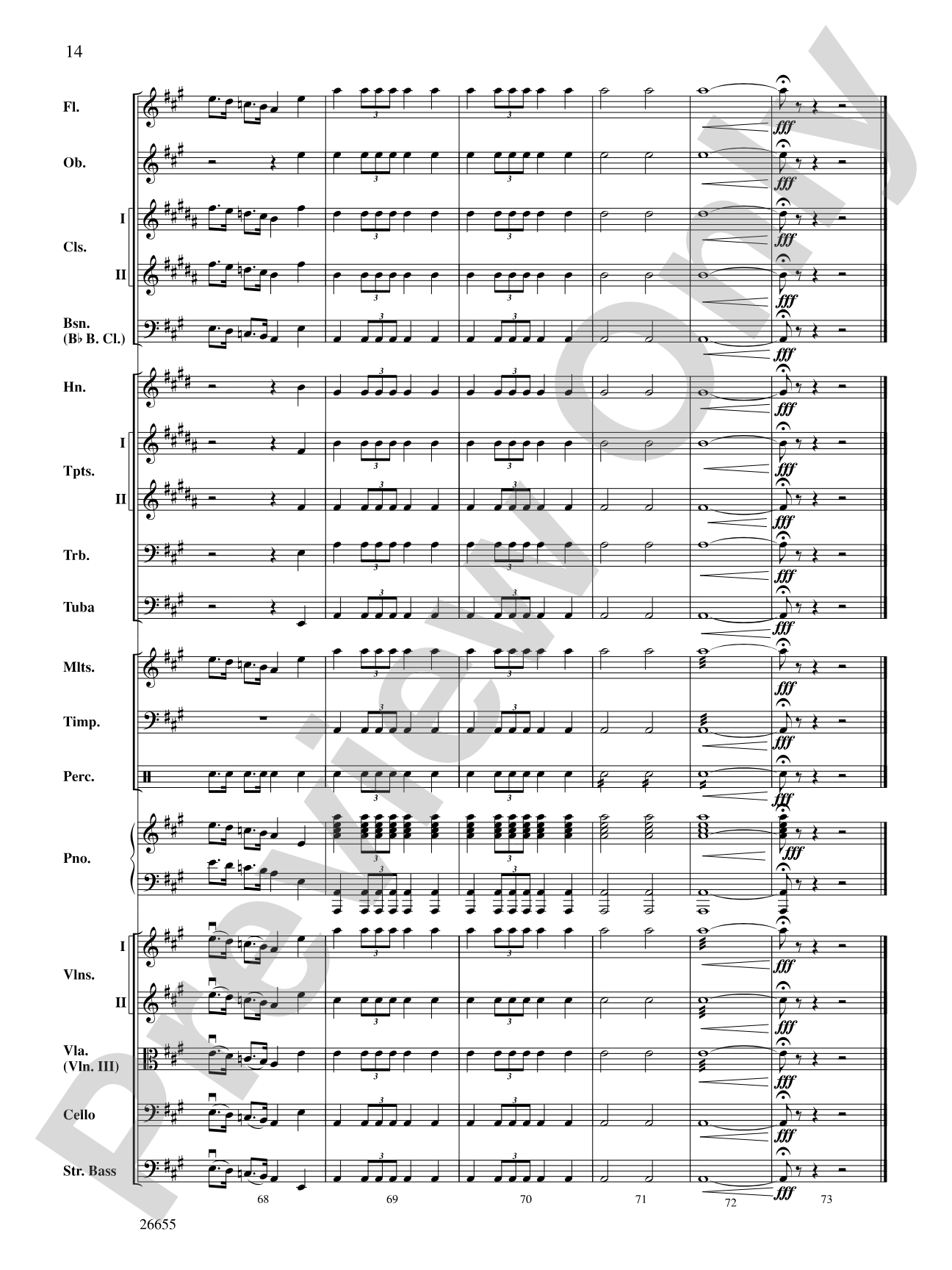



Robin Hood and His Merry Men: Full Orchestra Conductor Score & Parts
By Erich Wolfgang Korngold / arr. Roy Phillippe
Grade: 3
Item: 00-PK-0001158

$58.00
One moment…
Description
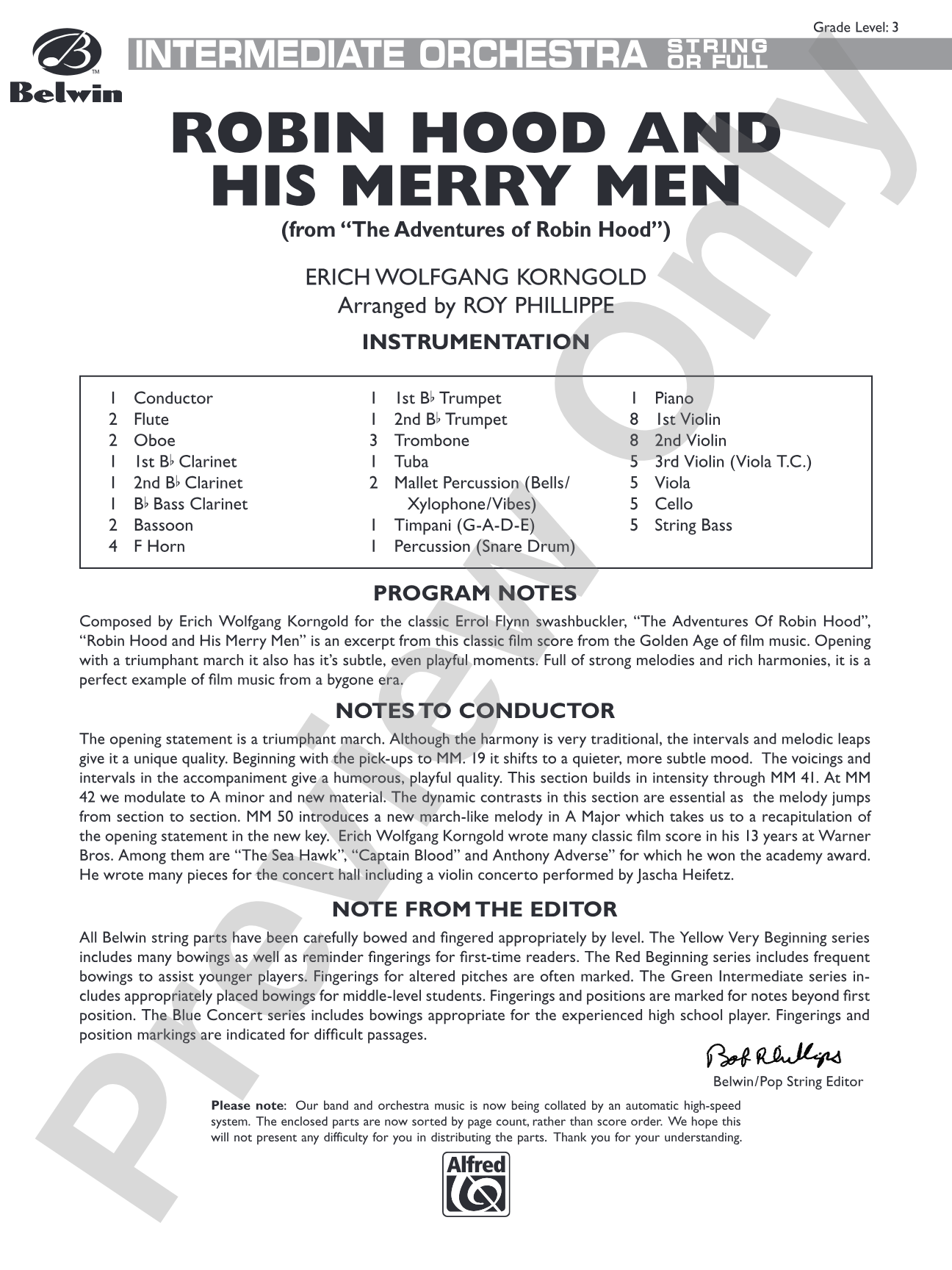
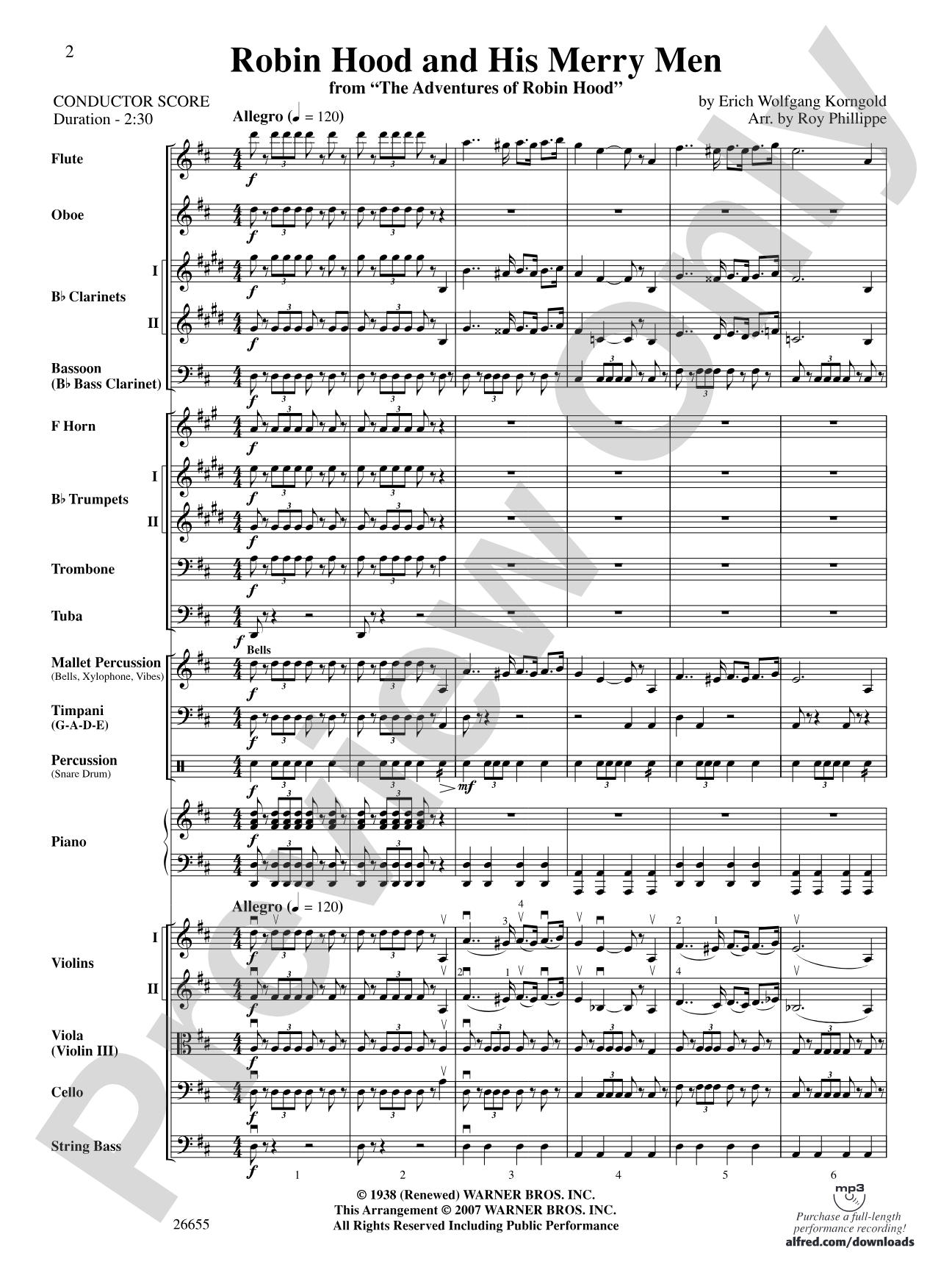
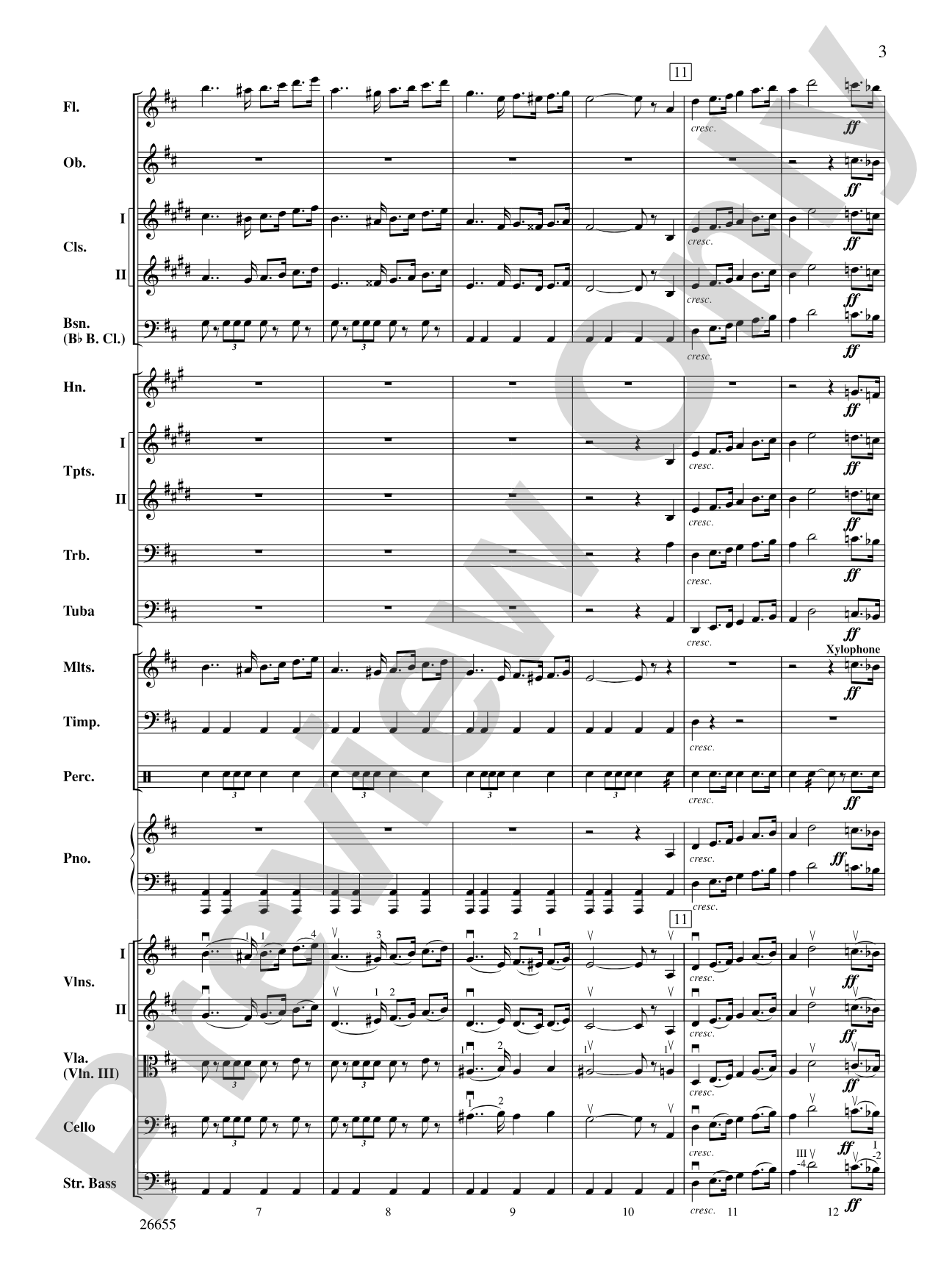
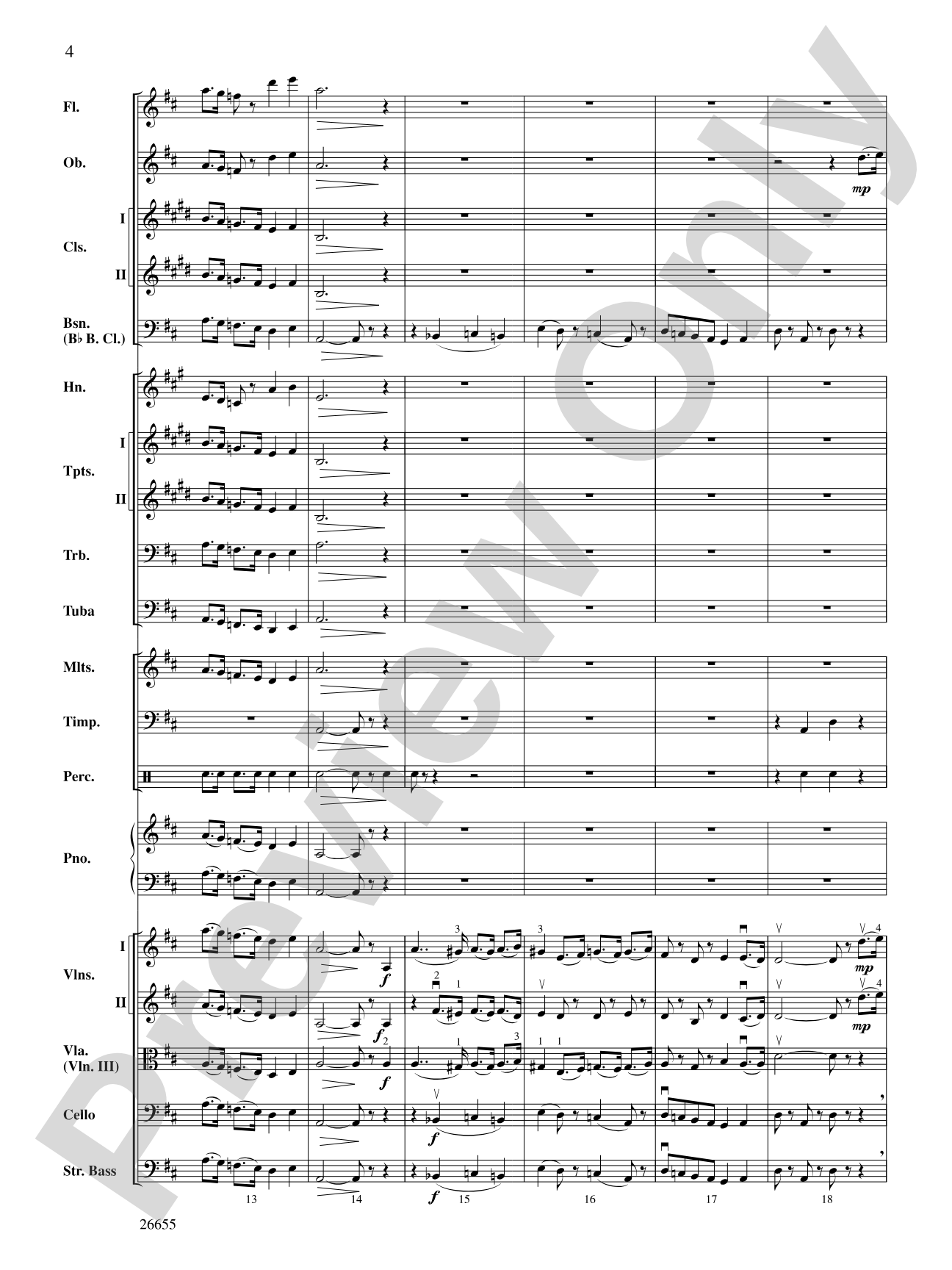
Relive the days of yesteryear in this fabulous setting of the music from the original score to the 1938 Robin Hood movie! The splendor of Korngold's classic score evokes the feel of Sherwood Forest in a rich piece accessible for a middle level or advanced orchestra that sounds lush with strings alone or with the addition of winds. Strong melodic content and rich harmonies create an exciting musical experience. This title is available in MakeMusic Cloud.


Don't just read it, hear it, play along with it, and watch your students grow with it. In MakeMusic Cloud, Robin Hood and His Merry Men: Full Orchestra Conductor Score & Parts comes alive with professional accompaniment, adjustable tempo, and built-in practice tools that turn solo practice into real progress.
Open in the Player
Jump straight in and assign it today.
Start Your Free Trial
Open this title and explore the full library in minutes.
Sample Audio
1
Audio File
--:--
0:00
0:00
Sample Video
No sample videos found.
Additional Details
Series:
Pop Intermediate String/Full Orchestra
Publisher:
Alfred Music
Page Count:
120
SKU:
00-PK-0001158
More about this title
About the Composer: Erich Korngold
Erich Korngold (1897–1957) was an Austrian-American composer who fundamentally shaped the sound of Hollywood's Golden Age. Trained as a classical composer in Vienna, he brought symphonic depth and operatic sophistication to film scoring, earning two Academy Awards and establishing himself as one of cinema's most influential musical voices.
Korngold's orchestral mastery shines through his film work, which demands the same compositional rigor as concert music. His scores for swashbuckling adventures like Robin Hood set the template for orchestral film music that conductors and composers still reference today. For school orchestras, his arrangements offer direct access to writing that balances accessibility with genuine artistic substance.
Why we love this
This arrangement captures the sweep and romance of Korngold's original without requiring a massive ensemble. The melodic writing is immediate and satisfying; students hear themselves playing something genuinely beautiful from the opening measures. Whether your orchestra is string-heavy or fully instrumented, the flexible orchestration means you can perform it now and layer in winds as your ensemble grows.
What to expect
The music captures Sherwood Forest's lush greenery and the daring of outlaws who steal from the rich. Sweeping string melodies evoke galloping horses and narrow escapes, while rich harmonies create moments of tender humanity beneath the adventure. It's music that feels both romantic and rousing, never losing sight of the human story beneath the spectacle.
Who it's for
This score works for Grade 3 orchestras with solid string sections and at least basic wind support. It rewards orchestras ready to tackle richer harmonic language and longer formal structures while staying within accessible technical ranges. Conductors seeking to program adventure and romance without stepping into full operatic territory will find this immediately useful.
How to get the most out of it
- Balance the first violins against inner voices carefully; Korngold's rich harmonies can muddy if the principal melody doesn't sing clearly above the texture.
- Shape phrases with the film's dramatic pacing in mind. These melodies were written to underscore sword fights and escapes, so rhythmic vitality matters as much as lyrical softness.
- Let the string section breathe together on the sweeping passages. Mark bowings in rehearsal to ensure unified articulation and vibrato across each section.
- Use the conductor score to identify where winds can strengthen a melodic line or add color; the flexibility to use strings alone or with full orchestra means you can adjust the blend to your ensemble's strengths.
How to use it
Program this as a showpiece on a spring concert alongside lighter repertoire or as the centerpiece of a film music themed program. Its theatrical energy and strong melodic content make it an excellent choice for audiences new to orchestral music. At 120 pages, it's substantial enough to anchor a concert while remaining manageable within a typical rehearsal calendar.
Skills your students will build
- Reading flowing melodic lines across multiple phrase lengths
- Balancing principal melody against sustained harmonic texture in strings
- Responding to conductor interpretation in sweeping, lyrical passages
- Coordinating with wind sections when the full orchestra is used
- Understanding how film scoring uses orchestral color to support narrative