Robbin's Nest Cover Image

Robbin's Nest: Jazz Ensemble Conductor Score

$9.00 USD
Sale price  $9.00 USD Regular price 
Skip to product information
Robbin's Nest Cover Image

Robbin's Nest: Jazz Ensemble Conductor Score

Transcr. David Berger

Item: 00-25064S

$9.00
Shipped

One moment…

Description

Robbin's Nest: Jazz Ensemble Conductor Score isn't in MakeMusic Cloud just yet...but it could be. Let us know you'd like to see it, and you'll help shape what comes next. In the meantime, start a free trial and dive into thousands of interactive titles your students can play along with today.

Sample Pages

No sample pages found.

Sample Audio
No sample audio found.
Sample Video
Additional Details
Series: Essential Jazz Editions (Jazz at Lincoln Center)
Publisher: Alfred Music
Page Count: 20
UPC: 038081280271
SKU: 00-25064S

More about this title

About the Arranger: David Berger
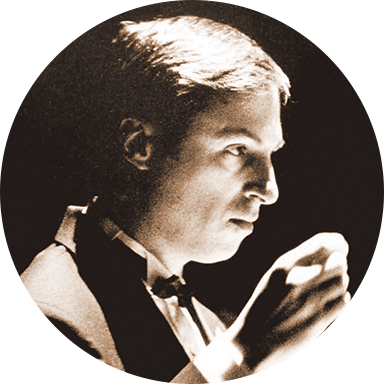
David Berger

David Berger's career spans five decades of deep engagement with American jazz history, particularly the symphonic orchestrations of Duke Ellington and the swing repertoire. His work as conductor and arranger for the Lincoln Center Jazz Orchestra (1988-1994) positioned him at the center of jazz preservation and performance, while his transcription project—over 700 scores from classic recordings—has made him an indispensable resource for understanding how the great arrangers constructed their work.

Berger's approach to the jazz tradition combines scholarly precision with practical knowledge of the ensemble. His arrangements honor the harmonic sophistication and orchestral color of the Swing Era while making the music accessible and rewarding for contemporary ensembles.

Why we love this

Berger's arrangement captures the infectious energy of a Swing Era classic while maintaining the clarity and balance that make it work in an educational setting. The voicings sit beautifully for jazz ensemble, the section writing is idiomatic, and the chart gives soloists genuine room to express themselves within a tight, swinging framework. You get the real thing, not a simplified version.

What to expect

Robbin's Nest swings with irresistible forward motion and rhythmic drive. The harmonies sit in that warm, sophisticated pocket of the Swing Era, bright enough to keep energy high but voiced with enough depth to reward close listening. When the ensemble settles into the groove, the feeling is one of collective purpose and joy.

Who it's for

Jazz ensemble directors leading intermediate to advanced groups who want authentic Swing Era material that teaches the real language of jazz orchestration. Students in the ensemble will develop their ears and chops on a piece that sounds like the recordings they should be listening to.

How to get the most out of it

  • Establish the groove early in rehearsal by isolating the rhythm section and locking the cymbal crash pattern with the bass line; this foundation makes everything else fall into place.
  • Balance the brass section carefully during the ensemble passages—the melody often sits across multiple trumpets and trombones, and clarity matters more than volume.
  • Give soloists space to breathe and swing; the written melody is the scaffold, not the ceiling. Encourage rhythmic flexibility and personal phrasing during improvised sections.
  • Pay attention to the dynamic contrast between the A and B sections; resisting the urge to play loud all the time will make the climaxes land harder.

How to use it

Program this as a centerpiece for a jazz concert or mixed concert, where it can anchor a set of swing repertoire. It pairs naturally with other Essential Jazz Editions pieces, or use it as a capstone project in the spring to showcase how much your ensemble has grown in musicality and ensemble swing.

Skills your students will build

  • Reading and performing authentic swing eighth-note feel and phrasing
  • Voicing clarity and balance in multi-part brass and reed sections
  • Listening and reacting to ensemble changes while maintaining rhythmic precision
  • Trading and responding to solo passages with supportive background figures
  • Interpreting stylistic dynamics and articulation marking specific to swing style

You May Also Like