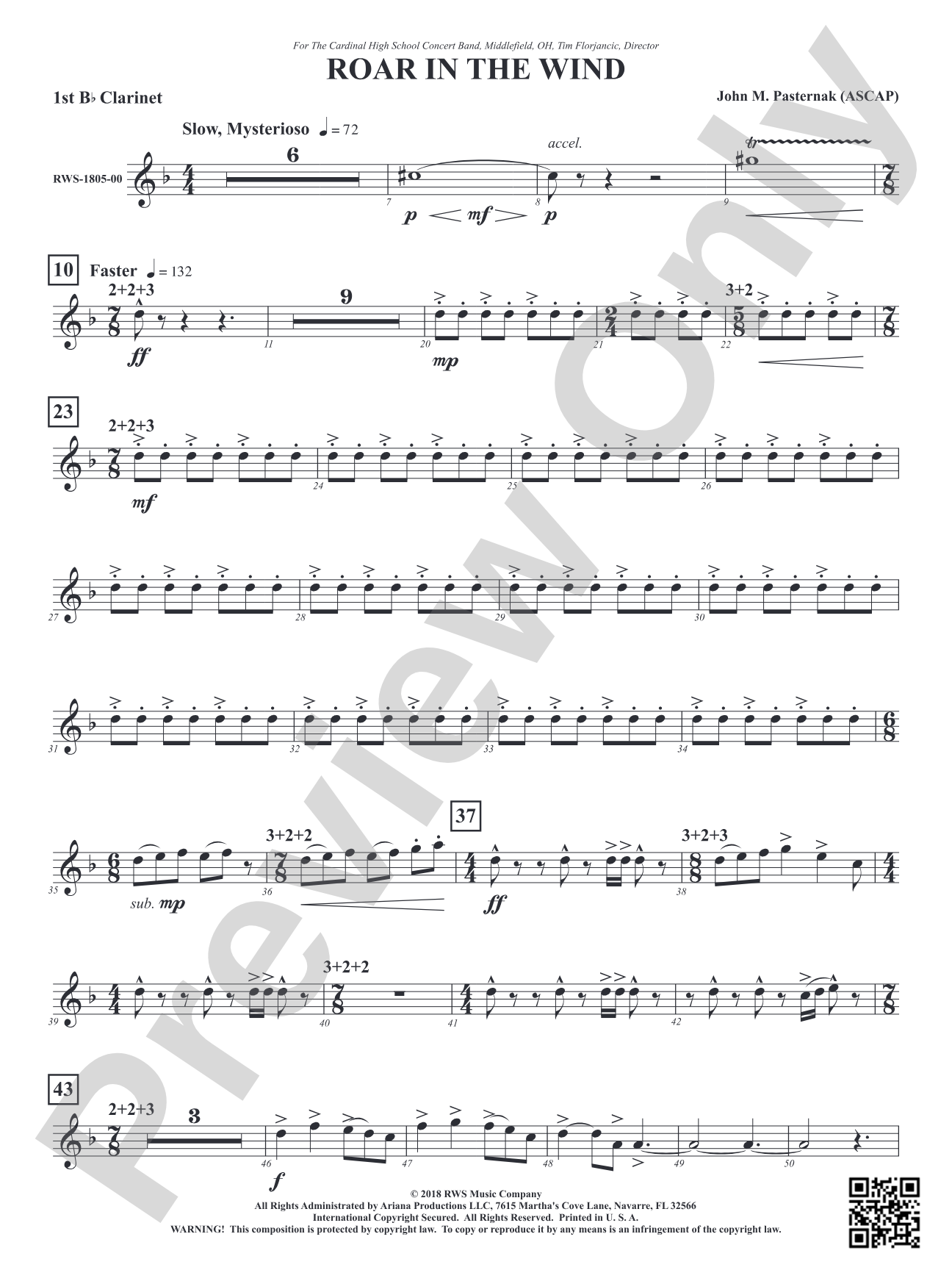
Roar in the Wind: 1st B-flat Clarinet
By John M. Pasternak
Grade: 3.5
Item: 98-PC-RWS1805_C1
Pickup currently not available
Description
Original Item#: RWS-1805-00
Roar in the Wind: 1st B-flat Clarinet isn't in MakeMusic Cloud just yet...but it could be. Let us know you'd like to see it, and you'll help shape what comes next. In the meantime, start a free trial and dive into thousands of interactive titles your students can play along with today.
Tell us you want it.
Explore everything that's ready to play right now.
Sample Audio
Sample Video
Additional Details
More about this title
About the Composer: John M. Pasternak
John M. Pasternak has built a reputation as a composer who understands what concert bands need: music that engages students musically while delivering genuine performance excitement. His works balance accessibility with compositional substance, making them favorites in middle and high school programs across the country.
Pasternak's approach to programmatic writing grounds itself in clear musical storytelling without sacrificing ensemble balance or educational value. His compositions often incorporate contemporary techniques and extended instrumental effects, giving students exposure to modern concert band literature while maintaining technical approachability.
Why we love this
Pasternak writes music that demands engagement from every section without sacrificing musicality. The mixed meter framework keeps players mentally sharp while the programmatic narrative (storm chasers, building tension, the storm itself) gives the band a story to tell rather than just notes to play. Special effects like finger snapping and bowed vibraphone transform the ensemble into storytellers, which secondary players particularly appreciate because they contribute to the drama in ways beyond traditional instrumental color.
What to expect
The music captures the exhilaration and tension of chasing something powerful and unpredictable. Quiet moments of anticipation build into waves of urgency; the band becomes part of the storm's energy rather than simply depicting it. You feel the wind gathering force and the stakes rising.
Who it's for
Concert bands at the Grade 3.5 level that want to tackle genuinely interesting compositional writing without needing advanced technical facility. Ensembles benefit from the programmatic hook, which engages audiences unfamiliar with contemporary band music. This works for groups ready to work with mixed meters as a compositional language rather than a gimmick.
How to get the most out of it
- Establish a clear visual cue system for the mixed meter changes. Brief your band on the pattern of shifts early in rehearsal so attention stays on phrasing rather than counting.
- The finger snapping and bowed vibraphone sections need isolated rehearsal time. These effects define the storm's character, so lock them rhythmically and dynamically before integrating them with the full ensemble.
- Shape the dynamics across full sections rather than within individual measures. The storm builds cumulatively, so avoid letting dynamic peaks flatten between phrase groups.
- Record a rehearsal early in your preparation cycle and listen together. Hearing how the programmatic arc takes shape helps the band understand what they're building toward musically.
How to use it
Program this as an opener or centerpiece for a concert themed around adventure, weather, or contemporary American band music. It pairs well with more traditional works because the programmatic clarity reads instantly to any audience. The Grade 3.5 level makes it suitable for mid-year or spring concert programming, when most ensembles have developed the rhythmic independence needed for mixed meters.
Skills your students will build
- Reading and performing mixed meter changes with precision and musical continuity
- Executing special effects (finger snapping, bowed vibraphone) as compositional tools rather than novelties
- Responding to programmatic musical narrative and shaping phrasing accordingly
- Balancing individual rhythmic responsibility with ensemble cohesion across meter shifts