Road Song: 2nd Baritone T.C. Sheet Music Preview

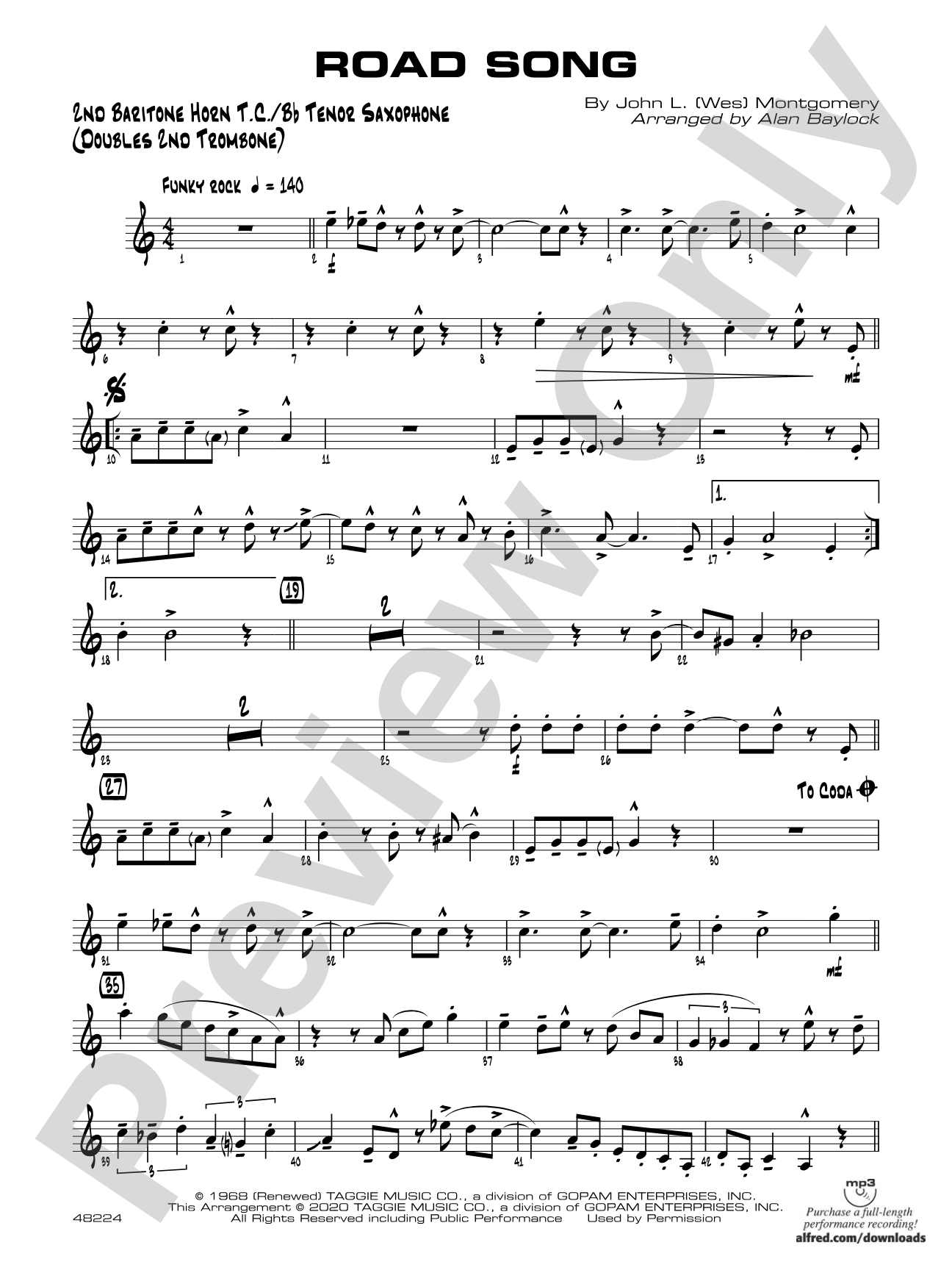
Road Song: 2nd Baritone T.C.

By John L. (Wes) Montgomery / arr. Alan Baylock

Grade: 3 (Medium)

Item: 00-PC-0019168_BTC2

Digital Download
$3.00
Description
Road Song arranged by Alan Baylock has a groove that is a funky-rock played around 140 BPM. This chart is a great tune and excellent vehicle for guitar or any instrument. A suggested written solo is provided for guitar and for C, B-flat, E-flat, or bass clef instruments for flexibility. Lead trumpet range is to written A above the staff. Quality! (4:35)

Don't just read it, hear it, play along with it, and watch your students grow with it. In MakeMusic Cloud, Road Song: 2nd Baritone T.C. comes alive with professional accompaniment, adjustable tempo, and built-in practice tools that turn solo practice into real progress.

Sample Audio
0:00
0:00
Sample Video
Additional Details
Series: Jazz Band Series
Publisher: Alfred Music
Page Count: 108
SKU: 00-PC-0019168_BTC2

More about this title

About the Composer: John L. (Wes) Montgomery

Wes Montgomery (1923-1968) was a pioneering electric guitarist who fundamentally changed jazz improvisation and small group playing. His innovative thumb-pick technique and warm, vocal tone influenced generations of jazz musicians across multiple styles, from bop to soul jazz to fusion.

Why we love this

Baylock's arrangement captures Montgomery's soulful groove and translates it perfectly for ensemble playing without losing the infectious pocket that made this a jazz standard. The built-in flexibility for soloists across multiple instruments and ranges means nearly every section has a compelling moment to shine, and the funky-rock feel energizes any concert.

What to expect

Funky, grounded, and swinging. The tune settles into a rhythm that feels both relaxed and propulsive, with enough harmonic space for soloists to breathe and stretch without losing the song's soulful core.

Who it's for

Jazz ensemble directors looking for a solidly grooved chart that engages multiple sections and offers meaningful solo opportunities. This works equally well for high school jazz bands and college ensembles that want something with genuine jazz credibility and approachable pedagogy.

How to get the most out of it

  • Lock the rhythm section into the groove at 140 BPM before adding horns; the pocket here is everything, so establish it early in rehearsal and guard it fiercely.
  • Shape the written solos to sound conversational rather than mechanical. Whether your soloist is playing guitar or any of the transposed options, encourage them to bend notes and play around the written lines to honor Montgomery's expressive vocabulary.
  • Balance the ensemble so the guitar line (if you have a guitarist) sits comfortably without overpowering the horn sections; this is a team effort, not a guitar feature with accompaniment.
  • Push the bridge and final chorus with dynamic lift; the cumulative energy of the arrangement deserves a payoff at the finish.

How to use it

Use this as a concert anchor or pre-concert warmup that reminds your ensemble why they love playing jazz. The moderate grade and strong grooves make it ideal for mixed-level jazz lineups or as a bridge piece between your beginner and advanced groups.

Skills your students will build

  • Playing with pocket and restraint in a funk-rock groove
  • Transposition and improvisation across multiple instrument ranges
  • Balancing solo and ensemble roles
  • Phrasing and expression in an R&B-influenced jazz context
  • Reading jazz lead sheets and responding to chord changes under tempo

You May Also Like