
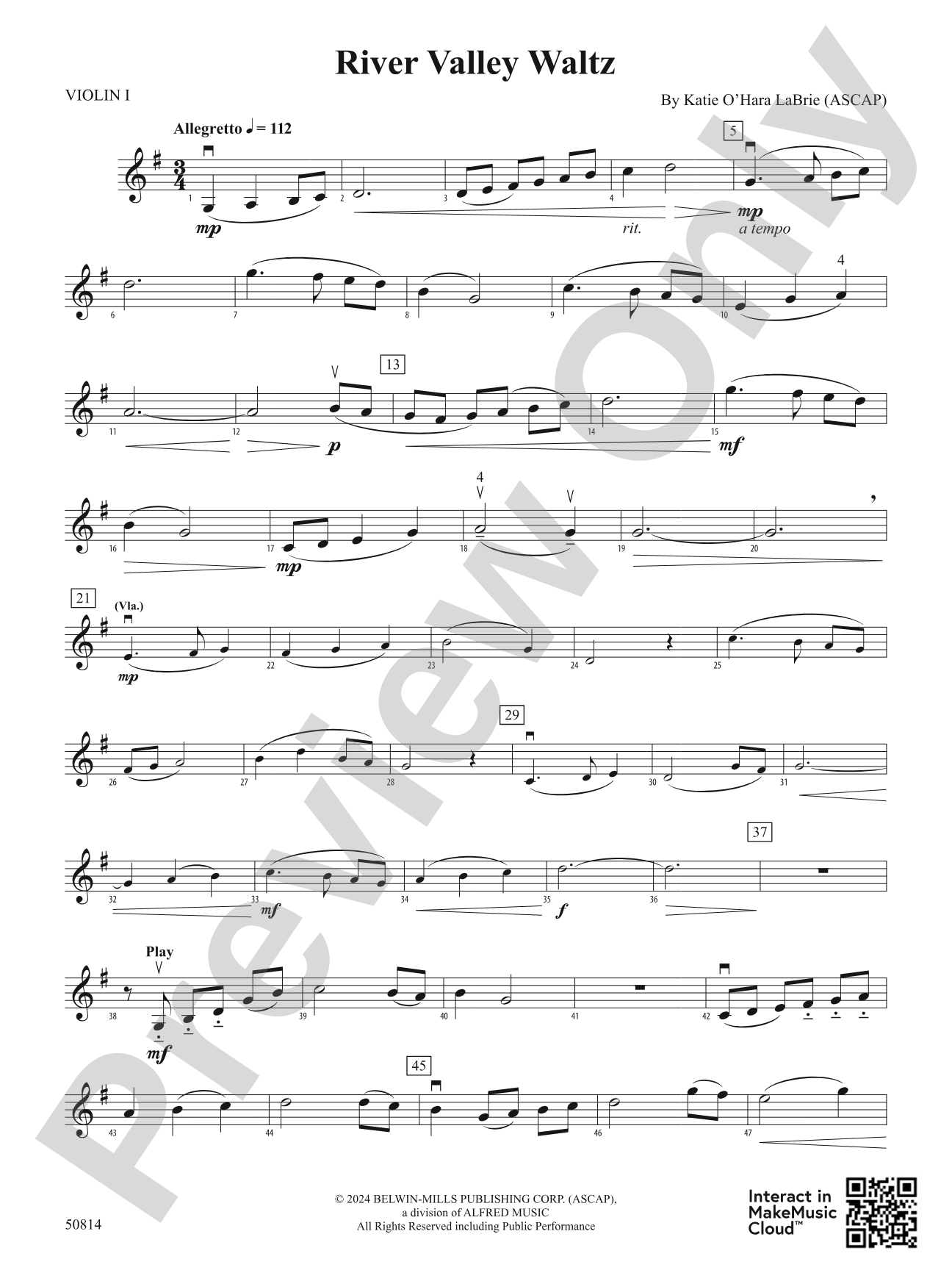

River Valley Waltz: 1st Violin
By Katie O'Hara LaBrie
Grade: 2.5
Item: 00-PC-0019275_VN1
$7.99
Pickup currently not available
Description
Inspired by a drive through Shenandoah National Park in late autumn, River Valley Waltz, by Katie O'Hara LaBrie, is the perfect piece to help your ensembles grow musically. The flowing, memorable melodies, dynamics, and attention to phrasing will inspire your students to perform with expression and grace while developing bow control and tone. Playable entirely in first position (up to third position in bass). Optional fingerings specifically meant to teach cellists how to avoid open A are provided. (2:50)


Don't just read it, hear it, play along with it, and watch your students grow with it. In MakeMusic Cloud, River Valley Waltz: 1st Violin comes alive with professional accompaniment, adjustable tempo, and built-in practice tools that turn solo practice into real progress.
Open in the Player
Jump straight in and assign it today.
Start Your Free Trial
Open this title and explore the full library in minutes.
Sample Audio
1
Audio File
--:--
0:00
0:00
Sample Video
Additional Details
Series:
Belwin Intermediate String Orchestra
Publisher:
Alfred Music
SKU:
00-PC-0019275_VN1
More about this title
About the Composer: Katie O'Hara LaBrie

Katie O'Hara LaBrie is a composer, conductor, clinician, and cellist based in Northern Virginia who brings a decade and a half of orchestra teaching experience into every piece she writes. She earned her Bachelor of Music in Music Education from St. Olaf College and her Masters of Music in Instrumental Conducting from George Mason University, studying with Anthony Maiello. Her work has been recognized repeatedly as a J.W. Pepper Editor's Choice selection and performed at prestigious venues including the Midwest Band and Orchestra Directors Clinic and the American String Teachers Association Conference.
LaBrie composes with the rehearsal room in mind, drawing inspiration from her experiences as an educator, her family, and the natural world around her. She was honored as one of Yamaha's "40 Under 40" in 2022 for her contributions to music education. Beyond composition, she founded the Fairfax Chamber Players and co-created "the Big IDEA" practice method, demonstrating her commitment to helping students develop purposeful practice habits.
Why we love this
River Valley Waltz succeeds because it balances musical substance with genuine playability. The piece gives your ensemble expressive material to sink their teeth into—flowing melodies and deliberate phrasing work—without asking for technical heroics, making it realistic to program even with developing orchestras. LaBrie's attention to bow technique, particularly her intentional fingering choices for cellists, shows she understands exactly where Grade 2.5 ensembles struggle and built solutions directly into the score.
What to expect
River Valley Waltz evokes the gentle, rolling landscape of autumn in the Shenandoah Valley through its flowing melodic contours and warm harmonic language. The piece unfolds with grace and reflection rather than drama, inviting players to focus on the singing quality of their tone and the elegance of their phrasing.
Who it's for
String orchestras at the Grade 2 to 3 level who are ready to work on expressive playing and refined tone production. This piece works particularly well for ensembles preparing for festival or contest performances, since it requires thoughtful musicianship without overwhelming younger or less experienced players.
How to get the most out of it
- Shape the melodic lines with vocal phrasing in mind; ask students to sing the passage silently before playing it, then carry that legato quality into their bowing.
- Balance the resonance of open strings against the optional fingerings provided for cellists, especially in the A position work. The fingering suggestions exist to build strength and consistency, not to eliminate open strings entirely.
- Work dynamics in small increments during early rehearsals. Rather than jumping to marked forte or piano, have the ensemble move between dynamic levels in half-steps so they hear the tonal differences their bow control creates.
- Allow the waltz character to breathe naturally; the three-beat pulse should feel conversational rather than metronomic. Let rubato emerge organically once the ensemble has solidified the fundamental rhythm.
How to use it
This waltz sits comfortably in the middle of a festival or concert program, offering a moment of lyrical beauty between bolder or more rhythmically driven pieces. Its 2:50 length and programmatic title make it ideal for fall or spring concerts where you want to showcase your orchestra's growing musicality and sensitivity to expression.
Skills your students will build
- Bow control and sustained tone production in legato passages
- Reading and executing dynamic nuance across the full range of forte to piano
- Phrasing and shaping melodic lines with intentional breath and direction
- Navigating first through third position (with a focus on avoiding open A strings on cello)
- Translating programmatic inspiration into interpretive choices