
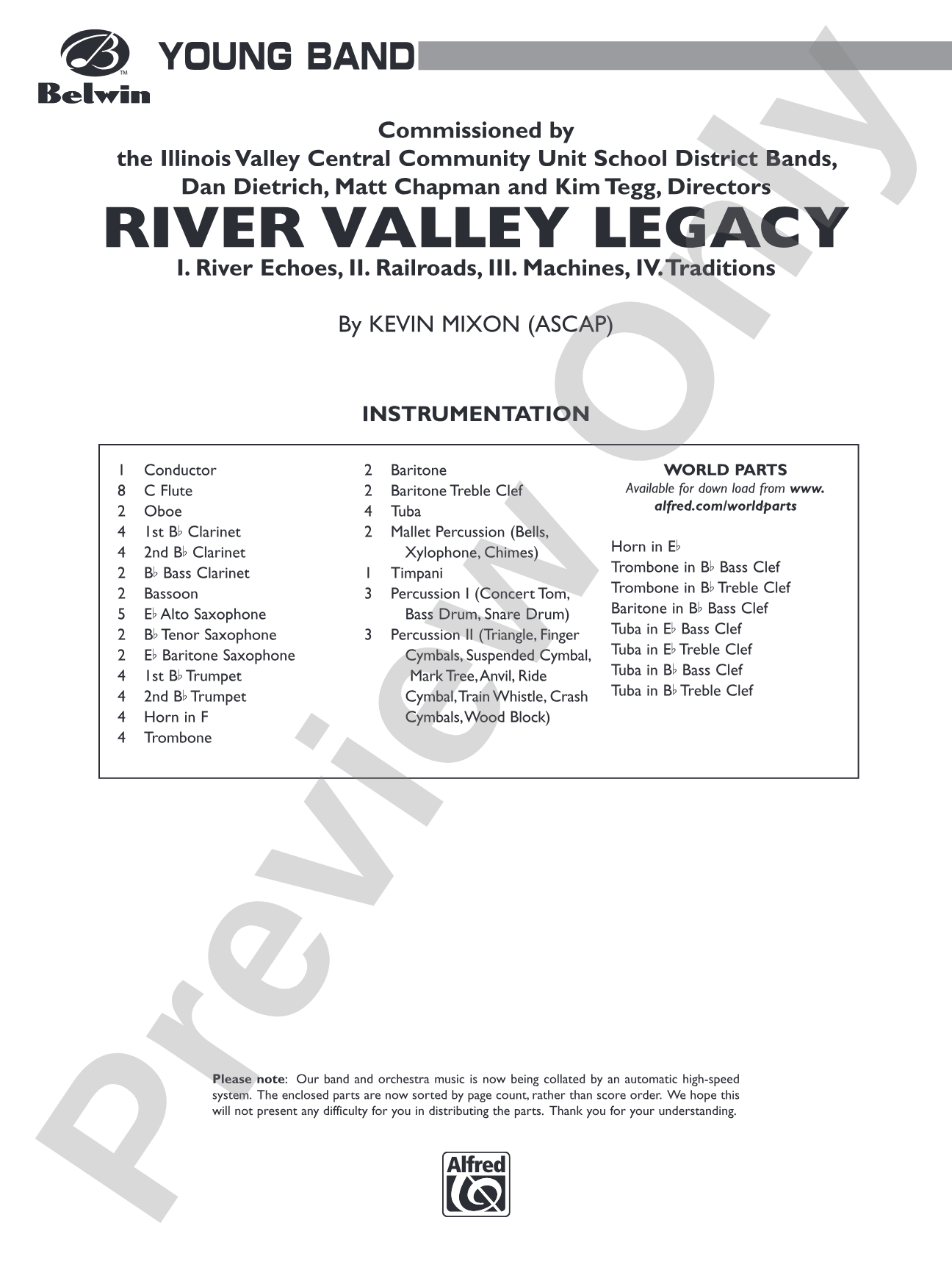
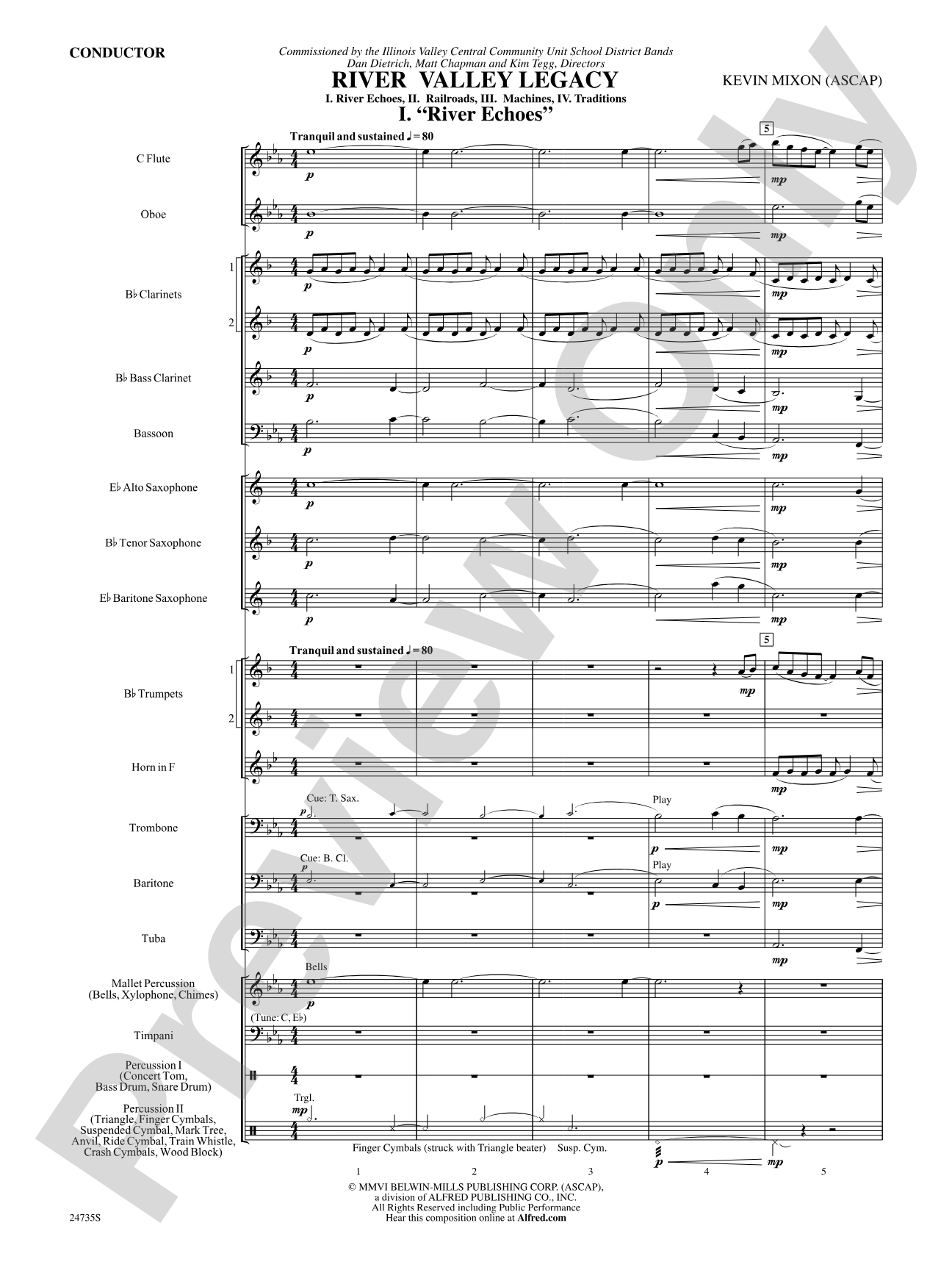
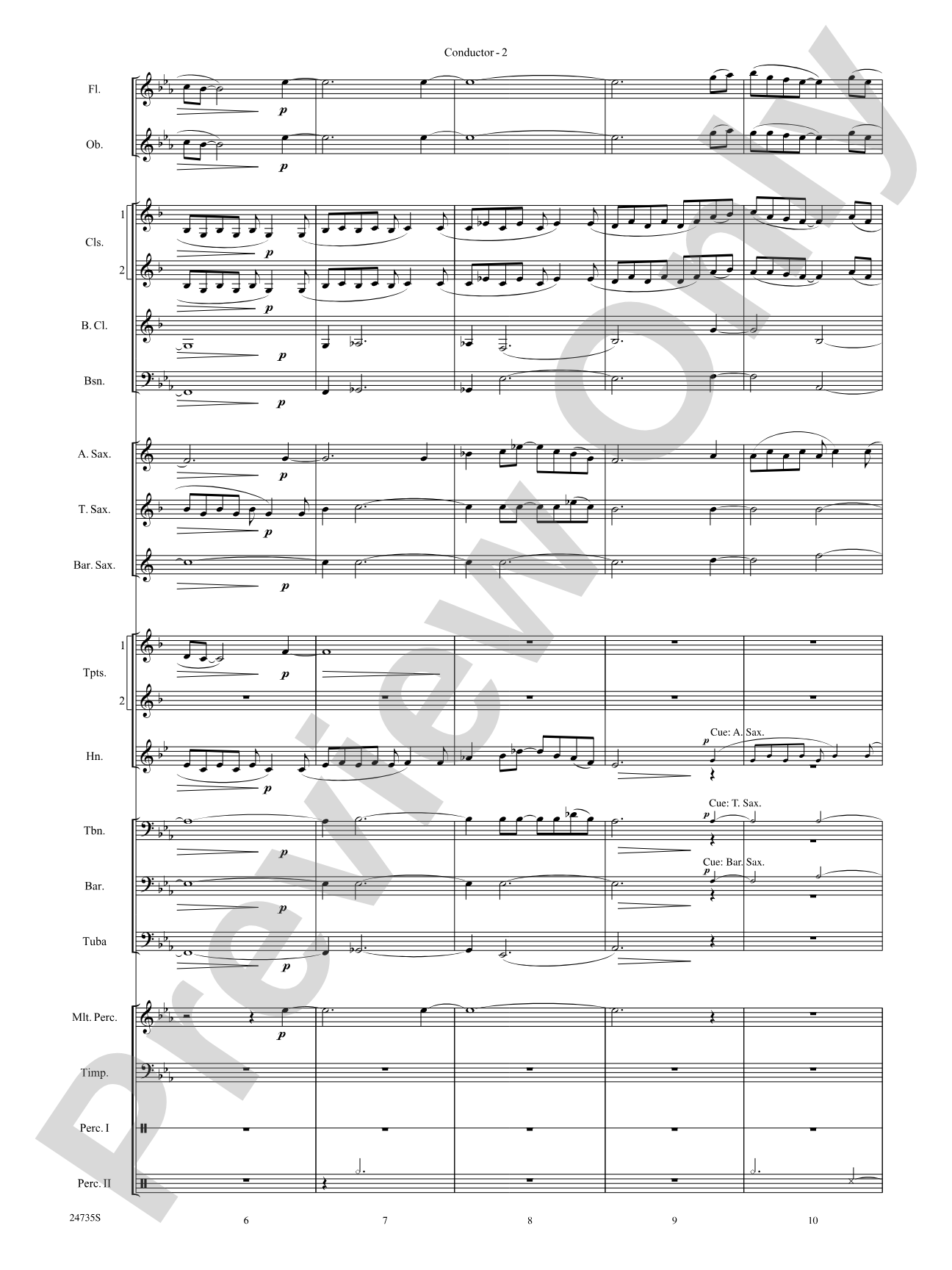
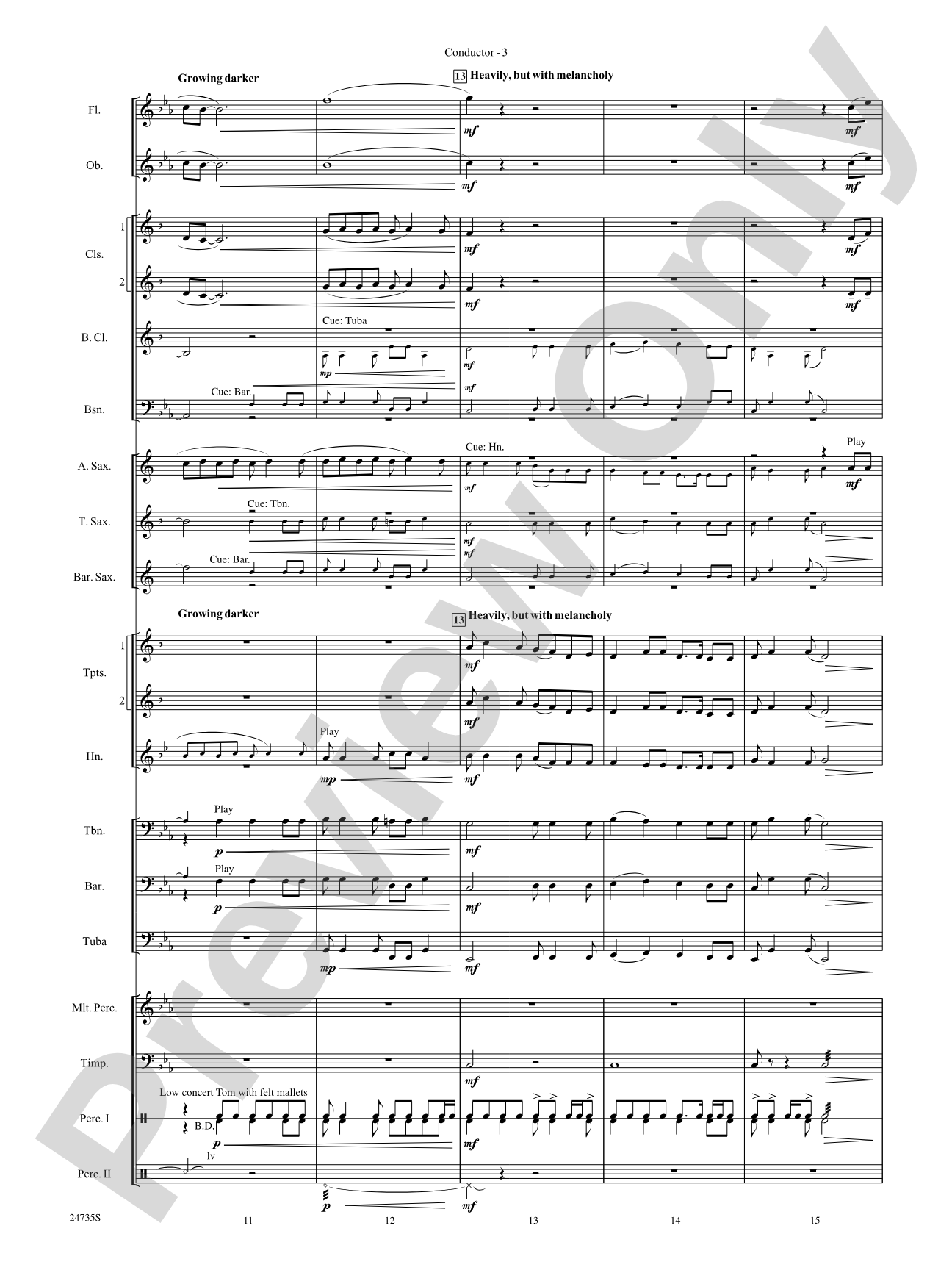
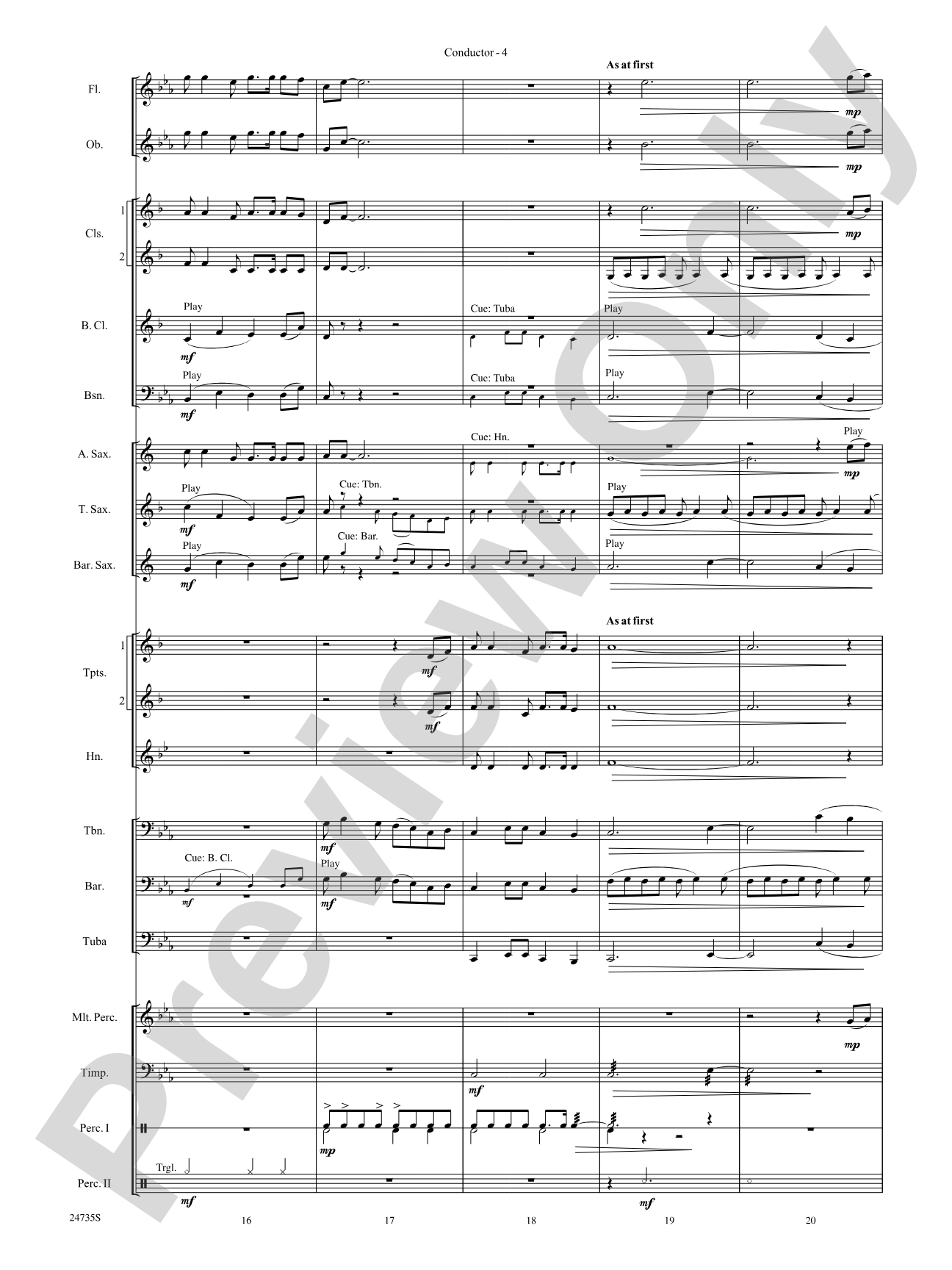
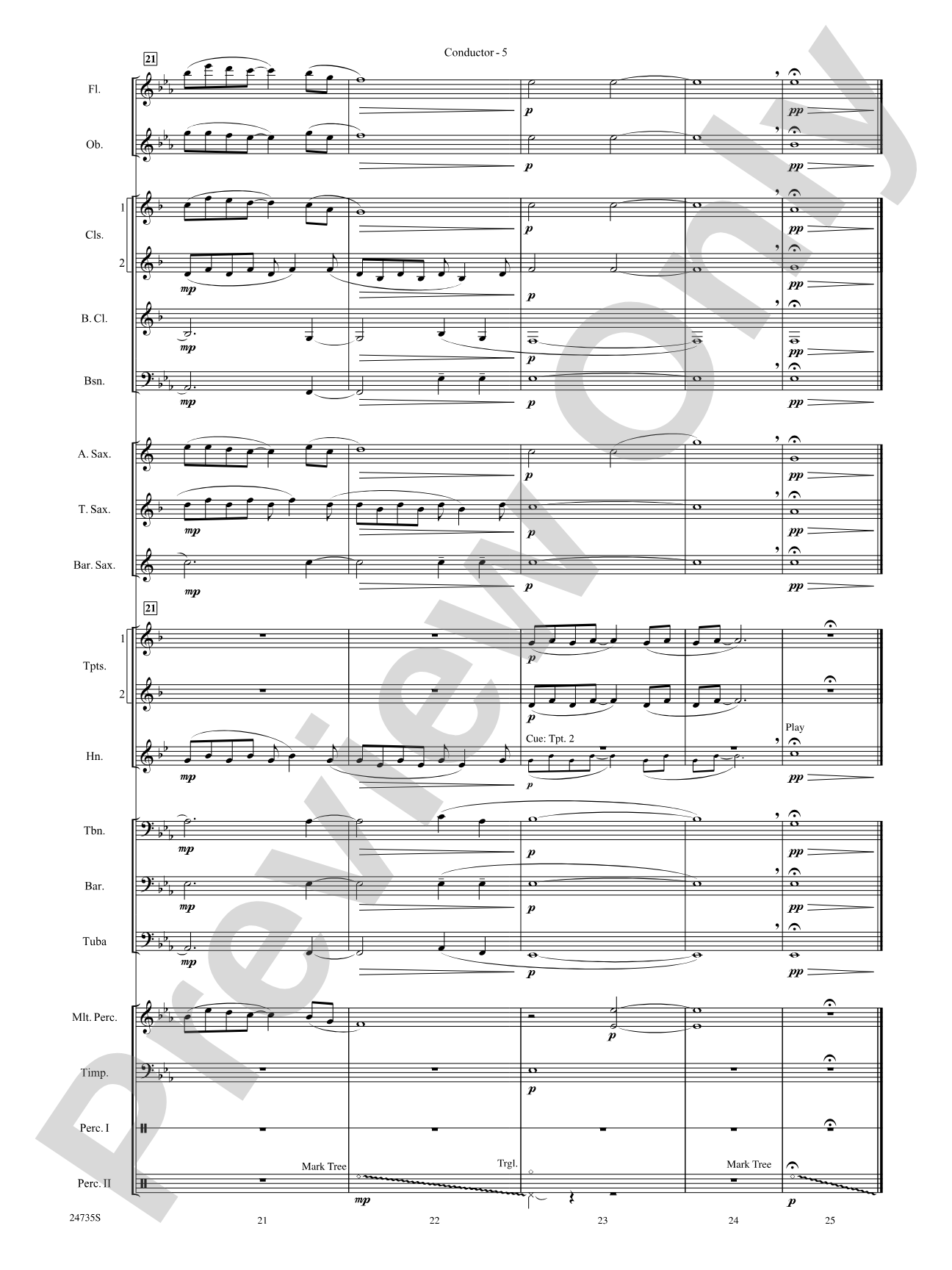
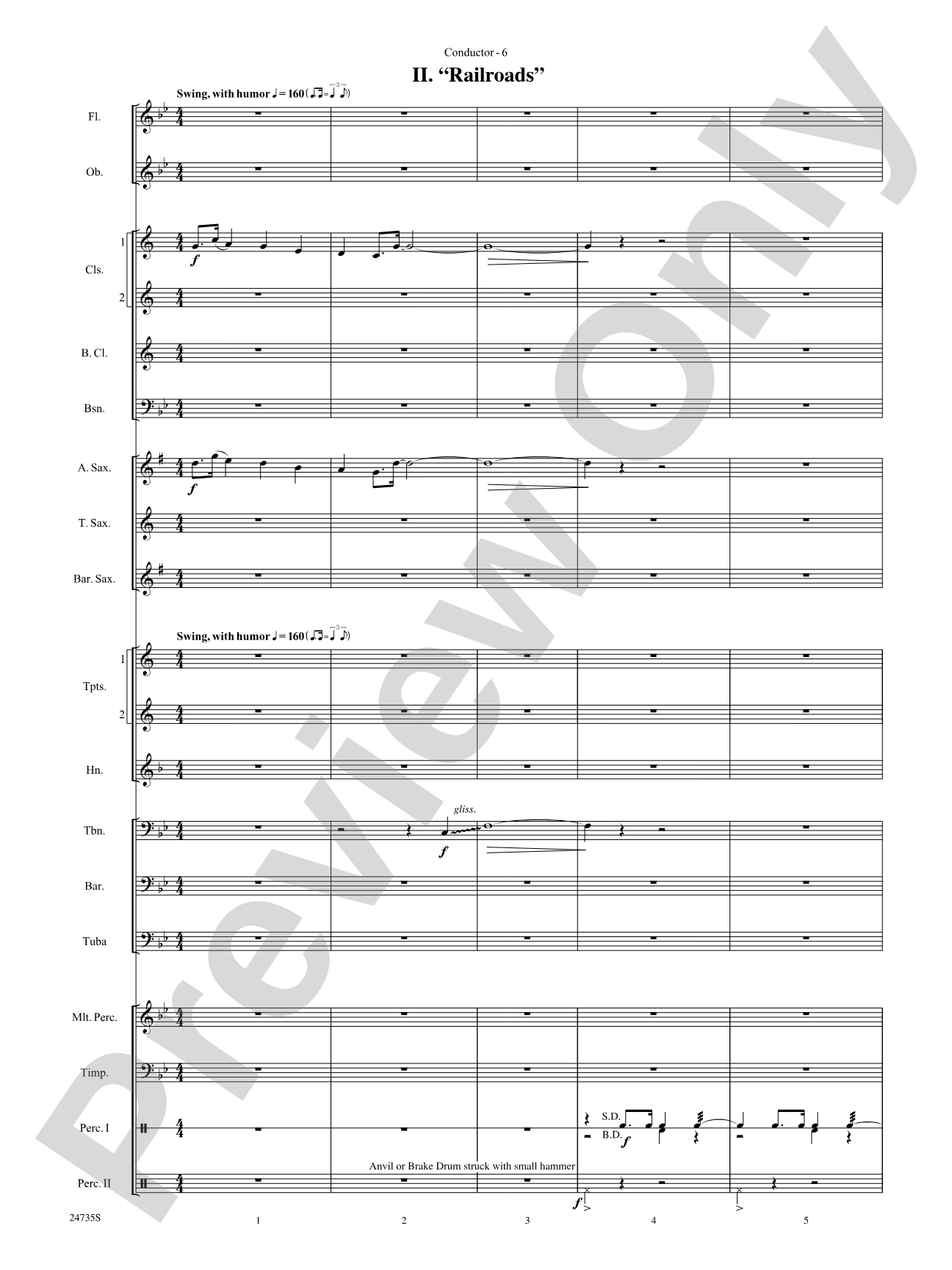
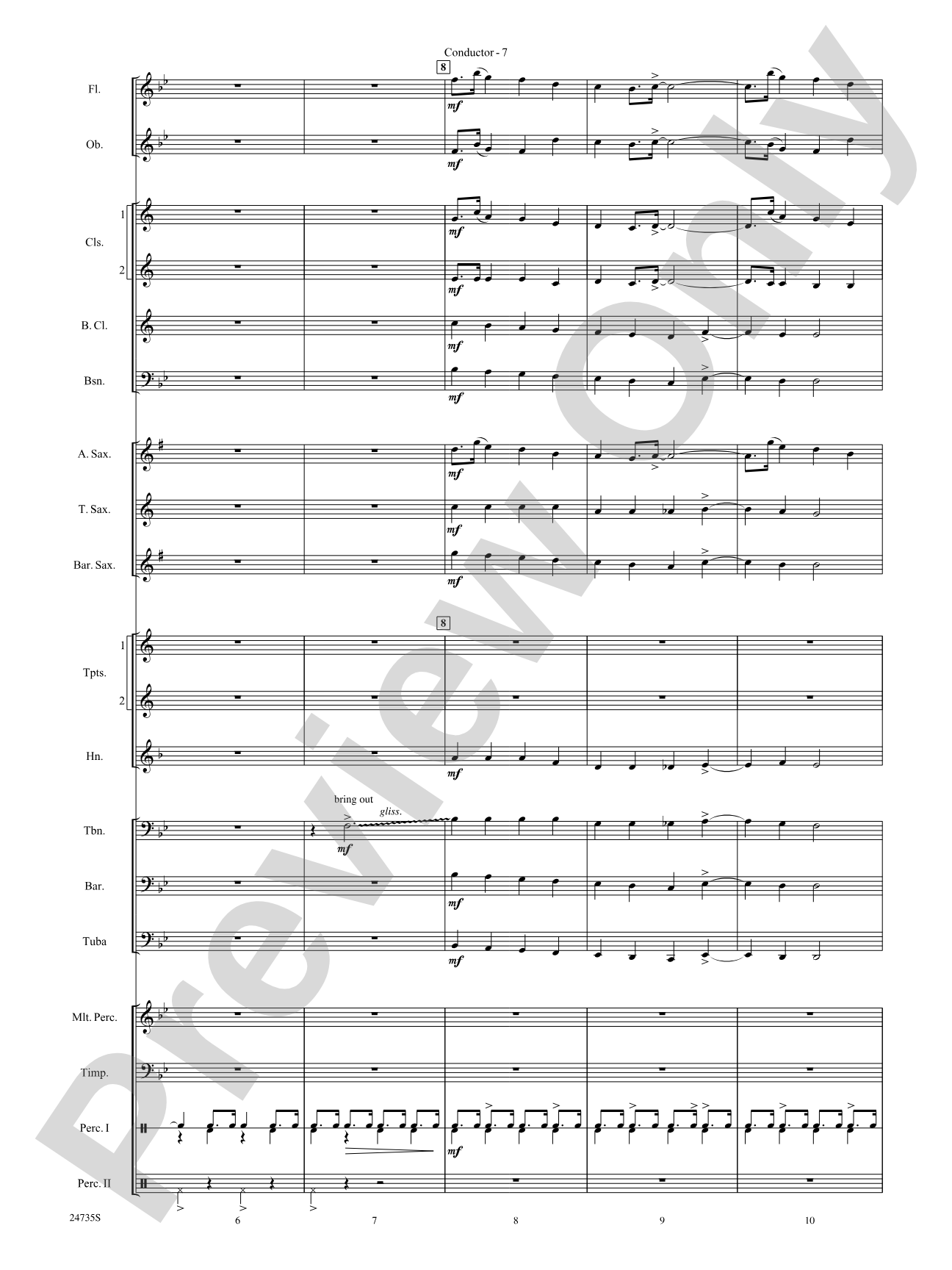
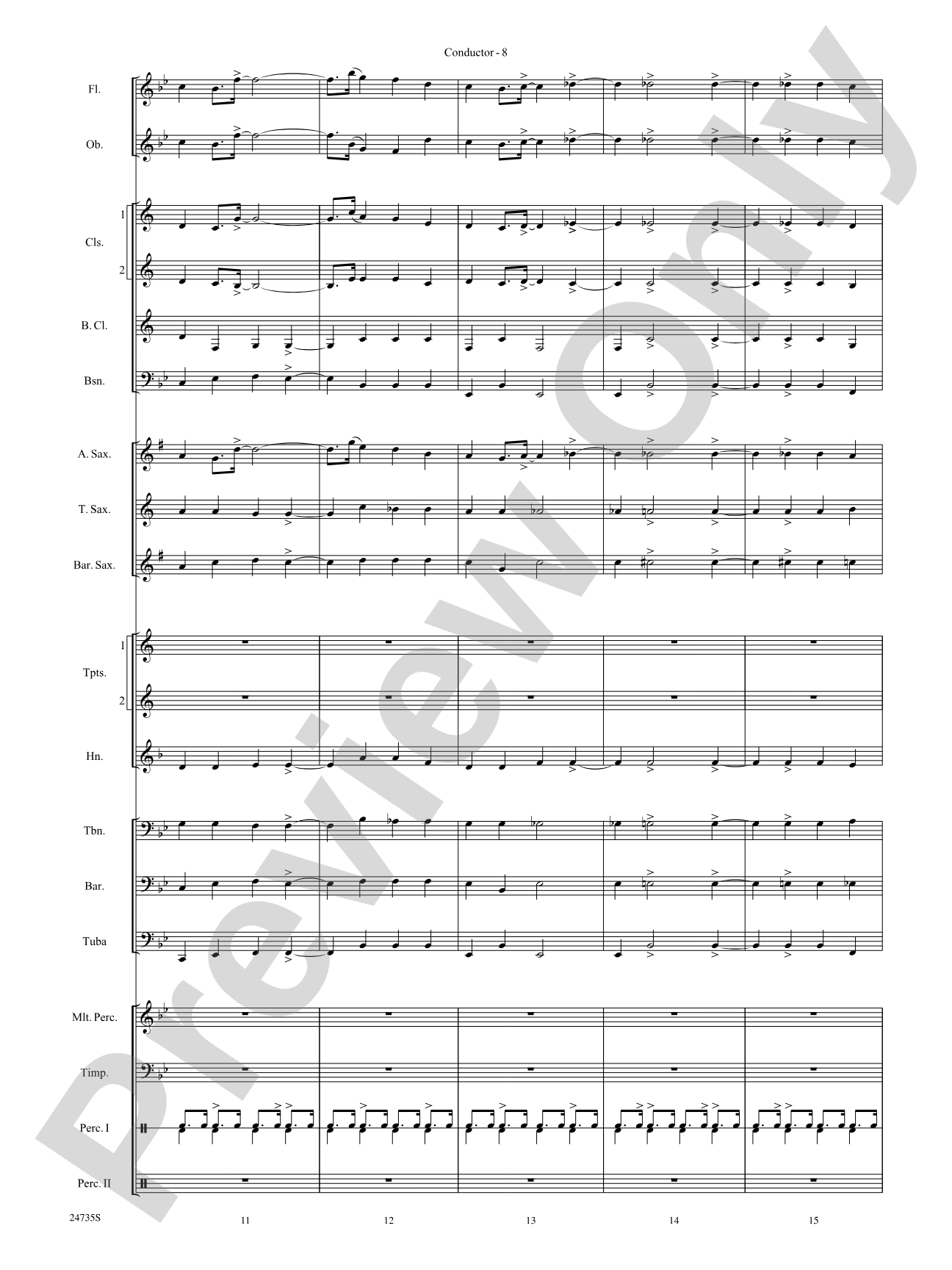
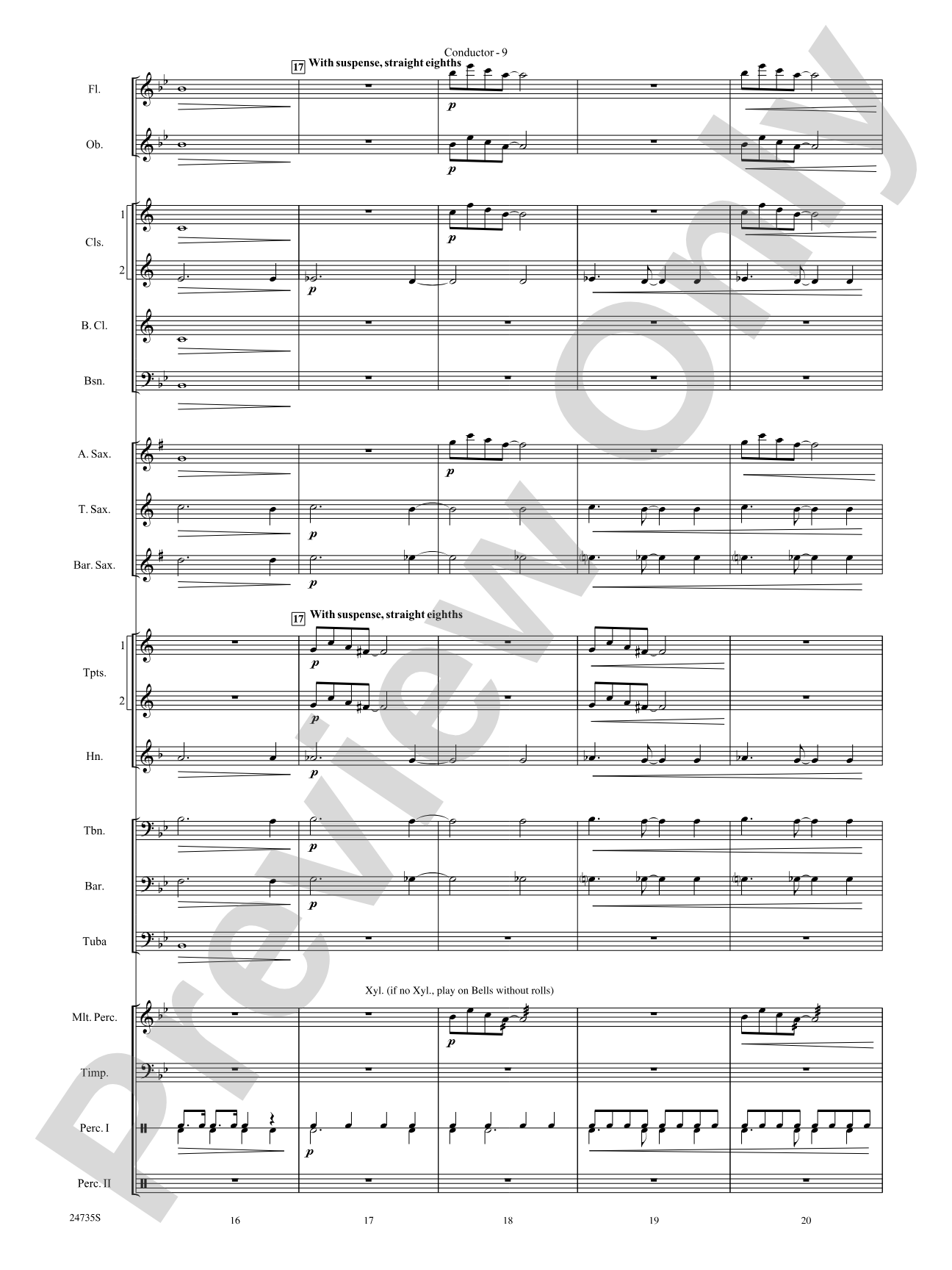
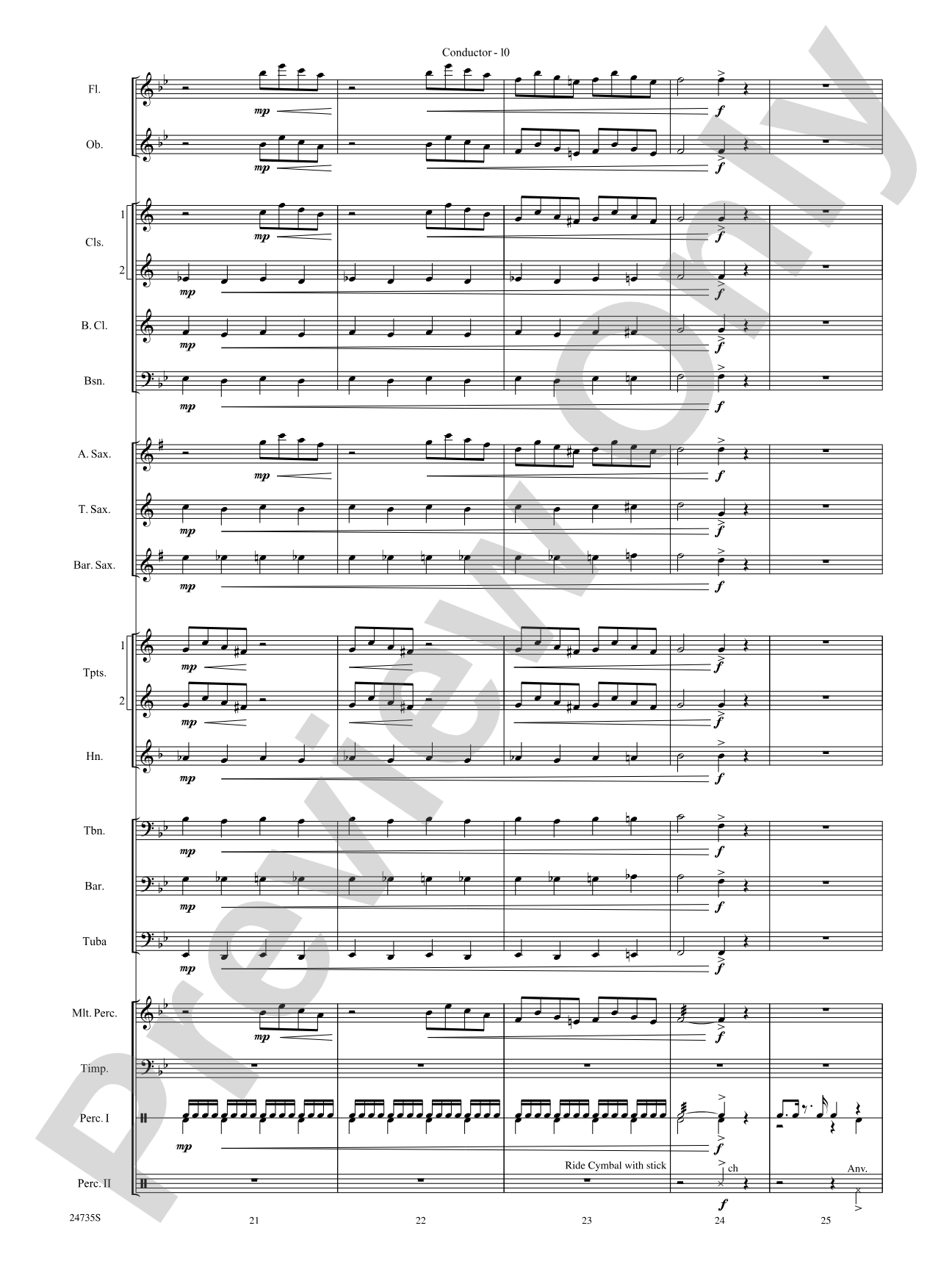
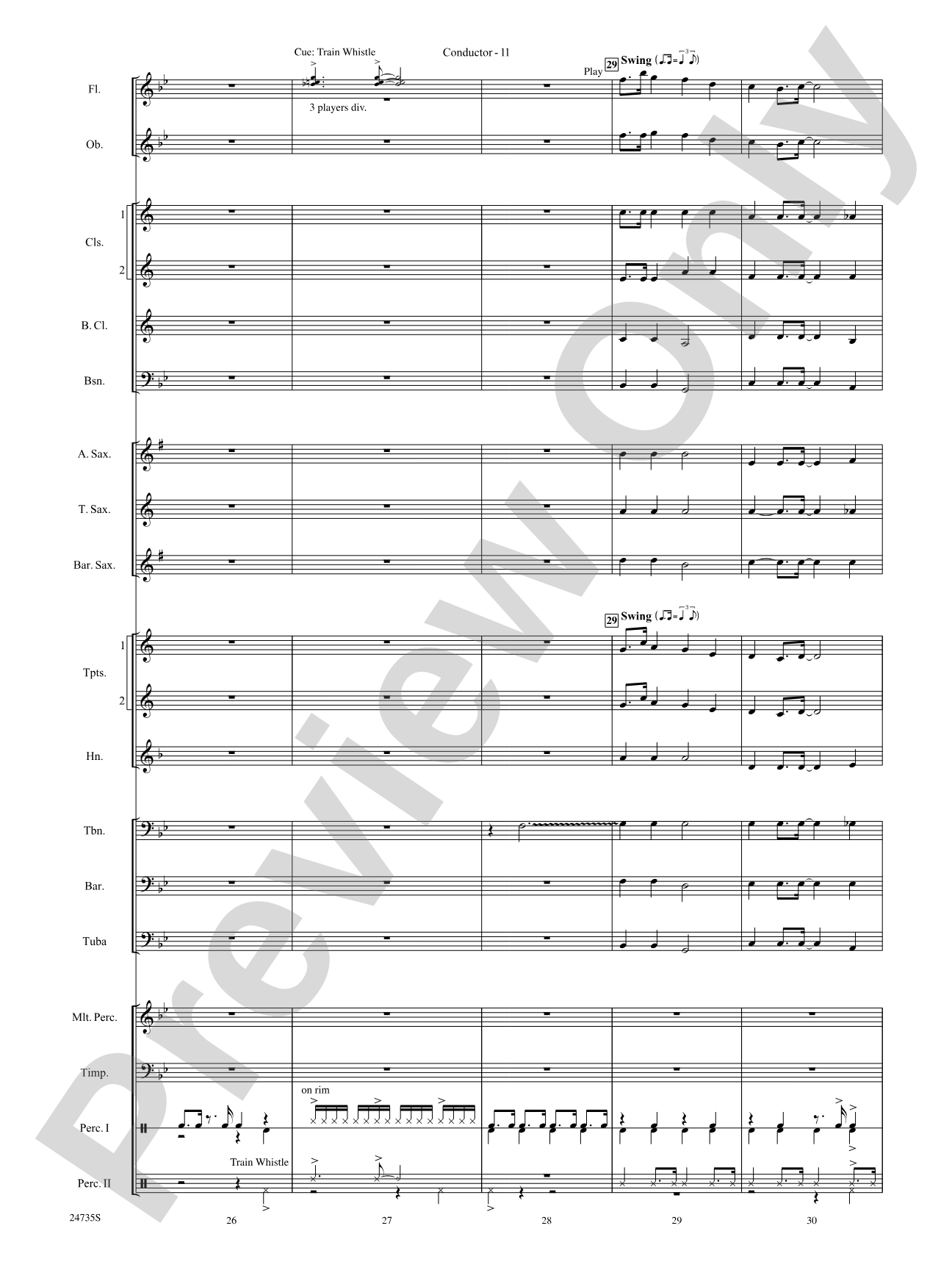
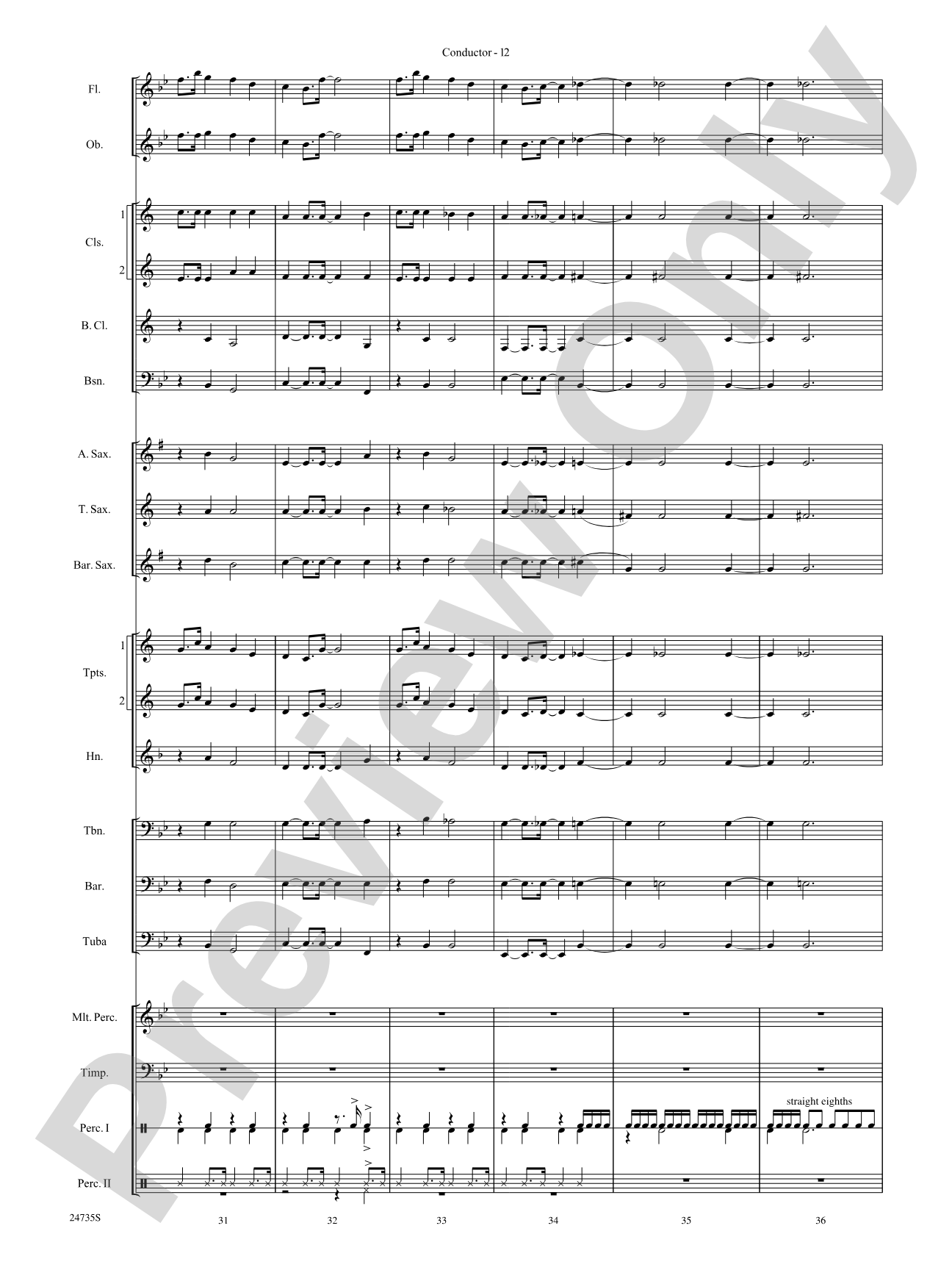
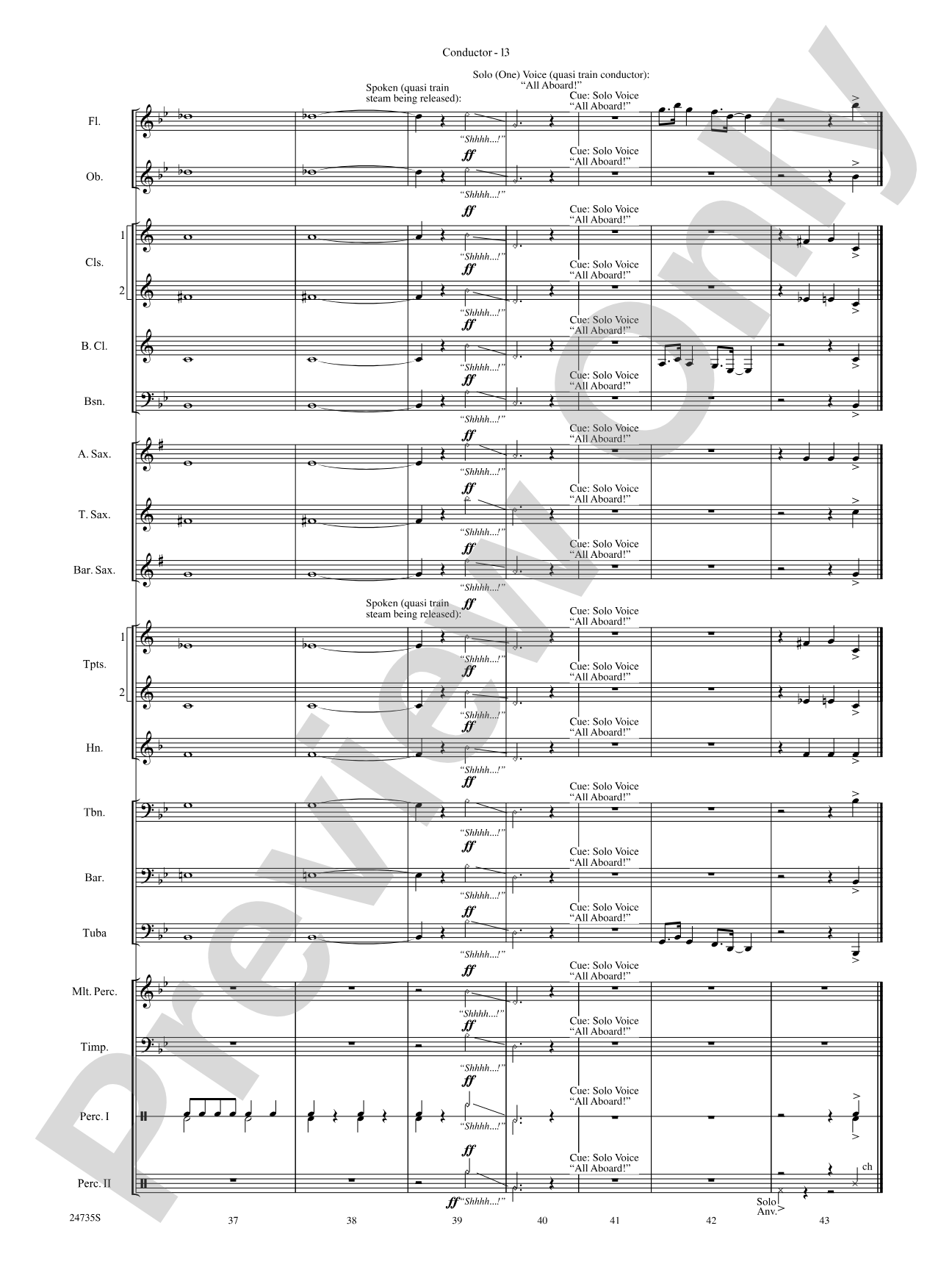
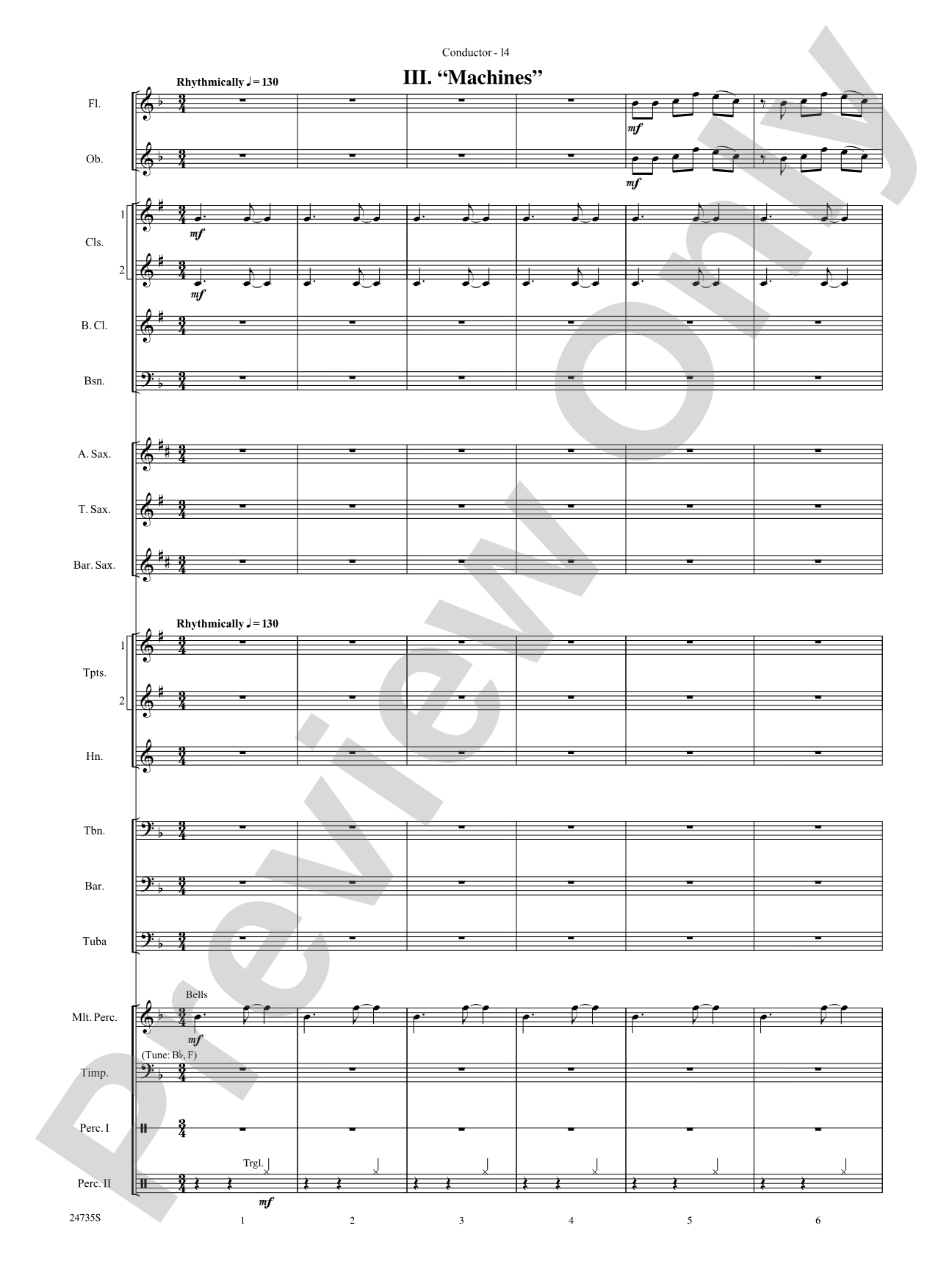
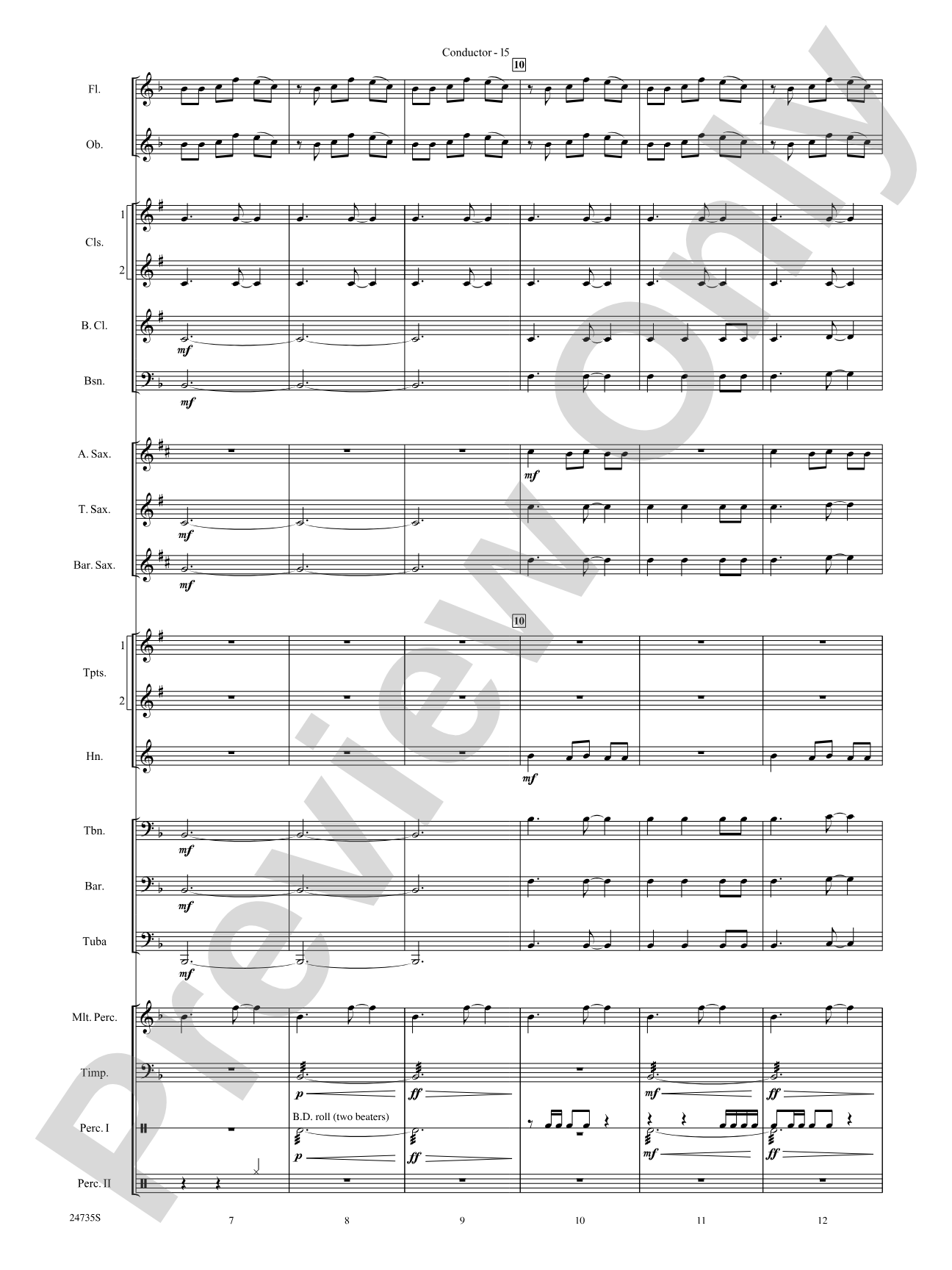
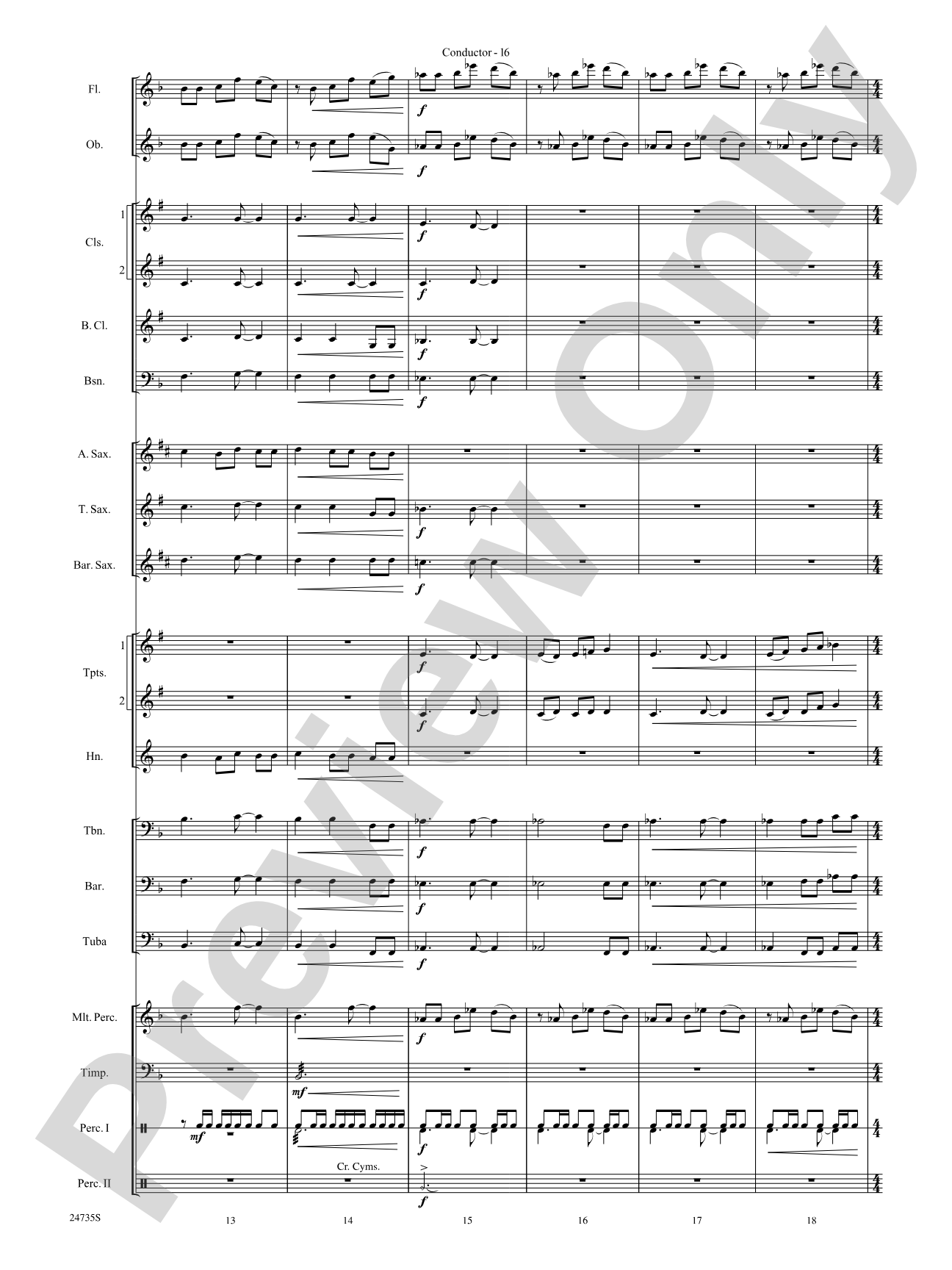
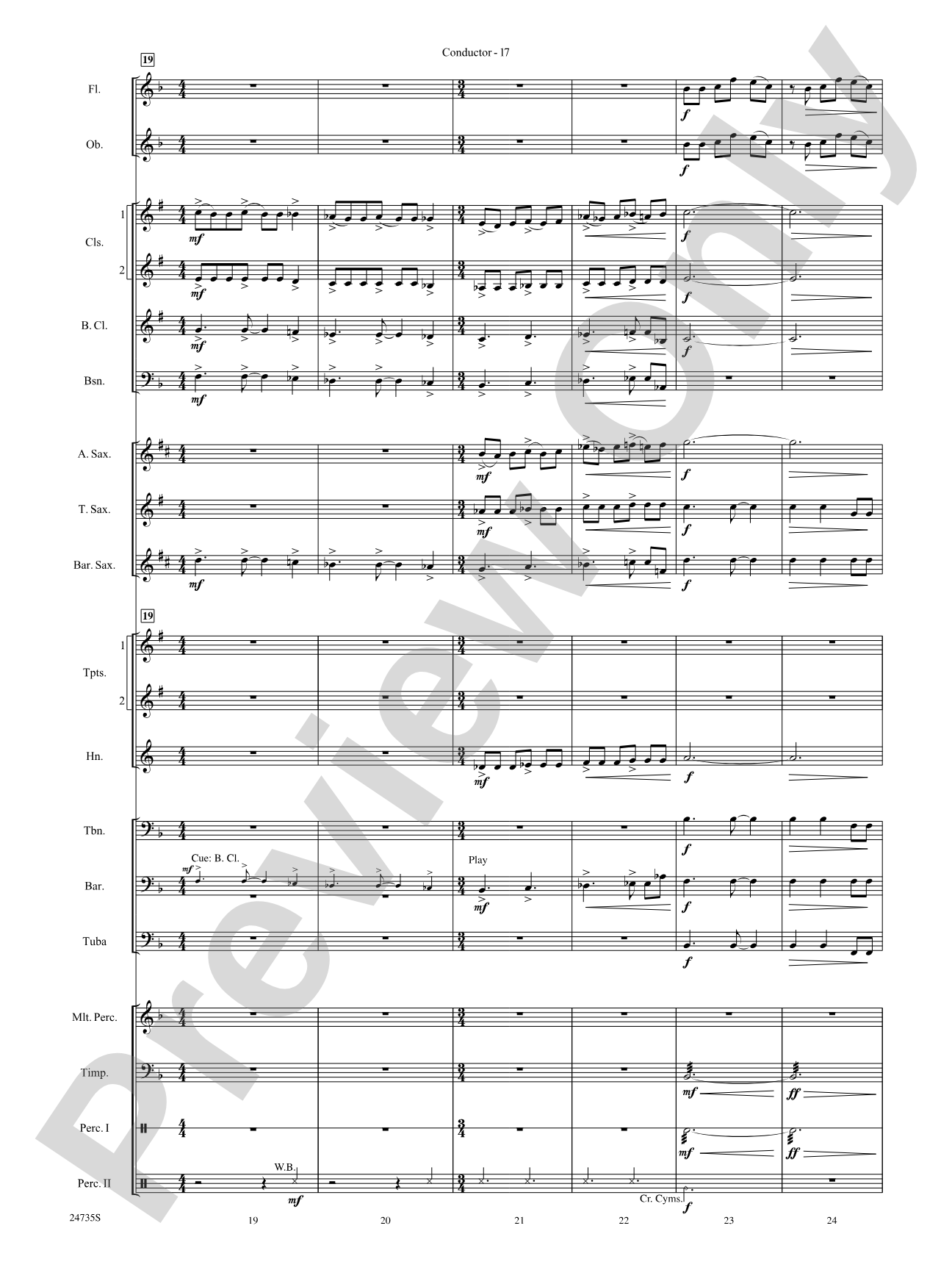
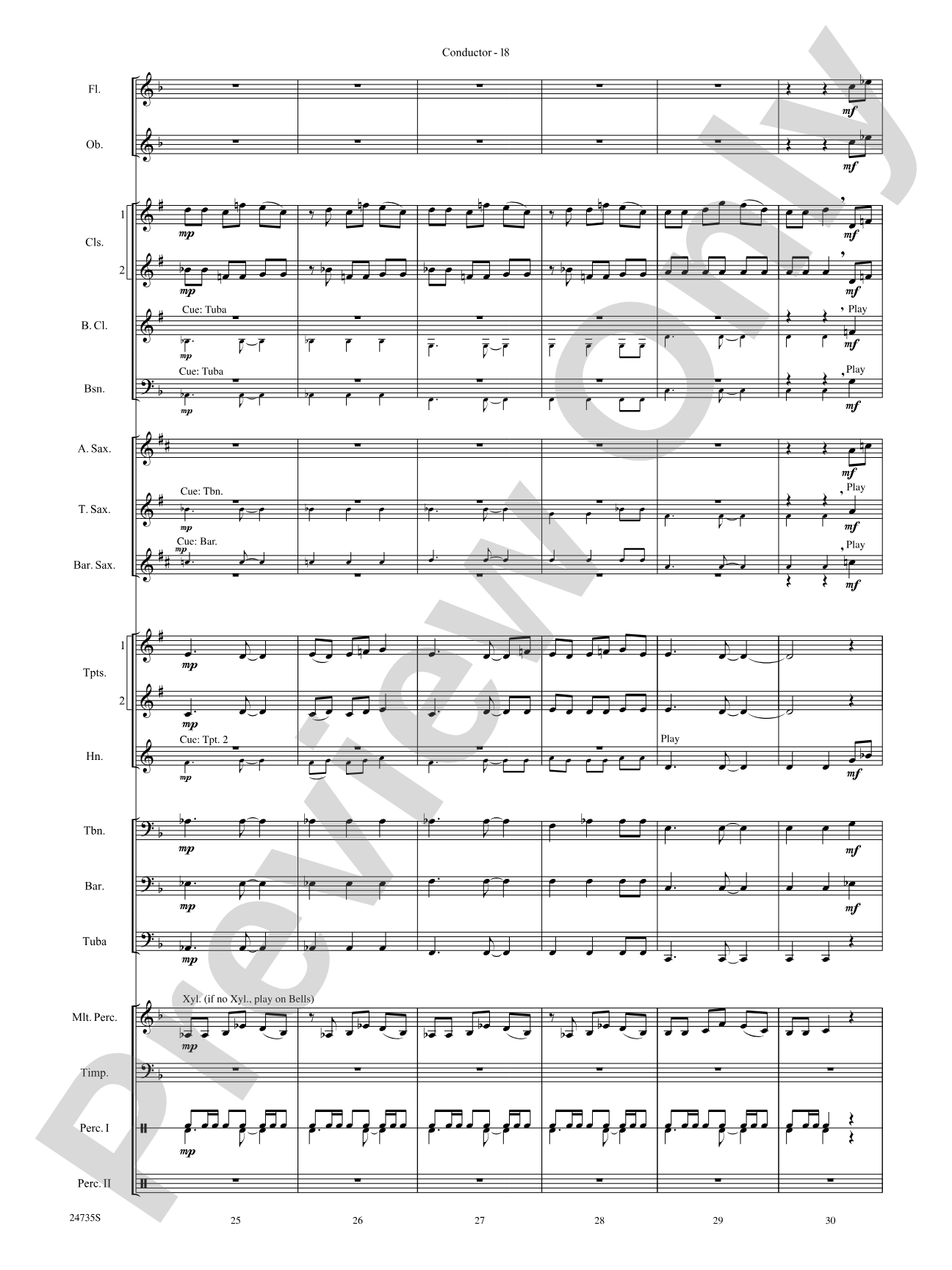
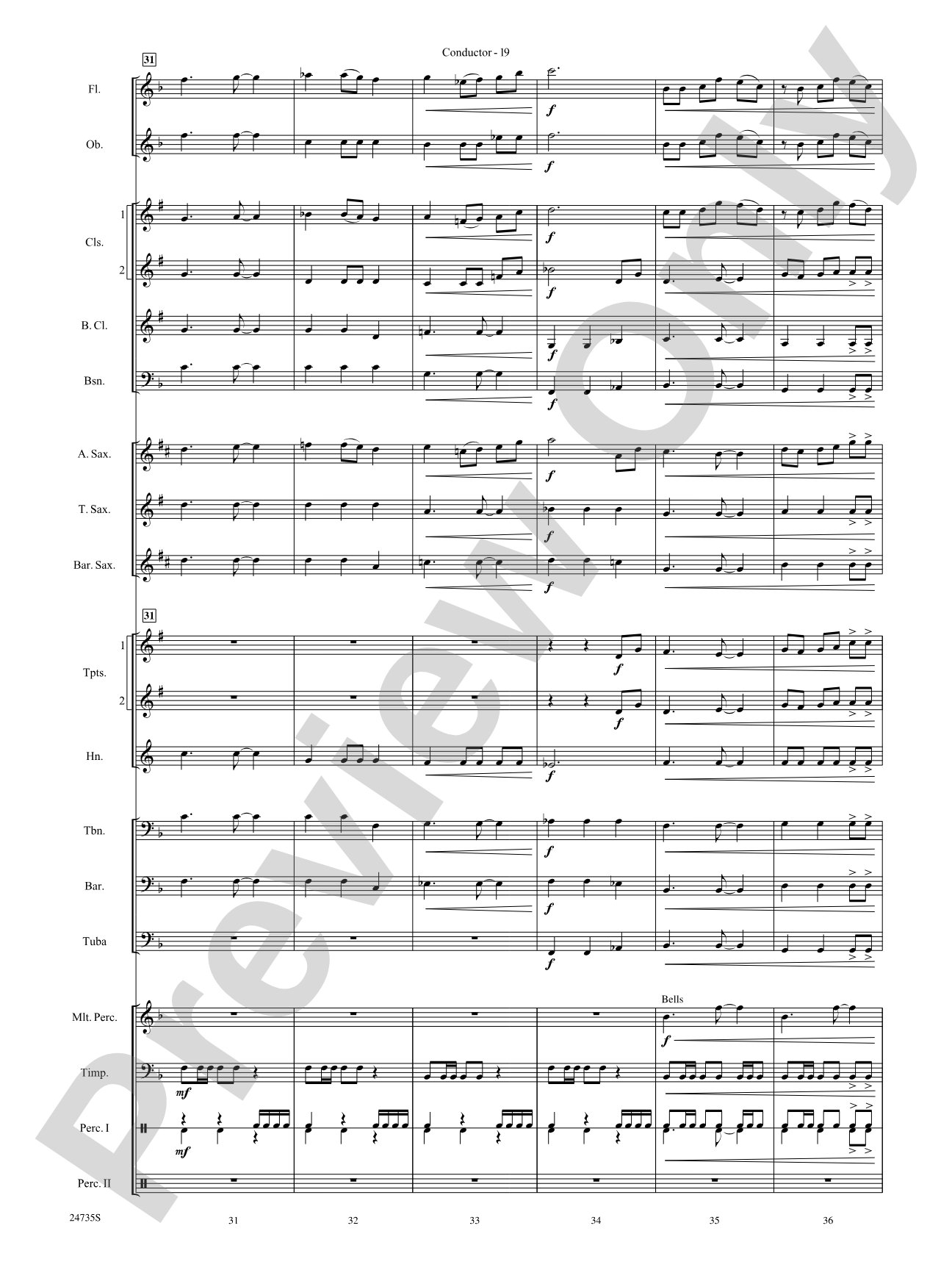
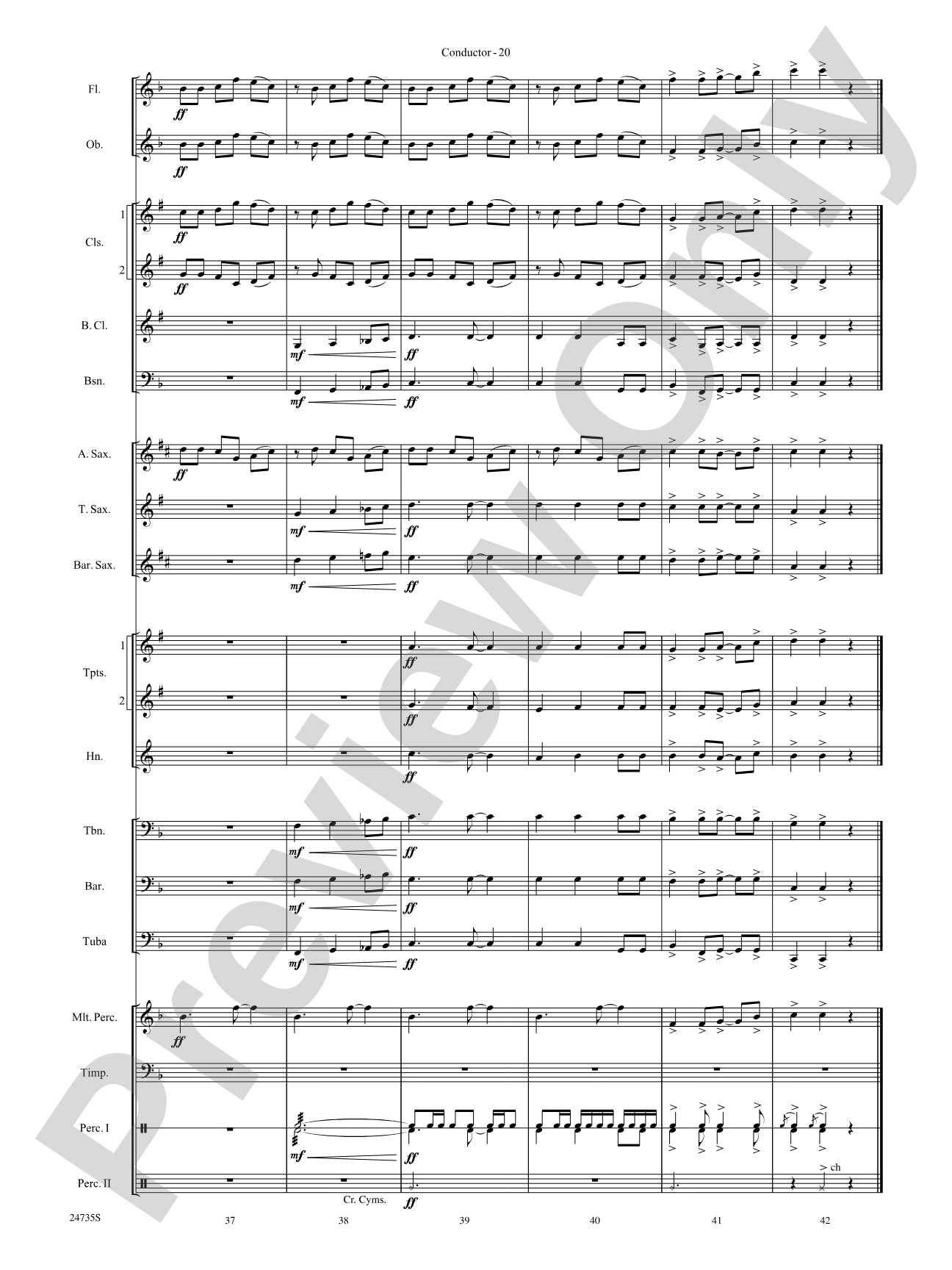
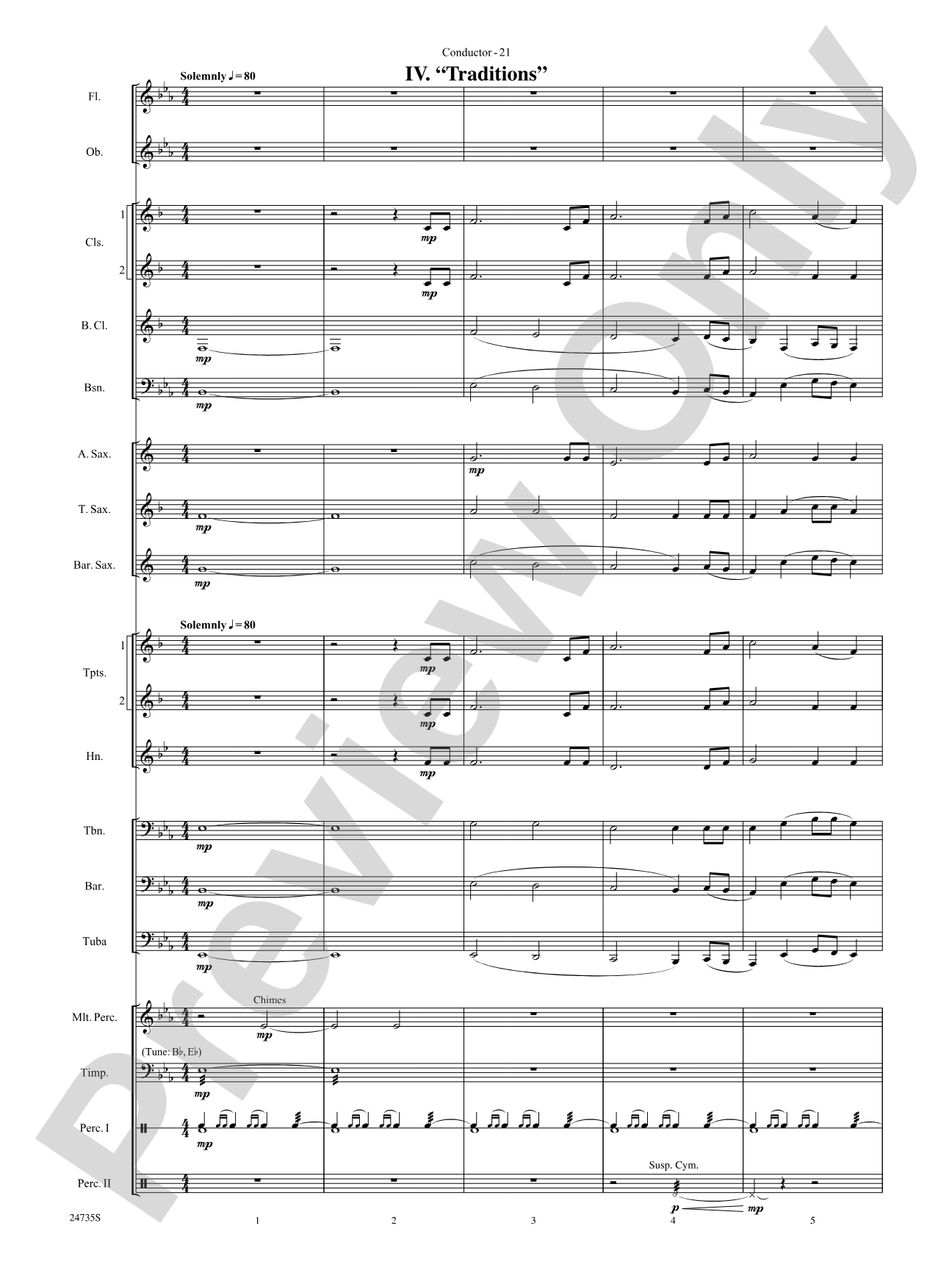
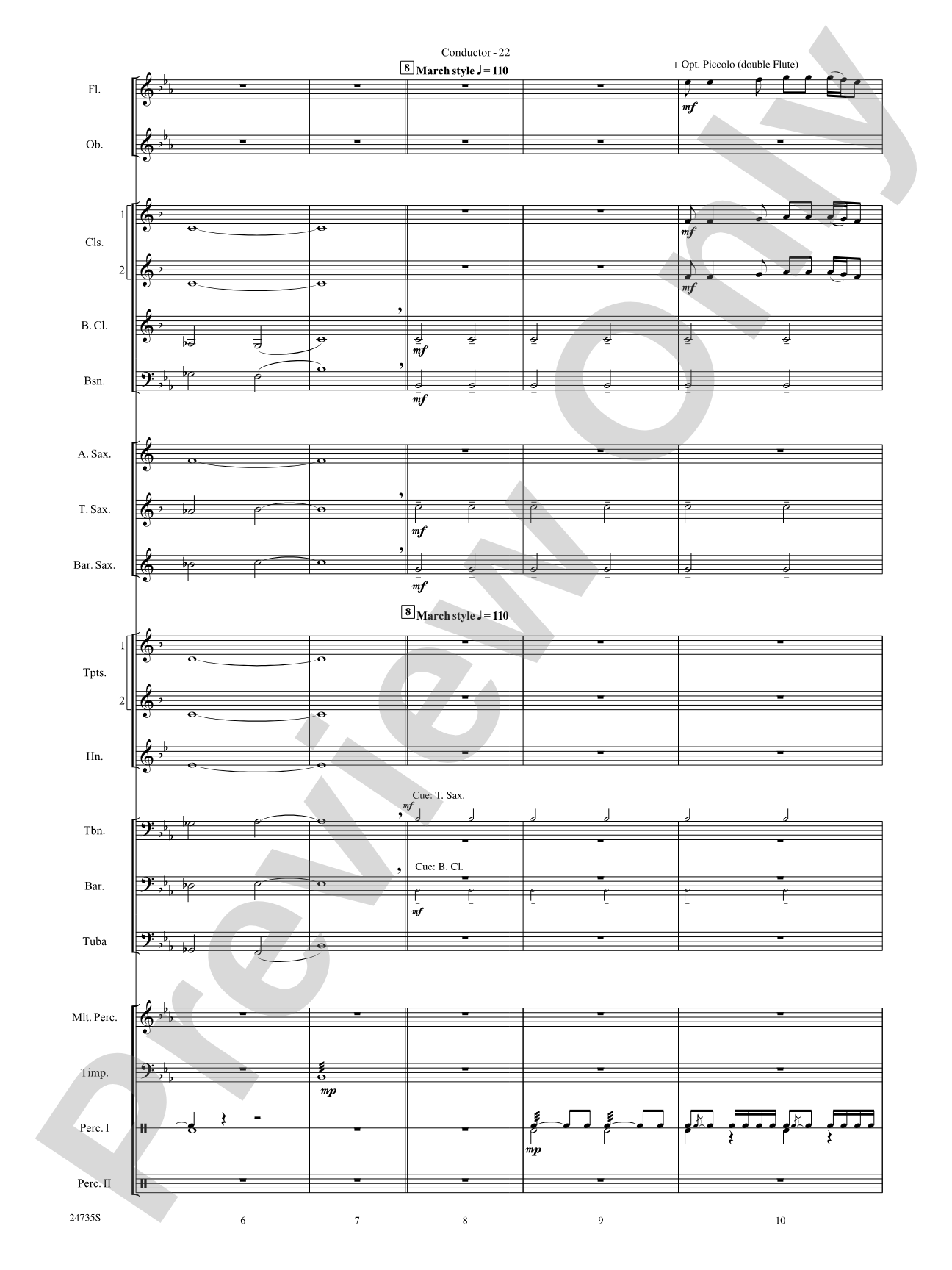
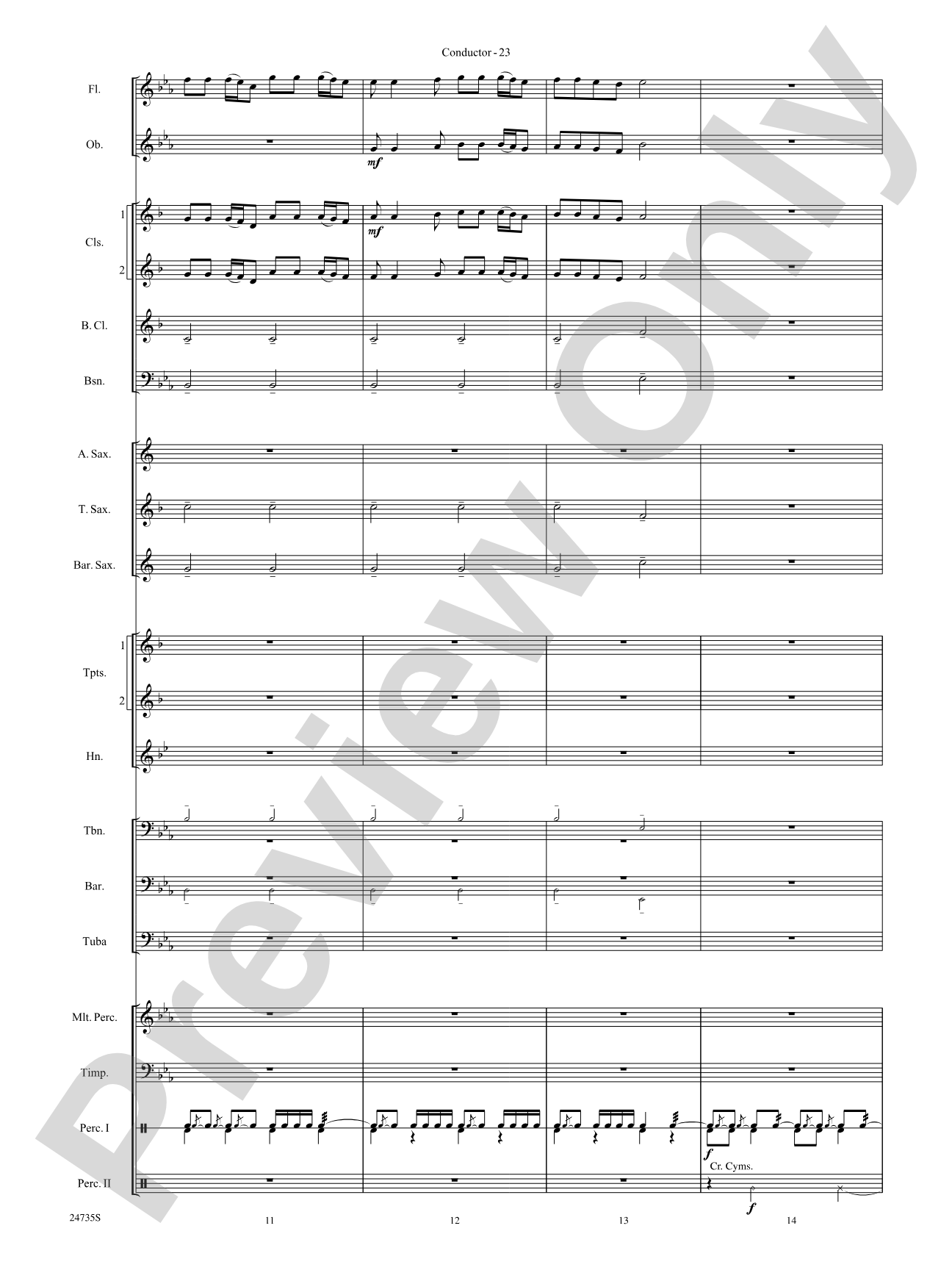
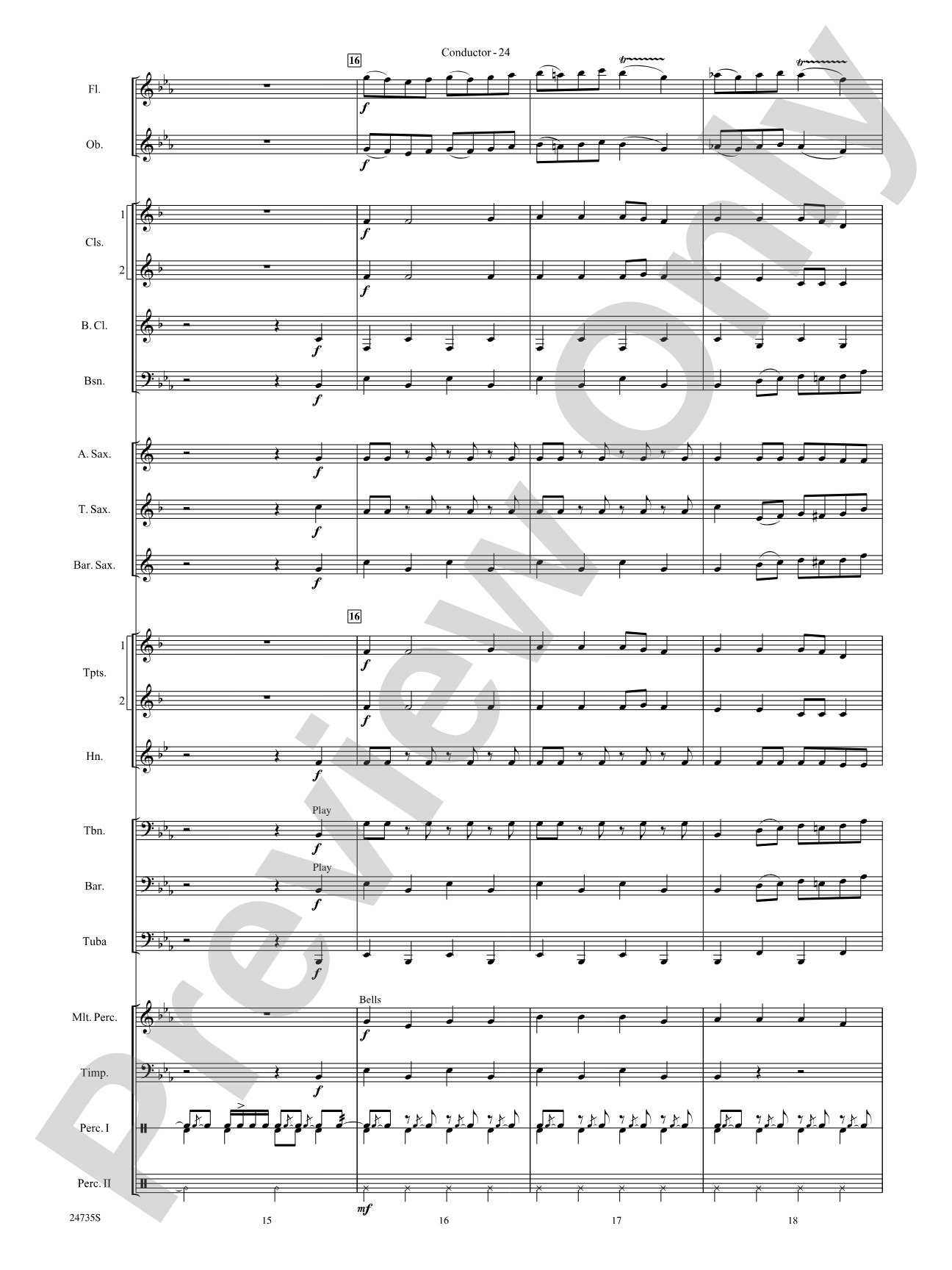
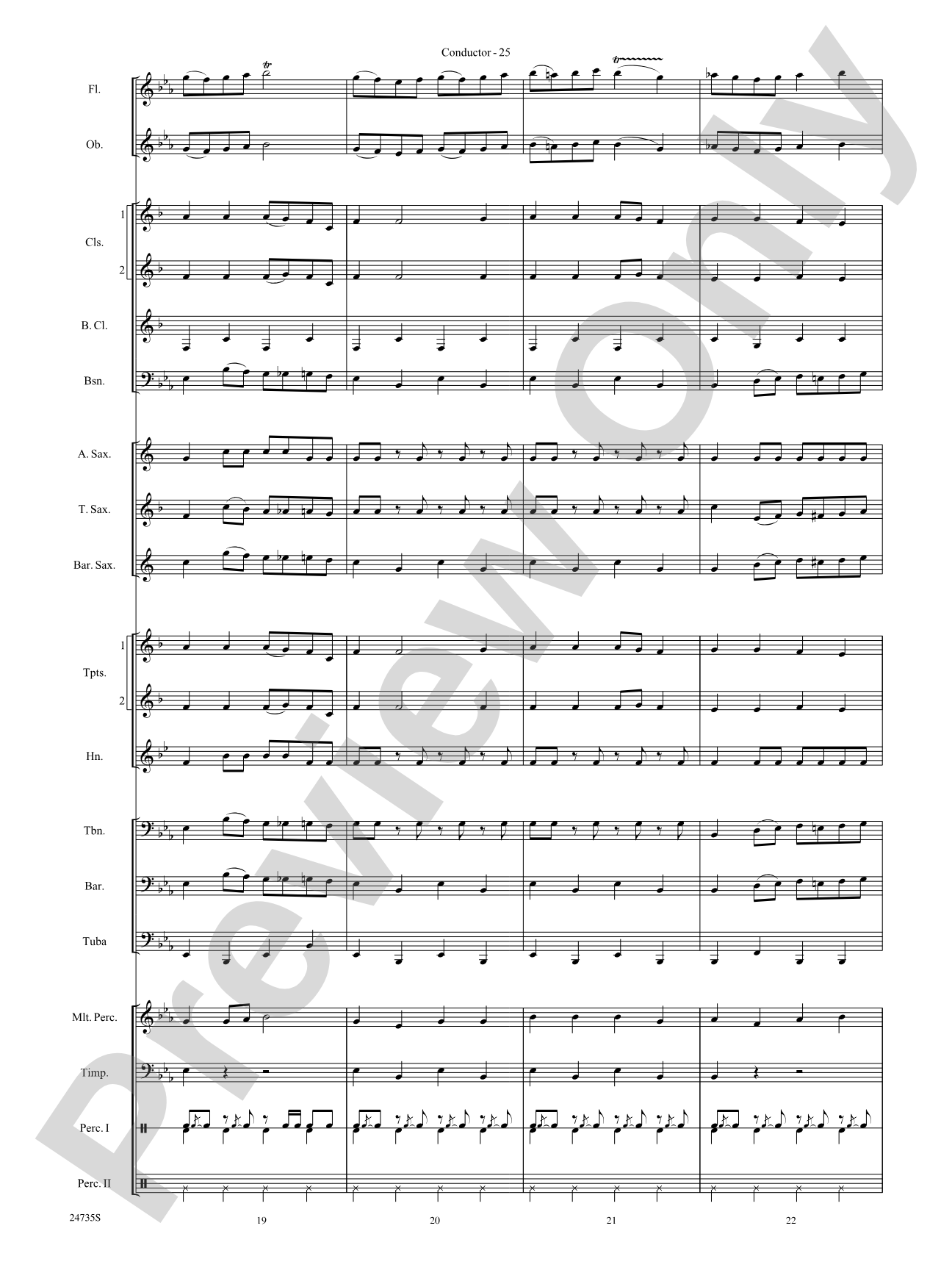
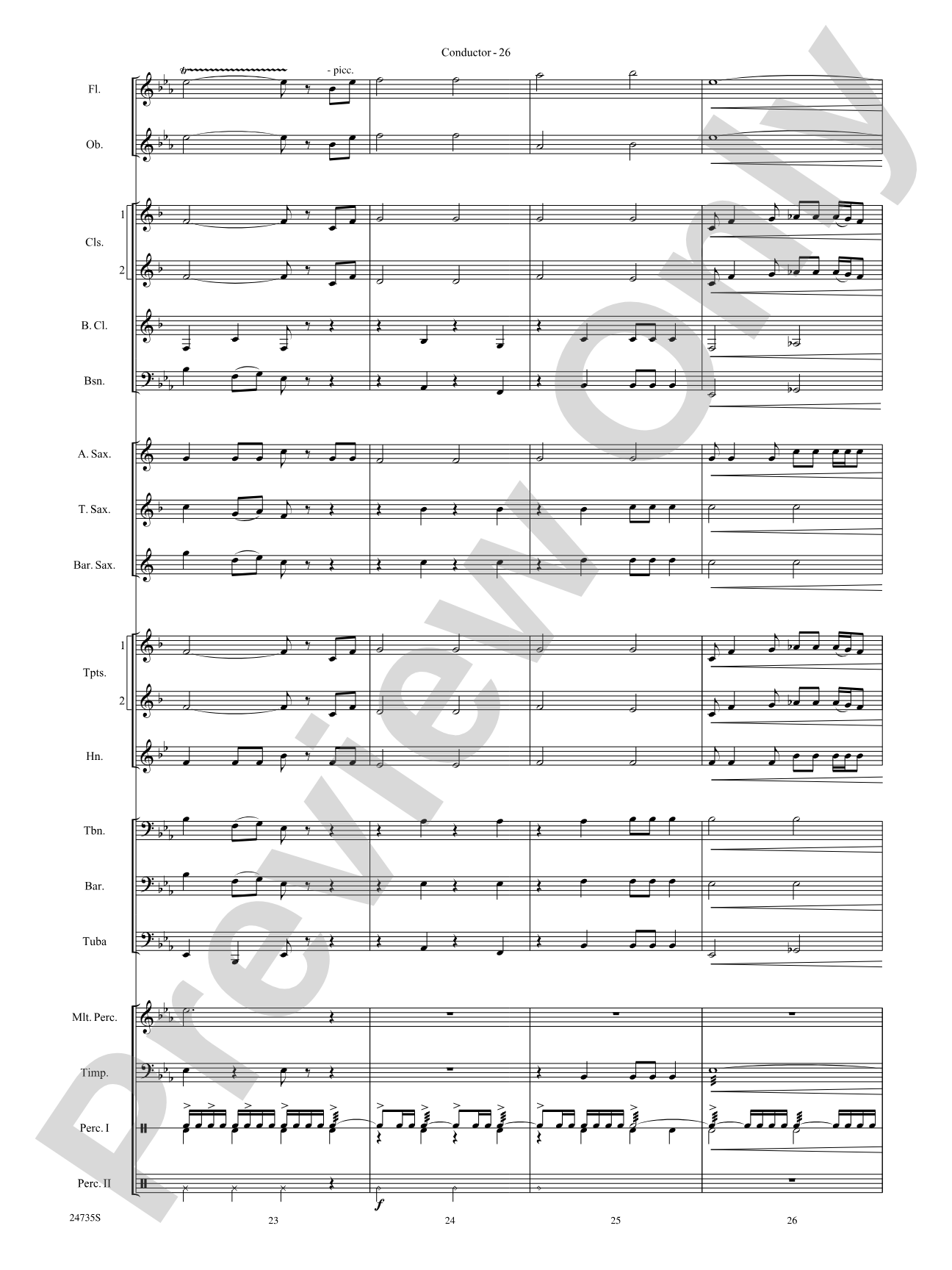
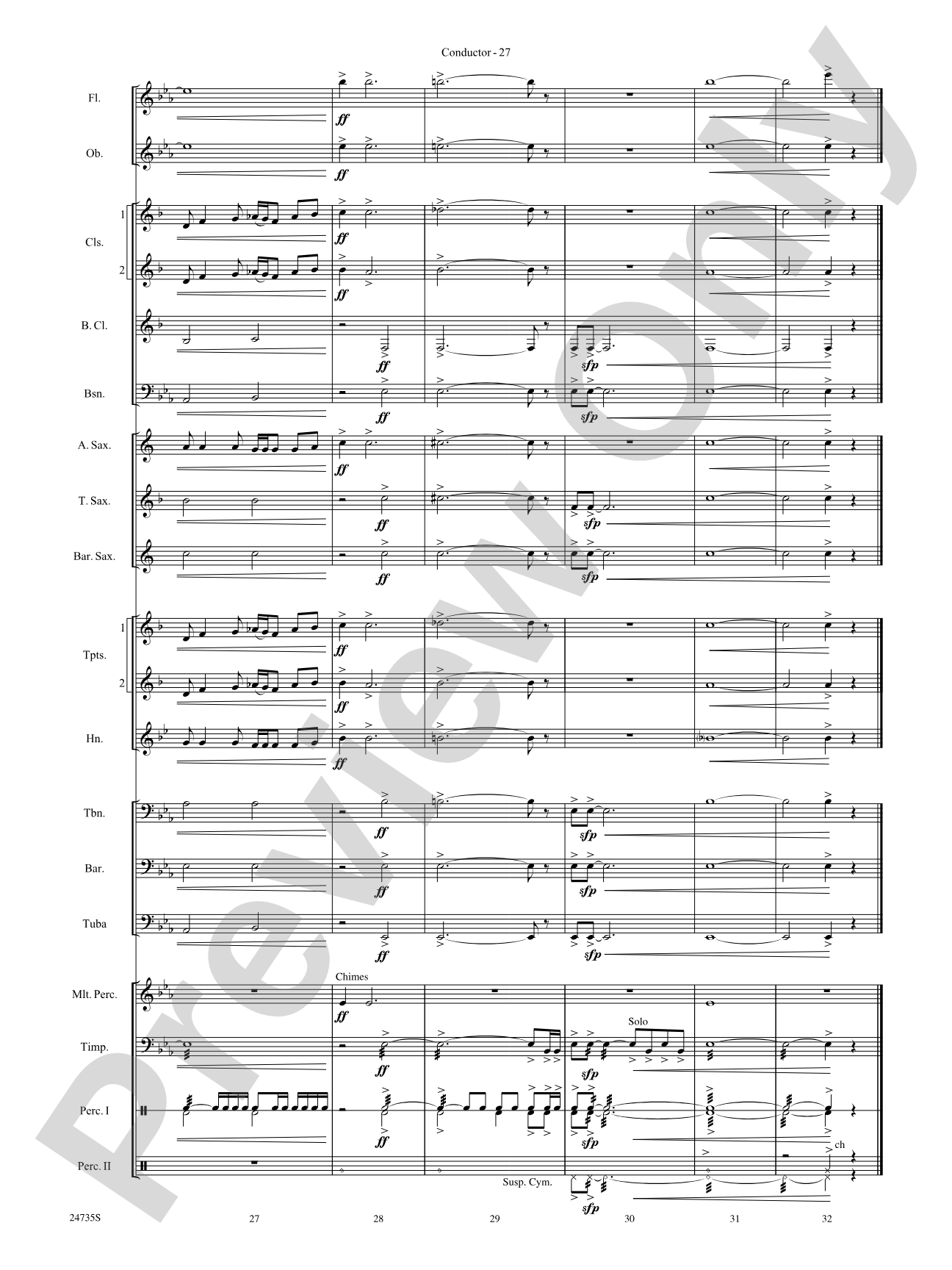

River Valley Legacy (I. River Echoes, II. Railroads, III. Machines, IV. Traditions): Score
By Kevin Mixon
Grade: 2 (Easy)
Item: 00-PR-0000877
$8.00
Pickup currently not available
Description
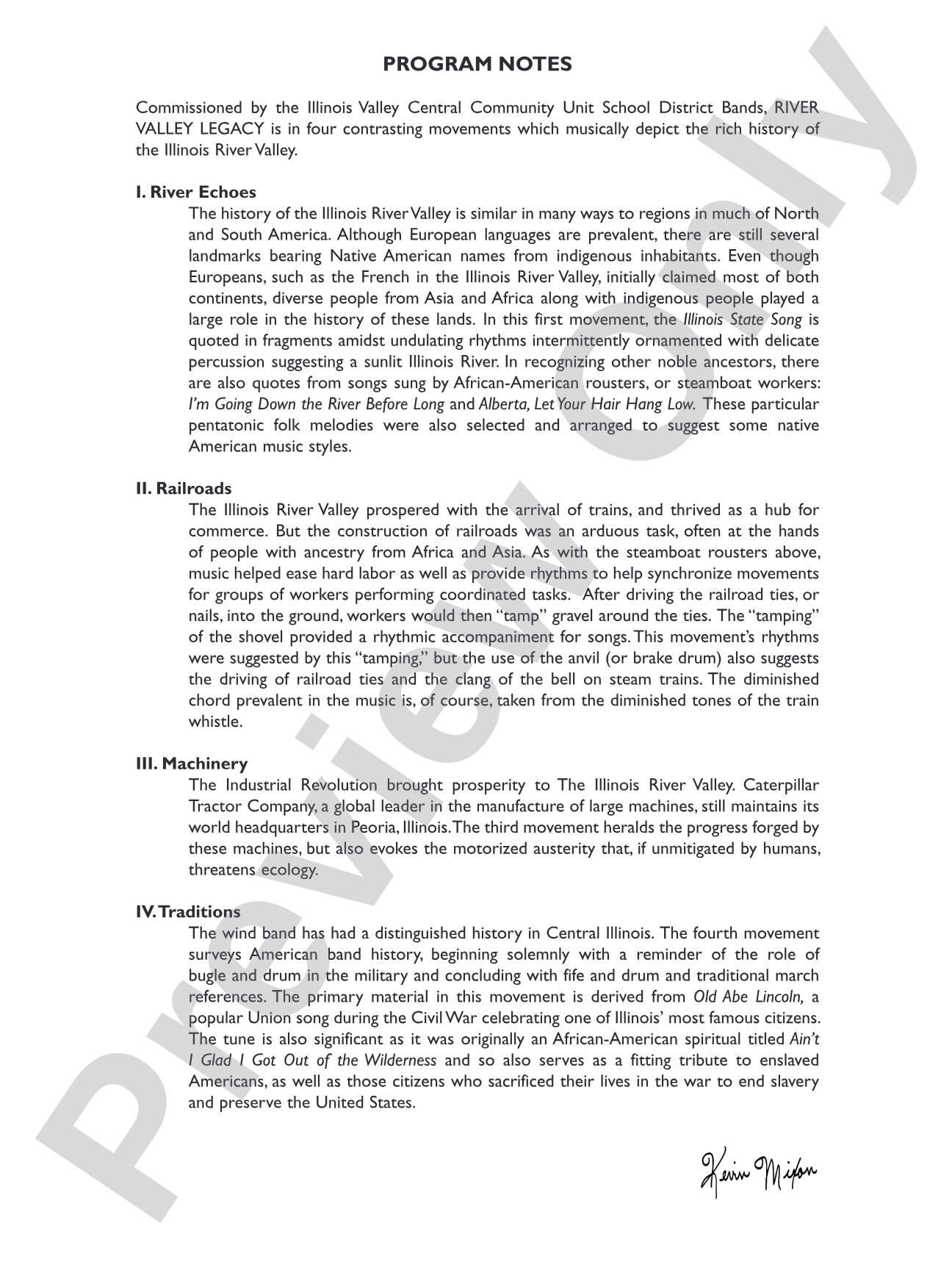
This substantive four-movement suite encompasses several musical styles: legato, swing, march, and more, with a spirited bravura conclusion that students and audiences will love. The contrasting movements include the lyrical "River Echoes," the jazzy "Railroads," the hard-driving "Machines" section, and the climactic "Traditions" finale. Though written to represent central Illinois, each movement references significant events encompassing several periods in U.S. history. Kevin Mixon's "River Valley Legacy" offers abundant opportunities for cross-curricular instruction with a piece that is sure to be a favorite at your next concert.


Don't just read it, hear it, play along with it, and watch your students grow with it. In MakeMusic Cloud, River Valley Legacy (I. River Echoes, II. Railroads, III. Machines, IV. Traditions): Score comes alive with professional accompaniment, adjustable tempo, and built-in practice tools that turn solo practice into real progress.
Open in the Player
Jump straight in and assign it today.
Start Your Free Trial
Open this title and explore the full library in minutes.
Sample Audio
1
Audio File
--:--
0:00
0:00
Sample Video
No sample videos found.
Additional Details
Series:
Belwin Young Band
Publisher:
Alfred Music
Page Count:
139
SKU:
00-PR-0000877
More about this title
About the Composer: Kevin Mixon
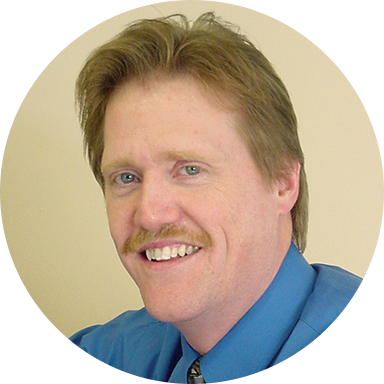
Kevin Mixon directs instrumental music at Blodgett K-8 School in Syracuse City Schools, New York, where he designs curriculum for diverse learners and urban music education contexts. He has presented clinics at major conferences including The International Society for Music Education Convention, The Midwest International Band and Orchestra Clinic, and numerous state and regional music conferences, focusing on topics such as curriculum integration, multicultural music, alternative rehearsal techniques, and percussion pedagogy.
Mixon holds degrees, summa cum laude, from Onondaga Community College, Syracuse University, and the University of Illinois (Urbana-Champaign), and has pursued a Certificate of Advanced Studies in Educational Leadership. His writing appears regularly in Music Educators Journal, Teaching Music, The Instrumentalist, and The National Band Association Journal. He is author of Reaching and Teaching All Instrumental Music Students and co-author of Teaching Music in the Urban Classroom (MENC/Rowman & Littlefield Publications). As a published composer and arranger, his works span band and orchestra literature.
Why we love this
River Valley Legacy is a rare Grade 2 suite that actually sounds substantial without requiring advanced technical facilities. Mixon weaves jazz, march, and lyrical writing together in ways that keep students engaged across all four movements while remaining confident and accessible for developing ensembles. The programmatic connection to regional history makes it natural partner material for social studies units, extending the value of rehearsal time beyond music class alone.
What to expect
River Valley Legacy opens with reflective, flowing phrases that evoke water and landscape, then shifts into the rhythmic energy of an American railroad past. The Machines movement strikes with percussive drive and industrial urgency before the finale brings all the thematic threads together in a spirited celebration of tradition and continuity. The suite captures regional history through accessible but substantive musical storytelling.
Who it's for
This suite works well for Grade 2 concert bands seeking substantive program material with programmatic and cross-curricular appeal. Students benefit from navigating contrasting musical styles and developing longer-form listening skills, while directors gain a four-movement work that holds both student interest and audience engagement at the concert.
How to get the most out of it
- Balance the legato phrasing in River Echoes by isolating the melody line in sectionals; this opening movement sets the lyrical tone for the entire suite, so invest rehearsal time here even though the technical demands are modest.
- Lock the swing feel in Railroads by having the rhythm section (low reeds and low brass) establish the groove independently before bringing in the full ensemble; this prevents the characteristic rhythm from becoming straight-eighth.
- Drive the Machines movement with precise articulation across all parts; the hard-driving character depends on clarity and uniform tonguing rather than volume alone.
- Shape the Traditions finale with a clear climactic arc; the bravura conclusion benefits from deliberate control of tempo and dynamics rather than simply playing faster or louder.
How to use it
Program this suite on a concert exploring American regional history or cultural heritage; the four movements allow natural pauses between contrasting styles and give audiences a coherent narrative experience. It also pairs well with social studies units on Illinois history or broader American industrial and cultural development, making it a natural choice for spring concerts with thematic programming.
Skills your students will build
- Legato phrasing and line singing across sustained passages
- Swing rhythm and feel, distinguishing it from straight-eighth interpretation
- March style articulation and ensemble rhythmic precision
- Four-movement form comprehension and thematic coherence
- Balance and blend across contrasting musical textures