
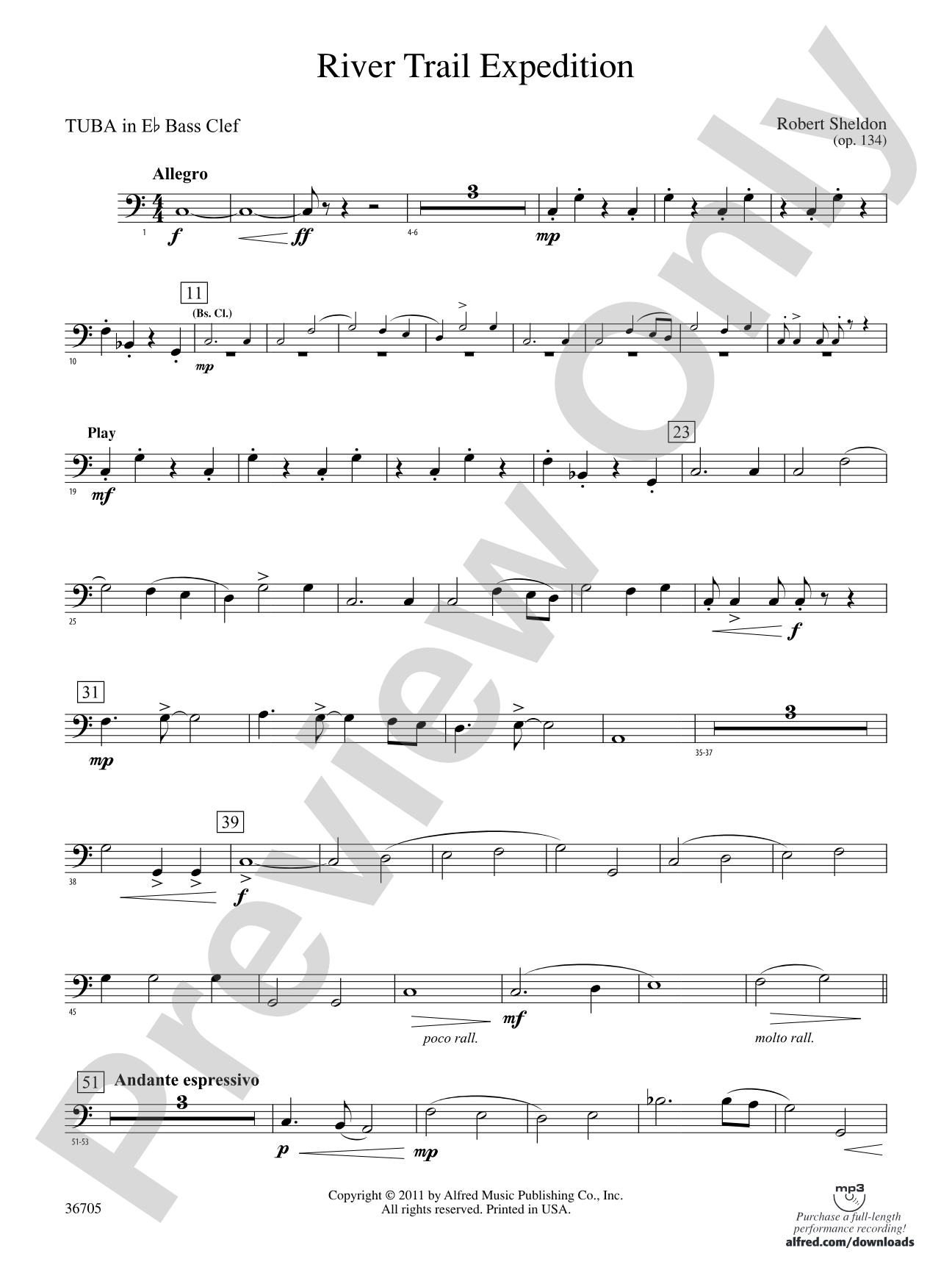
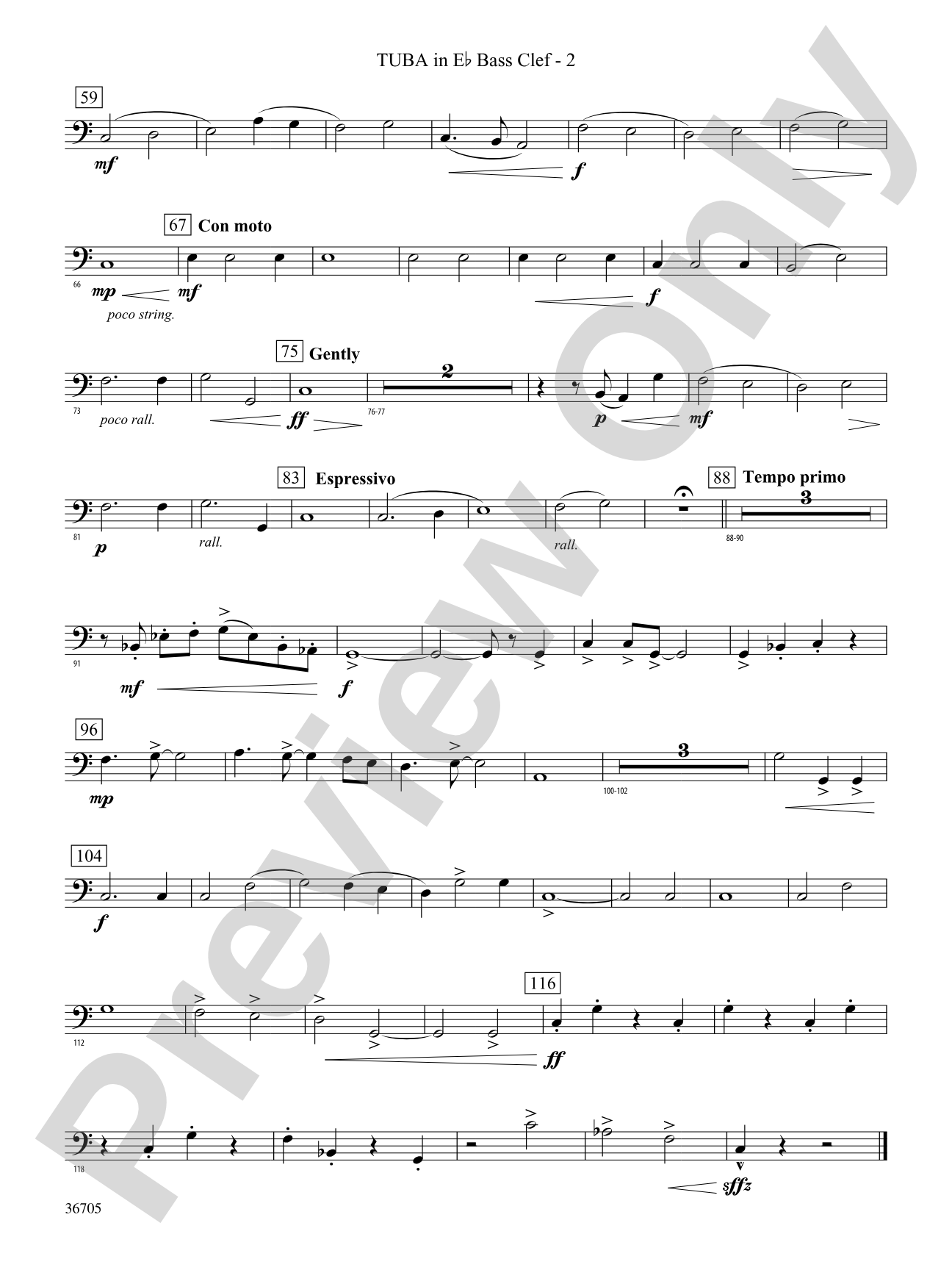

River Trail Expedition: (wp) E-flat Tuba B.C.
By Robert Sheldon
Grade: 3 (Medium)
Item: 00-PC-0015133_wpTBEBC
$3.00
Pickup currently not available
Description
Written for the Streator High School Band in Illinois, River Trail Expedition is named for the Hopalong Cassidy River Trail that winds along the banks of the Vermilion River. The trail borrows its name from the Hopalong Cassidy series of books, written by Streator native Clarence E. Mulford. This concert overture has an energetic drive which is enhanced by punctuated rhythms and edgy dissonances that contrast with the lyrical and tuneful melodies found throughout the piece. This title is available in MakeMusic Cloud.


Don't just read it, hear it, play along with it, and watch your students grow with it. In MakeMusic Cloud, River Trail Expedition: (wp) E-flat Tuba B.C. comes alive with professional accompaniment, adjustable tempo, and built-in practice tools that turn solo practice into real progress.
Open in the Player
Jump straight in and assign it today.
Start Your Free Trial
Open this title and explore the full library in minutes.
Sample Audio
1
Audio File
--:--
0:00
0:00
Sample Video
No sample videos found.
Additional Details
Series:
Alfred Concert Band
Publisher:
Alfred Music
Page Count:
272
SKU:
00-PC-0015133_wpTBEBC
More about this title
About the Composer: Robert Sheldon

Robert Sheldon stands among the most frequently performed composers in the wind band repertoire today. His works have earned recognition from the American School Band Directors Association, Phi Beta Mu, and ASCAP, and they appear regularly on contest and concert programs across the globe. He serves as lead author of Sound Innovations for Concert Band and accepts commissions consistently while producing substantial new publications annually.
Sheldon's influence extends through his work as a guest conductor for All-State and Regional Honor Bands, as well as his clinic and seminar presentations at universities and state music education conferences. He has conducted his own compositions at major venues including Carnegie Hall, Orchestra Hall in Chicago, Boston's Symphony Hall, the Sydney Opera House, and the Kennedy Center. In 2020, VanderCook College of Music awarded him an honorary doctorate in recognition of his contributions to wind music.
Why we love this
Sheldon crafts concert overtures that meet a real programming need: substantial, musically engaging works that sit comfortably at the Grade 3 level without sounding simplified. The programmatic anchor here (a trail named for a Streator native's literary creation) gives your program a meaningful local connection, while the musical language itself—sharp rhythmic punctuation against lyrical passages—holds audience attention and gives students something genuinely musical to sink their teeth into.
What to expect
River Trail Expedition moves with forward momentum and purpose, its energy driven by sharp, percussive rhythmic figures that cut through the ensemble. Underneath runs a stream of melody that's genuinely lyrical and singable, creating a satisfying contrast that keeps the piece from feeling one-dimensional or purely technical.
Who it's for
Any Grade 3 concert band ready for a programmatic work with genuine musical substance. This piece suits ensembles that have solid fundamentals in place and want to tackle something beyond generic march-based curricula without jumping to higher grade levels.
How to get the most out of it
- Clarify the dynamic contrast between the edgy rhythmic figures and the lyrical melodies; many bands default to playing everything at a similar dynamic level, but the piece's architecture depends on that push and pull.
- Balance the dissonant harmonic moments so they land with intention rather than sounding muddy; clean articulation in the winds during these passages prevents the piece from losing direction.
- Lock the rhythmic drive through steady contact with your percussion section, especially where punctuated rhythms occur; even slight wavering in the underlying pulse undermines the energetic character Sheldon builds.
- Breathe with your ensemble during the lyrical sections to avoid a mechanical feeling; the melodies reward slight flexibility and phrasing that emphasizes the tunefulness Sheldon writes.
How to use it
Open a concert with this overture to establish energy and sophistication early, or place it mid-program to reset audience attention. Its programmatic title and local heritage make it ideal for homecoming or regional pride programming, and the Grade 3 difficulty means you're not overextending your ensemble while still offering real musical merit.
Skills your students will build
- Balancing lyrical phrasing with rhythmic precision
- Articulating punctuated rhythmic figures clearly
- Navigating dissonant harmonic language with intonation
- Sustaining ensemble cohesion through contrasting musical ideas
- Reading a full concert band score layout