River Suite Cover Image

River Suite: Jazz Ensemble Conductor Score & Parts

$61.50 USD
Sale price  $61.50 USD Regular price 
Skip to product information
River Suite Cover Image

River Suite: Jazz Ensemble Conductor Score & Parts

As Recorded on the Album Strings

by Jim Snidero

Level: Advanced

Item: 01-ADV17012

$61.50
Shipped

One moment…

Description
Following the release of Jim Snidero's critically acclaimed Strings album, the complete scores and parts of the recorded pieces are now available for alto saxophone, string ensemble and rhythm section. River Suite, a Snidero original in three movements, reflects varied moods on the Hudson River. The second movement requires changing to flute (opt. alto saxophone part included).

Recommended editions for further study include the book Strings (ADV7058), which features the complete transcriptions of the recorded alto saxophone solos.

River Suite: Jazz Ensemble Conductor Score & Parts isn't in MakeMusic Cloud just yet...but it could be. Let us know you'd like to see it, and you'll help shape what comes next. In the meantime, start a free trial and dive into thousands of interactive titles your students can play along with today.

Sample Pages

No sample pages found.

Sample Audio
No sample audio found.
Sample Video
Additional Details
Publisher: Advance Music
UPC: 805095170122
SKU: 01-ADV17012
Instrumentation: Alto saxophone/flute, string quintet, piano, double bass, drum set

More about this title

About the Composer: Jim Snidero
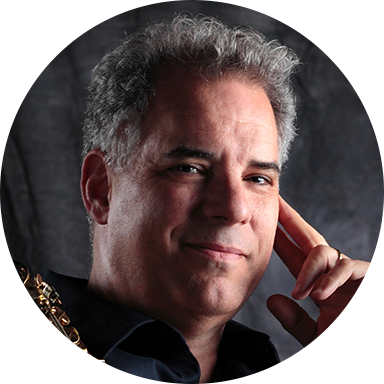
Jim Snidero

Jim Snidero has spent over three decades establishing himself as both a bandstand master and a thoughtful voice in contemporary jazz. A Downbeat Magazine honoree and alto saxophone virtuoso, Snidero earned his musicianship through study with legends like Phil Woods and Dave Liebman, then cut his teeth in New York alongside Brother Jack McDuff, the Mingus Big Band, and on Frank Sinatra's Duets II. His discography reflects a musician unafraid of stylistic range, from the street-smart funk of Mixed Bag to the introspective lyricism of Blue Afternoon, a recording the Penguin Jazz Guide ranks among the finest jazz albums ever made.

Beyond the bandstand, Snidero has become a dedicated educator and composer whose orchestrations reveal a deep understanding of how jazz functions across different instrumental settings. His ability to craft sophisticated ensemble writing without sacrificing the improviser's voice makes his work particularly valuable for serious student ensembles navigating the intersection of classical training and jazz language.

Why we love this

River Suite proves Snidero's skill at organizing a jazz composition across extended form without losing narrative shape. The three-movement structure gives your ensemble room to develop character and contrast, while the instrumentation (strings plus rhythm section anchoring a solooist) creates acoustic textures rarely heard in student jazz settings. The optional flute doubling in the second movement keeps the piece accessible across different programs without diluting its sophistication.

What to expect

The Hudson River itself becomes a character: the suite moves through reflection, energy, and quiet resolution like water shifting across different light. String writing creates an almost classical transparency, allowing the rhythm section and saxophone to articulate jazz language without the density of a full band. Each movement has its own emotional temperature, from contemplative to kinetic.

Who it's for

Advanced jazz ensembles ready to move beyond standard big band charts into more chamber-like settings. Directors programming concerts that highlight the saxophone as a primary voice and students who have studied classical strings alongside jazz fundamentals.

How to get the most out of it

  • Balance the alto saxophone melody against the string quartet; the written parts often double or counterpoint the soloist, so clarity comes from ensemble listening rather than volume.
  • Study the recorded version first as a group. Snidero's recorded interpretation models phrase shape, rubato, and the relationship between written and improvised sections that students need to hear.
  • The rhythm section drives the harmonic foundation in each movement. Establish what changes happen at sectional boundaries well before rehearsing tutti passages.
  • If doubling on flute for the second movement, allow extra rehearsal time for that transition. The instrument change affects both the soloist's setup and the ensemble's tonal expectations.

How to use it

River Suite works as a centerpiece on a jazz concert that otherwise features blues heads or uptempo standards, offering your audience a compositional vision and emotional range they won't find in typical repertoire. It also fits naturally into a concert shared with classical chamber musicians, since the string parts can draw interest from players trained in that tradition. Program it when your improviser is ready to carry substantial solo responsibility across an entire piece.

Skills your students will build

  • Reading and interpreting jazz solos from recorded transcriptions
  • Balancing ensemble voicing in smaller instrumentation (quintet plus rhythm)
  • Maintaining harmonic awareness while accompanying improvisation
  • Responding to rubato and phrasing that extends beyond strict time
  • Doubling on a second woodwind instrument and managing quick transitions
  • Understanding form and narrative arc across a multi-movement composition

You May Also Like