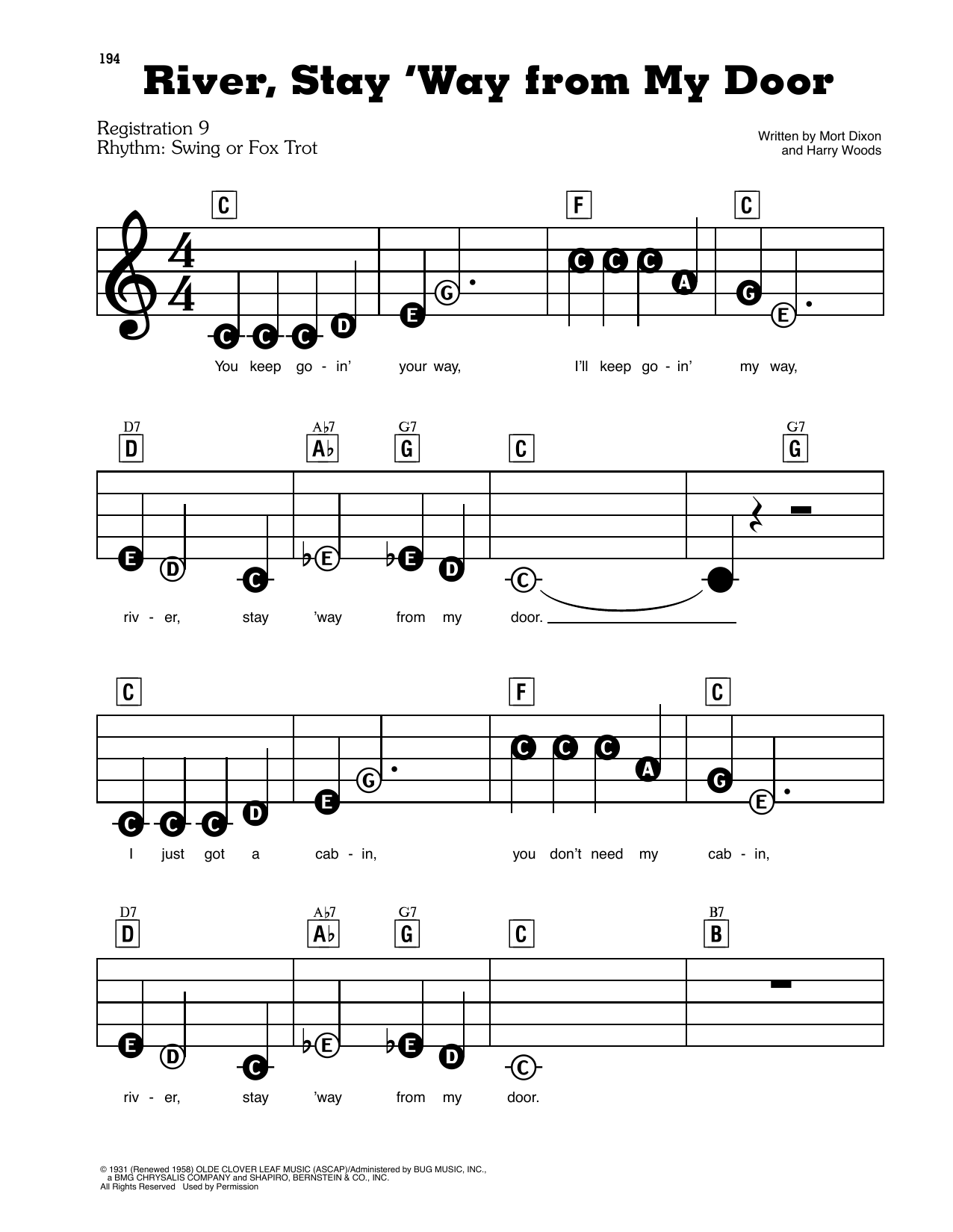
River, Stay 'Way From My Door Sheet Music Preview

River, Stay 'Way From My Door: E-Z Play Today

As performed by Frank Sinatra

Item: 35-DS00447943

Digital Download
$4.99
Description

River, Stay 'Way From My Door: E-Z Play Today isn't in MakeMusic Cloud just yet...but it could be. Let us know you'd like to see it, and you'll help shape what comes next. In the meantime, start a free trial and dive into thousands of interactive titles your students can play along with today.

Sample Audio
No sample audio found.
Sample Video
Additional Details
Publisher: Hal Leonard
Page Count: 3
SKU: 35-DS00447943

More about this title

About the Artist: Frank Sinatra

Frank Sinatra (1915–1998) was an American singer and actor whose interpretive gifts and technical command shaped popular music for decades. His influence on jazz phrasing, lyrical storytelling, and swing sensibility remains a cornerstone of music education, offering students a masterclass in how melody and rhythm serve emotional expression.

Sinatra's recordings demonstrate the power of simplicity and restraint in performance. For music educators, his work provides essential listening and study material for understanding the relationship between vocal line and instrumental accompaniment, particularly in how standards are arranged and performed.

Why we love this

This arrangement captures the melancholic sophistication of a classic American standard in a format that pianists at intermediate levels can actually enjoy playing. The three-page length keeps the piece manageable while preserving the harmonic richness and interpretive space that makes this song enduring.

What to expect

A quiet moment in a dimly lit room. The melody carries a gentle yearning, asking a river (and by extension, fate) to let someone pass through unscathed. The harmony drifts through minor and major colors with the emotional ambiguity of someone caught between resignation and hope.

Who it's for

Pianists seeking authentic jazz standard repertoire that develops musicianship without requiring advanced technique. Teachers building a jazz or standards curriculum will find this an accessible entry point to Sinatra's interpretive legacy.

How to get the most out of it

  • Lean into the rubato. Jazz standards live in the spaces between strict time; allow the melody to breathe, then settle the accompaniment around it rather than fighting against it.
  • The lyric tells the story. Even as an instrumental arrangement, treat phrases as if you're singing them. Shape melodic contours with dynamics and touch, not just finger technique.
  • Balance the bass line with your right hand melody. The walking bass pattern should feel conversational rather than metronomic; this creates the swing feel the piece demands.

How to use it

Pair this with other American standards at a jazz or pops concert, or slot it into a vocalist recital as an accompaniment piece that stands on its own. Its intimate character makes it ideal for a solo piano set that showcases interpretive maturity rather than technical display.

Skills your students will build

  • Swing rhythmic interpretation and jazz articulation
  • Walking bass patterns in the left hand while maintaining melodic shape above
  • Harmonic analysis of jazz reharmonization and chord substitution
  • Rubato and expressive phrasing independent of metronomic time
  • Balancing accompaniment texture with lyrical content

You May Also Like