
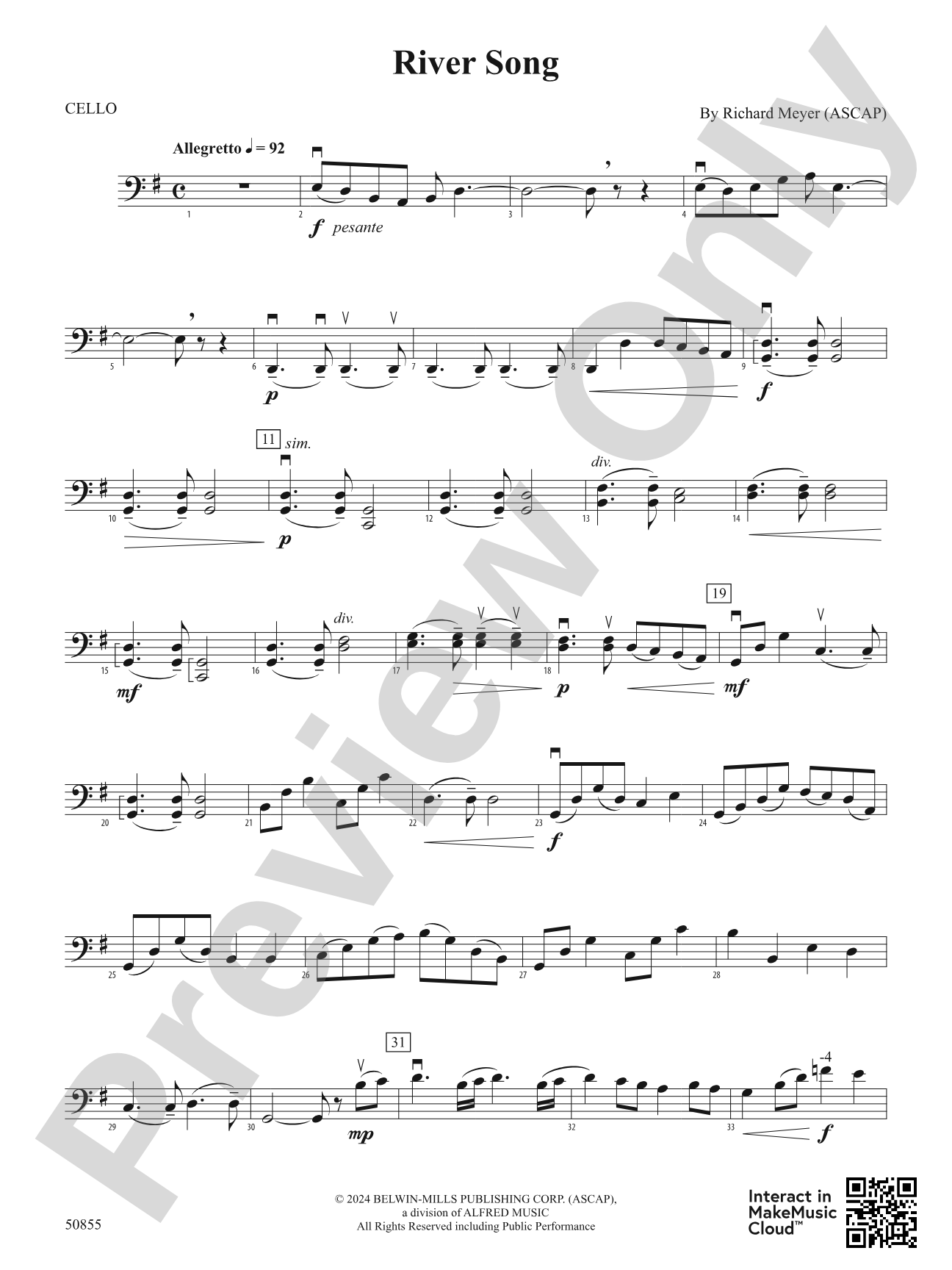

River Song: Cello
By Richard Meyer
Grade: 3
Item: 00-PC-0019335_VC1
$7.99
Pickup currently not available
Description
River Song, by Richard Meyer, is an excellent way for your students to develop their legato playing. The original folk-like melody is gently passed from section to section (even the Basses are featured!), giving the piece the feel of a slow journey of discovery down a sleepy, isolated waterway. The piece includes some simple shifting into upper positions for violin 1, cello, and bass and interesting and imaginative accompaniments throughout. Perfect as a second piece for your next festival or contest program and a wonderful change-of-mood selection for any concert. (3:20)
The PerformancePlus+ series is an innovative addition to the ever-expanding MakeMusic Cloud interactive library. These engaging selections are presented with educational resources designed to enrich the rehearsal process and create outstanding performances. Including:


The PerformancePlus+ series is an innovative addition to the ever-expanding MakeMusic Cloud interactive library. These engaging selections are presented with educational resources designed to enrich the rehearsal process and create outstanding performances. Including:
- Assignment, recording, and assessment tools within MakeMusic Cloud
- Piece-specific exercises focused on skills and techniques
- Educational tips and suggestions to support learning
Available in print and digital formats.
Don't just read it, hear it, play along with it, and watch your students grow with it. In MakeMusic Cloud, River Song: Cello comes alive with professional accompaniment, adjustable tempo, and built-in practice tools that turn solo practice into real progress.
Open in the Player
Jump straight in and assign it today.
Start Your Free Trial
Open this title and explore the full library in minutes.
Sample Audio
1
Audio File
--:--
0:00
0:00
Sample Video
Additional Details
Series:
Highland/Etling String Orchestra - PerformancePlus+
Publisher:
Alfred Music
SKU:
00-PC-0019335_VC1
More about this title
About the Composer: Richard Meyer

Richard Meyer brings three decades of string teaching experience to his compositions, having shaped orchestra programs from elementary through high school levels in Southern California public schools. His tenure directing orchestras at Oak Avenue Intermediate School resulted in a program that grew from 29 to 200 students, and he spent 22 years building the city's elementary string curriculum. Beyond the classroom, Meyer conducted the Pasadena Youth Symphony Orchestra for 16 years, leading performances across North America, Europe, and Australia.
Meyer's broader impact extends through his "Giving Bach" initiative, launched in 2009 to bring interactive concerts to students with special needs and underserved communities throughout Southern California. As a composer, he has published over 190 works and arrangements while serving as string editor for Alfred Publishing Company. He is also a co-author of widely used string method resources, including the String Explorer Series and Sight-read It for Strings. Meyer has been featured clinician at major conferences including the A.S.T.A. National Conference and has guest-conducted All-State orchestras in multiple states.
Why we love this
Meyer understands exactly what Grade 3 string orchestras need: an elegant piece that builds legato control without sacrificing musical integrity. The sectional passing of melody ensures every player feels the weight of the line, while the featured bass section and accessible upper-position shifts for violin 1 and cello keep musicians engaged at their current level. This is the kind of selection that programs beautifully between heavier repertoire and reminds audiences why string texture matters.
What to expect
River Song unfolds like a quiet meditation, with melody drifting from strings to strings as if carried downstream. The orchestration creates a sense of peaceful solitude, with warm sustained accompaniments and a gently flowing line that invites listeners into an intimate, unhurried space. By the time the bass section takes its moment in the sun, the piece has built a quiet confidence that makes everyone sound like they belong.
Who it's for
String orchestras at Grade 3 level who are ready to deepen legato playing and explore sectional independence without tackling dramatic shifts in difficulty. This works equally well for ensembles preparing for festival competition or adding textural contrast to a concert program, and the modest technical demands mean rehearsal time stays focused on musicianship rather than technical problem-solving.
How to get the most out of it
- Shape the melody phrasing across sections as one continuous musical thought, resisting the urge to let sound drop when the line passes to a new group. The journey matters more than the individual moment.
- Balance the accompaniment figures throughout so they support rather than compete with the featured melody. Imaginative texture is lost if the harmonic foundation overwhelms.
- Use the upper-position shifts in violin 1, cello, and bass as an opportunity to refine intonation and bow control at the staff, not as technical hurdles to rush through.
- Build legato gradually across rehearsals by isolating one section's melody passage at a time, establishing the singing quality before adding accompaniment layers.
How to use it
Slot this as a second selection in a festival program or contest entry to reset the room after more energetic work. On a concert, it pairs beautifully as a mood-shifting piece between rhythmically driven repertoire and closing selections, giving both orchestra and audience a moment to breathe. The manageable length (3 minutes 20 seconds) makes it an ideal confidence-builder for younger orchestras entering their first festival season.
Skills your students will build
- Sustained legato playing across phrase lengths and section changes
- Upper-position shifting for violin 1, cello, and bass
- Sectional melodic independence and balanced ensemble texture
- Intonation awareness in slower-moving harmonic contexts
- Musical storytelling through passing melody and accompaniment balance