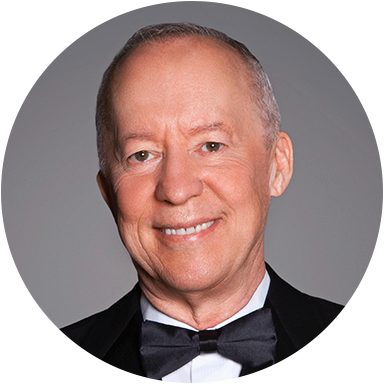
Mark Hayes has composed and arranged over 1,750 published works across sacred music, concert repertoire, piano literature, and musical theater. His credentials span decades of conducting at major venues including Lincoln Center, Carnegie Hall, and the National Cathedral, where he has premiered large-scale works such as his Requiem and conducted honor choirs through professional organizations. Hayes earned his summa cum laude degree in Piano Performance from Baylor University and received the Award for Exemplary Leadership in Christian Music from that institution in 2010.
Beyond the concert hall, Hayes has shaped sacred music globally through commissions and international performances, including conducting his Requiem at St. Ignatius Basilica in Rome as part of the Vatican-sponsored Festival Pro Musica E Arte Sacra. His versatility extends to orchestration, record production, and musical theater scoring, with works ranging from civil rights stage productions to contemporary musicals. His piano catalog alone includes over 100 books spanning gospel, classical, jazz, and Broadway styles.
Why we love this
Hayes brings the polish of a concert hall composer to sacred choral writing. His mastery of harmonic language and orchestral thinking means even a fifteen-page octavo feels crafted at the highest level, giving your singers something genuinely beautiful to sink their voices into rather than functional repertoire.
What to expect
The piece unfolds with emotional generosity, offering singers the experience of sacred music written by someone who understands both the voice and the spiritual intention. Hayes's harmonic vocabulary suggests comfort and hope rather than complexity for its own sake.
Who it's for
Sacred choral programs seeking a concert-worthy addition with genuine artistic depth. This works equally well for community choirs, church choirs stepping into the concert repertoire, and school choirs working at an intermediate to advanced level.
How to get the most out of it
Honor the text's emotional arc by shaping phrases through breath placement rather than dynamic extremes; Hayes writes idiomatically for voices, so natural phrasing emerges when singers understand the lyrical intent
Balance the upper voices with the foundation: this harmonic language requires clear bass and tenor support to prevent the piece from floating away
Lock the inner parts first in sectionals before working blend; the alto and tenor lines contain the harmonic movement that anchors the sopranos and basses
How to use it
Pair this with other Hayes sacred works for a focused concert segment, or use it as a standalone feature in a mixed sacred and secular program where you want an undeniable artistic centerpiece. Its fifteen pages make it substantial enough to deserve its own program real estate without overwhelming rehearsal time.
Skills your students will build
Reading Hayes's extended harmonic language and voice leading
Sustaining legit singing across longer phrase structures
Balancing four independent voice parts with equal clarity
Interpreting text-driven phrasing in sacred context
You May Also Like
Scan to Complete Your Purchase
Use your phone's camera to scan the code below
You'll log in on your phone and the order will be added to your account